


06 Mar Navigating in uncharted waters:
Hello everyone! My first month with the RAP program with the Eastern Service Planning Group (EPSG) has been filled with a lot of firsts. Most of my previous professional experiences have been in the field; I’ve spent a lot of time navigating forests and other ecosystems to look for and identify rare plants, removing invasive species or digging holes to plant native species that I helped grow in the nurseries. Basically, getting my hands dirty! But now I get to work on bigger-picture issues, such as forest plan revisions and land management plans.
During my time with EPSG, I will be helping assemble lists of species of conservation concern and coming up with plan components to best maintain their associated ecological needs and ensure their longevity long term. To best prepare for these upcoming tasks I need to wrap my head around different laws, regulations, and learn how to write management plans. It’s like learning a whole other language! I’ve also spent time learning about how national forests and grasslands have been historically managed by the US Forest Service and how the new 2012 planning rule came into effect to write land management plans that better reflect the agency’s current values.
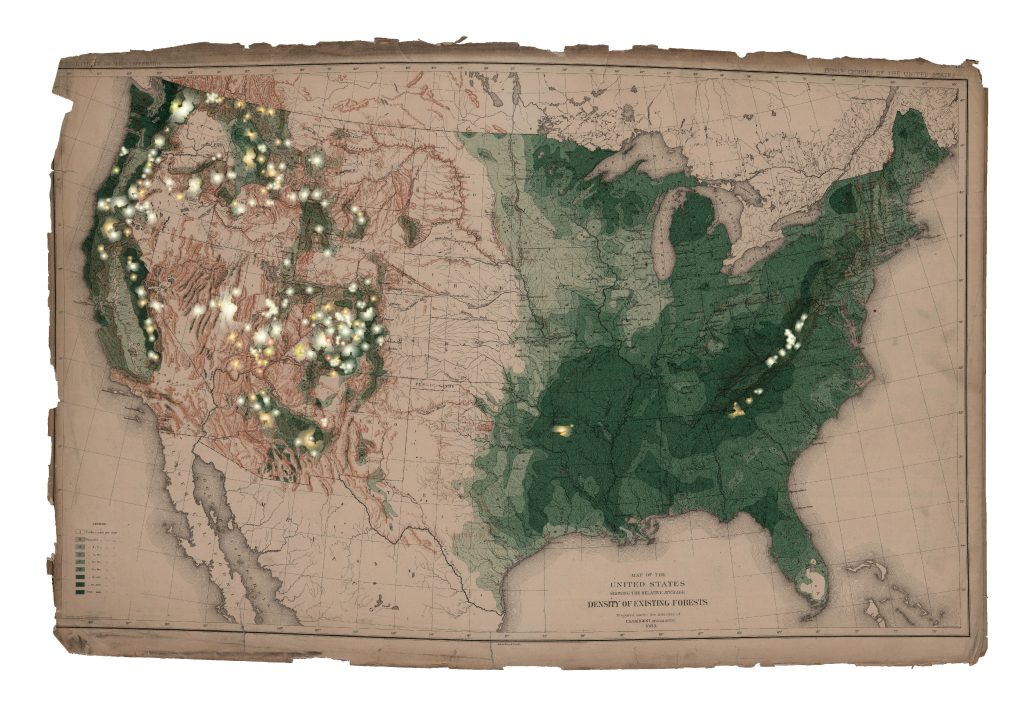
I’ve also listened to an NPR podcast called “Timber Wars” which describes some of the controversies associated with the past management of old-growth forests and the changes the Forest Service has gone through. It provided me with some important context on old timber practices and it gives a voice to different sides affected by all these issues. It also mentioned the journey it took to list the northern spotted owl as a federally recognized endangered species and its key contribution to recognizing the importance and value of old-growth forests. For some added context, I made a map (using ArcGIS Pro) of some of the locations where moderate to high-growth forests can still be found in the U.S, the background is an old 1883 map showing the density of forests at the time and I represented the old growth forests as ‘glowing’ spots. This map isn’t extensive but gives an idea of the old-growth forests that are left in the contiguous United States.
Despite being fully remote, everyone at EPSG has been extremely welcoming, helpful, and made us feel at home, which is harder to do because we’re all scattered throughout the eastern US. I have also enrolled in a short course through the University of Georgia in plant taxonomy to better my skillset in plant identification. I never had a chance to take a course in plant taxonomy in college, so I am very much looking forward to this class!
Sorry, the comment form is closed at this time.