


28 Mar Spruce-Fir Forest Nest Box Monitoring/Cajas para Nidos en Bosques de Abeto-Pícea
Forest Service RAP Intern Insights
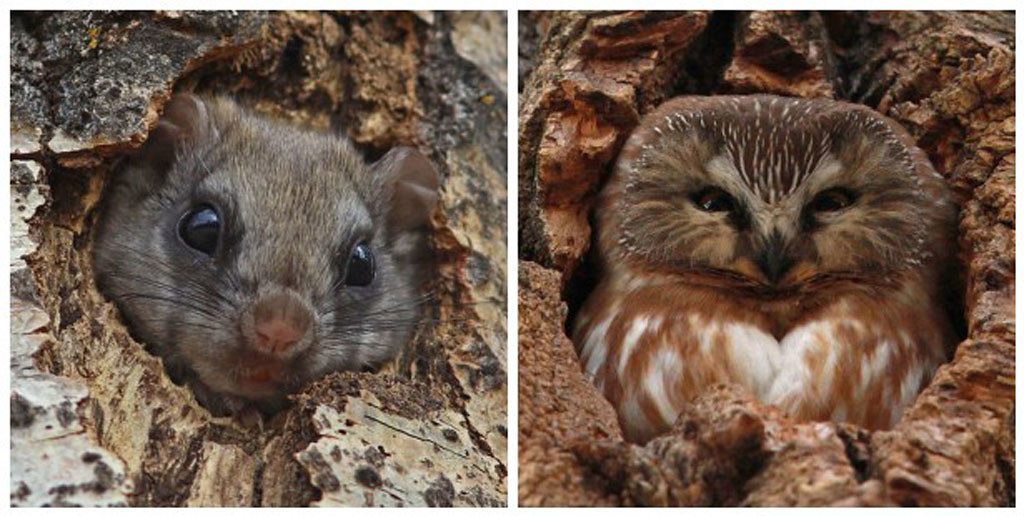
Being in the forest service means collaboration with nature commissions and Non Government Organizations. As a team, the goal is usually also aligns with the Forests service goals and desired outcomes. I was encouraged to contact the North Carolina Natural resource Commission (NCNRC) in order to see where they were working of national forest lands and they encouraged me to go out with them for some Northern Saw-whet Owl (Aegolius acadicus) nest monitoring.
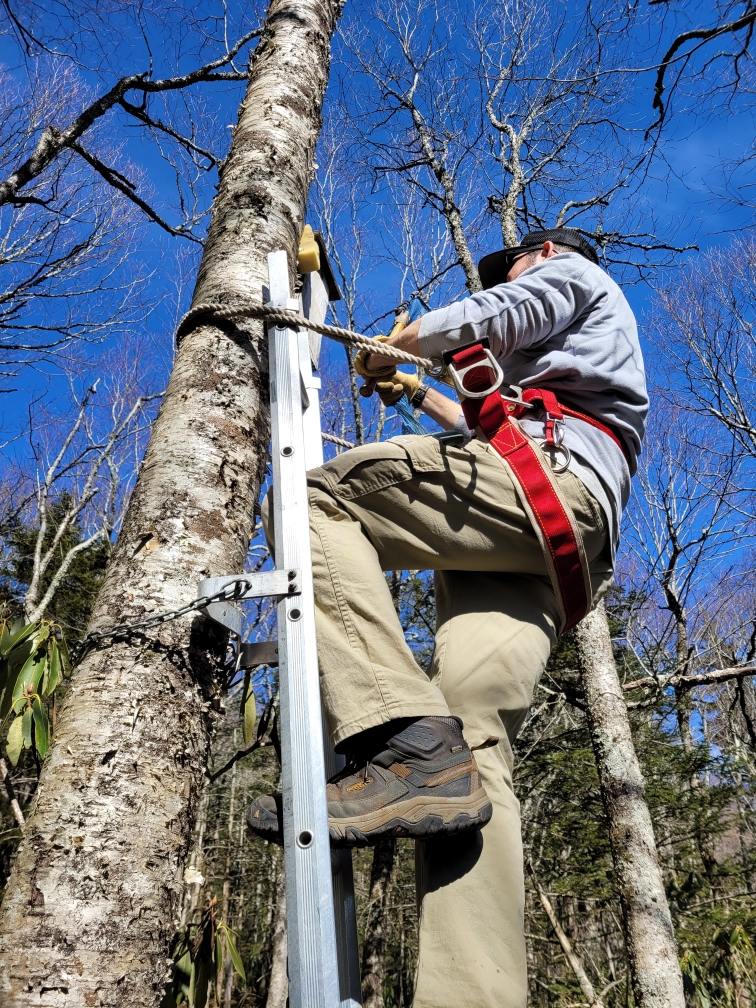
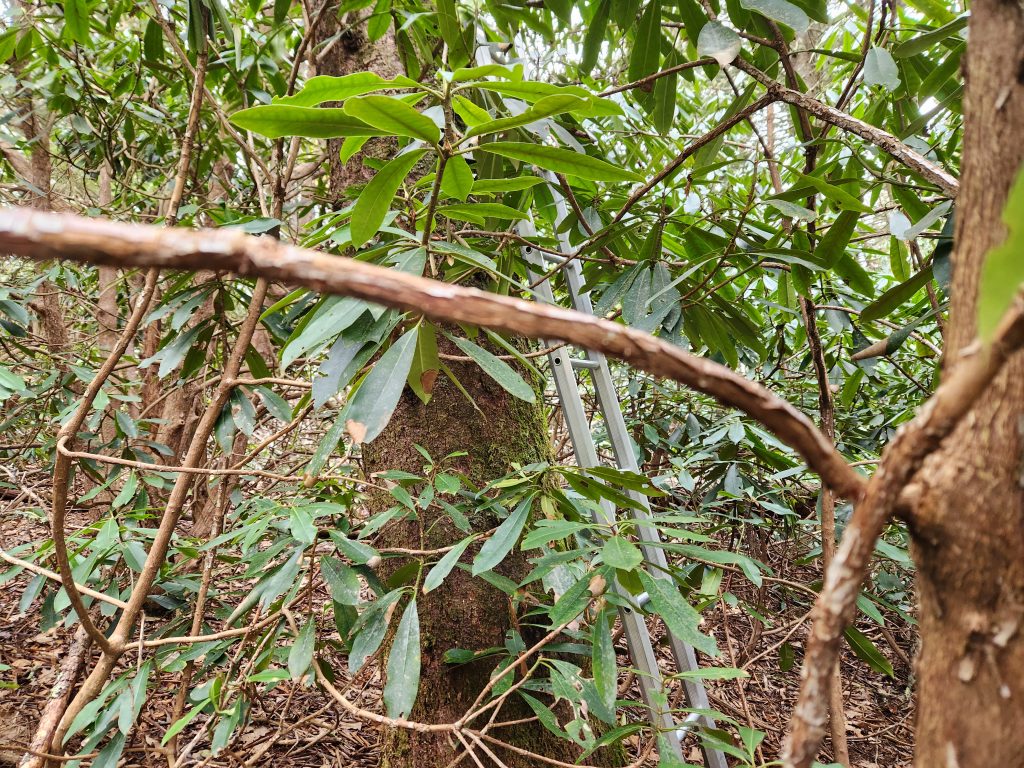
Nest monitoring entails hiking with ladder and climbing equipment as well as tagging equipment up slopes to get to spruce fir forests and then finding the already placed nest boxes and then taking a peek inside of them. The boxes are made out of wood and are placed at elevations greater than 4000ft since Saw-whet Owls prefer to nest in higher elevations in the mountains of North Carolina.
Cuando trabajas por los bosques nacionales, es muy importante trabajar juntos con otras organizaciones. Juntos pueden lograr más cosas para el medioambiente y obtener más metas para los bosques. Mi mentor recomendó que yo hablaba con la gente en North Carolina comisión de recursos natural (NCNRC). Encontré que estaban trabajando en tierra de los bosques nacionales y me invitaron a checar cajas de nidos para tecolote afilador (Aegolius acadicus).
Monitorizando cajas de nidos tienes que caminar cargando una escalera chiquita y equipo para subir árboles. Las cajas ya están en los bosques y teníamos que encontrarlos otra vez y ver si tenían tecolotes adentro. Las cajas son echas de madera y están puestas a alturas mas de 1300 metros por que los tecolotes prefieren alturas en las montañas de North Carolina.
Another organism that shares the habitat of Saw-whet Owls is the North Carolina Northern Flying Squirrel (Glaucomys sabrinus coloratus), a federally and state listed as endangered animal. When the NCNRC placed the boxes out they also knew that flying squirrels could also benefit from the nest boxes. When going out to check the boxes in the middle of March the chances of either organism being in the nest box are high. So we had to be prepared to band an owl or tag a squirrel when approaching each nest box.
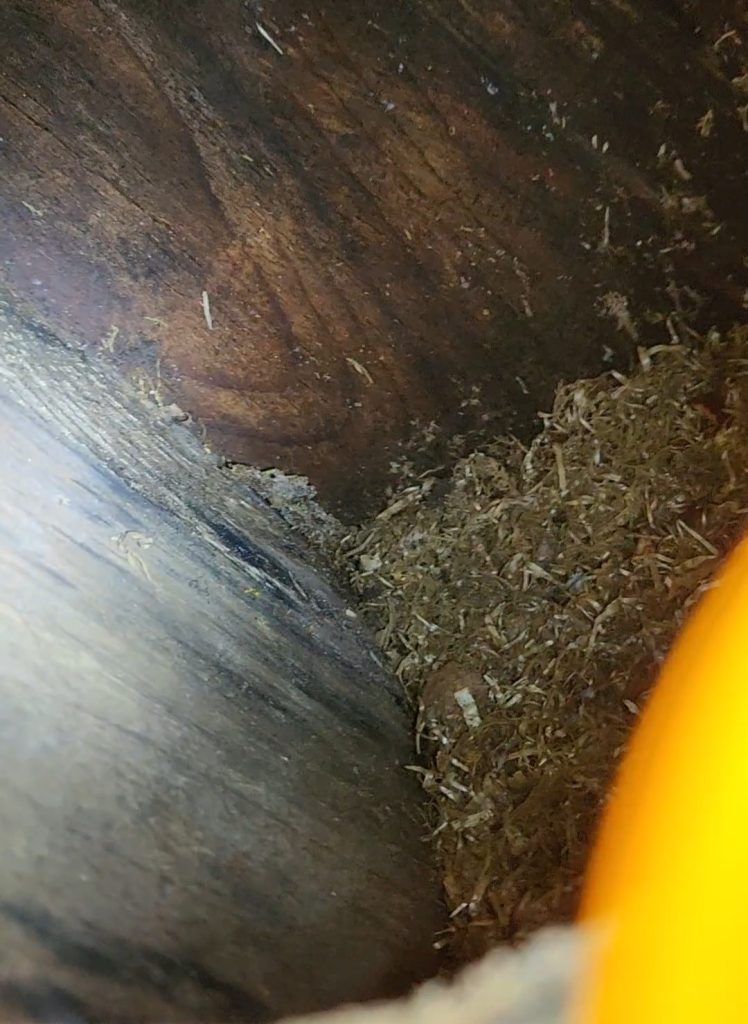
In forests, a nice nest box is a wonderful hiding spot for any organism so most of the nest boxes we checked had evidence that red squirrels (Tamiasciurus hudsonicus) were using the boxes instead of our target species. On the very last box that we checked we found evidence of northern flying squirrel nesting! The key to telling the difference is what the nest material is made up of. When owls nest, they do not actually build a nest, instead they just scrape the bottom of the box with their talons and then lay their eggs. Northern Flying squirrels will use birch wood scraps as their nesting material and red squirrels will use dried leaves and or moss clumps.
Otro animal que puedes encontrar en los mismos bosques de tecolote afiladores es la Ardilla Voladora del Norte de North Carolina (Glaucomys sabrinus coloratus) un animal en peligro de extinción en los EEUU y en el estado de North Carolina. Cuando la gente de NCNRC pusieron las cajas de nido, también sabían que las ardillas podían usar las cajas. Entonces, cuando fuimos a chequear las cajas en marzo, tuvimos que estar listos para tecolotes o ardillas.
En los bosques, una caja de nido es muy valioso entonces también otros animales como la Ardilla Roja (Tamiasciurus hudsonicus) podían usar las cajas. Las Ardillas Rojas son muy común entonces no son los animales que usen las cajas. Muchas de las cajas que fuimos a ver estaban llenas de hojas secas o de musgo, eso usualmente significa que Ardillas Rojas están usando la caja. ¡Pero, la última caja que vimos tenía madera de abedul y eso significa que una Ardilla voladora está usando la caja! Cuando tecolotes usan las cajas, ellos no hacen un nido, nomás raspan un poco con sus garras y ahí ponen los huevos solos.
Sorry, the comment form is closed at this time.