


28 Jun A Splash in the Pond: The Koi & Carp Predicament
This summer I am getting the opportunity to work on an assortment of projects ranging from driving elk surveys to removal of forest invasive plants and helping upkeep the numerous educational gardens scattered across the park. In hand with this I have one main project that is the focus of my internship. This project focuses on a manmade pond stocked with nonnative, and now invasive, fish and the further development of a management plan for the pond.
Overview and Background
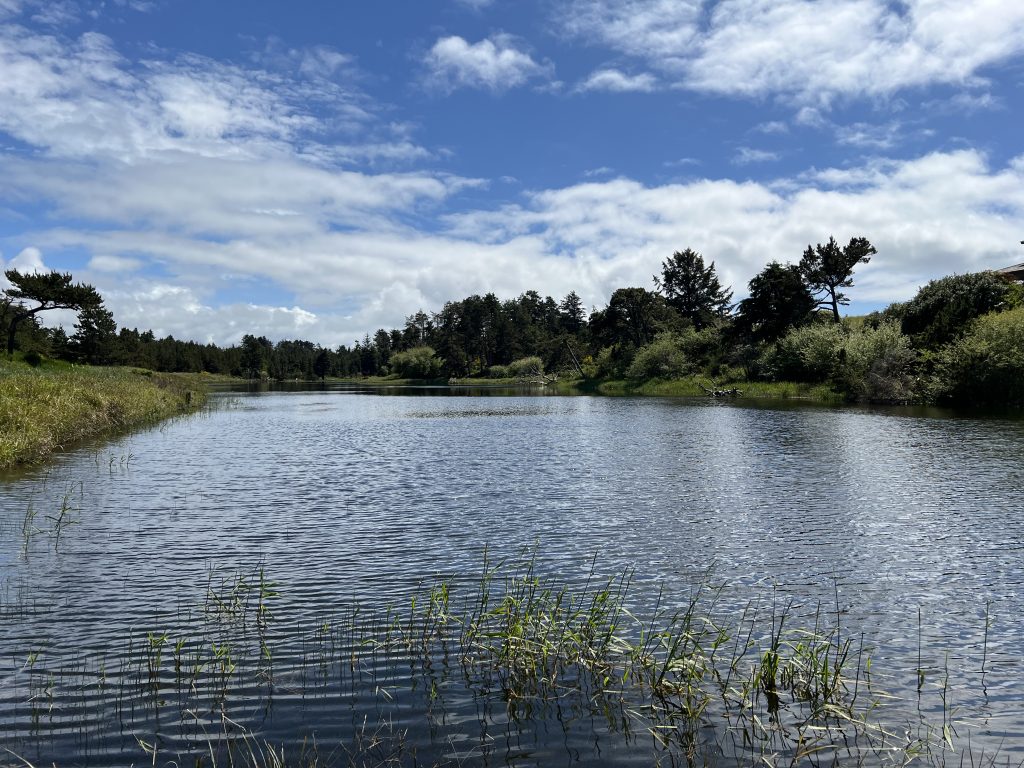
In the early 1960’s 104 acres of property nestled within the coastal dunes of Astoria was purchased by a man named Norman Yeon. A conservationist, Yeon wanted the properties natural features to shine and was passionate about connecting people to nature and increasing accessibility. On this property he built a house, as well as dug out a portion of willow wetland below the water table to create a 3-acre pond. This pond was stocked with various common aquarium plants, mystery snails, and the star of the show: Koi fish.
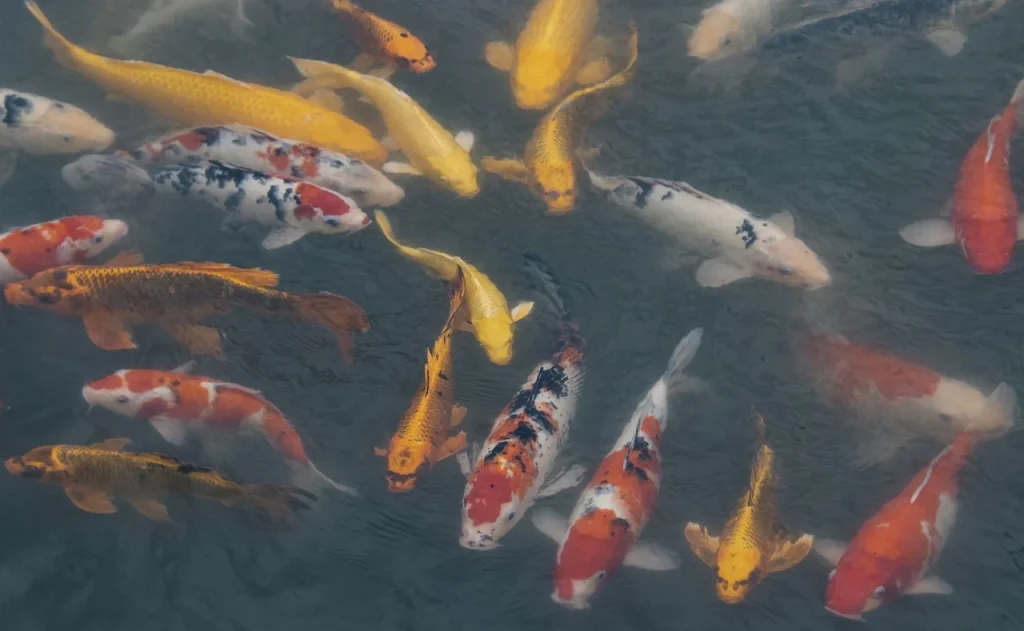
For those who are not aware, koi fish are a species carp that have been bred specifically for their unique coloration and patterns (in domesticated settings). Despite being beautiful to look at, koi are nonnative to Oregon, and overtime become invasive as their populations boom. As their populations grow, they outcompete other fish that may be in the pond and predate aggressively on various native invertebrates, amphibians, and even small waterfowl that exist in and around the pond. They also wreak havoc on the pond by ripping up the aquatic plants.
The property, house and pond included, is now under the ownership of Lewis and Clark National Historical Park. Continuing Yeon’s legacy, the park utilizes the property for a variety of invasive species mitigation projects and educational uses.


What do we know and What have we done?
Prior to my addition to LEWI’s resource crew this summer, this project surrounding the koi pond was loosely developed around 2020/2021. Research began with examination of the ponds water quality, as well as some snorkel surveys. What had been discovered was that the pond was murky with abundant plant matter and woody debris, and the only fish spotted during snorkel surveys were small dusky green/brown carp. Due to these observations, it was believed that the coloration of the koi had been bred out through the generations, adapting to the murky cold waters, and that the original koi stocked in the pond had died out of the population. With this information, a mitigation plan began to be developed which seeks information on the possible species of carp in the pond and removal of the fish due to their invasive status.
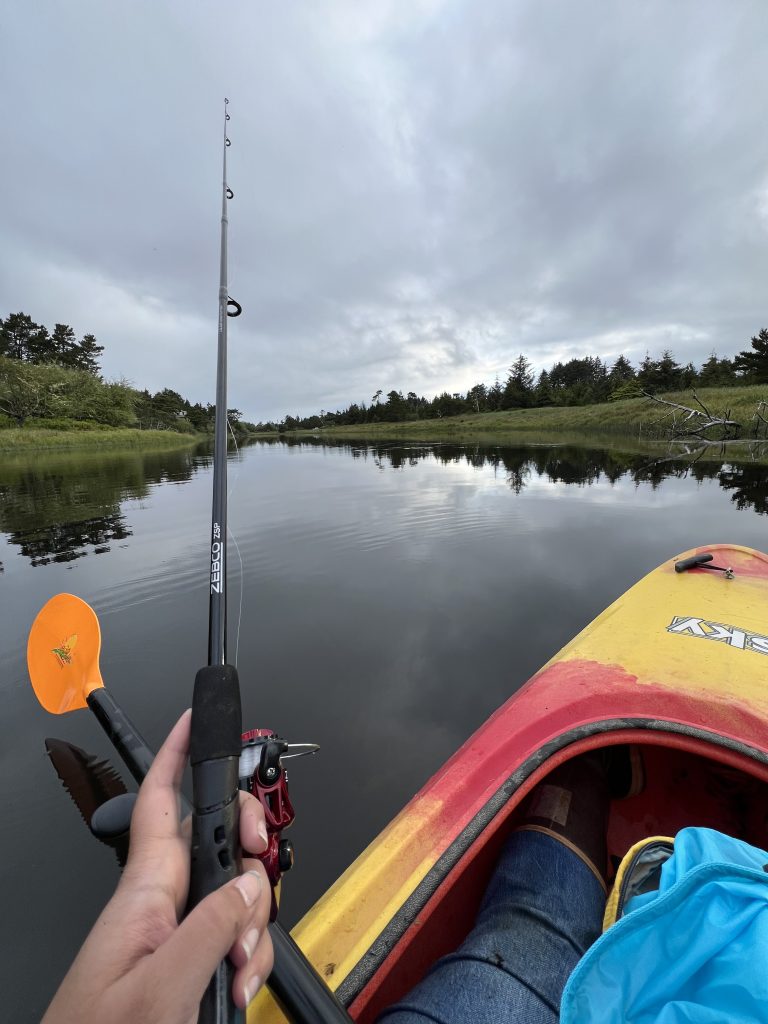
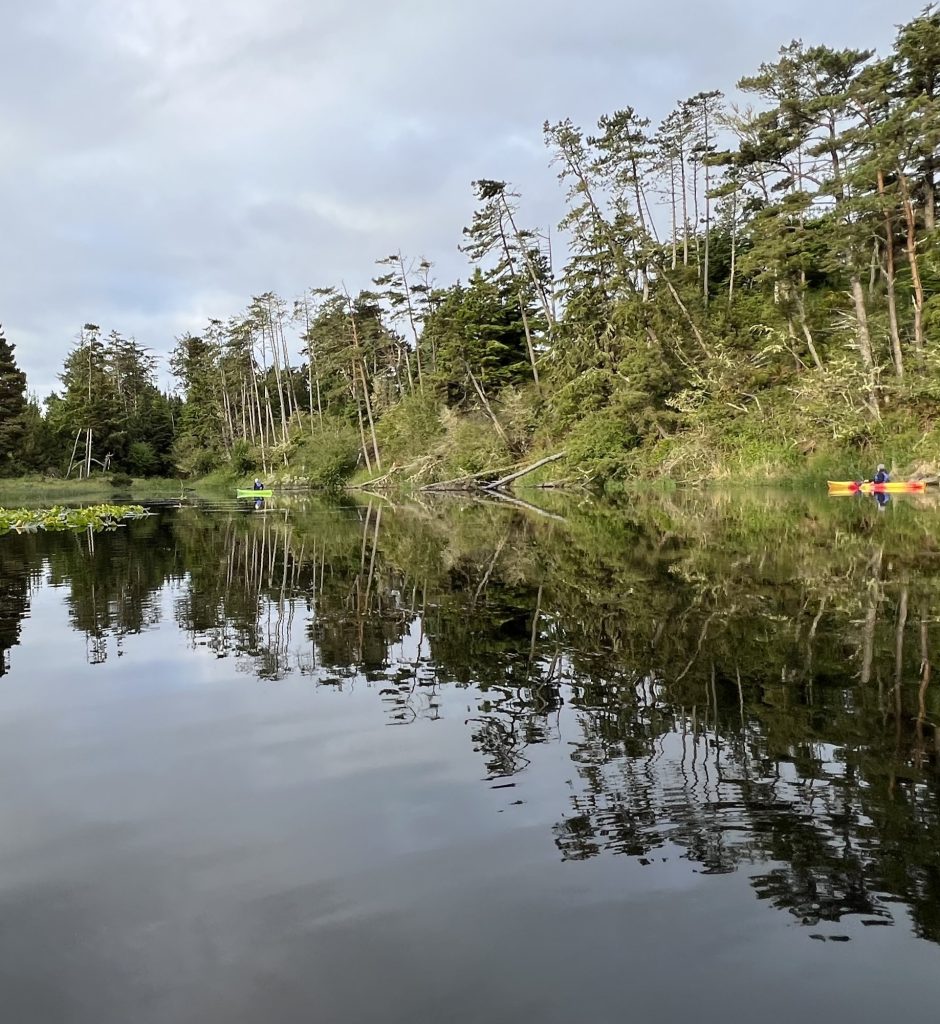
As I have begun to continue this research and help develop the mitigation plan further, along with the help of my coworkers and volunteers, I have started fishing the pond for the carp. We have focused on testing different baits and different times of day to fish. This has been done both from the bank of the pond and kayaks. Fishing has proven to not be the most effective method of capture and have not had any physical catches thus far. However, we have made many visual observations that changes everything about our plan.
The discovery that changes the game
On June 14st, 2024, during a fishing clinic I hosted working with the NYC Tribal Stewards group to kick off this project, visual observations were made of large (estimated to be ~ 25lbs or more) colorful koi. Since this project started before my arrival and participation, it was thought that none of the original koi were left in the pond and only the drabby colored carp were left. Contrary to this belief, the two fish spotted were pure white and red/black in coloration.
On June 18th, 2024, another observation of a 3rd koi was made. While on an early morning kayak survey of the pond, my coworker observed a smaller sized koi with a white and reddish orange color pattern.
Now why do these observations mean so much? Based on the size of these fish, along with the coloration, they could be some of the original fish put in the pond over 40 years ago! This now changes a large part of the mitigation plan. We are now working on a new protocol which calls for the koi fish (carp with the koi color patterns only) to be removed and relocated instead of eradicated.
So, what next?
While we have already made some amazing discoveries, it is early in the summer and there is much work to be done. First, we will begin to alter and adapt the mitigation plan to the new data collected. From there we will continue to survey the pond and narrow down the best methods of capture and removal of the fish.
We plan to collect spatial data and estimates of population density using an underwater camera during kayak surveys, as well as possibly using fish finder technology. As we have been finding that fishing is not quite effective in this situation, we are going to try other methods of capture including seine netting. Throughout the summer we will also be collecting water quality samples and data each time we visit the pond. More youth crews will also be coming in to assist on the project while learning about the environmental impacts of invasive carp, the importance around invasive species mitigation in relation to conservation and stewardship, field sampling methods, data collection, and more.
The data we are collecting this summer is setting the base for how to this project is handled and continues in the future. I am so excited and honored to be able to head it.
I look forward to posting an update at the end of the summer with all of our discoveries (and hopefully catches!)
Stephanie Laredo
Posted at 13:51h, 28 JuneI’m staying tunned for future discoveries and updates! So interesting!
carla cole
Posted at 09:50h, 01 JulyGreat synopsis of the project thus far! We’re so glad to have you here working on it. Can’t wait to see some of those old beauties up close!