


15 Aug Critters in the Congaree
Critters in the congaree
On my first day at Congaree National Park I had the opportunity to walk one of their most popular trails. The Elevated Boardwalk is a 2.6 mile loop that takes visitors through an old-growth bottomland hardwood forest. Visitors will be able to spot several tree species throughout their walk such as bald cypress and tupelo trees in lower elevations and oaks, maples, and loblolly pines in slightly higher elevations. A self guided tour brochure that can be picked up at the visitor center walks visitors through the natural and cultural history of the Congaree as they make their way around the boardwalk.
During my boardwalk journey, I came face to face with a creature that initially startled me to the point where I stopped in my tracks. After staring at one another for a few moments, I realized that I was looking at a barred owl. I was excited to spot it as this was my first time seeing one in the wild. I decided to take the opportunity to observe the owl for a few moments. During this time I was able to watch the owl hunt for food. It was so interesting to watch the owl dive for its prey. The way that the owl scanned for its prey with such focus was intense. I even got to hear it do its call that sounds like the phrase, “Who cooks for you?”. At one point I was able to watch the owl dive down and catch a snake. Unfortunately, I forgot to hit record to capture that moment. However, I was able to capture our first few moments together.
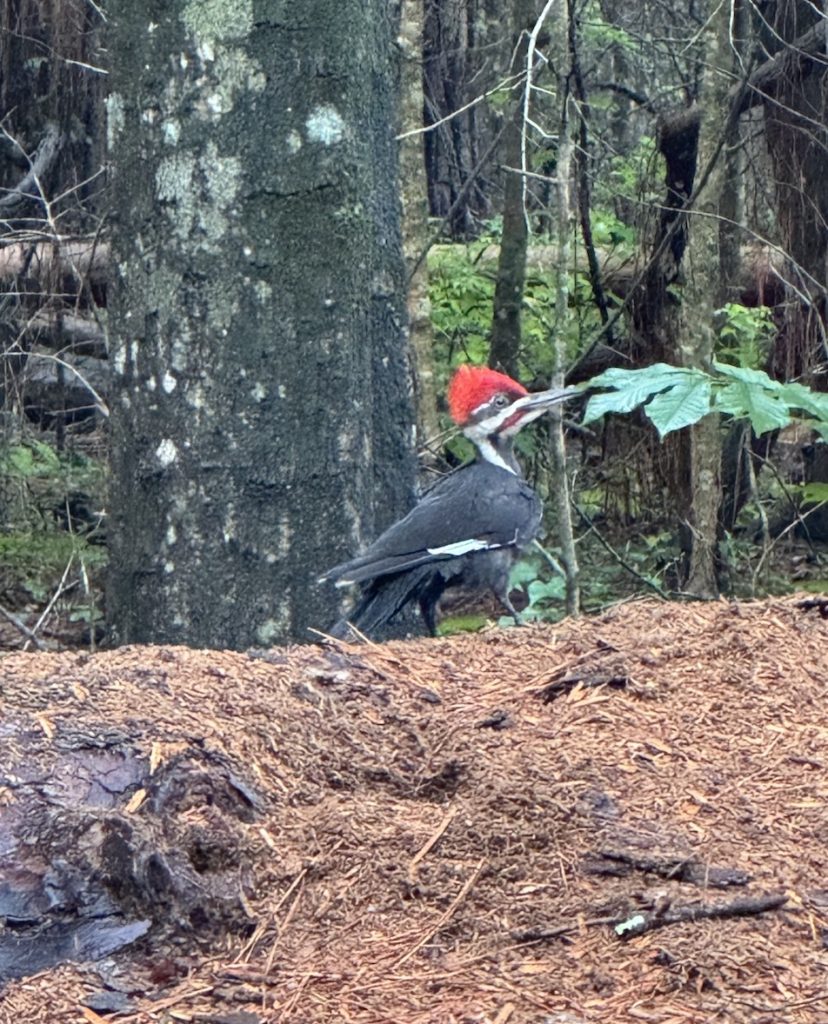
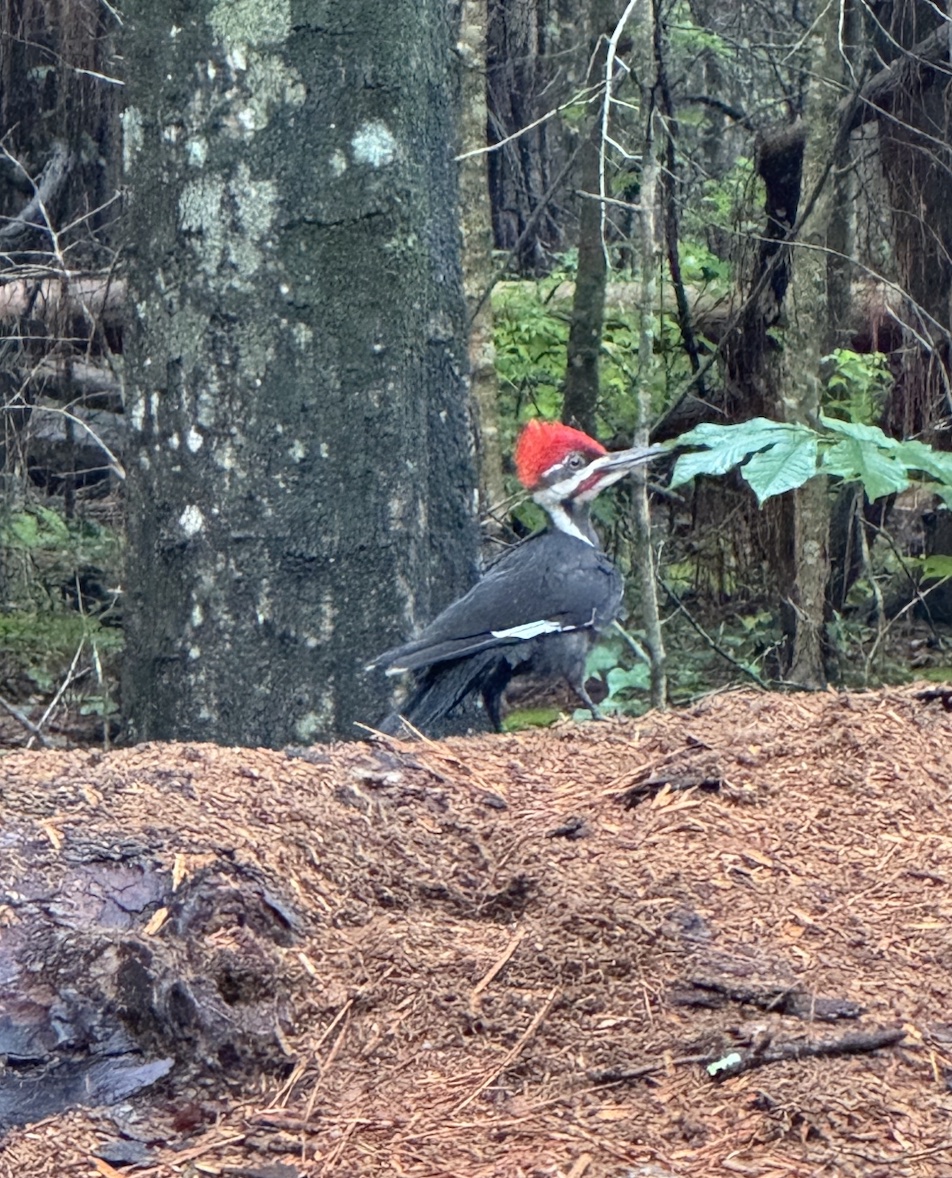
This next creature had me looking up, down, and all around trying to figure out where the loud, drumming noise was coming from. Eventually, I was able to lay my eyes on a pileated woodpecker. The pileated woodpecker is known for pecking deep into rotten wood to reach ants that may be living inside. The pecking can also help them create holes for nesting sites or attract a mate. A way to tell the difference between a male and a female is that males have a red stripe on their cheek called a “malar stripe” whereas females have a black stripe.
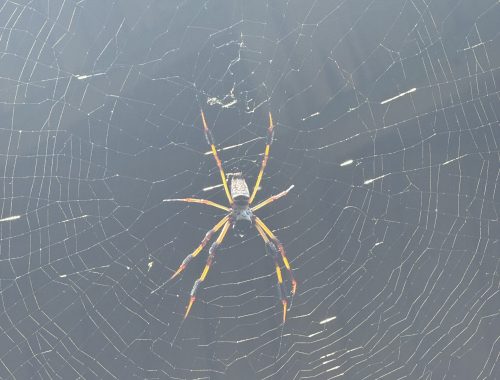
Throughout my walk on the boardwalk, I observed many spiders and their webs. I later learned that these were golden silk orb-weavers. Golden silk orb-weavers make large circular webs and can produce seven different kinds of silk. Males will eventually end up finding a female to live with. A female can be anywhere from 2 to 6 inches long and a male can be 0.5 to 2 inches long. The size of the female tends to scare people. I admit that I was even a little creeped out the first time I saw one. However, I have now learned that as long as I don’t bother them, they won’t bother me. It’s enjoyable to coexist with them and watch them create their webs.
Honorable Mention
I also couldn’t help but to find an excuse to include this video of an inchworm. The way that it was inching along brought some joy to my day. They can be described to move like they are measuring the ground with their body. Inchworms mostly eat leaves and fruit. They only eat at night whenever predators aren’t around. If danger does arrive, they can drop from the leaf they are on and hang from a silk strand. Something that I found interesting about inchworms was that they have no legs in the middle of their body. They have 6 true legs and only 2 or 3 pairs of prolegs that can be found at the tail end of the body.
I am excited to spot more critters during my time at Congaree National Park!
Chelsea Niles
Posted at 13:42h, 27 AugustWhat a great blog post outlining an incredible experience! Thanks for the information and imagery. :)