


10 Jan Defending the Watershed from Outside Attack
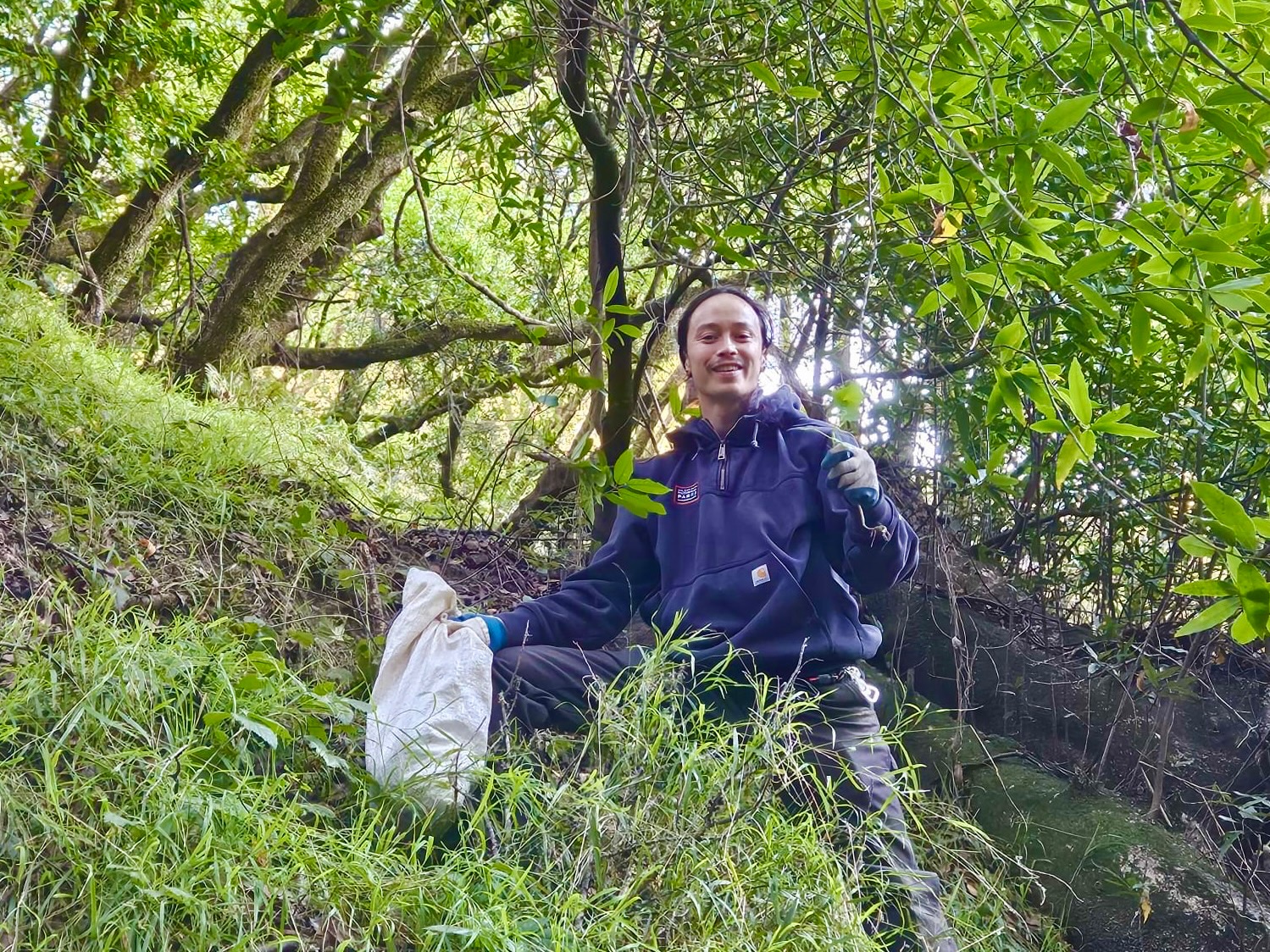
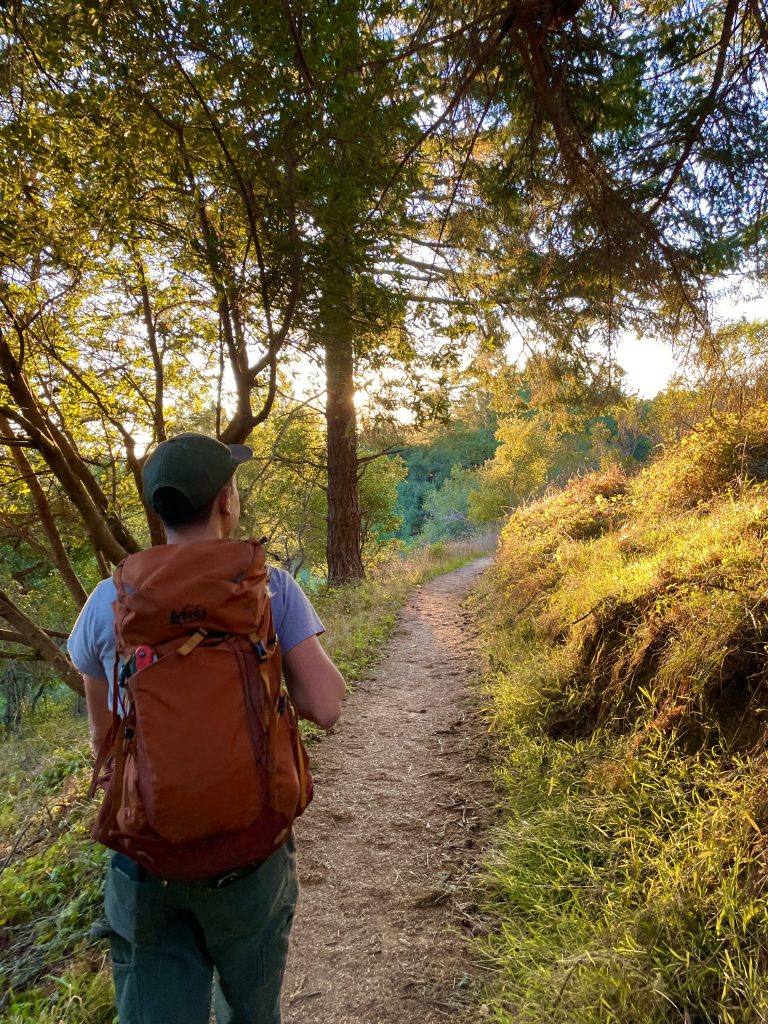
Hello! Trey Aviles here reporting live from the Golden Gate National Recreation Area in cold Northern California! I guess cold is subjective as one of our interns from the Seattle area thinks it’s warm here, but I just moved from a sub-tropical region and I’m currently nice and cold. I’m part of the North Marin Vegetation Team here to tell you a little more about my project area, our purpose, and the threats to our area.
The Redwood Creek Watershed is the area from the coast at Muir Beach up to the ridges along the Panoramic Highway, including Muir Woods and Redwood Creek. Our job as the North Marin Vegetation Team is to ensure healthy plant communities remain intact within this watershed, with the overall goal of maintaining native species diversity, stream health, and native species that benefit wildlife. While planting native species will be one of our primary goals, the removal of invasive species is of equal importance. Invasive species removal is also time-sensitive because, for some species, it is easier to identify, locate, and remove depending upon their phenology and the other surrounding plant’s phenology.
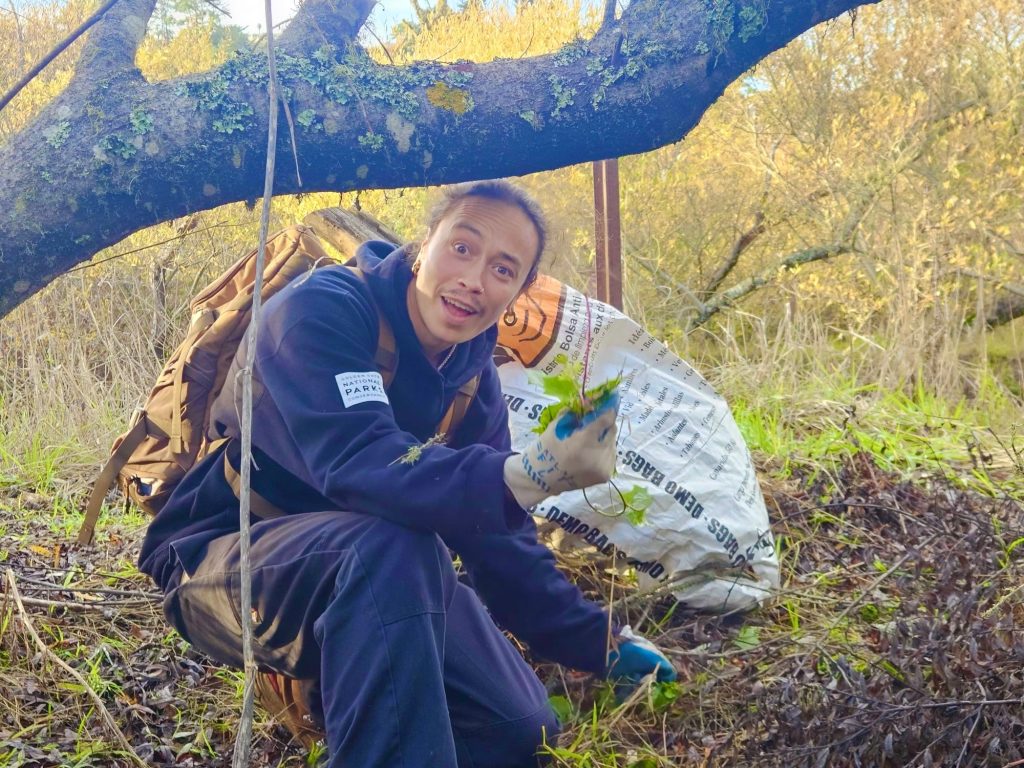
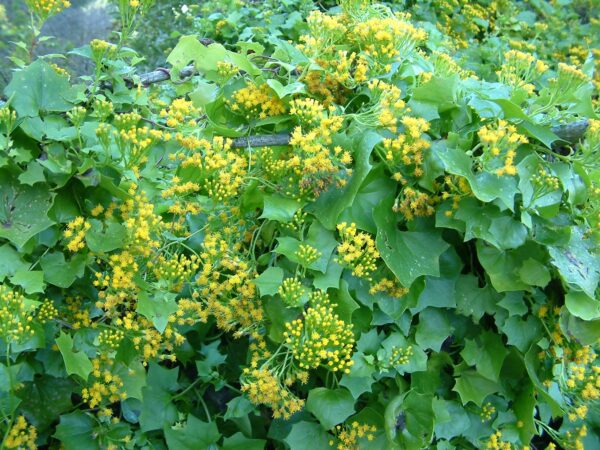
One of the main invasive species we have in this watershed is Cape Ivy (Delairea odorata) which originates from South Africa. Cape Ivy is a light green vine that makes yellow flowers and propagates via wind dispersal and vegetatively through any part of the root or stem that touches the soil. It tends to smother and crowd out all other plants and can reach tree tops by climbing. Cape Ivy likes riparian habitats and this is where it is affecting the Redwood Creek Watershed. To learn more about Cape Ivy check out Calflora’s website linked here: https://www.calflora.org/app/taxon?crn=9623. We have been hand-removing patches of Cape Ivy, ensuring all roots are removed so they do not propagate again. We have been crawling under coyote brush, avoiding dense bushes of poison oak, and laying in the sand alongside the creek at Muir Beach pulling Cape Ivy. Some locations are a dream while others are a nightmare; for example, avoiding hidden branches of poison oak with no identifiable leaves on unstable ground! Thank goodness for Tecnu poison oak soap.
We often spend 9 hours in the field removing Cape Ivy. My favorite moment was being just behind the sand dunes at Muir Beach. We were able to listen to the crashing ocean waves all day while being lucky to have a warm, sunny winter day. The calls of Red-shouldered Hawks came through the trees and hidden newts came to say “hi” or maybe to say “Don’t step on me!”
Sorry, the comment form is closed at this time.