


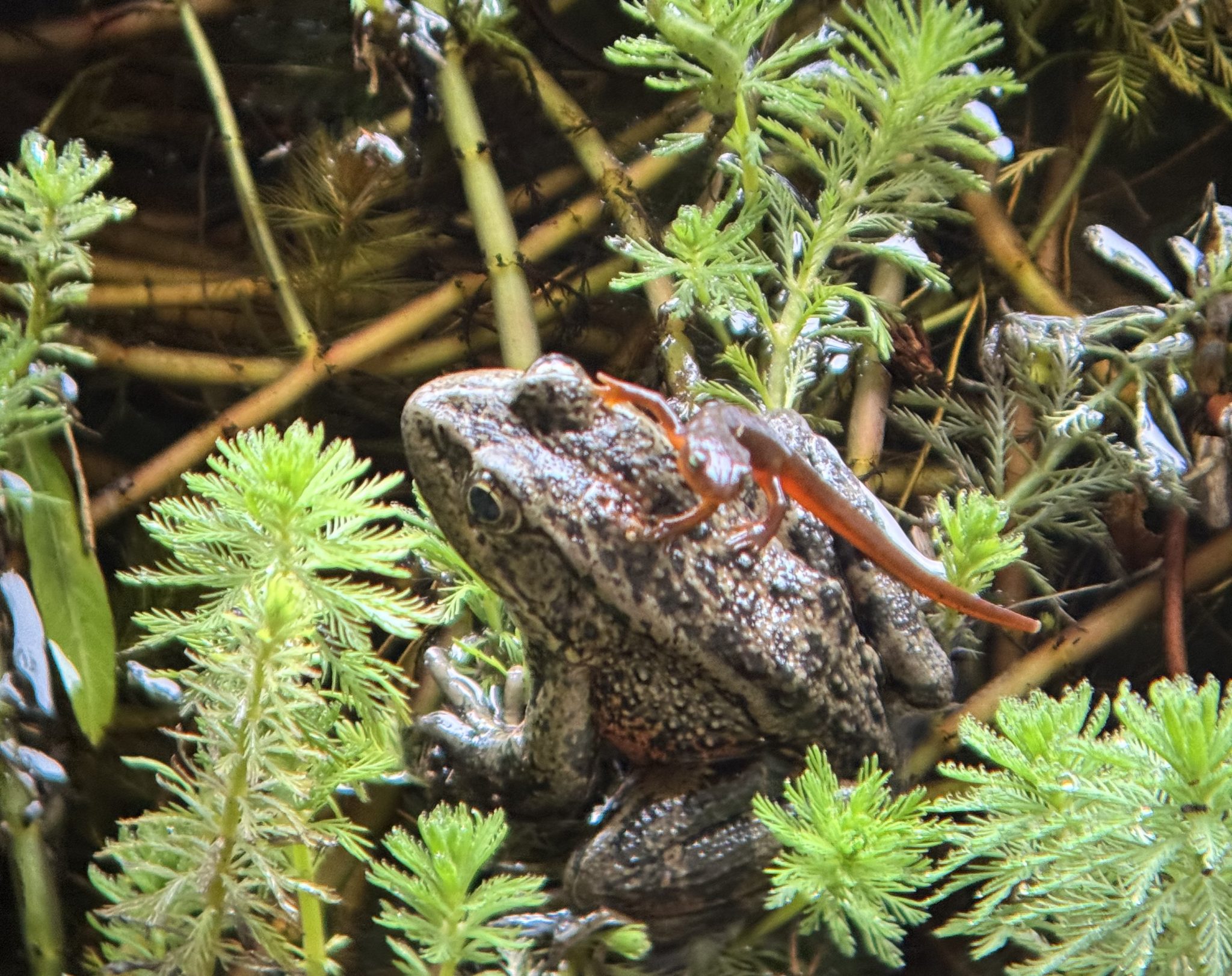
29 Jan Cam Chronicles Vol. 2- Frogs Frogs (newts) and Frogs
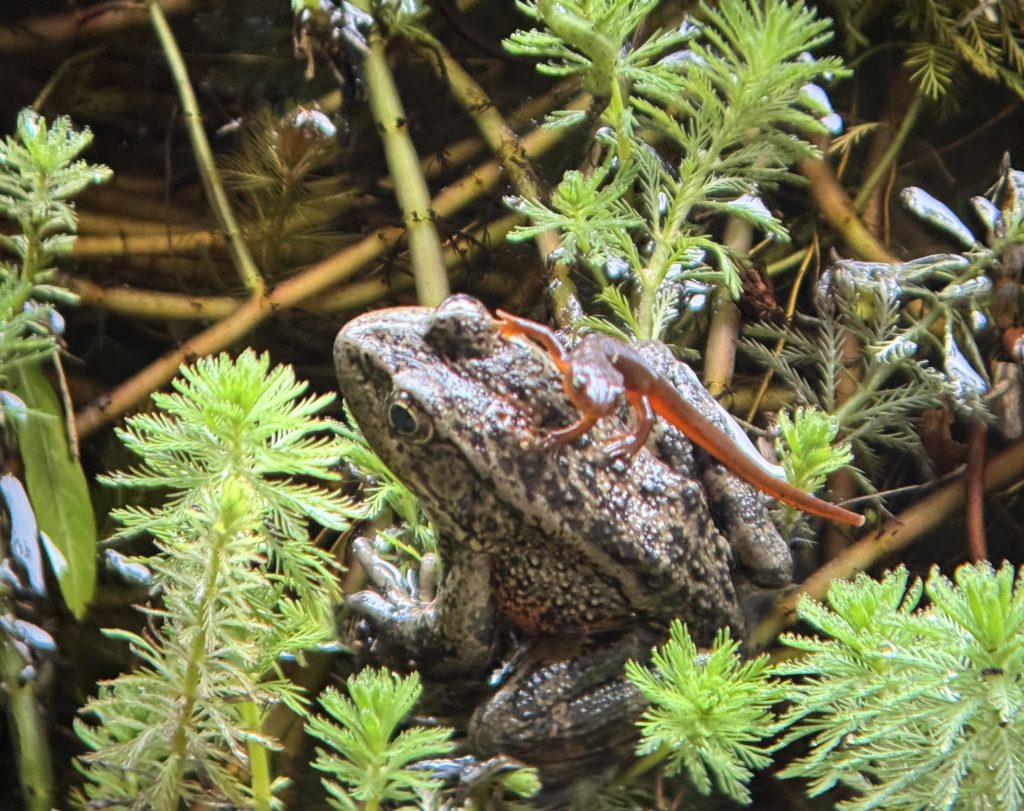
Frogs, Frogs, Frogs!
If you were to ask me how I would summarize my month of December here at GOGA, I would say that phrase above. December has been a sleepy month also, The holiday season has been filled with wet days, food, and sleepy time chamomile!
AMPHibians!
When I say Frogs frogs frogs, I truly mean it (sort of). The California Red- Legged Frog’s breeding season is full steam ahead, and so that means they are laying their eggs. The egg size are the size of grapefruits, and can be seen above water the water surface, as seen in the images above.
Throughout their life stages, the eggs undergo different developmental patterns, Some of the images I captured show this clear distinction of a “boba-like” ball, into a full bean shaped egg!
behind the scens of frogs frogs frogs
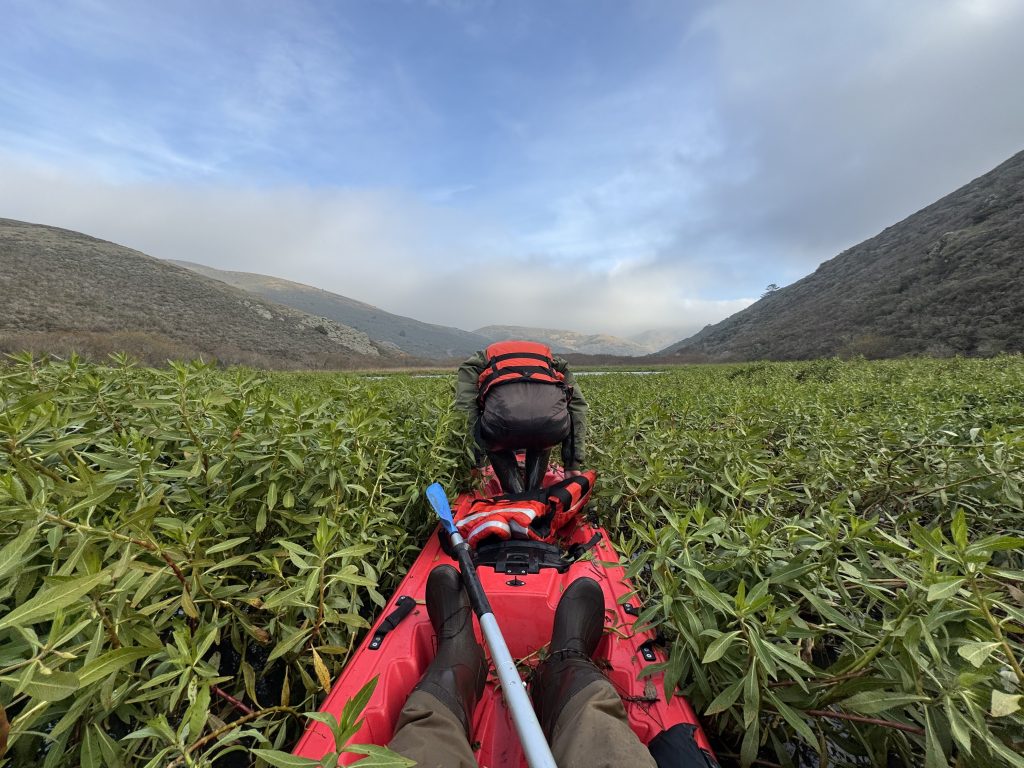
Most of the egg mass you see above had to be found in some extravagant ways. Some of the lakes and ponds that are surveyed required kayaks to access deep areas that are otherwise inaccessible by foot. Kayaks are especially helpful to avoid disturbing the egg masses too that would easily done if were walked on foot. Darren, the aquatic biologists at GOGA, and I are seen below taking a kayak to a lake to survey the thick vegetations that surrounds the open water.
spot the difference?
If you noticed the weird lizard on top of the frog on the first image, then you would of noticed a Salamander! Outside of the frog season also comes the amphibian season.
There are two salamanders that I wanted to highlight on my blog that are prominent in this park, and can be challenging to differentiate for those inexperienced. These salamanders have a interesting life history, and are an absolute pleasure to be a part of this park.
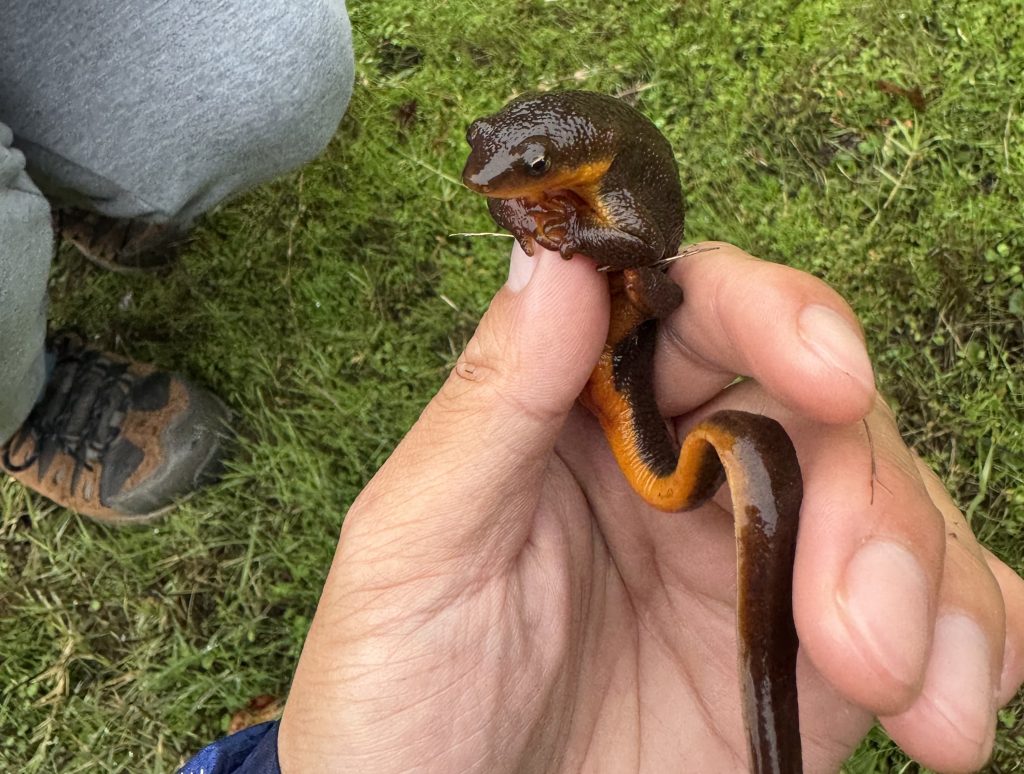
The California Newt have an orange-bellied, with a grainy textured skin on top. California Newts are often bigger than the Ensatina species
Another defining difference from the ensatina is that the California are EXTREMELY poisonous. Newts secrete a toxin in their skin called tetrodotoxin, and ingesting even a 1/1000th of an ounce of this can kill an adult human. After reading this, you might be startled at the fact that I am handling such a poisonous creature. Fortunately, I did not have any cuts on my hand, and. I proceed to clean my hand after my observation.
Newts have a fantastic life history, explaining how they develop to become this poisonous due to the Gartersnakes. The article linked about this story is here!
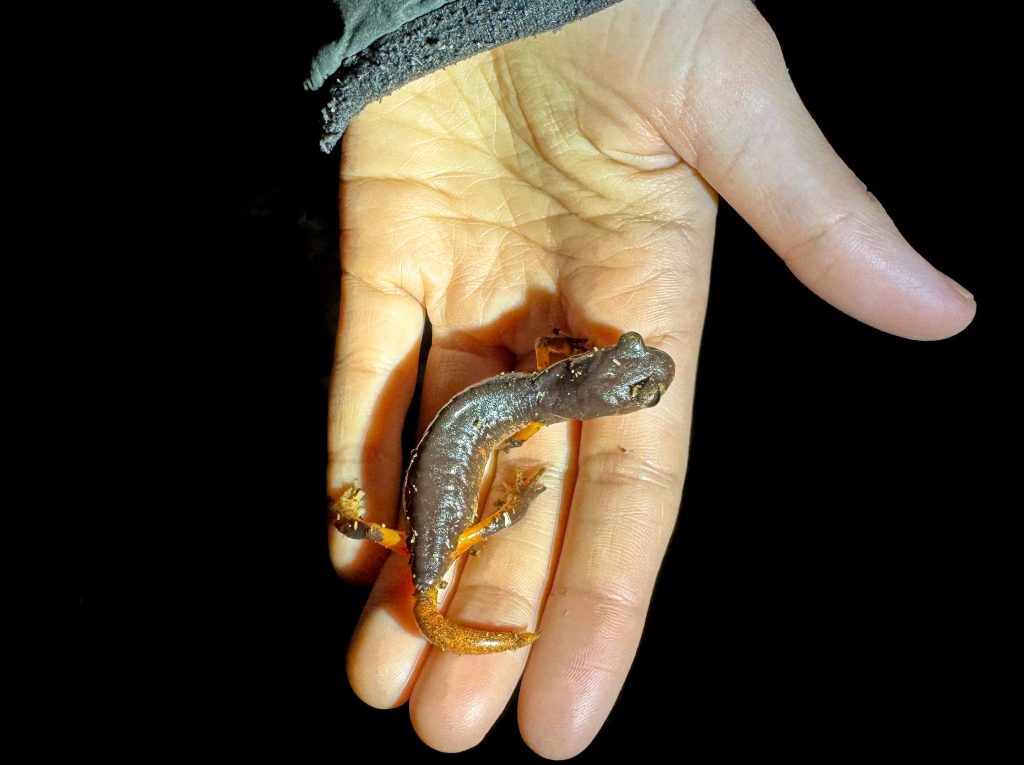
My informal advisement to differentiate the ensatinas from newts is the fact that Ensatinas look more like “gummy worms.”
To elaborate, Ensatinas feature a similar coloration distribution of that of Newts, however, their entire body has a smoother texture, as oppose to the rougher texture of the newts. Ensatinas are also smaller in size compared to the newts.
The bright orange coloration is also suggested to mimic the Newts. While Ensatinas can secrete a mucus-like toxic substance, this substance is not nearly as toxic.




Sorry, the comment form is closed at this time.