


13 May Critters of West Texas: An Incomplete compendium
Critters of West texas: an incompletely compendium
        Throughout my time in West Texas, I have encountered many species. From tiny frogs to nesting mother ducks,
I have seen my fair share of critters. I define a critter as any living animal or insect. The species in the following
list are all unique in their own ways. From distinct markings to special abilities to help them survive in the harsh
conditions of the North Central Plains. So join me as we explore and learn about each of these critters and what makes
them special!
#1 PhidIpPUS TEXANUS (texas jumping spider)
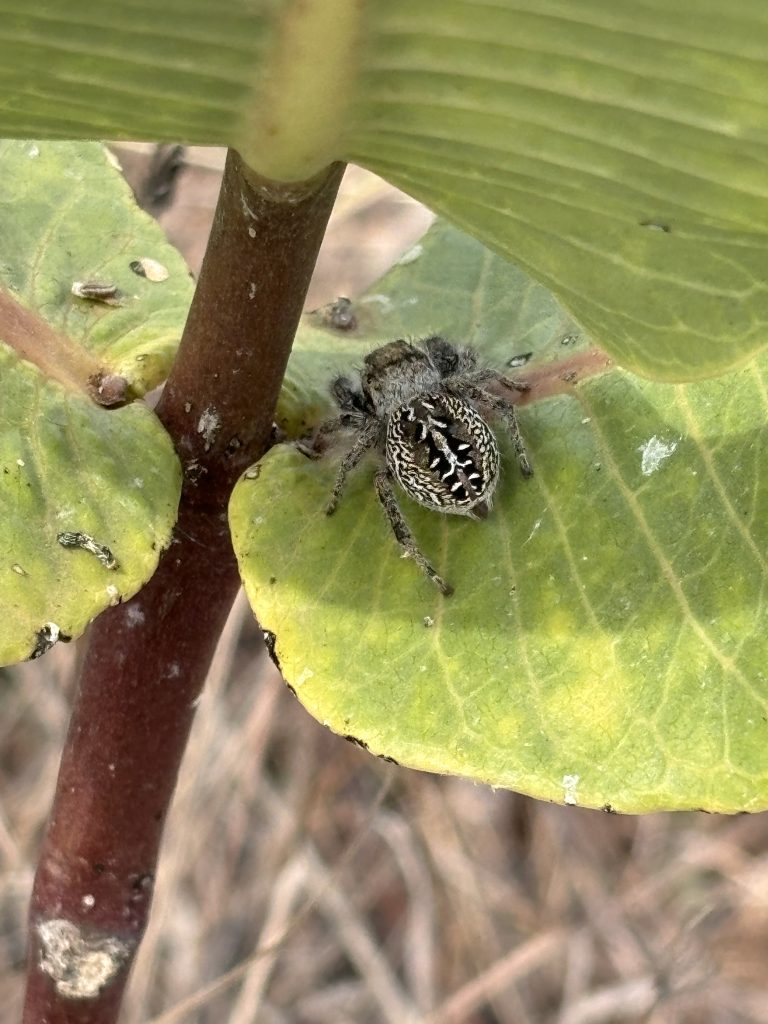
Phidippus Texanus perched on a leaf of Broadleaf Milkweed.
The Texas Jumping Spider, scientifically known as Phidippus texanus, is a species found in Texas, Mexico, and other parts of the United States. Jumping spiders are among the largest families of spiders, with over 6,000 described species worldwide. They utilize their impressive jumping abilities to hunt prey flying above them and as a means of transportation, allowing them to easily cross large distances. Unlike most other spiders, they are diurnal hunters thanks to their impressively developed vision. Their eyes are their most distinct feature, as all jumping spiders have 4 pairs of eyes. Starting with their posterior median eyes, which are not used immediately, many species make them vestigial. Next are the posterior lateral eyes, which act as motion detectors, giving jumping spiders nearly 360 degrees of vision. In addition, they have anterior lateral eyes, which have the best acuity of any of their eyes. Allowing them to see some very focused details. Finally, we have their anterior median eyes. These eyes are their main set. They act almost as binoculars, letting them see very focused detail across several wavelengths of light. Some species can even see UV light! These eyes have a cone of vision of just 2-5 degrees. All of these sets together make a very serious predator, and a very cool critter.
#2 acris blanchardi (Blanchard’s Crickeet frog)
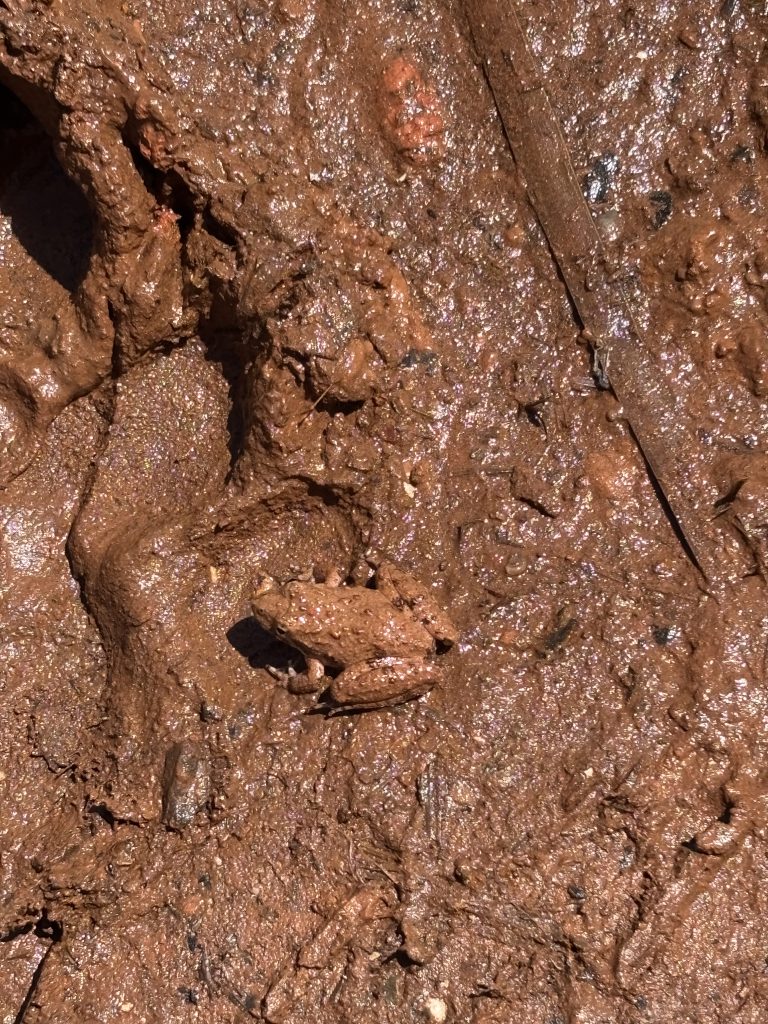
Blanchard’s Cricket Frog blends into the mud along the bank of a pond
Blanchard’s Cricket Frog is an aquatic species found across the United States, from Michigan to Texas. These frogs display a variety of colors, including brown, green, tan, and gray. They are easily identified by a triangular mark between their eyes, and their backs can range in color from red to bright green. While not federally listed as endangered, the species is considered endangered or even extinct in some parts of Wisconsin, and it is threatened in Michigan. This decline is attributed to factors such as susceptibility to disease, habitat loss, and chemical pollution in waterways.
Blanchard’s Cricket Frog has highly vascularized skin, allowing them to absorb substances quickly through their skin. Despite their name, these frogs have a very diverse diet. Although they prefer non-aquatic prey, they will consume whatever is available in their habitat, including flies, spiders, moths, butterflies, grasshoppers, and, of course, crickets.
Interestingly, each male has a distinct call, and females tend to prefer the calls of local males. This ability allows them to differentiate between the tones of frogs from their own ecosystem and those that have traveled into the area. Additionally, these frogs possess an internal compass and clock, enabling them to tell time and navigate using the sun. Their camouflage, varied diet, mating habits, and unique abilities help them adapt to a changing environment.
#3 Danaus gilippus (queen butterfly)
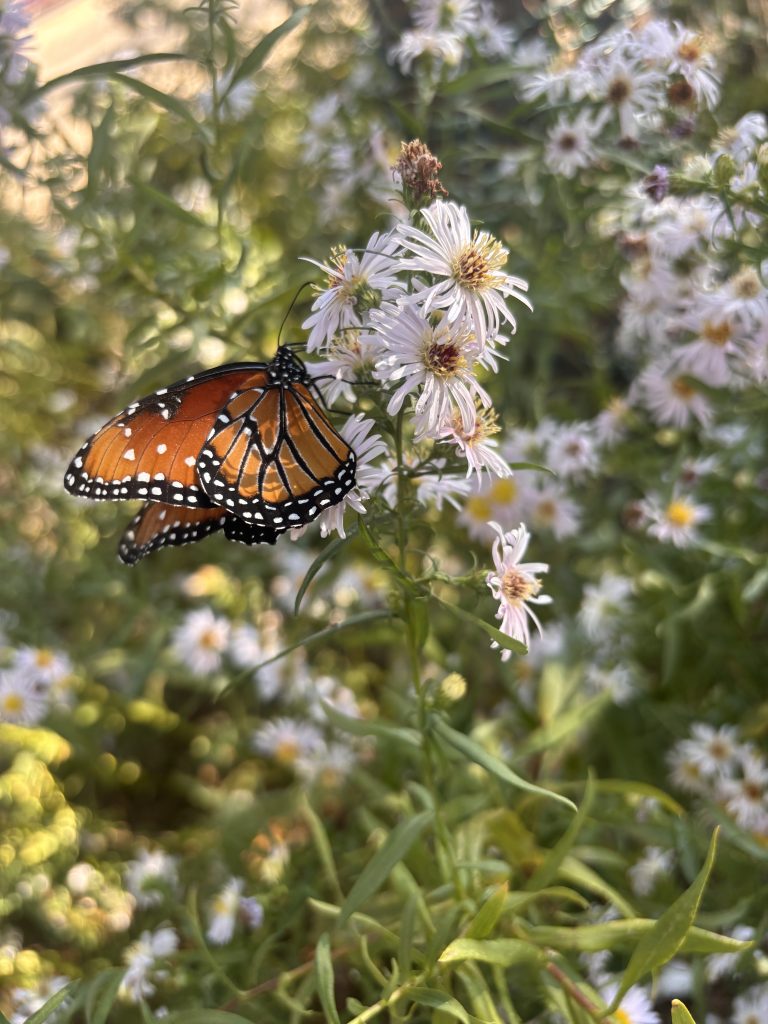
Queen Butterfly nectaring on American Asters
The queen butterfly is a beautiful insect with deep orange-brown wings and white spots that make it easy to recognize. It’s closely related to the monarch and plays an important role in nature by helping pollinate flowers and serving as part of the food chain. One special thing about the queen butterfly is that its caterpillars feed on milkweed, which makes them taste bad to many predators, helping them stay safe. Though some studies have shown the Queen is less chemically poisonous due to their diet as adults. Unlike Monarchs and Viceroys who solely feed on flowering plants, Danaus Gilippus will feed on rotting fruit, decaying vegetation, flowering plants, and even animal feces. Due to this, the studies suggest the Queen’s main defense is blending in with Monarchs and Viceroys to avoid predation. Thiis makes Queen butterflies truly unique. Seeing queen butterflies in an area is a good sign that the environment is healthy and full of native plants. And that makes Danaus Gilippus a pretty cool critter.
#4 Argiope trifasciata (Banded Garden Spider)
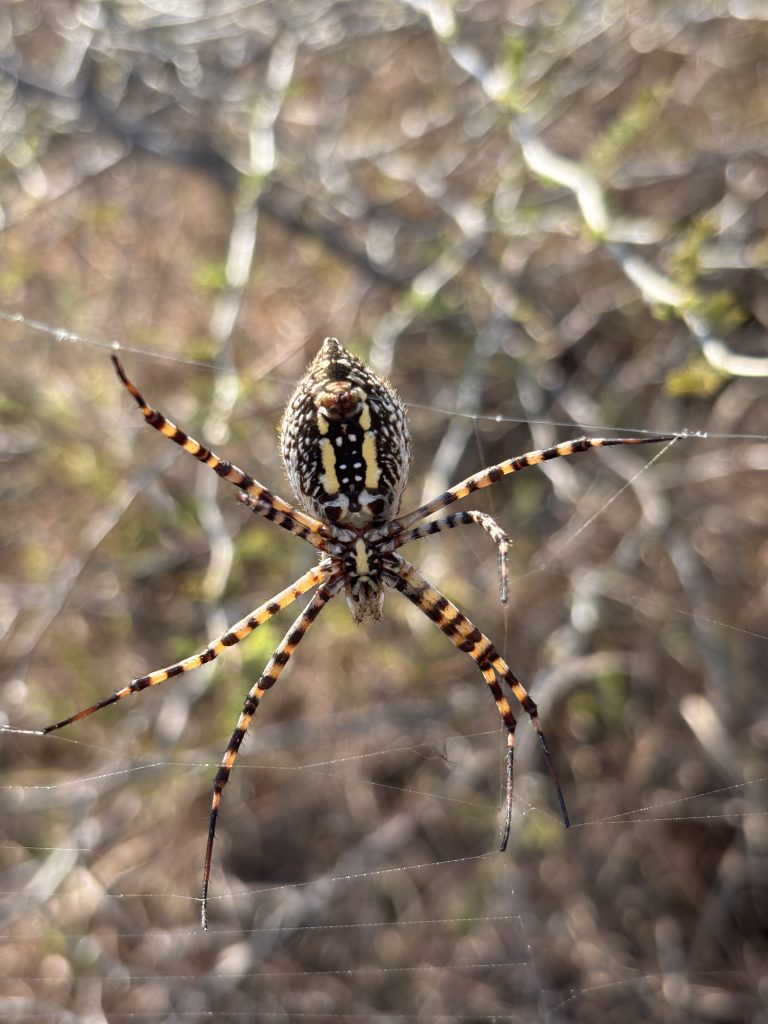
Banded Garden Spider perched on it’s web.
The banded garden spider is a striking creature known for its black, white, and yellow-striped body and long, banded legs. Commonly found in gardens, fields, and tall grasses, this spider spins large, circular webs that are often stretched between plants or grasses. One of its most unique features is the zigzag pattern, called a stabilimentum, that it weaves into the center of its web—believed to either reflect light to attract insects, help stabilize the web, or even warn birds away. As a skilled hunter, the banded garden spider plays a crucial role in the ecosystem by helping control insect populations, especially pests like flies, grasshoppers, and mosquitoes. This natural form of pest control supports plant health and reduces the need for chemical pesticides. Although its appearance might seem intimidating, it’s completely harmless to humans and prefers to stay out of the way. By quietly doing its job, the banded garden spider contributes to a healthy balance in nature and is a welcome helper in any garden or natural space. For these reasons the Banded Garden spider is a pretty neat critter of West Texas.
#5 Danaus plexippus (Monarch Butterfly)
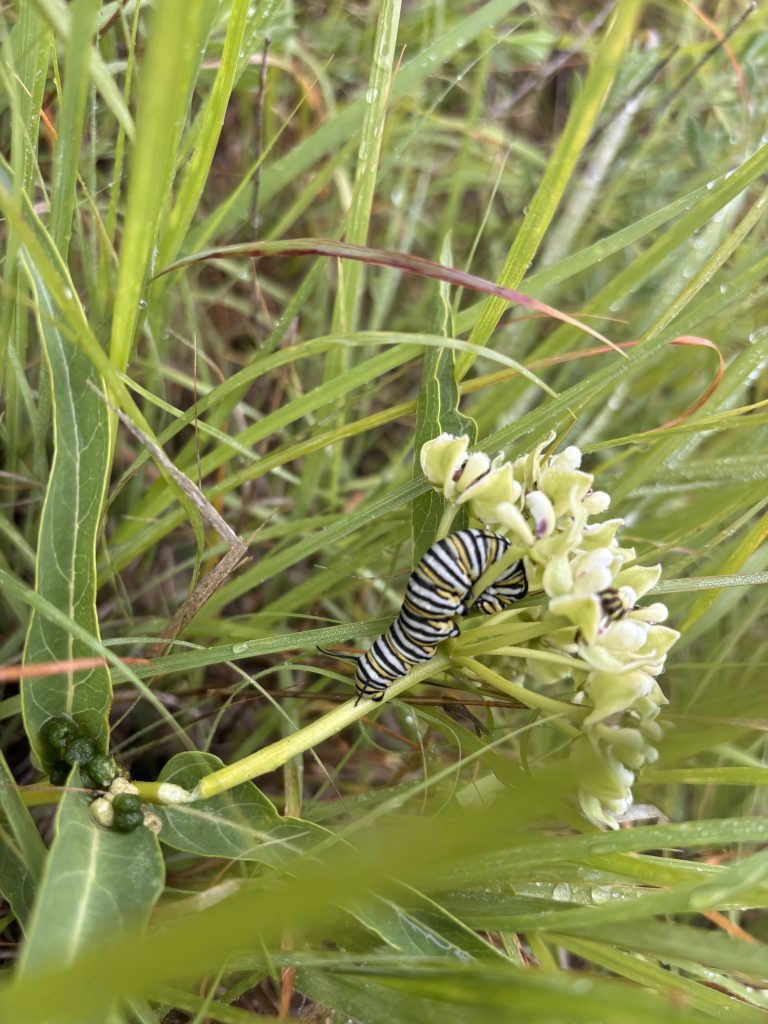
Monarch Larva hiding from the rain under the flowers of an Antelopehorn Milkweed.
The Monarch, much like the Queen, is a milkweed butterfly. Monarchs have a unique ability to bring people together. Across cultures in the U.S, the Monarch symbolizes growth, change, resilience, and even loved ones who have passed on. Danaus Plexippus does have a natural chemical deterrent to predators. Through their feeding solely on milkweed, the monarch larvae are very unappetizing to birds and other predators. After they have exited their chrysalis, where they metamorphose and become a butterfly, the adults will feed and nectar on almost any flowering plants. However, they only lay eggs on milkweed. In addition, the adults who overwinter will only overwinter in very specific conditions. Due to this, the Monarchs are very susceptible to habitat loss. Through their migration north and south, Texas happens to be the butterflies’ first stop in the US. This makes West Texas super important to the Monarch. Interestingly, the Monarchs have two distinct populations. There is one species between Mexico and the US, and there is an independent population in California. Though some interbreeding has been observed through the use of trackers, these two populations are quite distinct. The Monarchs are truly a very special species to many people across the U.S, and almost everyone has a story to connect to them. If they are important to you, I highly encourage you to leave a comment on the docket to enter Monarchs as an endangered species. The deadline for the comment period ends on May 19. To enter your comment, you can use this link https://www.regulations.gov/docket/FWS-R3-ES-2024-0137
Sorry, the comment form is closed at this time.