


02 Jul On the Ground at Indiana Dunes: Evaluating Sites for World Migratory Bird Day Activities
Hello all! Karli here!
For this blog entry, I’ll discuss the facility and trail assessments that Adelaide and I completed during our first month on-site.
As you may know, one of the main goals of this internship program is to organize a World Migratory Bird Day event and invite local organizations to enjoy programming at Indiana Dunes National Park.
But before organizing the event, we had to identify a site for our activities. The Paul H. Douglas Center for Environmental Education and the connected Douglas Loop Trail almost immediately seemed like the best option. Not only does it have robust infrastructure for visitors (including restrooms, classrooms, and an auditorium for programming), but the loop trail behind the center is paved. So many bird species live in the Black oak trees that decorate the pathway.
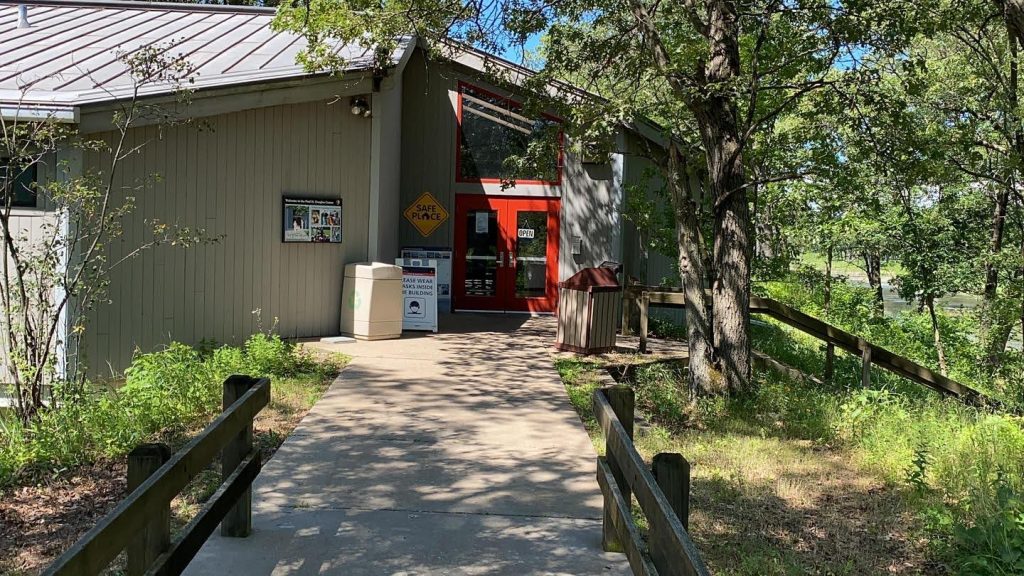
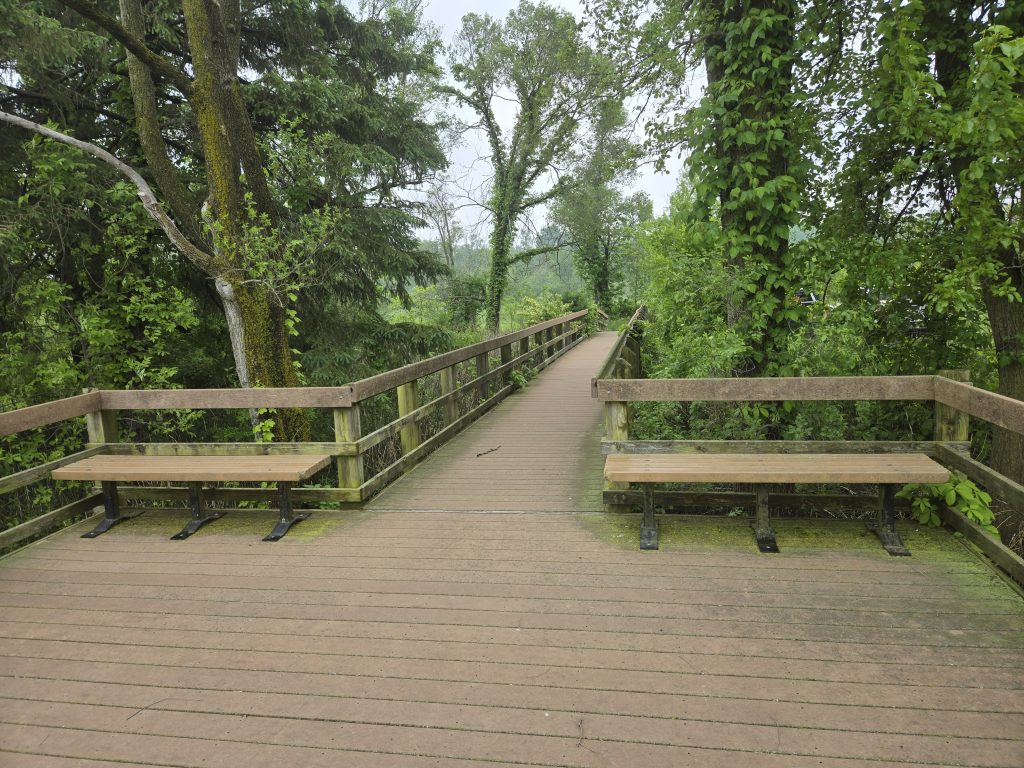
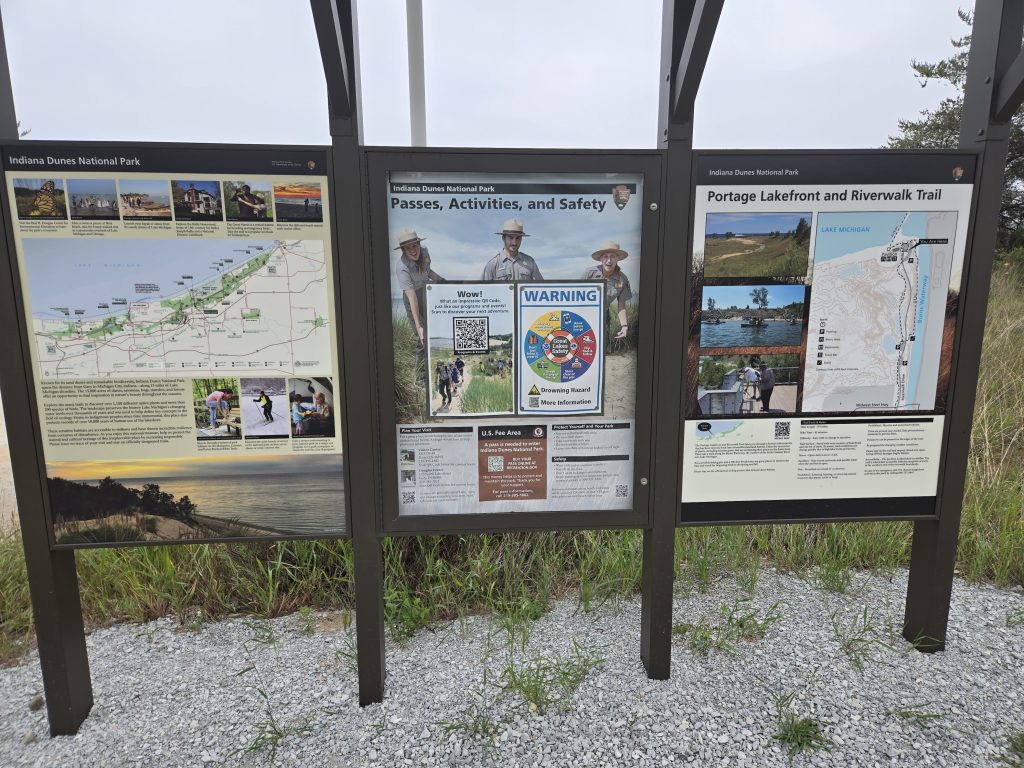
So, we targeted our assessment efforts to this location and a few others—the Portage Lakefront/Riverwalk Trail and the Great Marsh Trail—as potential back-up sites. These assessments included taking many measurements and pictures to identify potential issues and then strategic thinking about how to overcome them.
Still, I knew from my training that the pathway to access is not always straightforward. Every logistical factor must be considered when planning an event like this, including how to access the site in the first place. As interns, Adelaide and I have access to parking passes that allow us to visit any location in the park, but our event participants will not receive the same luxury.
While I have become familiar enough with Indiana Dunes’ policies to know that passes are available online, it also seemed likely that some participants might visit the Indiana Dunes Visitor Center to purchase the passes in person or even to request other information about the park. This rang especially true given the availability of the Access Pass, which provides disabled individuals lifelong access to any National Park free of charge.
Therefore, it seemed like an assessment of the Visitor Center facilities was also in order, despite it not being a requirement for the internship. And honestly, it was a great learning opportunity. For one, the Visitor Center has a decent amount of interpretive exhibits, including my favorite, a mural showing the different ecosystems within the park, habitat descriptions, and tactile displays.
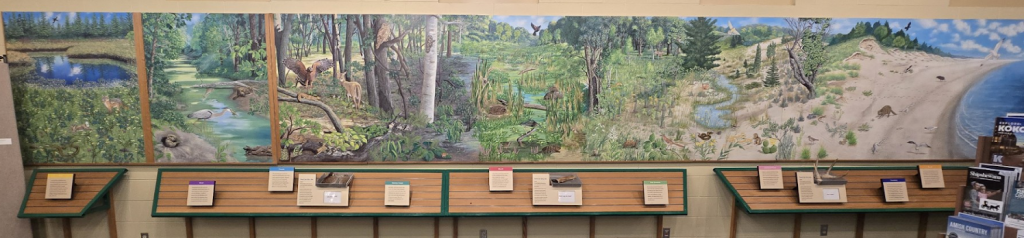
While it was essential to examine the accessibility of different birding locations, a closer look at the center’s Exhibit Room gave us ideas about how our materials—a crucial part of programming—could be more inclusive to people with various needs. It also gave us insights about the typical visitor experience, which tends to begin at the Visitor Center.
Now, Adelaide and I are in the process of planning our WMBD pilot event, creating activity plans, and conducting outreach with local organizations. We intend to conduct the pilot event on July 6, so my next blog entry will discuss how that goes and how we will use those insights for planning our main event on July 19.
Talk to you soon,
Karli
Joanna Mishtal
Posted at 17:21h, 07 JulyFantastic work Karli! Super important. best of luck!
Garret Wiseth
Posted at 17:42h, 10 JulyWonderful blog Karli🤙 keep it up!