


04 Aug Monarch Multi-egg Mystery
When surveying for monarchs and milkweed last week, we checked on our milkweed garden and saw 41 eggs and 4 first instars (Danaus plexippus) on just 8 milkweed (Asclepias fascicularis) plants. These were not very large plants, but these are the same plants that were planted earlier this season and had already hosted around 10 monarch larvae. Compared to other narrowleaf milkweed (A. fascicularis) plants that we had seen on base, these plants had grown back with denser arrangements of leaves especially around their new growths. However, we had not seen nearly as many eggs on any other milkweed plants on base. Our maximum number of monarchs that we saw on one plant that day was 8 eggs and 2 first instars. Below are some of the pictures I took that day that show how densely the eggs were laid next to each other.

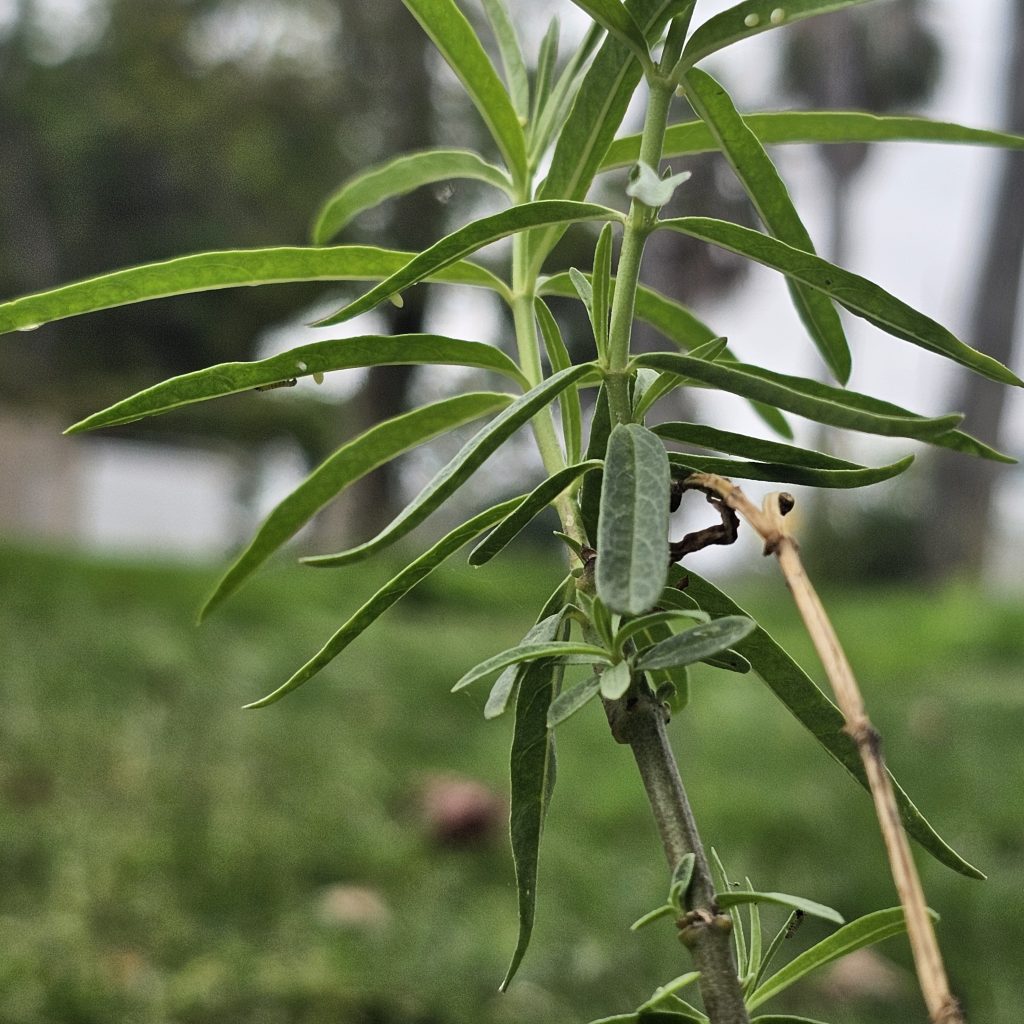
The next day we surveyed a site that we had previously seen lots of narrowleaf milkweed and some adult monarchs at about a month ago. We ended up running out of time trying to count all of the narrowleaf milkweed at this site, but we saw 15 eggs, 4 second instars, 1 third instar, 1 fifth instar, and 2 adults flying through the plot. Again, we saw multiple eggs on one plants laid very close to each other. However, at this site, the adult monarchs had hundreds of other plants to choose from without any eggs or larvae on. These sites are almost 6km away from each other, too. Below is the stem with 3 eggs that we found that day.
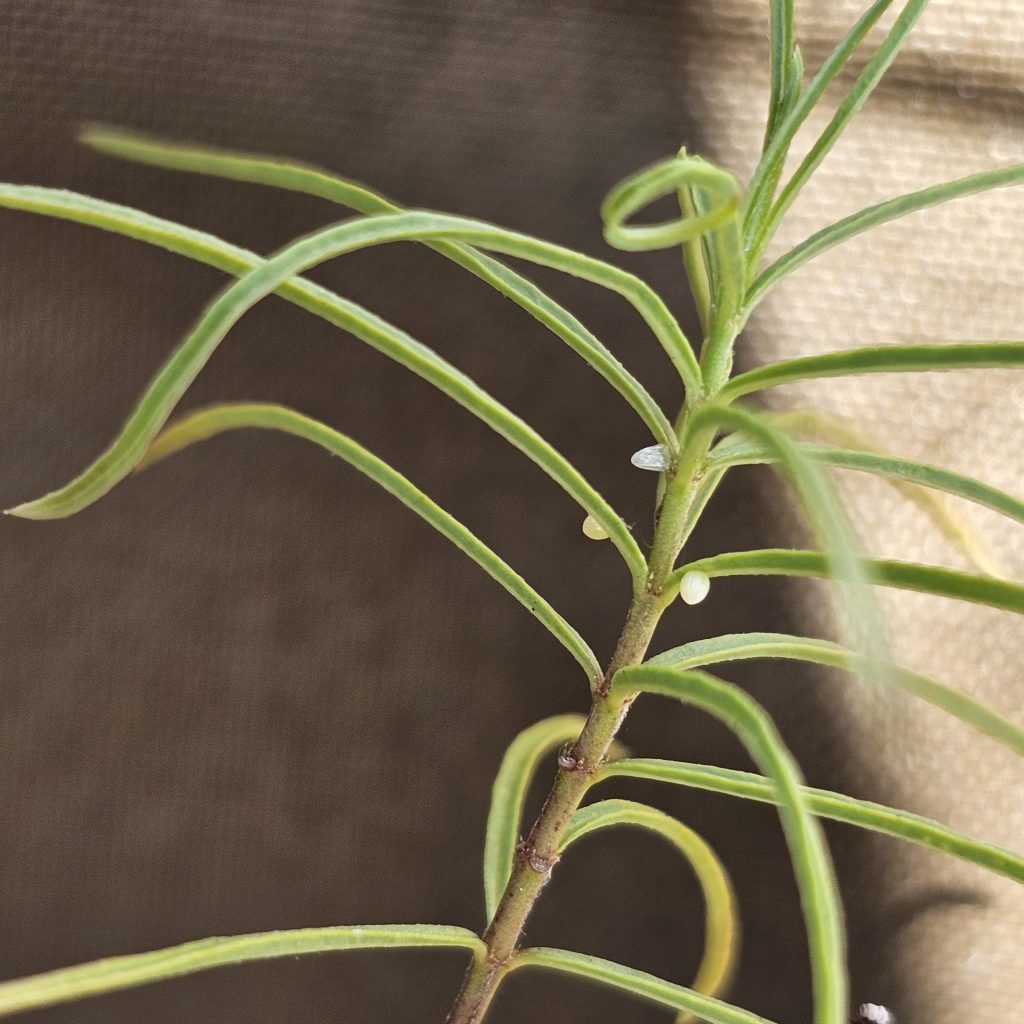
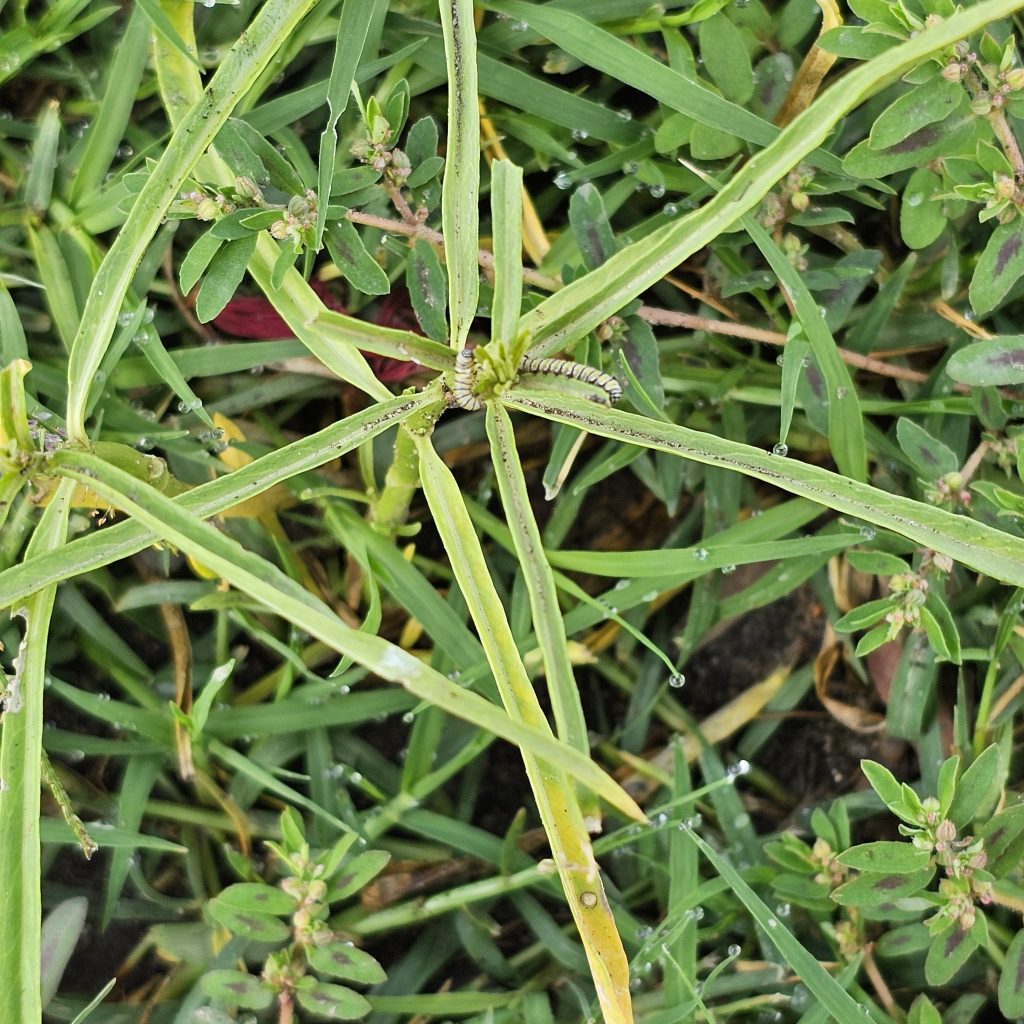
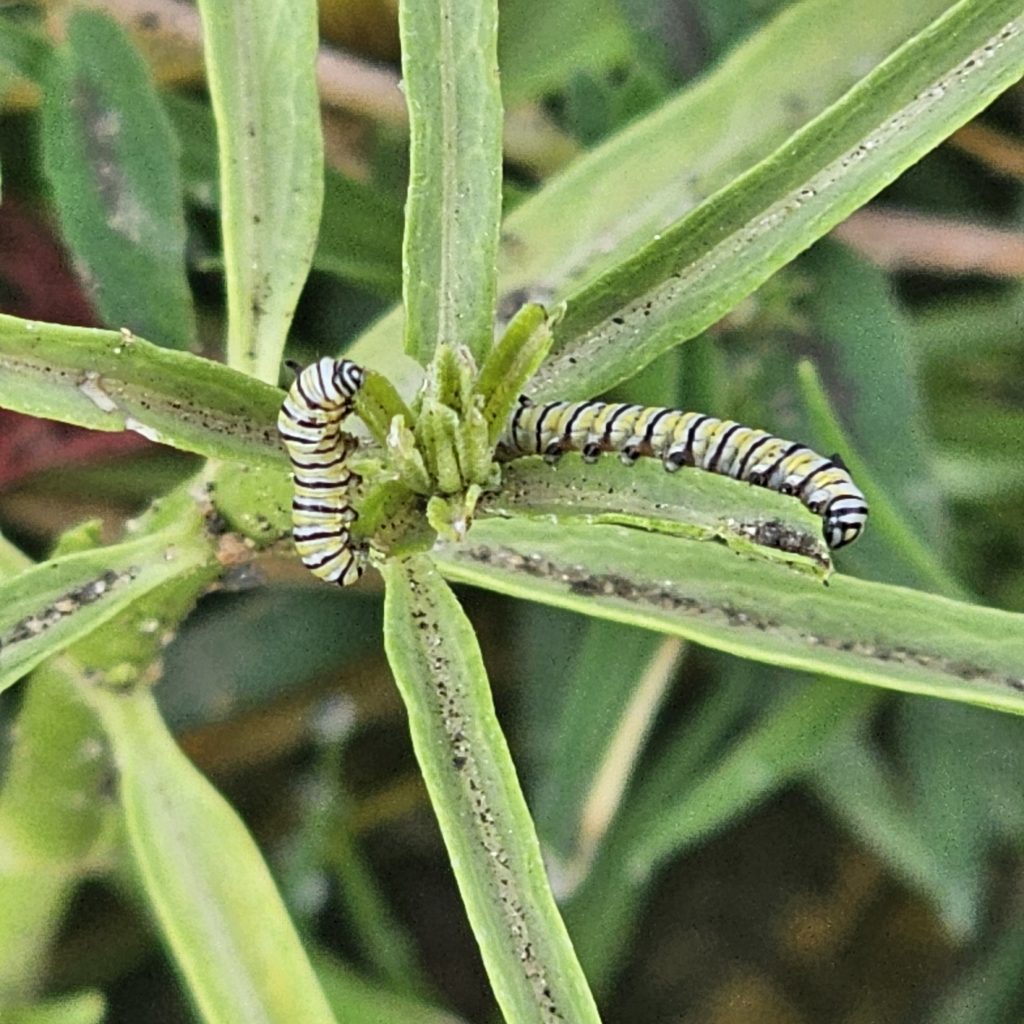
When we returned to the milkweed garden Wednesday (2 days after counting over 40 monarchs) we ended up counting even more eggs. It seemed as though many of the eggs we counted Monday had started to hatch since we counted 33 eggs now, but had 27 first instars. Returning to the milkweed garden the next Monday we started to see more larvae, but it looked like not all of the eggs made it. We counted 1 fourth instar, 16 third instars, and 20 second instars for a total of 37 larvae on 9 plants. Below is a photo of a 4th instar just above a 2nd instar, and I like how this image shows how much growing these caterpillars do in about one week. They will continue to grow even larger before setting up their chrysalises that we will be on the lookout again for.

Thankfully we were able to buy 6 more narrowleaf milkweed plants to put in the garden. We are hoping the extra milkweed will provide more places for eggs, or the larvae will be able to move off of the already crowded plants. So wish our little friends luck! Below is the photo of one of the plants we received that already had a fourth instar on it. The other photo is of the milkweed garden. We were able to mark the edges of the garden to hopefully prevent any mowing and weeding since it is next to a developed area. The pink flags (and some of the yellow flags since we ran out of pink) mark the milkweed plants. After we recounted everything, we saw that we now have 16 plants. Of those 16, 12 of the plants had monarchs on them.
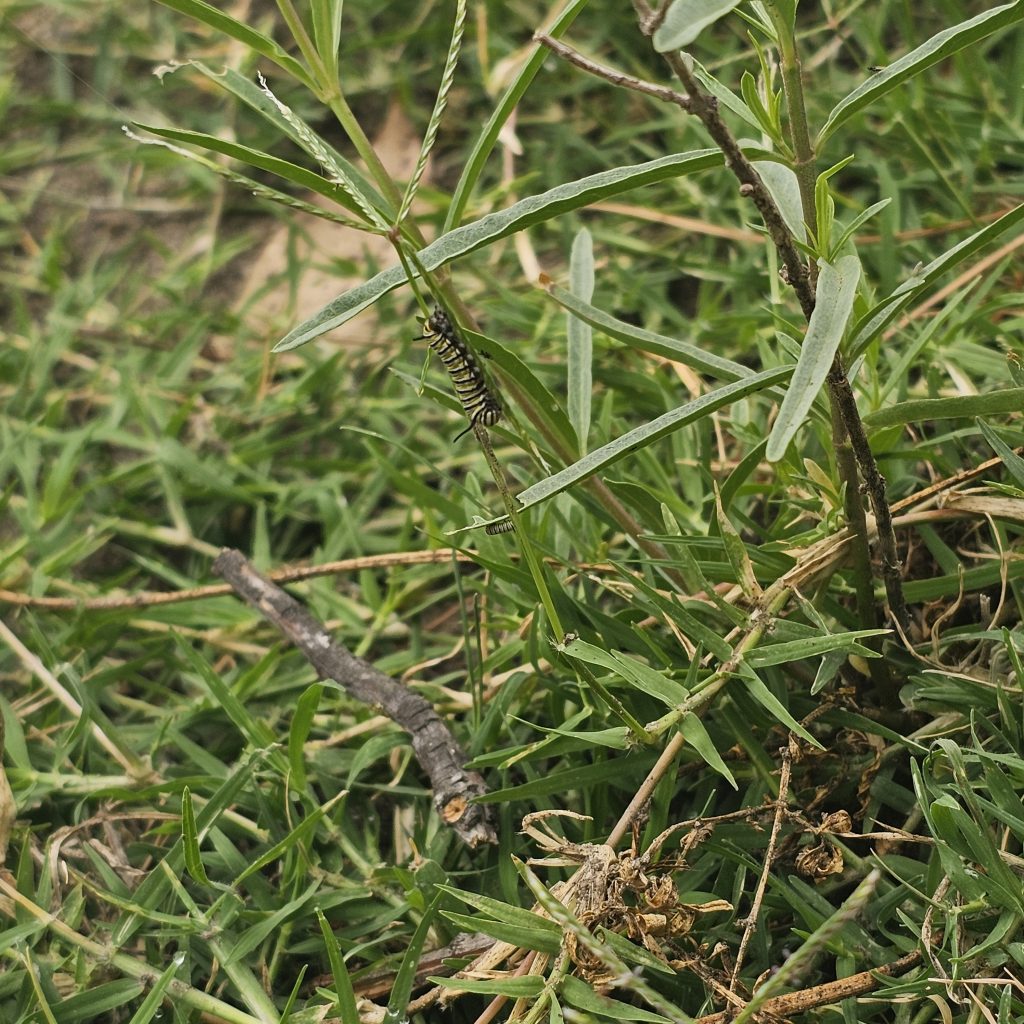
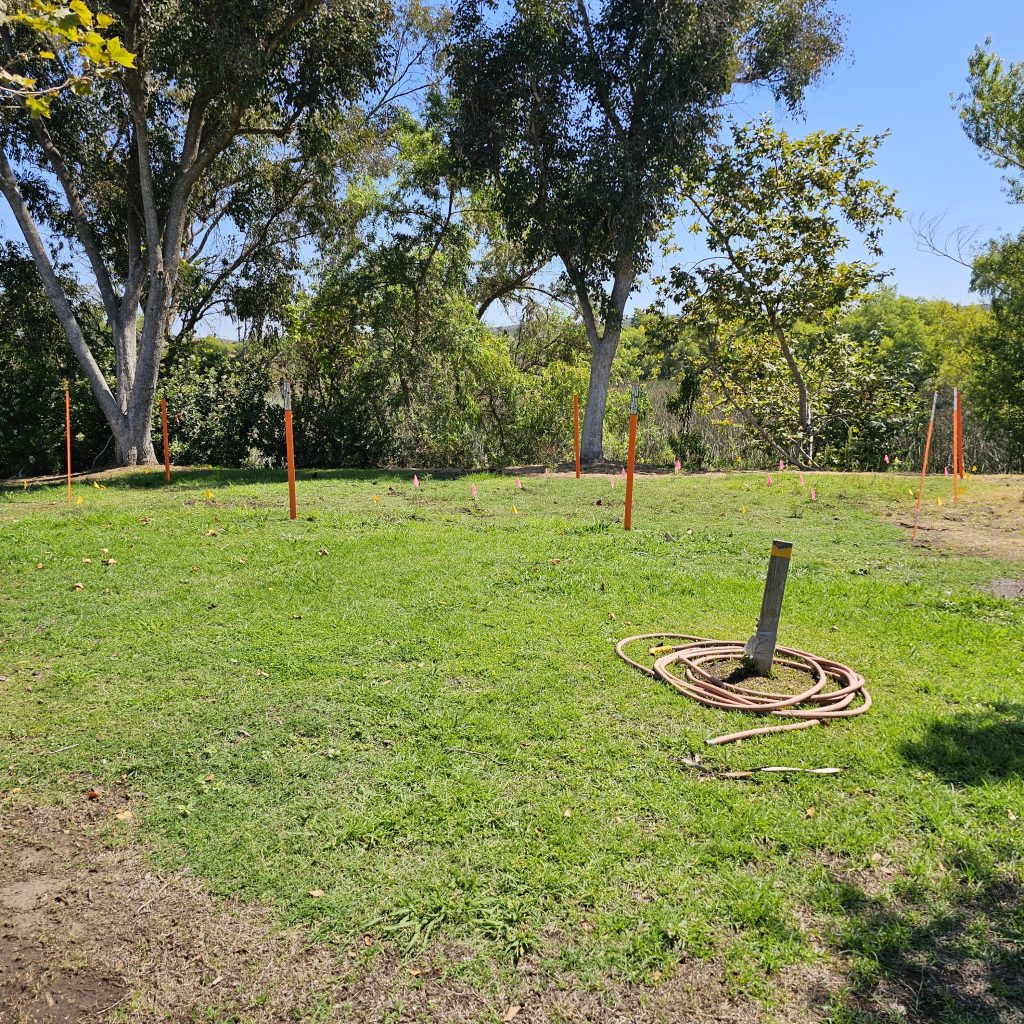
Coming back 2 days later, we made sure the new milkweed was doing well and got a full count of the monarchs. We counted 5 fourth instars, 14 third instars, 10 second instars, 2 first instars, and 2 eggs for 31 total larvae and 2 eggs. On one plant alone we had 9 larvae. If anyone else has seen similar numbers of monarchs in such a small area or numbers of larvae on a single plants I would love to hear more about it! We are certainly not seeing anything else like it here in southern California, but hopefully the rest of the field season will continue to be just as interesting.
Sorry, the comment form is closed at this time.