


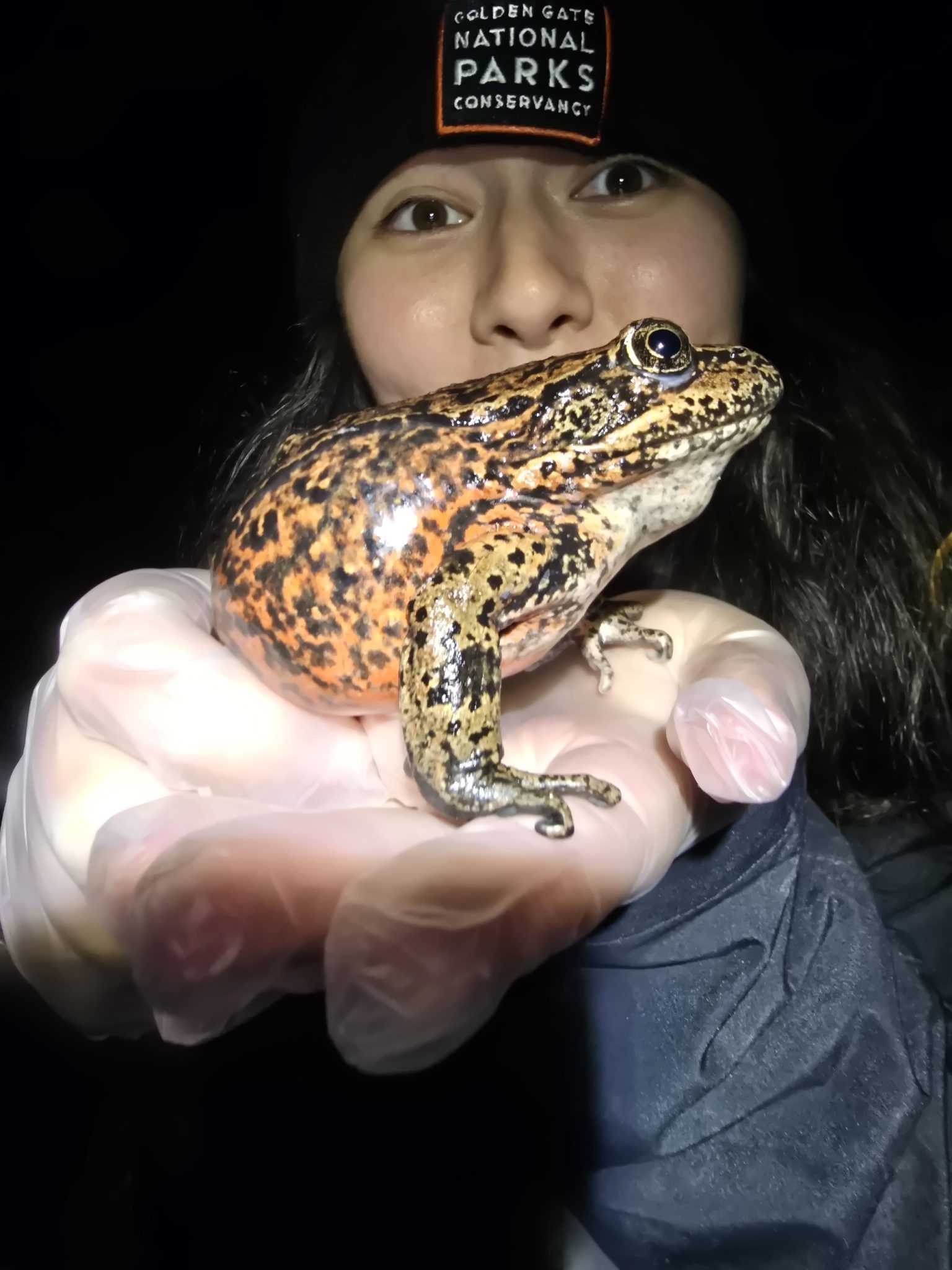
11 Aug Getting Up to Some Froggy Business
the star of the show: Rana aurora draytonii
In the Golden Gate National Recreation Area there are a handful of different populations of California red legged frogs (Rana aurora draytonii) that we monitor. In the fall, this mostly consists of looking for egg masses laid by these frogs to get a population estimate. This year there was an exciting opportunity to get more hands on experience with this frog species. My supervisor Darren Fong wanted to do a genetic study on all of our different populations of California red legged frogs (CRLF) in the park. This meant that we would be going out to each of our sites to try and capture CRLFs to take a DNA sample. The goal for each site was to capture 30 different individuals, which was a pretty daunting number!
During the fall, the adult CRLFs will gather at night after a rain event to find a mate. Because of this behavior, our plan was to go out at night hoping to have a higher chance of spotting the frogs and catching them. At night, we used flashlights to look for their eyeshine and when we found them, we would keep the flashlight on them to temporarily blind them to sneak up and catch them with a dipnet or our hands. These nights had my adrenaline pumping when we were sneaking up and trying to catch these elusive frogs! After catching a frog we would ensure it was a California red legged frog, place it in a Ziplock bag with a unique ID to help keep track of each individual to prevent cross contamination of the DNA samples.
The Toe Snatcher...
An unlikely title, but one I have earned while working on this project. The most effective way for us to take DNA samples from our frogs is to take a clipping of one of their toes. By consistently taking the same toe on every frog we catch, it also helps us distinguish previously caught individuals to new frogs. In our protocol we always take the posterior left 4th toe on each CRLF we catch. In the picture on the right, you can see that the 4th toe is the longest one on the foot. We only clip a few millimeters worth of toe to ensure that the fitness of the frogs are not effected in any way. After a sample is taken, it is placed into a labeled tube with ethanol to preserve the sample until we are ready to send them off for analysis.
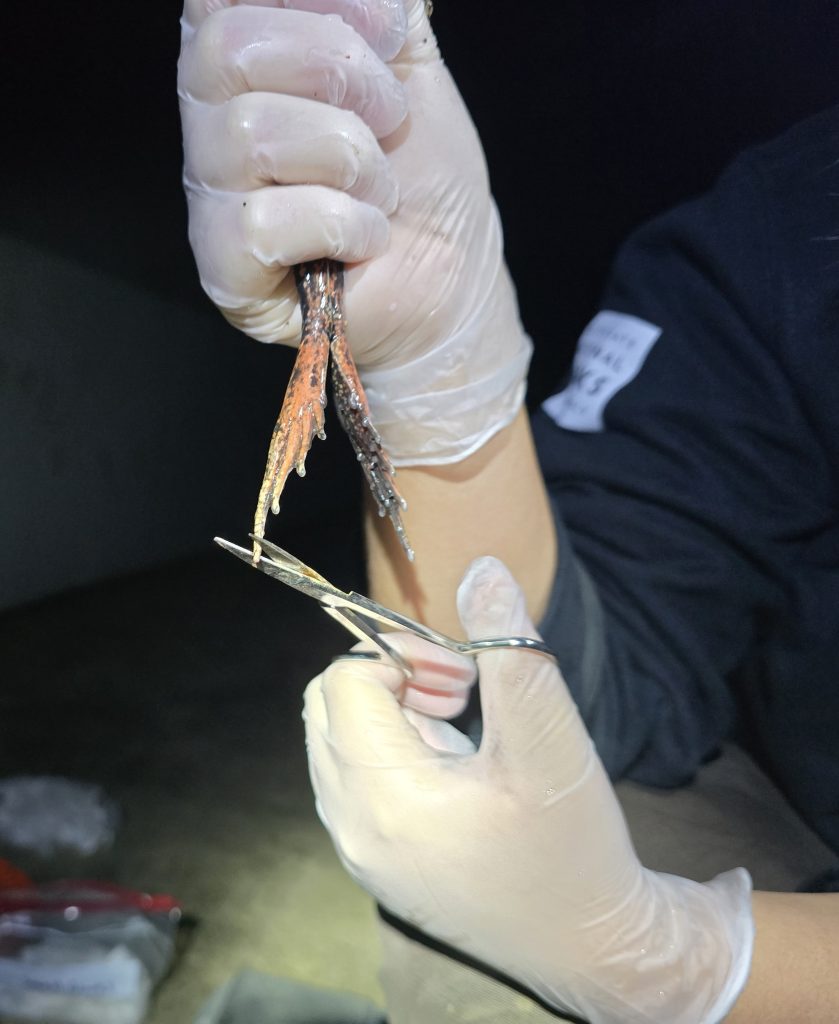
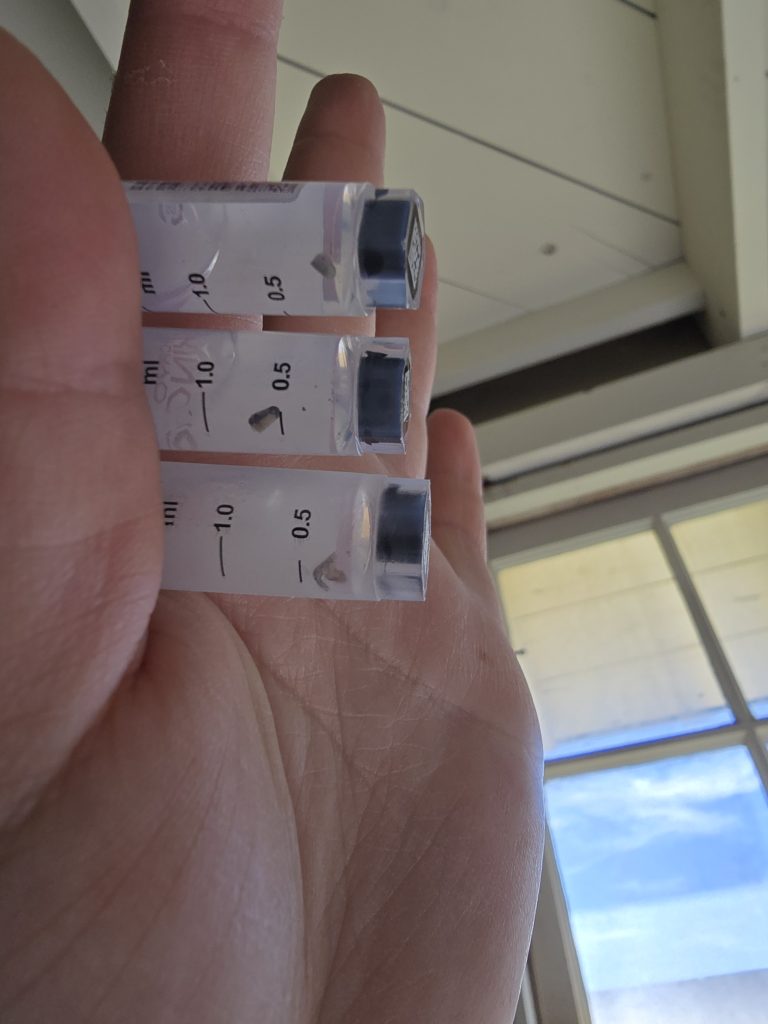
The Entire process
While we have the frogs captured, we record different information to help understand how the individuals in each population are growing. The first step is to weigh the frog while still in the Ziplock bag so it doesn’t hop away and escape. With a clean pair of gloves wetted with water, we will then take the frog out of the bag and weigh the empty Ziplock to subtract it from the first weight to get the real weight of the frog. To determine the sex of an individual, we can look at the thumbs for some specific characteristics. Males will have a large pad called a “nuptial pad” on their thumbs and beefy arms, which are used to help hold onto females while they mate. The females will not have a pronounced pad on their thumbs and their arms will be slimmer. After determining the sex, we will measure the snout to vent length of the frog. When all the measurements are taken we will then clip the toe of the individual and then place them back into their bag to release back into the pond where we originally caught them.
Sorry, the comment form is closed at this time.