


19 Aug My Project: Bat Intern in Action!
Hello readers! Today I am finally going to discuss what my whole internship is about! Eavesdropping on bats. By recording bat echolocation calls we can study where bats are and when. Read on to get a mildly in-depth guide to bat acoustics.
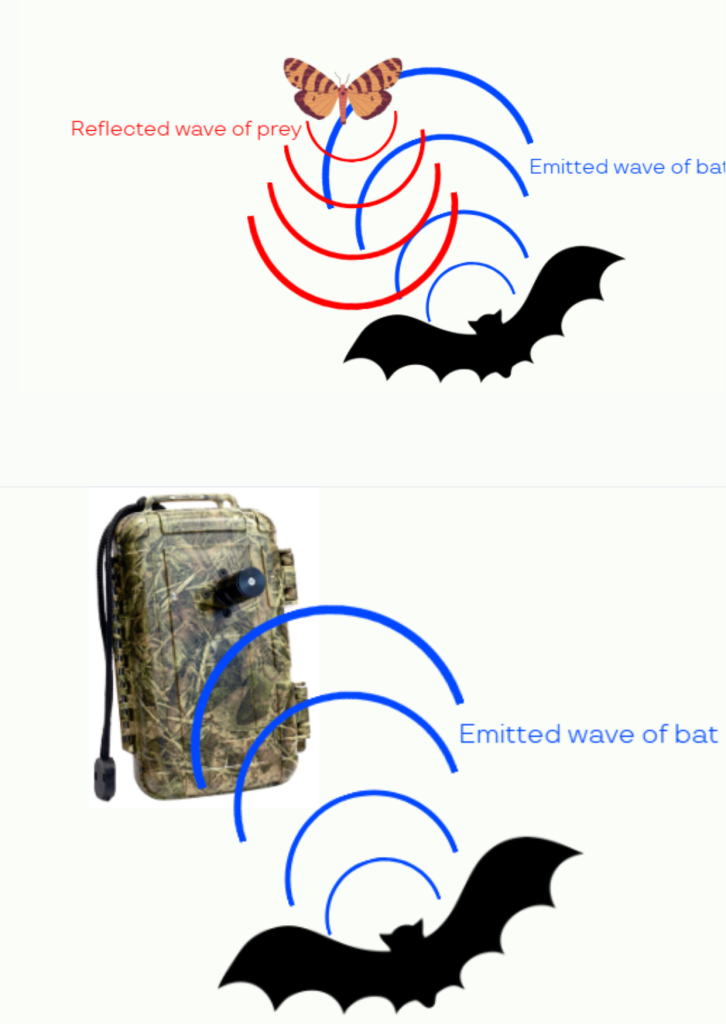
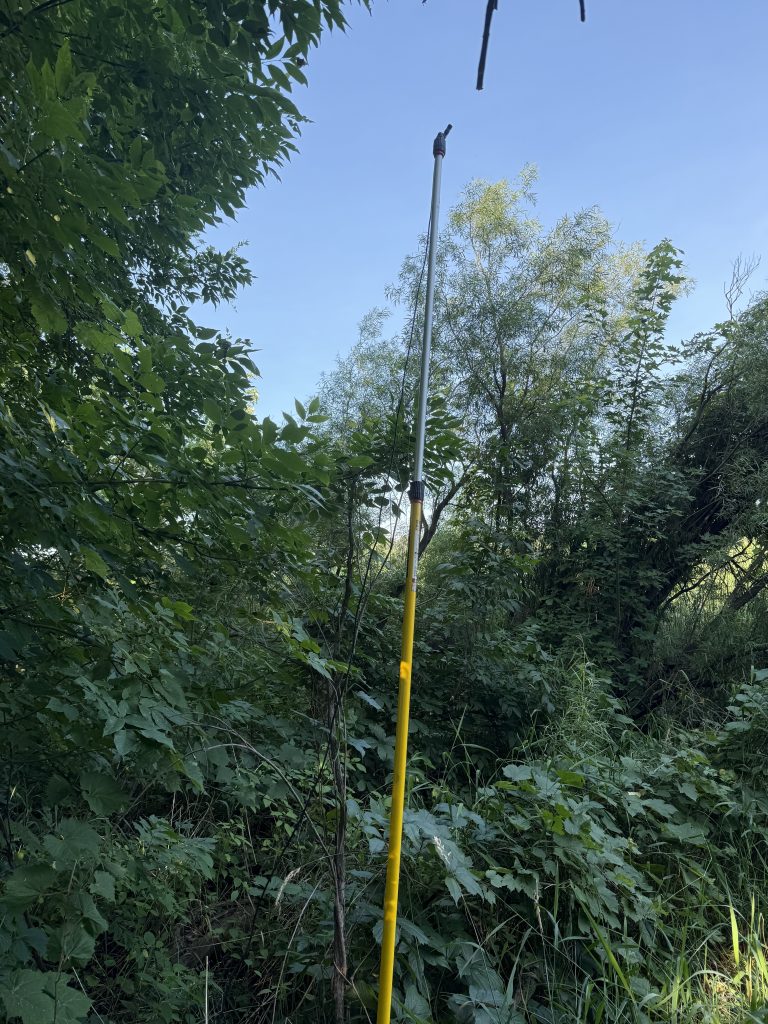
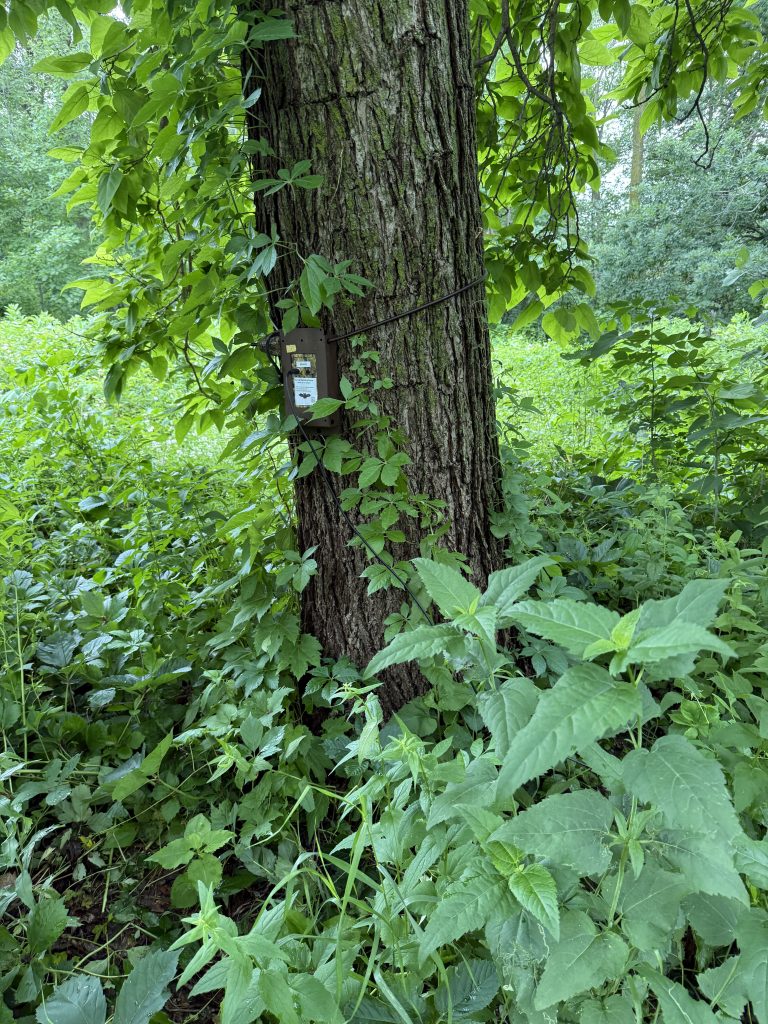
So, a quick crash course on bat detectors. First, I’m sure we all know that bats make ultrasonic calls generally inaudible to human ears for social reasons, navigation, and hunting. These are the sounds I want to record to figure out what species are where. This summer I used an Anabat Swift bat detector, which is programmed to trigger on when a sound is made within the range of a Minnesota bat call. Bat call frequency ranges by species so it’s important to specify which bats you’re looking to record. An ultrasonic microphone is connected to the detector and raised up as high as possible and away from any clutter. The placement of the microphone is super important because you have to target where bats will be flying/feeding. All night the detector will record thousands of sound files, and they aren’t necessarily all bat calls either. I will attach a picture below to what the set detector and mics look like.
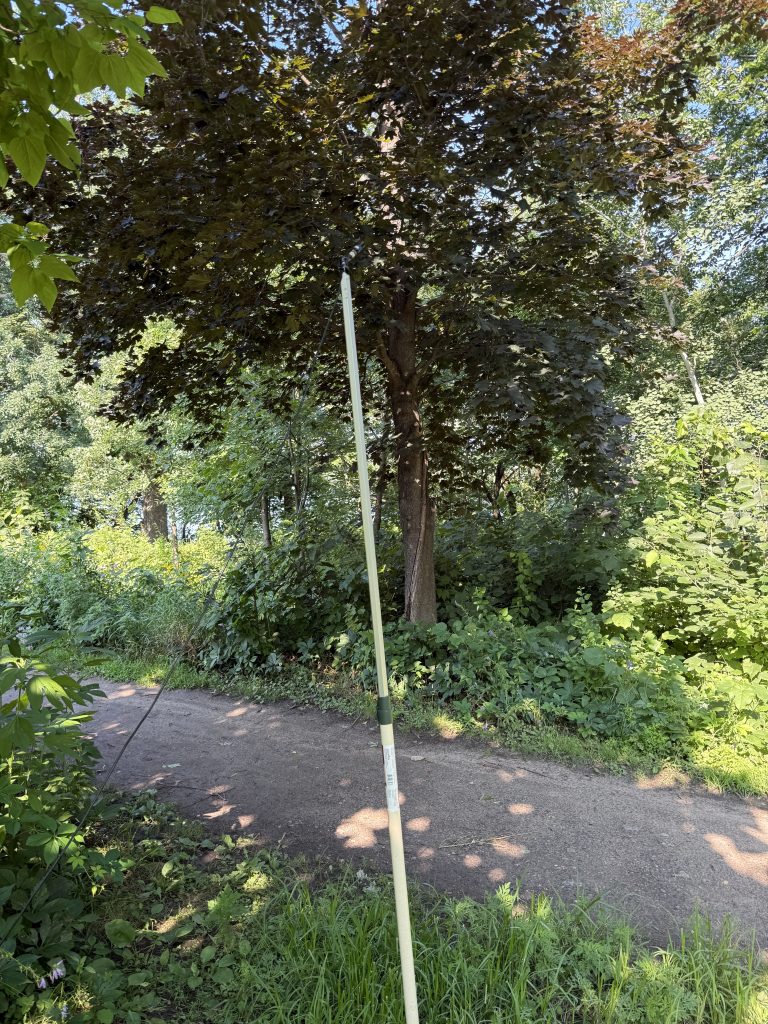
Onto my project. I am continuing the Minneapolis Parks Bat Acoustics Project that was started by my supervisor, along with others at the Fish and Wildlife Service and the MN DNR. A lot of bat acoustic data is collected in places where most people expect bats, in the woods, near caves, and in more remote locations. This project investigates bat activity in more urban green spaces, specifically in parks (and one golf course) in Minneapolis, Minnesota.
There were two parts to data collection in this project: passive stationary detectors and mobile detecting. First, passive detectors, which go out twice a year at each of the four parks and stay out for four nights. Then there is a mobile route that runs past these stationary locations, and we run that twice during each stationary survey. We survey twice in the summer season, both before and after the bat pups become volant (or can fly).
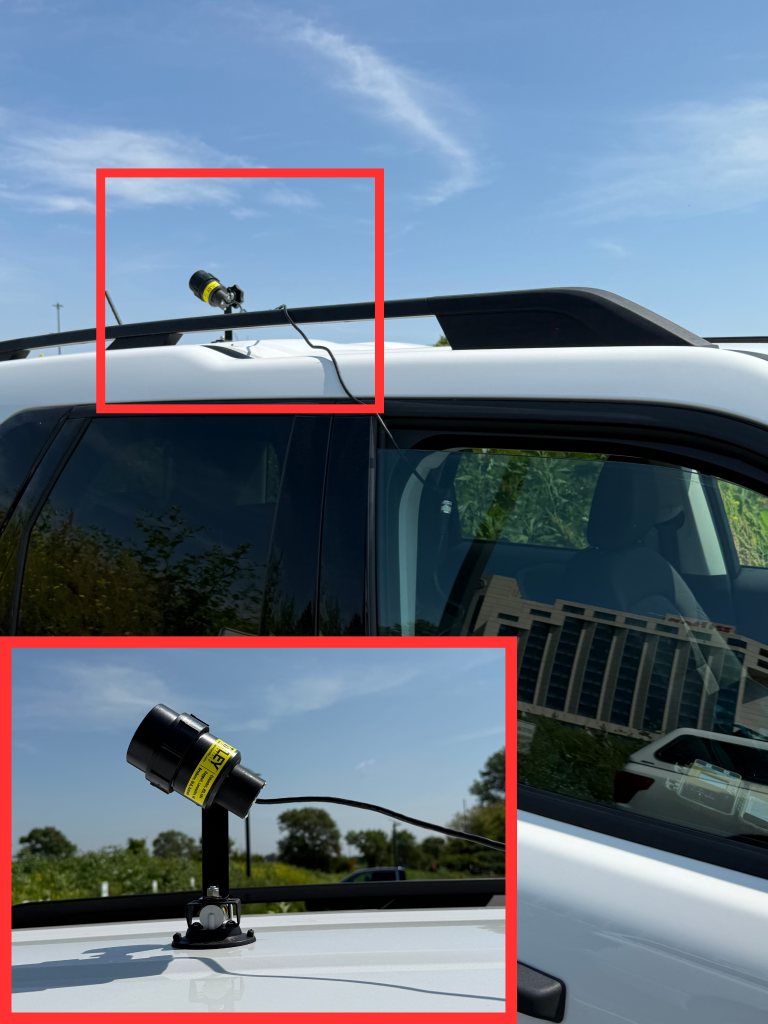
For the mobile route, we use the same detectors with a different microphone suctioned to the top of my car to collect live calls late at night along a 13-mile route in the area. Everyone endearingly calls this process “driving the Batmobile” which makes the nerdy side of me very happy. The mobile route yielded different results than the stationary detectors, which is super interesting.
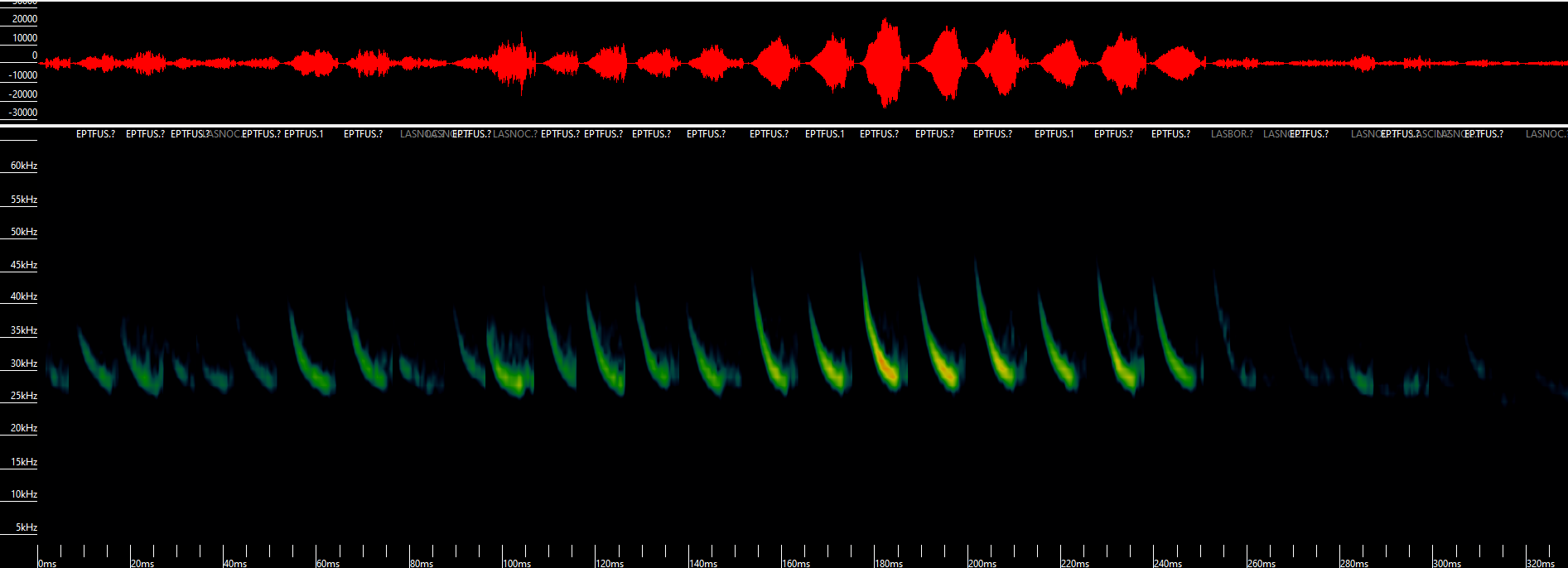
These raw sound files get sorted by a wilderness acoustic software program that automatically identifies the calls by comparing them to a database of each species. While not foolproof, this program can within a certain level of confidence sort the calls. While I would love to vet the call files manually I lack both the experience and time needed to go through thousands of calls, so the program is neat! If I were going to go about manually identifying calls, I would focus on the frequency range, slope, and duration, as that differentiates between species. But vetting is super tricky and best left to the experts (NOT ME!).
The results of the surveys were so exciting! I found seven of the eight bat species at the sites, including the proposed to be federally listed endangered tricolored bat! I plan on making an entire blog just about the results, as going through the data has been my favorite activity all summer.
This experience was so amazing, and I am so grateful I have been here from start to finish for this summer’s bat acoustic surveys. Believe it or not, I have even more data to go through, so that’s all for now.
Talk Soon!
Grace
Sorry, the comment form is closed at this time.