


28 Aug The Buzz on Outreach
Outreach is an important part of conservation and pops up multiple times in the rusty patched bumble bee recovery plan. A recovery plan is written when a species is listed as endangered and outlines the steps that need to be taken to secure the survival of the species and eventually delist it. For the rusty patched bumble bee, outreach aims to educate everyone from beekeepers to the agricultural community to the general public about the threats facing the species and the resources they require. While The Rusty Patched Bumble Bee Buzz will provide annual updates on research and policy, there are tons of other ways to connect with people on the importance of rusty patched bumble bees and bumble bees in general. Here are two examples of bumble bee outreach I’ve recently been a part of.
Pollinator Party
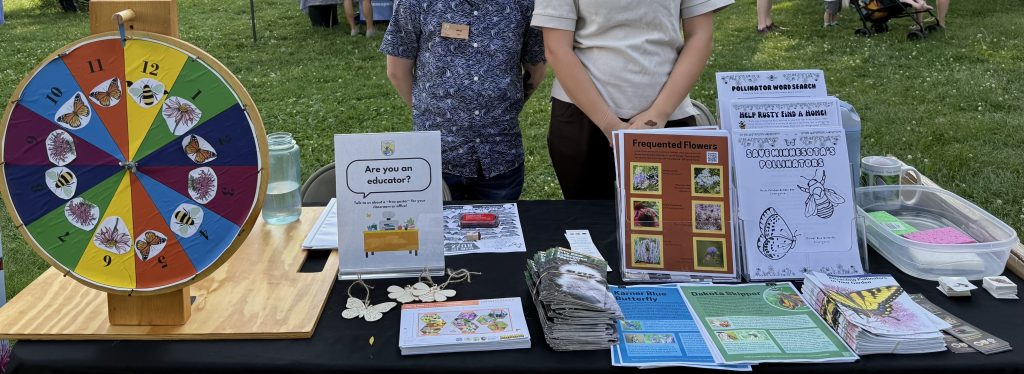
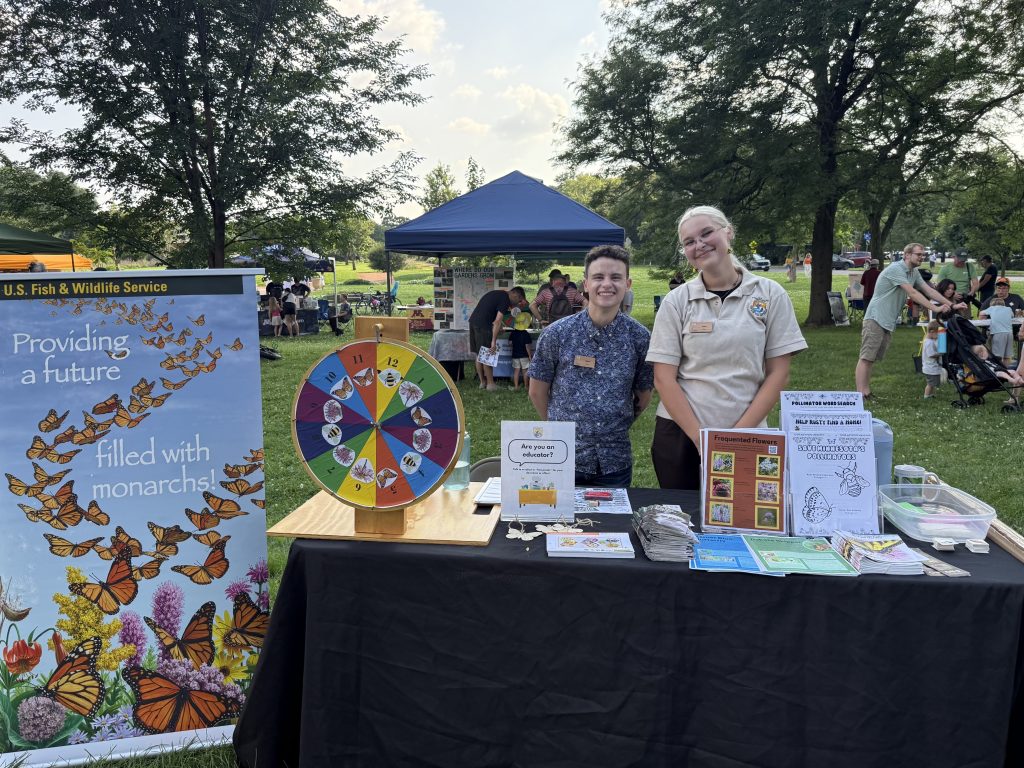
The Pollinator Party brought educators, scientists, beekeepers, musicians, artists, and a taco truck together in Lyndale Park on July 24. The goal of the party, hosted by Minneapolis Parks and Recreation, was to celebrate bees and other pollinators. The other Environment for the Americas intern at my office, Grace Moore, and I represented the Fish and Wildlife Service with a table for the Office of Ecological Services. We stocked our table with information on endangered species, coloring pages about the rusty patched bumble bee, and a pollinator trivia wheel. Each table had an activity where kids could earn a stamp upon completion (five stamps for a bee prize and ten stamps for free honey ice cream!) We had a blast talking about pollinators, endangered species, and all things ecological services, as well as giving out temporary rusty patched bumble bee and monarch butterfly tattoos as prizes for answering the trivia questions. We also had big colorful posters with pollinator plants for educators to put in their classrooms or offices. All in all, it was a hot day, but we had a lot of fun and gave out a lot of information on pollinators and their habitats.
2025 Backyard Bumble Bee Count
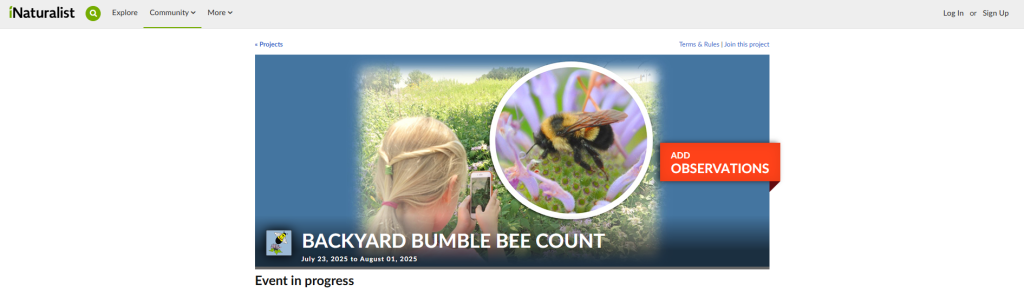
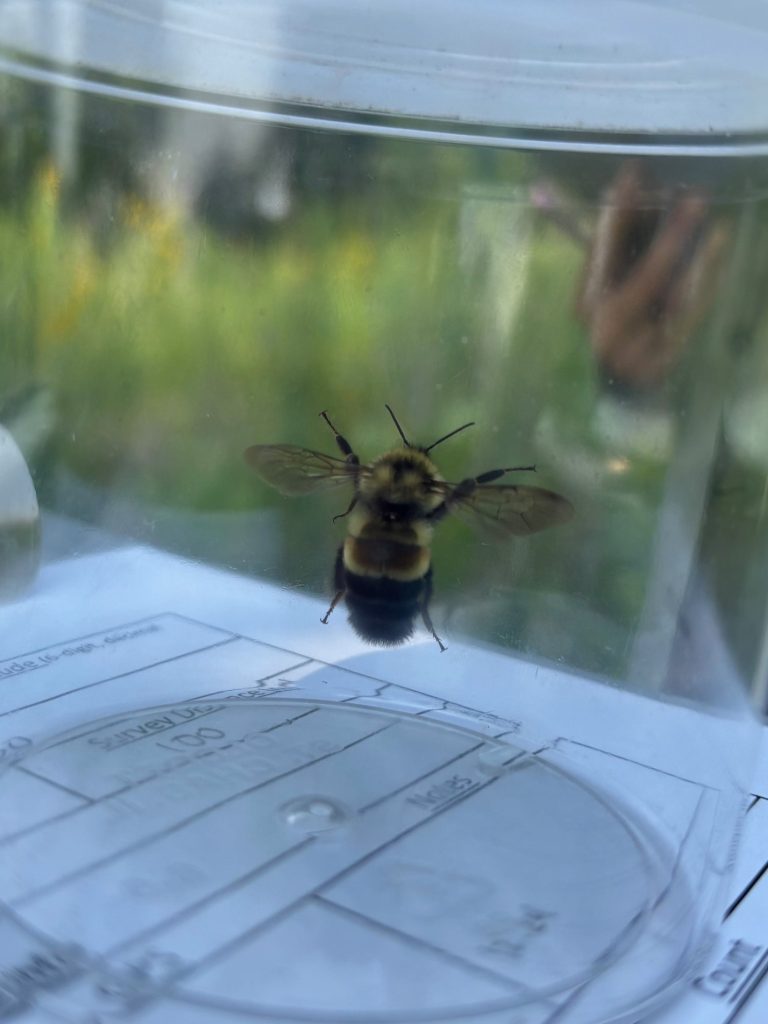
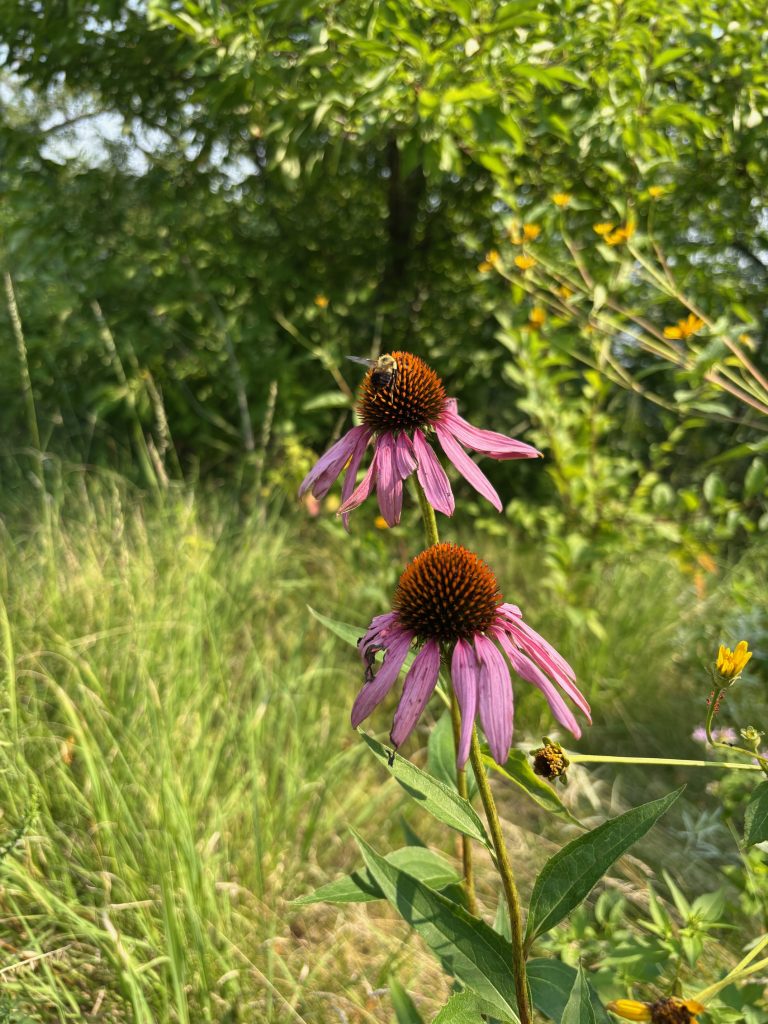
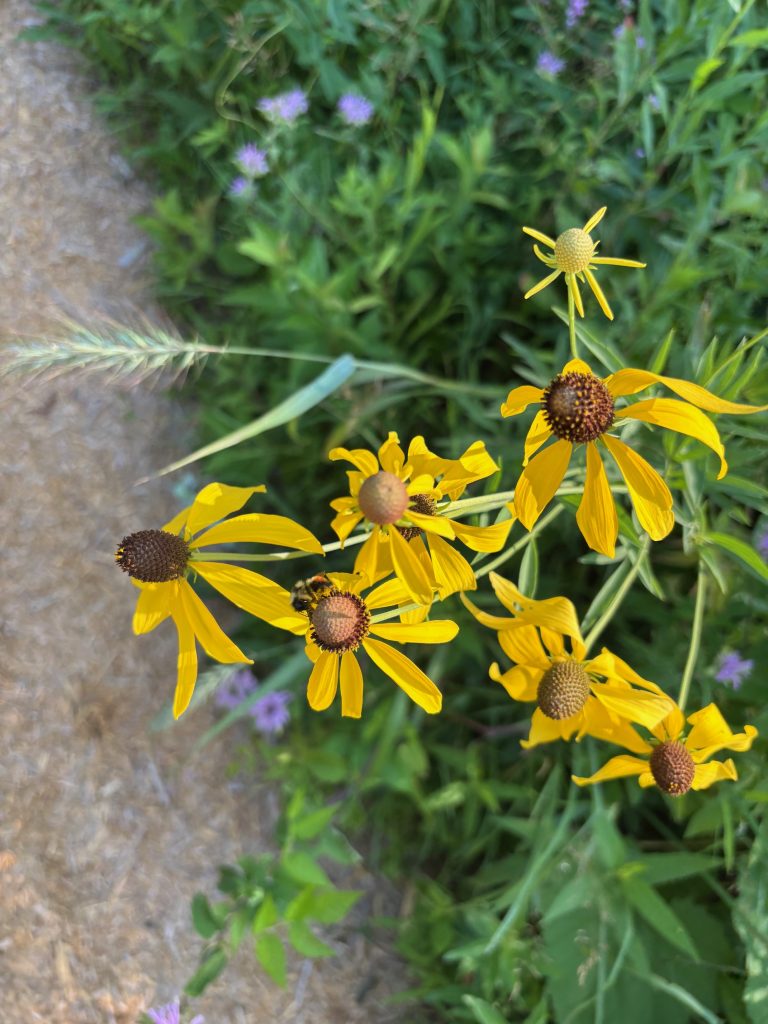
The Backyard Bumble Bee Count is an annual citizen science project that invites the public to submit photos of bumble bees on flowers from July 23 to August 1. The event takes place late July to early August to capture bumble bee activity at its peak. Each photo is analyzed by a scientist who will identify both the flower and the bee. This information helps researchers understand how different bumble bee species are doing and give insights on how to protect them and the resources they use. I will be analyzing the data from 2024 and 2025 to look for trends and post some summary stats. Most observations are local to the Midwest (over 90% in previous years), but we get submissions from all over the country. I am excited to dive into this year’s data and can’t wait to see what trends emerge. It will also be interesting to work with citizen science data and see all the weird places people see bumble bees. While we are only looking for bees on flowers, I’ve heard that previous submissions have shown bees in puddles, on people, and everywhere in between.
Views from the Field
Sorry, the comment form is closed at this time.