


05 Sep The Behavior of Monarchs and how they See our World
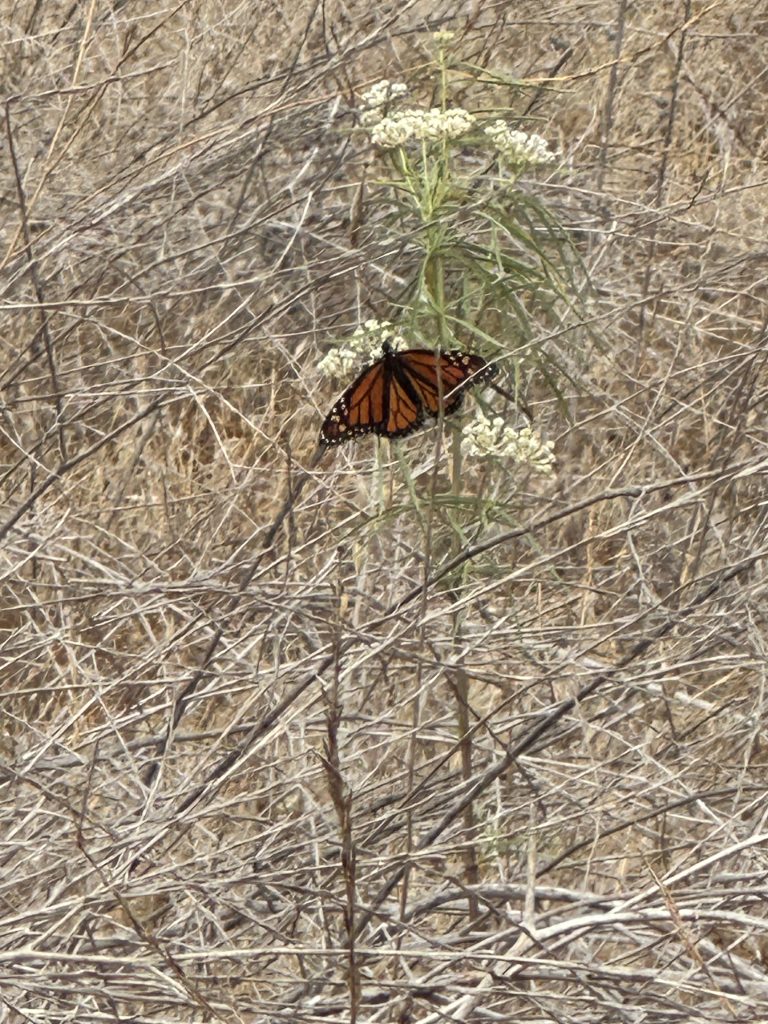

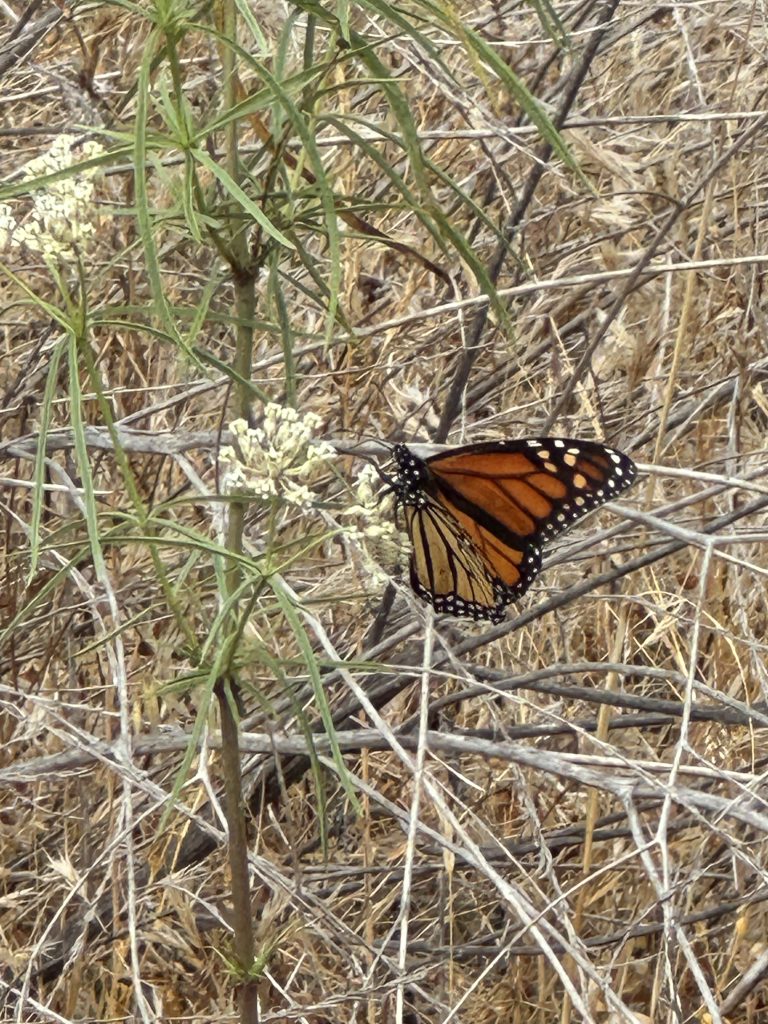



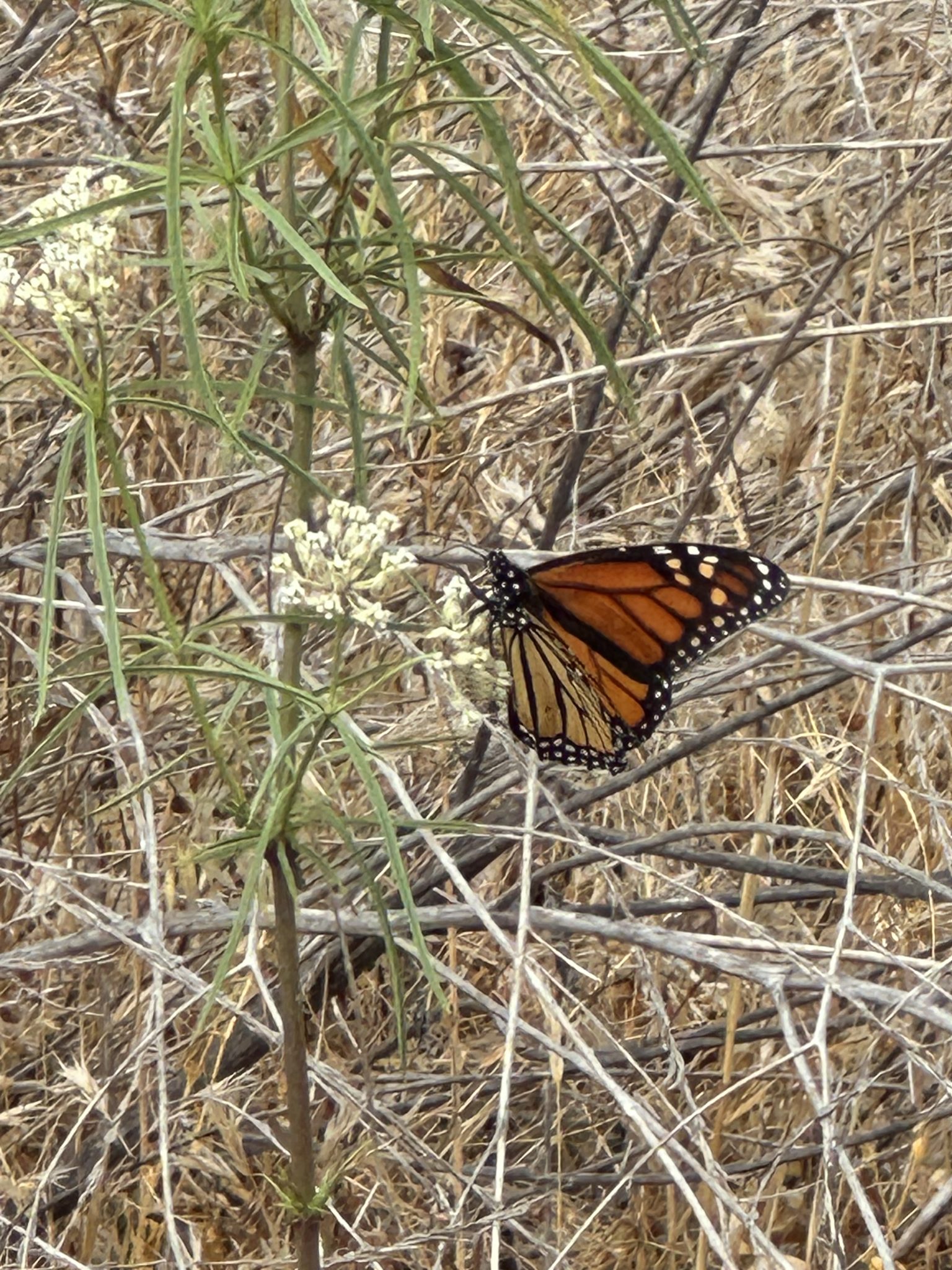
Ever wonder what a monarch butterfly is thinking when it flies around or when it lands on a flower? Sometimes I think about that when my intern partner, Thomas, and I are completing our surveys, and we both spot a monarch butterfly flying back and forth to a patch of California Buckwheat or zigzagging towards a lake or to a storm drain. During our surveys, I have witnessed monarch butterflies landing on a type of purple flower called woolly leaf sea lavender. This makes me wonder if monarch butterflies prefer flowers that are purple or just like their shape. Outside of surveys, I have witnessed monarch butterflies landing on and drinking from exotic flowers within housing complexes. With so many different types of flower choices when no milkweed is available, why are monarch butterflies choosing to fly towards California Buckwheat, to housing complexes with exotic flowers, or to nectar from Woolly leaf sea lavender? Maybe it’s because the California Buckwheat looks a lot like Narrowleaf Milkweed that monarch caterpillars spend almost their entire lives on before forming a chrysalis around themselves. Maybe monarch butterflies prefer purple flowers or flowers with colors that stand out against Southern California’s golden landscape. That would be my guess. To me, this type of behavior is a clue to how these insects survive and adapt to our world.
While working as a monarch research and education intern and even in my free time, I had the privilege of watching countless monarch butterflies in flight. Watching them fly was truly magical. When monarch butterflies fly, they don’t just fly in a straight line like an airplane. Instead, these insects often flap their wings and fly back and forth to multiple locations before reaching their destination. This made me realize that because monarch butterflies don’t fly in straight lines, the distance that they cover when flying from one location to the next could be twice or three times as long as the straight-line distance. This means that the annual migration of monarch butterflies from Canada to Mexico or possibly even Southern California could likely be much longer than it would normally be if they were to fly in a straight line. Another fascinating aspect that I learned through my internship is that the journey of a monarch butterfly from Mexico or California’s coast to as far north as Canada is achieved across multiple generations. During this migration, individual monarch butterflies complete only a portion of the journey before they die, while their offspring continue onward until reaching their northern breeding grounds.
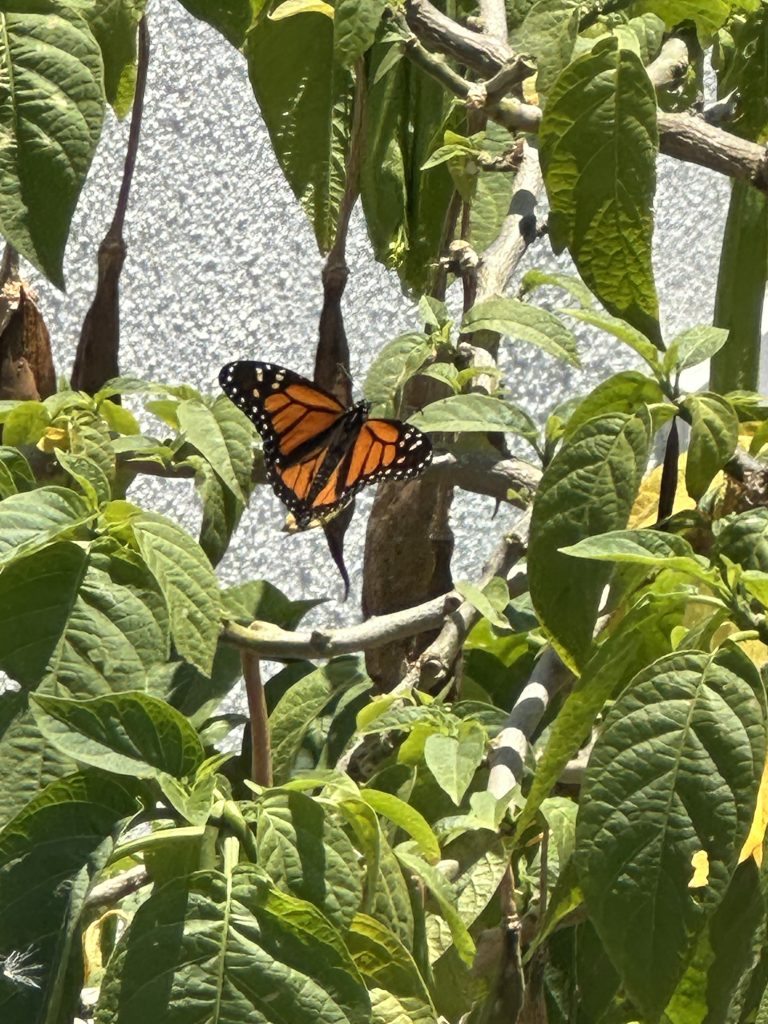
Also, when monarch butterflies fly, they don’t just flap their wings but also glide through the air like a kite. I have also witnessed the same behavior from other types of butterflies at the San Diego Zoo and Safari Park’s Butterfly Jungle event, which is an event where guests can walk through an aviary filled with exotic butterflies. Through that, I learned that butterflies, at least the ones from Butterfly Jungle, are attracted to the air vents within the aviary and seem to enjoy gliding on the thermal air currents they give off. Also, a lot of the butterflies within the aviary seem to prefer flying when the sun is out. This is the same for monarch butterflies, which enjoy riding on thermal air currents and being out whenever it’s sunny. This could explain why Tom and I have mostly seen monarch butterflies flying when the sun is out and alternating between riding on the air current and flapping their wings while flying.
During my upbringing, I had the privilege of watching monarch butterflies within their natural habitat at close range. For some reason, despite the size comparison, I have always been able to approach monarch butterflies without them flying away. Unlike a lot of wild animals that will flee when they first encounter a human, monarch butterflies, however, tend to remain where they are and will usually continue with whatever they are doing as if nothing has approached them. Are monarch butterflies not smart, or do they not see humans as a threat? If I were the size of a monarch butterfly and had a creature approach me that was humongous in comparison to my size, then I would be terrified. Why are monarchs not afraid of this? Moreso, why can you get a lot closer to a flying insect than to a flying bird? It’s possible that monarch butterflies do not fear humans because, rather than seeing us as predators, they instead view us as part of their natural landscape. They also might not view us as giants that could potentially catch, injure, or eat them, maybe because humans don’t typically hunt butterflies. That would be my guess as to why monarchs don’t fear us while other animals do.
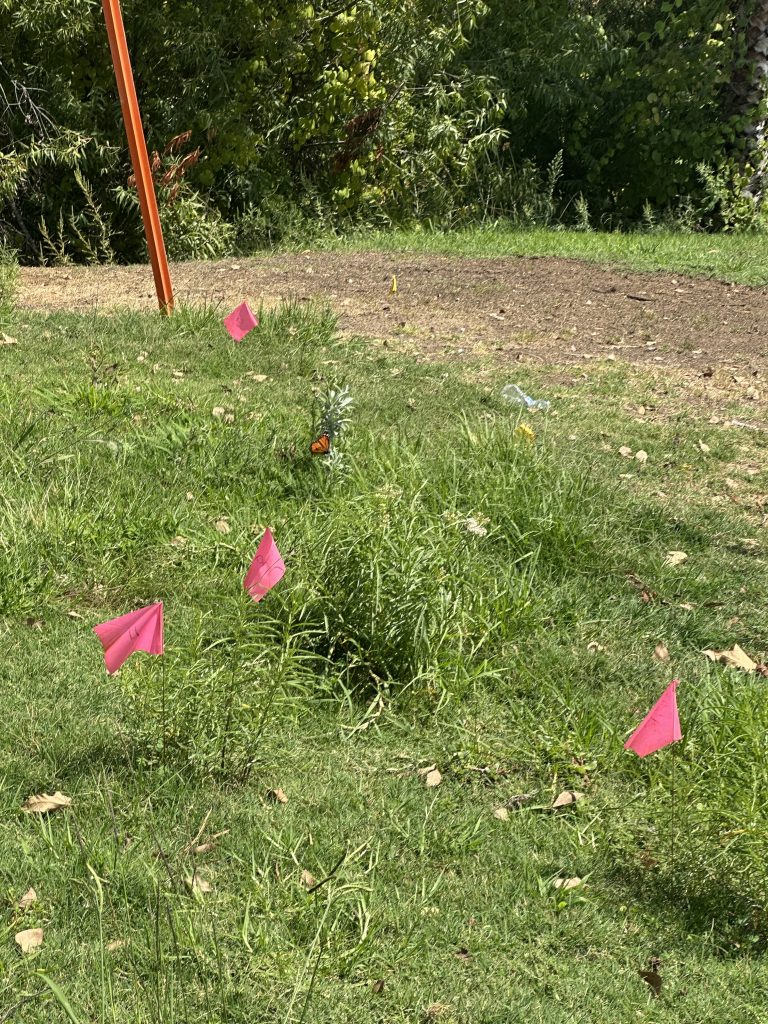
Subsequently, Tom and I have been seeing the milkweed garden that we helped plant at Lake O’Neill fluctuate between having almost no monarch activity to having monarchs on nearly all the milkweed plants. Furthermore, we have been coming across both monarch eggs and monarch caterpillars within the milkweed flowers on the plants. Right now, it’s uncertain why the monarch butterflies choose to lay their eggs mostly on the milkweed flowers rather than their leaves. I would guess it’s because the flower petals from the narrow leaf milkweed provide monarch caterpillars with more shade while their leaves don’t, or maybe it’s because their flower petals camouflage them better from predatory birds. Also, why are monarch butterflies laying more than one egg on one milkweed plant, and why are monarch butterflies laying most of their eggs on the milkweed within the garden that Tom and I helped start, and not in areas on base with milkweed but with less disturbances? It could be because monarchs prefer milkweed that’s watered continuously, which is normally expected from gardens. Overall, it’s questions like these that remind me that we still have a long way to go with learning about monarch butterflies and their interactions within our world.
Sorry, the comment form is closed at this time.