Life as a Natural Resource Management Intern at the Golden Gate National Recreation Area is never uneventful for long. There is always something new to learn and experience, whether it’s with your team or by joining another crew for the day. In this blog, I wanted to give an insight into what you can expect from a typical work day during the summer months here at Golden Gate.
DAY- Mapping golden gate grasslands
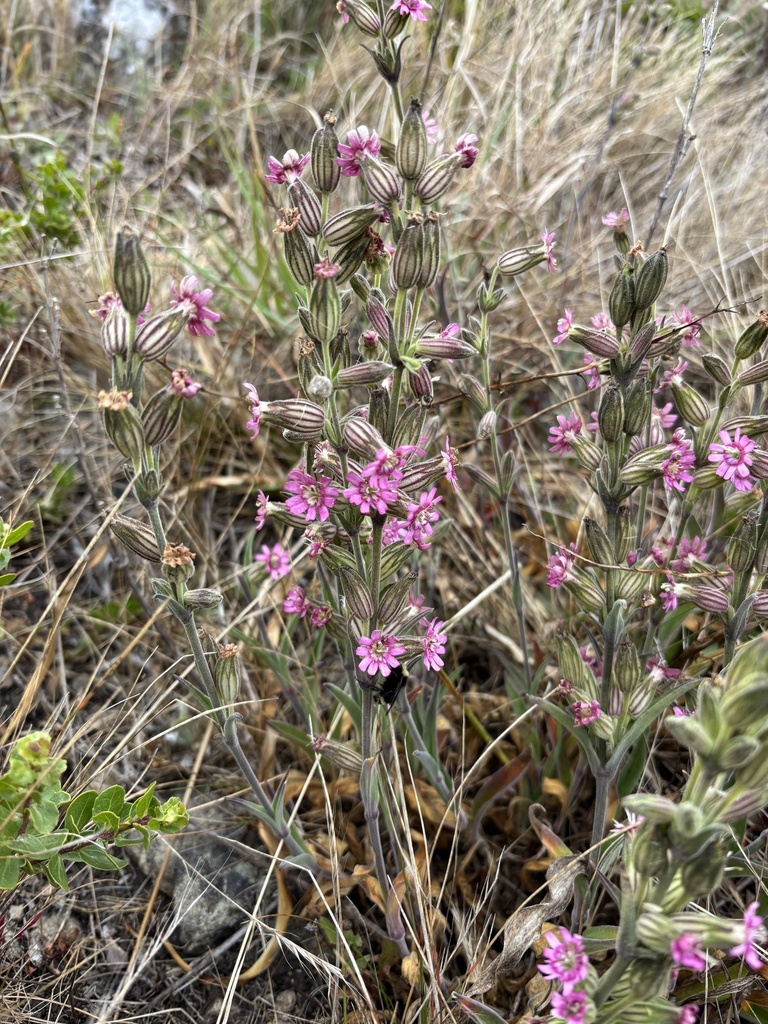
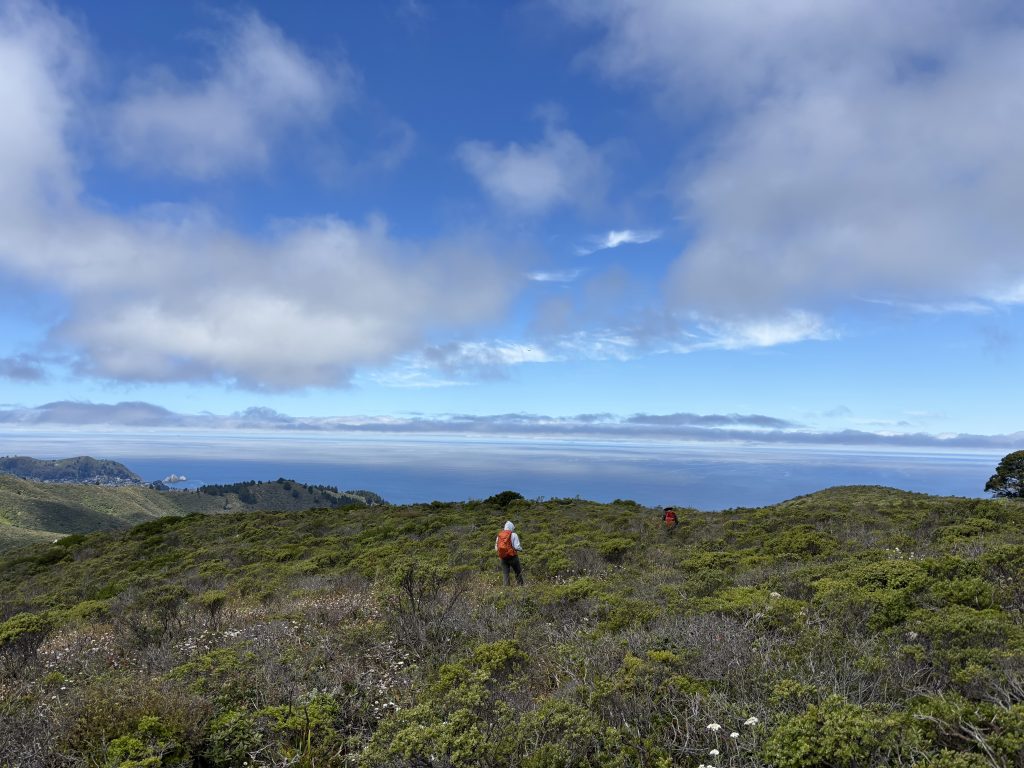
A typical morning starts by driving from Fort Cronkhite to my office at Fort Funston, where I am briefed on the field activities for the day. My team has been mapping grasslands at Sweeney Ridge for the past couple of weeks. Grassland mapping involves the utilization of ArcGIS software to locate grasslands in the park and assess their quality. By determining native composition of the grasslands, we can prioritize high quality areas as restoration sites or take other appropriate actions. It is also important to monitor these more remote areas for invasive species, as well as the presence of rare native species- such as Silene scouleri, the Scouler’s catchfly.
Silene scouleri (Scouler's catchfly)
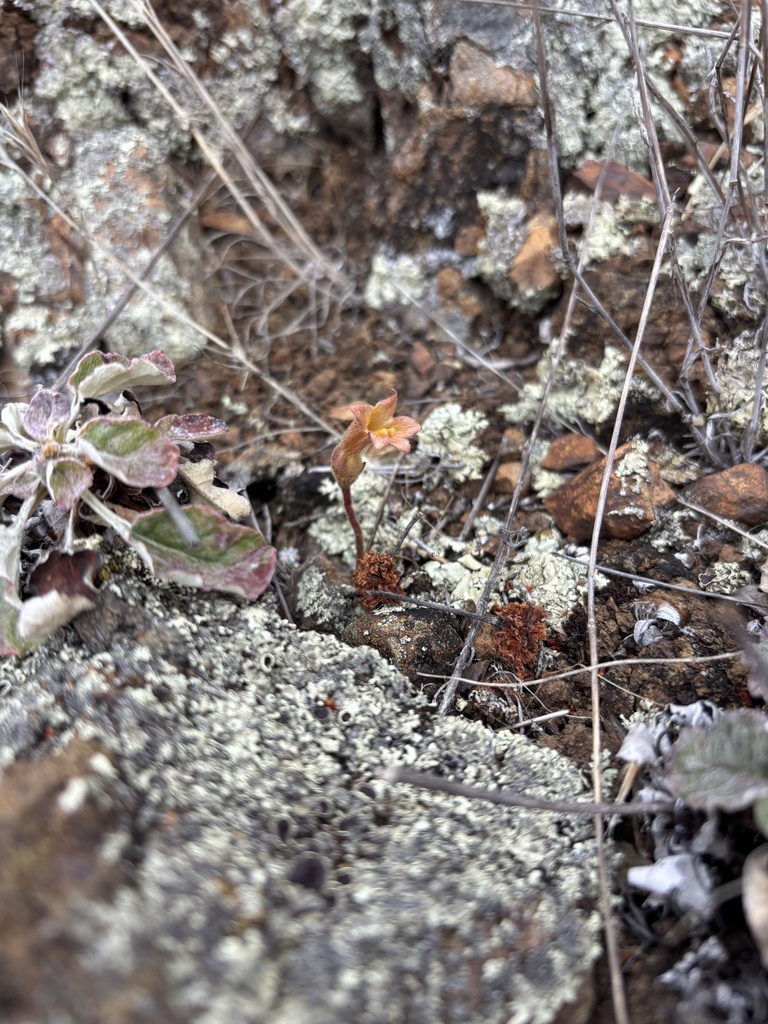
Aphyllon franciscanum (Yellow clustered broomrape), a unique parasitic plant species that relies on a host plant for nutrients.
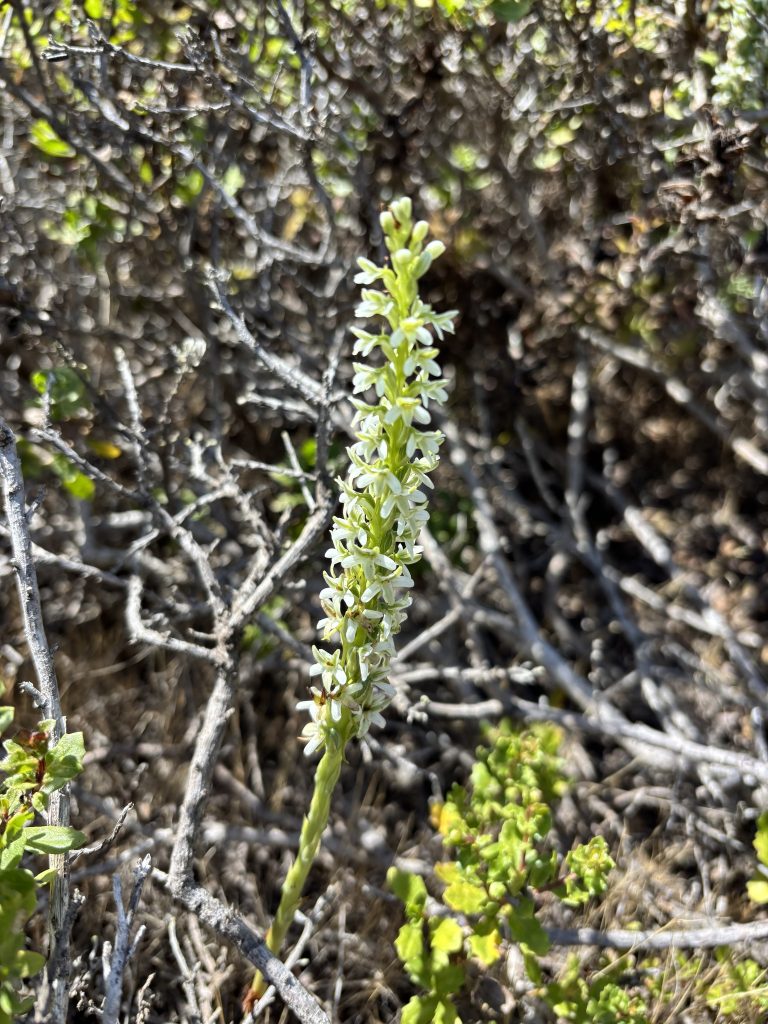
Platanthera elegans (Elegant rein orchid)
Grasslands are considered high quality if they consist primarily of native species, and medium quality grasslands should have at least 10% native cover. At the beginning of this project, I wasn’t sure if I had the depth of knowledge it would take to make these estimates on such large pieces of land. At this point in the season, it can be difficult to identify grass species, and I was afraid of missing something. However, after a few days of shadowing the experts on my team, I became more confident in visually assessing grasslands and recognizing the species that I should expect to see more frequently. Since I primarily work on habitat restoration, it has been a great lesson in plant identification and using GIS to navigate and map off trail. Also… I’m still amazed that I continue to encounter new species out in the field, like the Aphyllon and Platanthera above. It’s one of my favorite parts of the job.
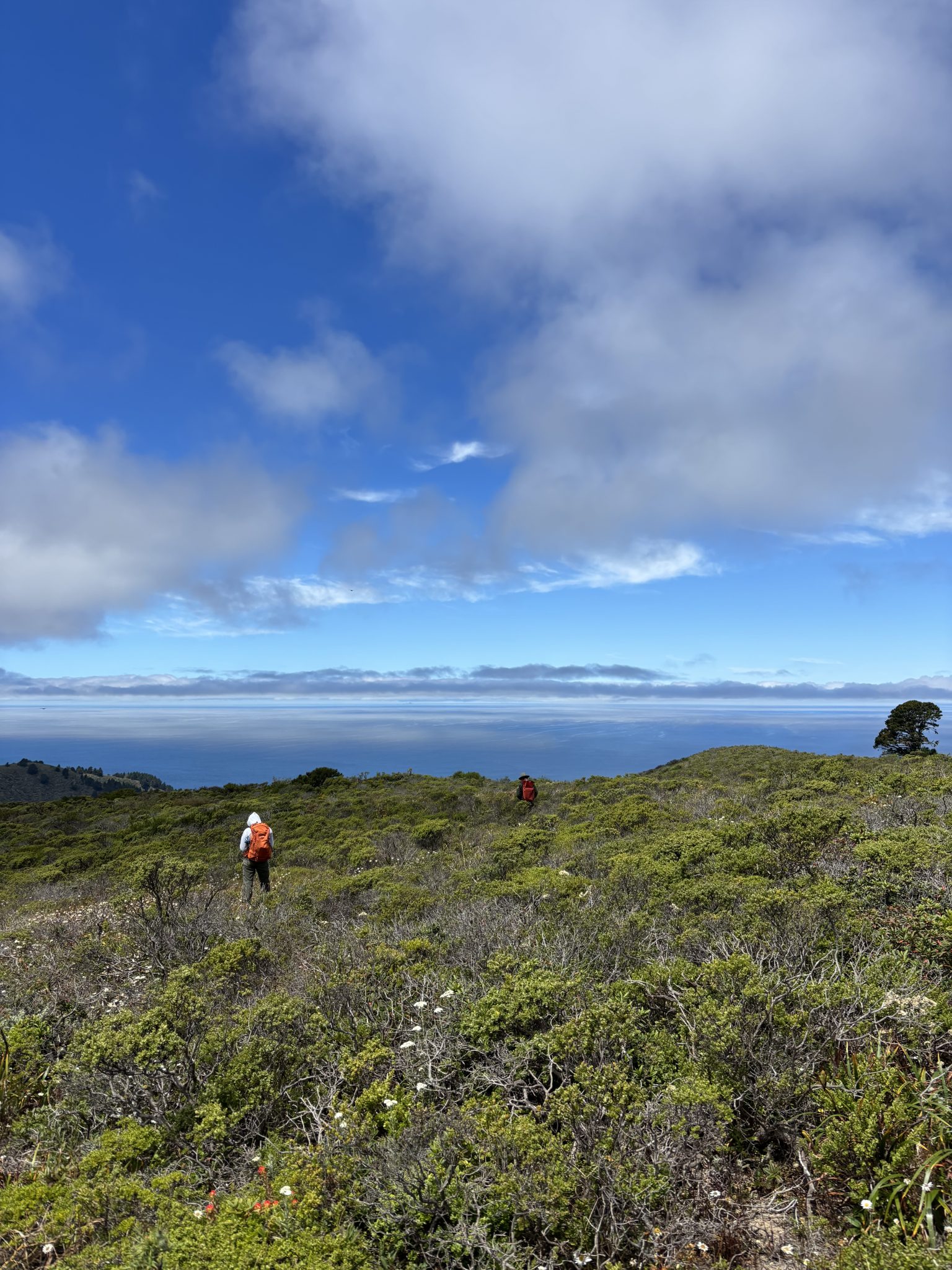
Mapping requires cutting a path through dense brush.
The end of a typical workday involves cleaning, sanitizing, and sorting any equipment back at Fort Funston. Then, any data recorded that day must be uploaded and double checked for quality.
Night- GRUNION RUn
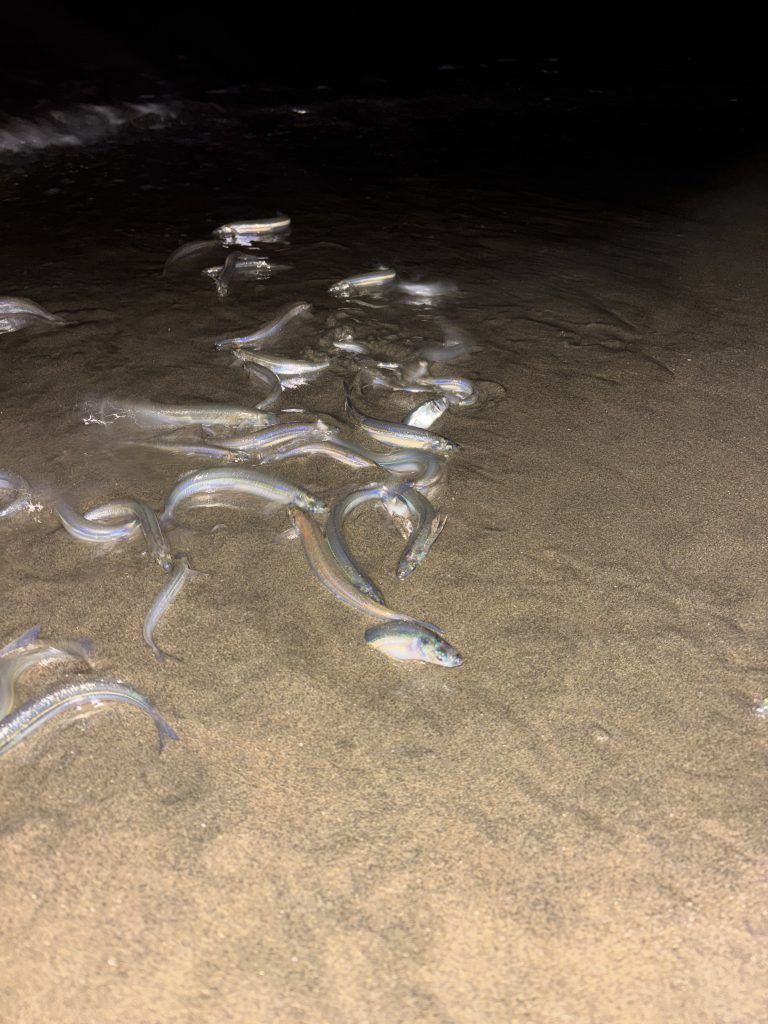
As an intern that works on grassland vegetation management for most of the year, I enjoy taking opportunities to expand my skillset and appreciate the diverse ecosystems in different parts of the park by joining other interns for wildlife surveys. Working with wildlife means that you have to plan surveys in accordance with their natural behaviors, and this means that surveys can take place outside of the typical workday. Such is the case with the California grunion (Leuresthes tenuis), a small, silvery fish with an unusual nighttime mating ritual. Thousands of grunion spawn on California beaches on nights after the full moon and new moon in the spring and summer. They ride waves onto the shore, where females will dig into the sand tail first. The males fight to curve around the female and release their milt. After depositing her eggs, the female returns back to the water. The mating ritual of individual fish is only a few minutes long, but an entire “grunion run” can last up to three hours.
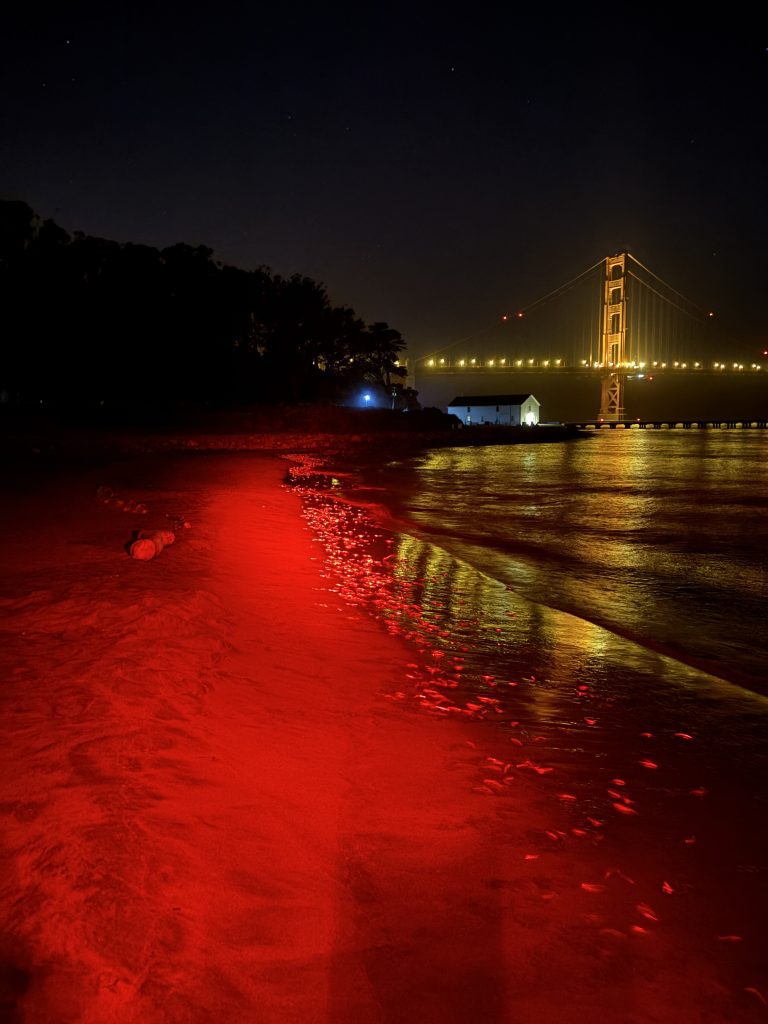
The grunion are illuminated by red light, which minimize negative impact.
A female grunion can be observed burying her body into the sand.
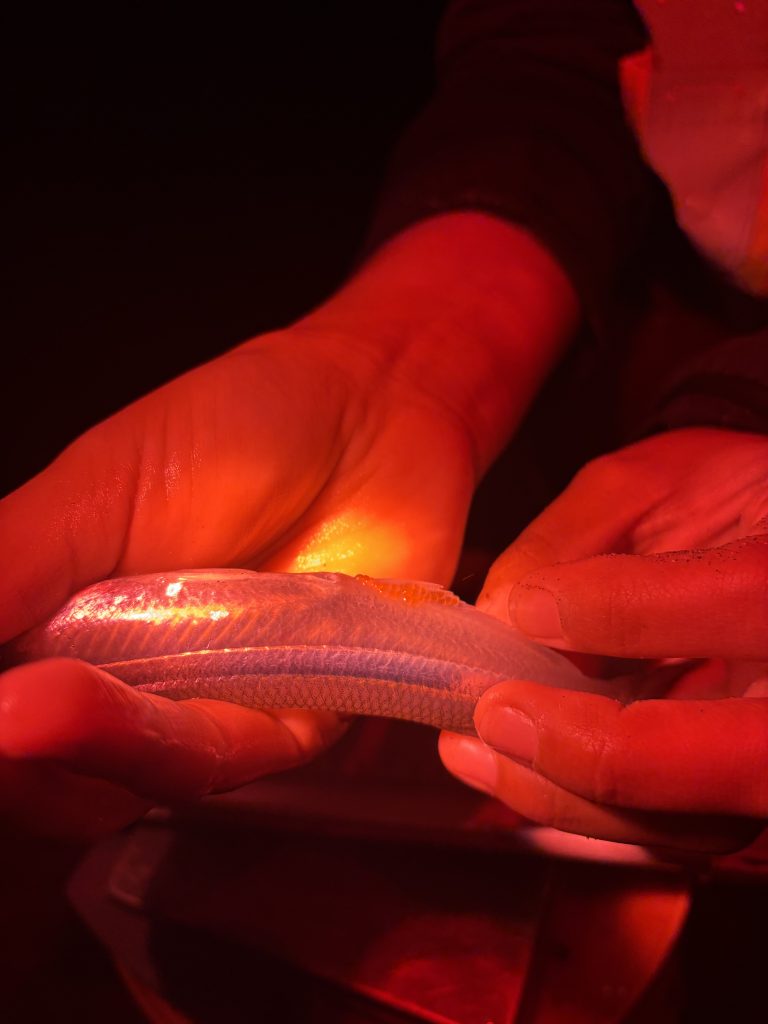
If you look closely, you can see a cluster of eggs which will hopefully become the next generation of grunion!
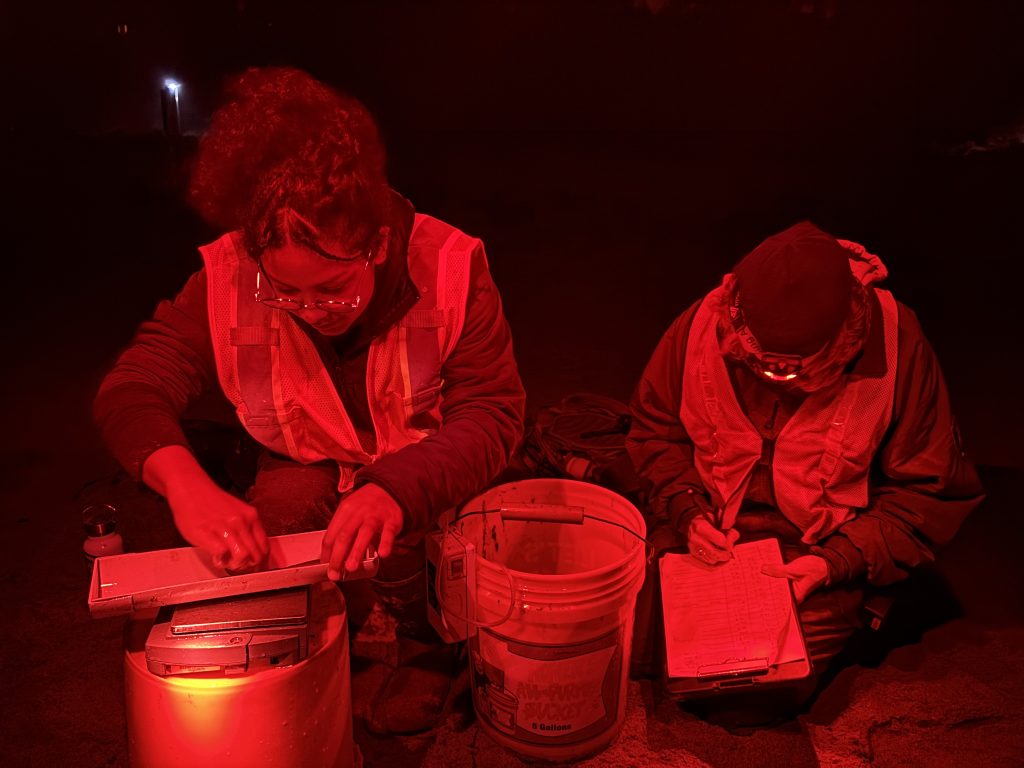
I had the opportunity to join the Water Quality Monitoring intern, Sai, for two grunion surveys at Crissy Beach. During these surveys, she taught volunteers that the presence of the California grunion in San Francisco is a relatively recent phenomenon; prior to 2005 the species was only observed as far north as Point Conception in Southern California. Scientists hypothesize that climate change is pushing the species north because the maximum temperature for the eggs is 28 degrees Celsius (Read an informative article here). Curiously, grunions found in Northern California are significantly smaller than their counterparts in traditional range because of harsher environmental factors such as rocky shores and varying salinity. During one survey, we had permission to handle the grunion and take measurements which will be used by researchers whose work you can read more about at Grunion.org.
The Water Quality team taking measurements of the grunion, which will be used to determine how the species in developing in Northern California.
While grunion runs in SoCal attract thousands of visitors each year, the presence of grunion in northern California is virtually unknown and so it was a unique experience to observe these beautiful fish on a quiet, empty beach.


Sorry, the comment form is closed at this time.