


15 Sep Creating the Perfect Milkweed Garden for Monarchs
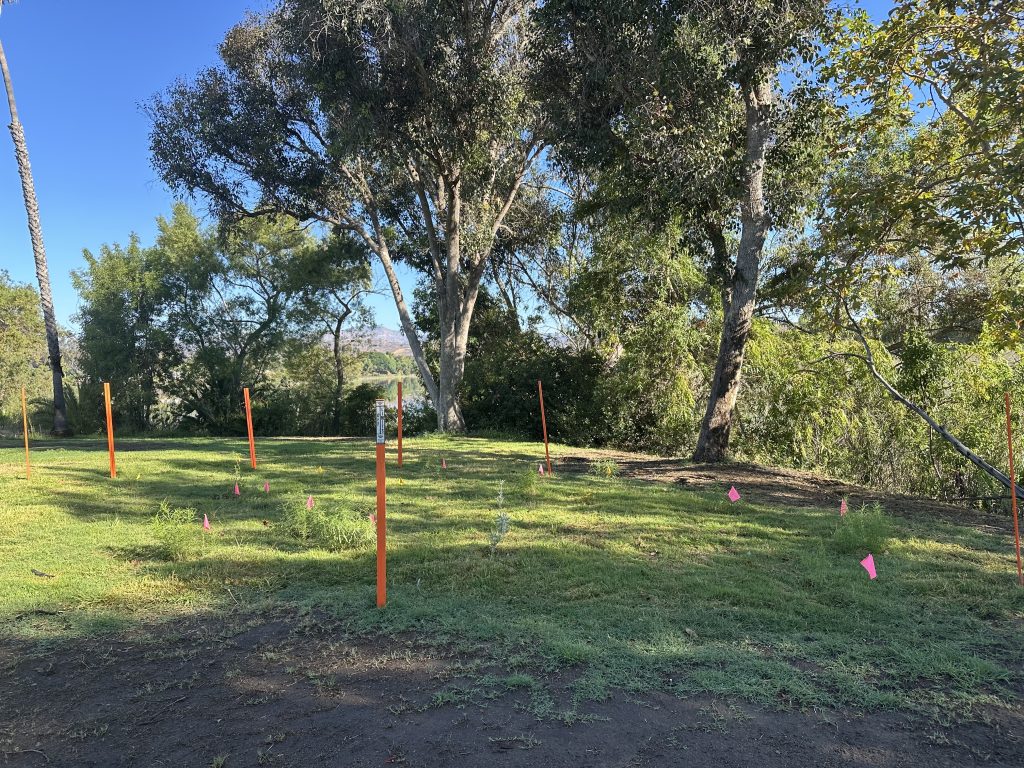
When you imagine starting a milkweed garden, you would probably picture a patch of healthy and lush plants, attracting fluttering monarchs. But the reality isn’t always so simple. When we first established a milkweed garden at Camp Pendleton, nearly all the plants failed. When we started the garden, our team didn’t know exactly why most of the milkweed did not survive. Was it the milkweed plants or the soil, or something else that prevented it from thriving? That was what it was like in the beginning with the Lake O’Neill milkweed garden when it was first established.
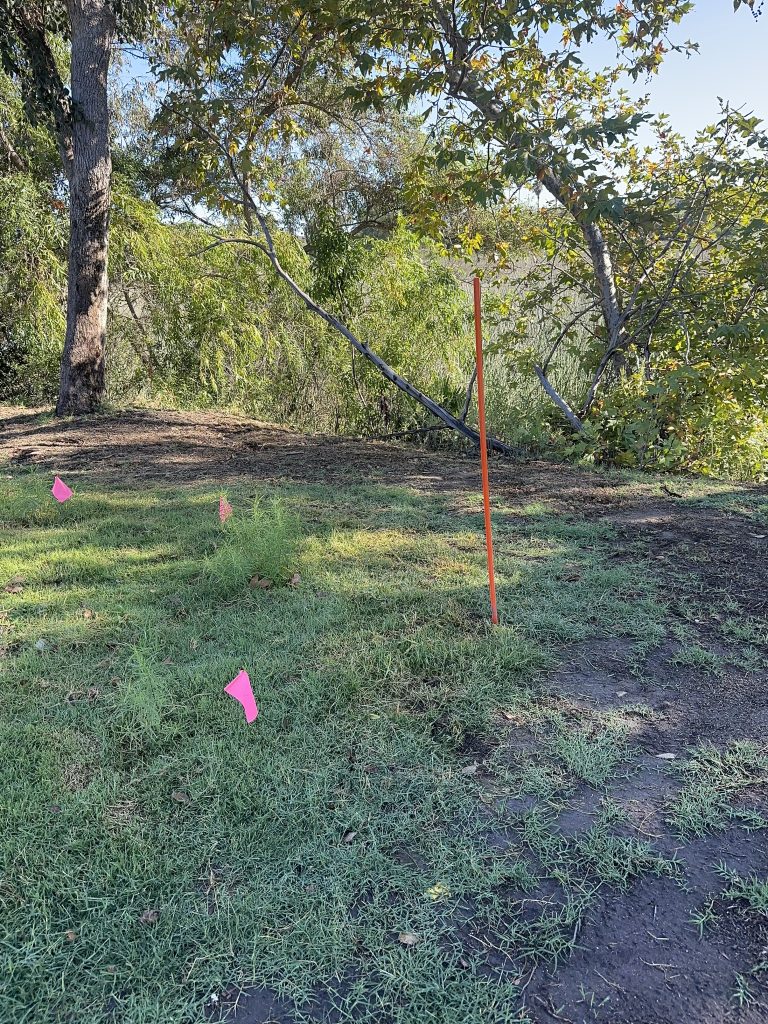
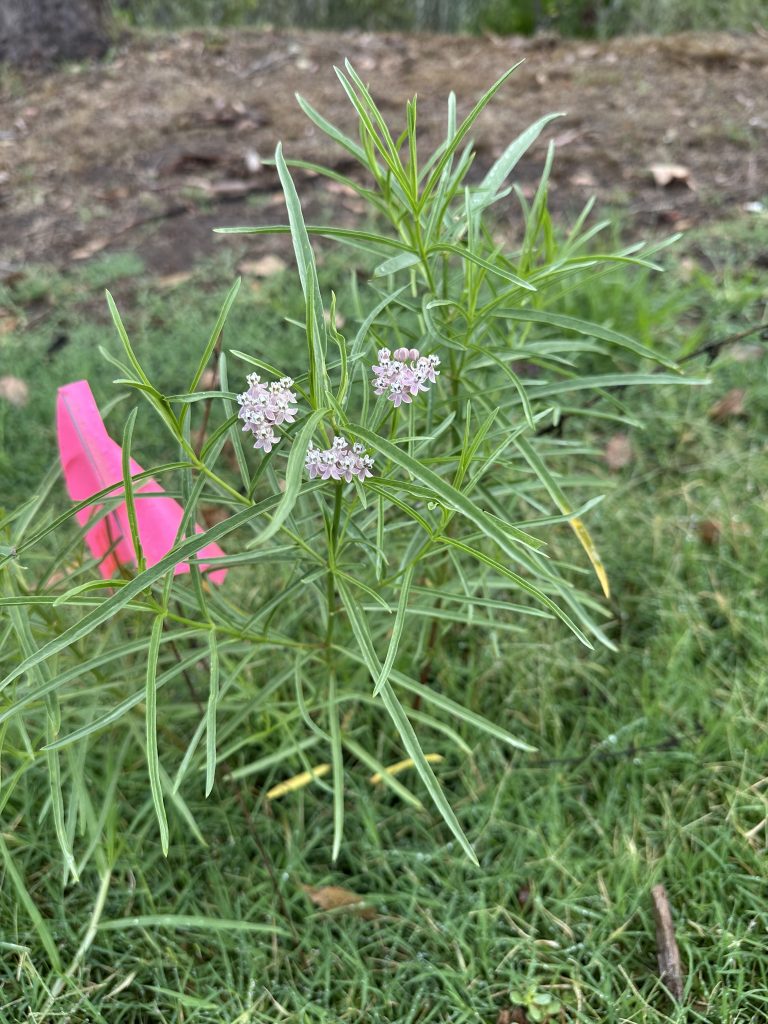
Working together, my supervisor Dejeanne May, the Camp Pendleton Natural Resource Manager Bill, a few others, and I planted nearly 200 small narrowleaf milkweed plants in the garden, spacing them 12 to 18 inches apart. We had high hopes that all the time spent clearing the area, removing weeds, and digging holes for the milkweed would pay off. Unfortunately, the milkweed we planted struggled, and after all that effort, only one or two tiny plants survived. In the end, we each had to figure out what went wrong with the garden and how to fix it. The Lake O’Neill milkweed garden felt like a science experiment because neither Bill nor I fully understood what was affecting the garden or the best ways to fix the issues with the milkweed.
A Second Chance
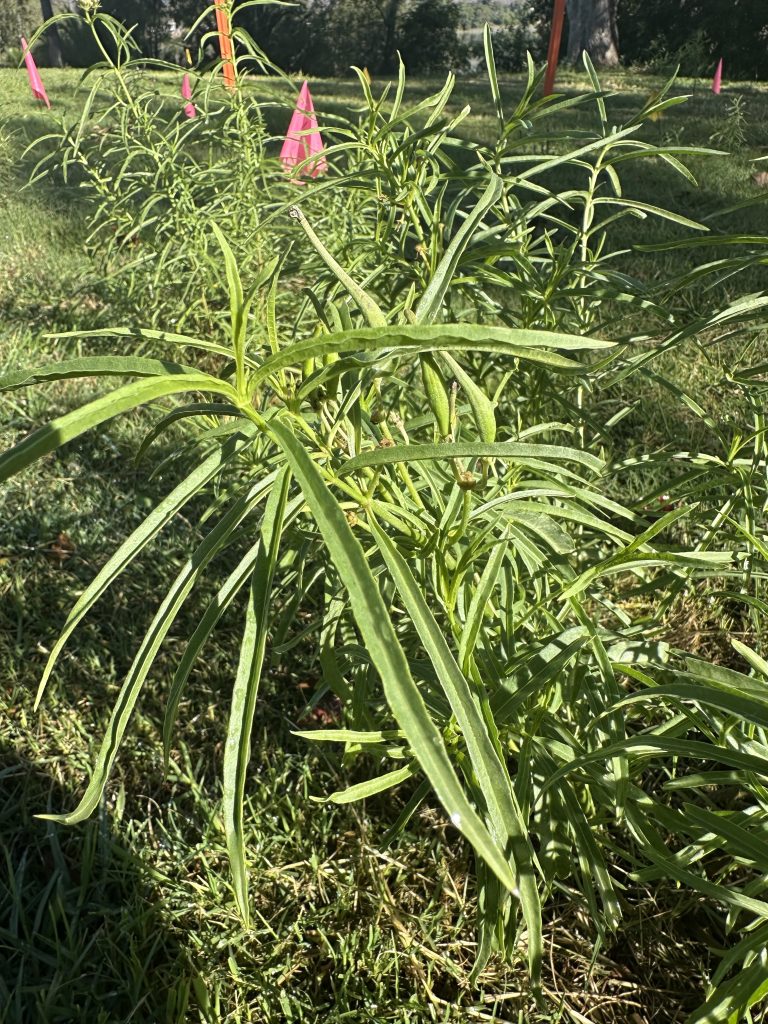
Since a majority of the narrowleaf milkweed from the first batch planted within the Lake O’Neill Milkweed Garden failed to survive, Dejeanne worked with Bill to coordinate a second order of plants for the garden. This time, we took a new approach to help the milkweed not just survive but flourish. We replanted the second batch of milkweed only in the sections where it had previously survived. Luckily, the second batch of milkweed was also larger and healthier looking than those from the first batch, and they even arrived with monarchs on them!
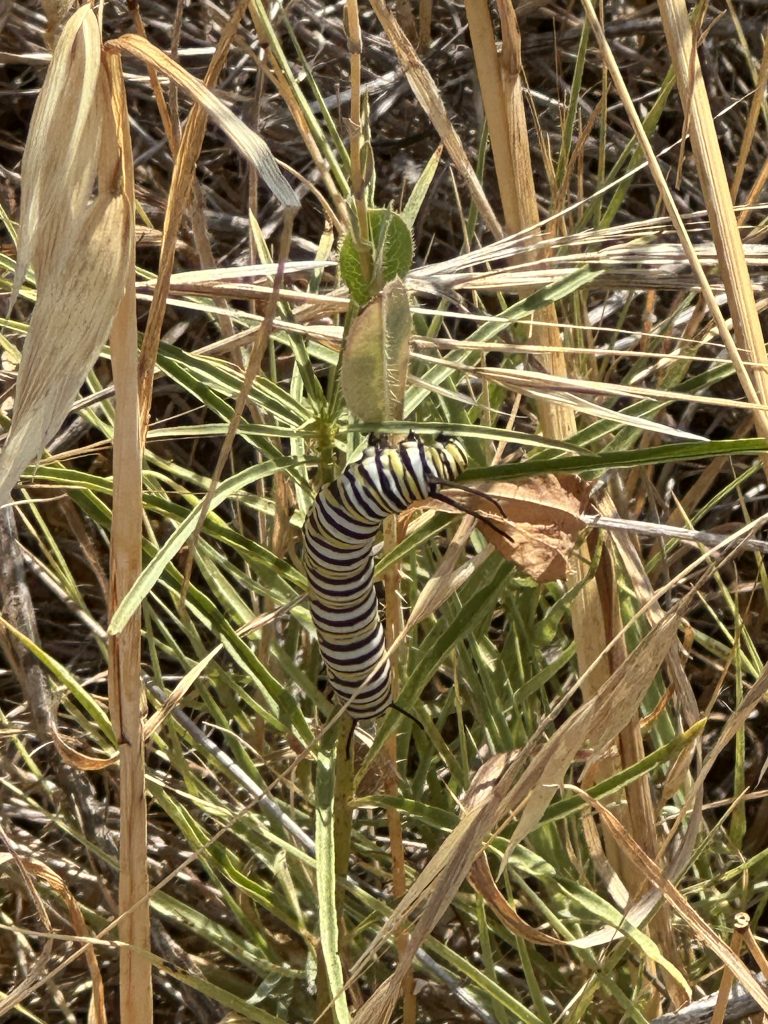
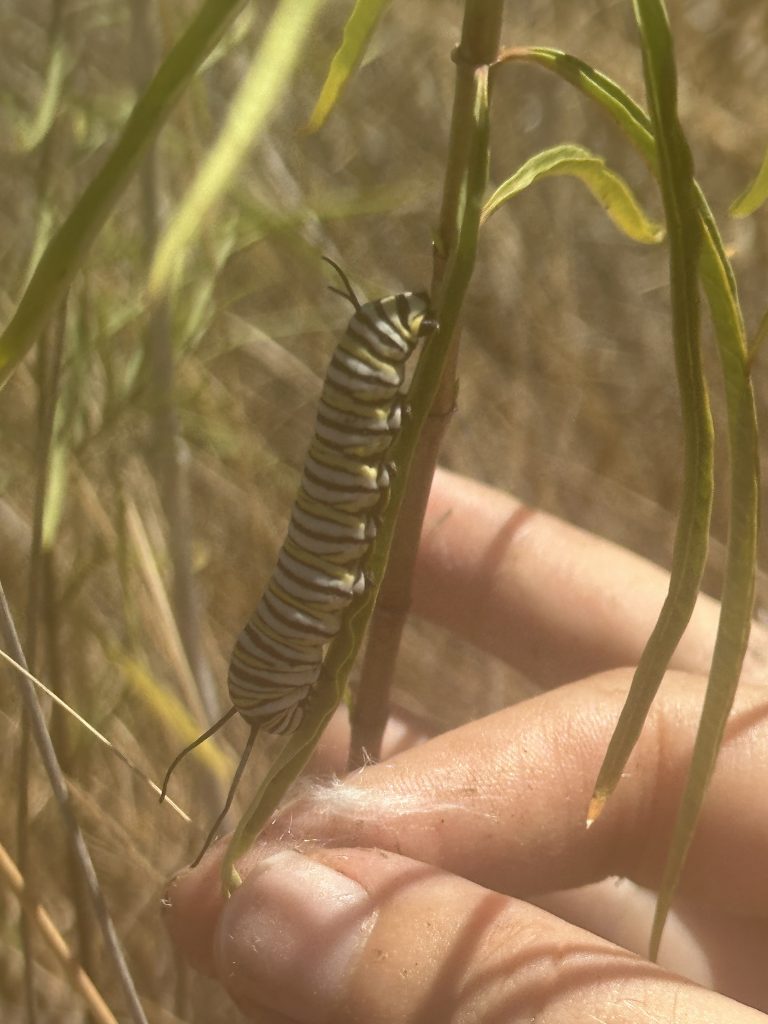
This time, most of the milkweed survived, but was barely hanging on because most of the leaves were being consumed by hungry monarch caterpillars.
Building a Pollinator-Friendly Habitat
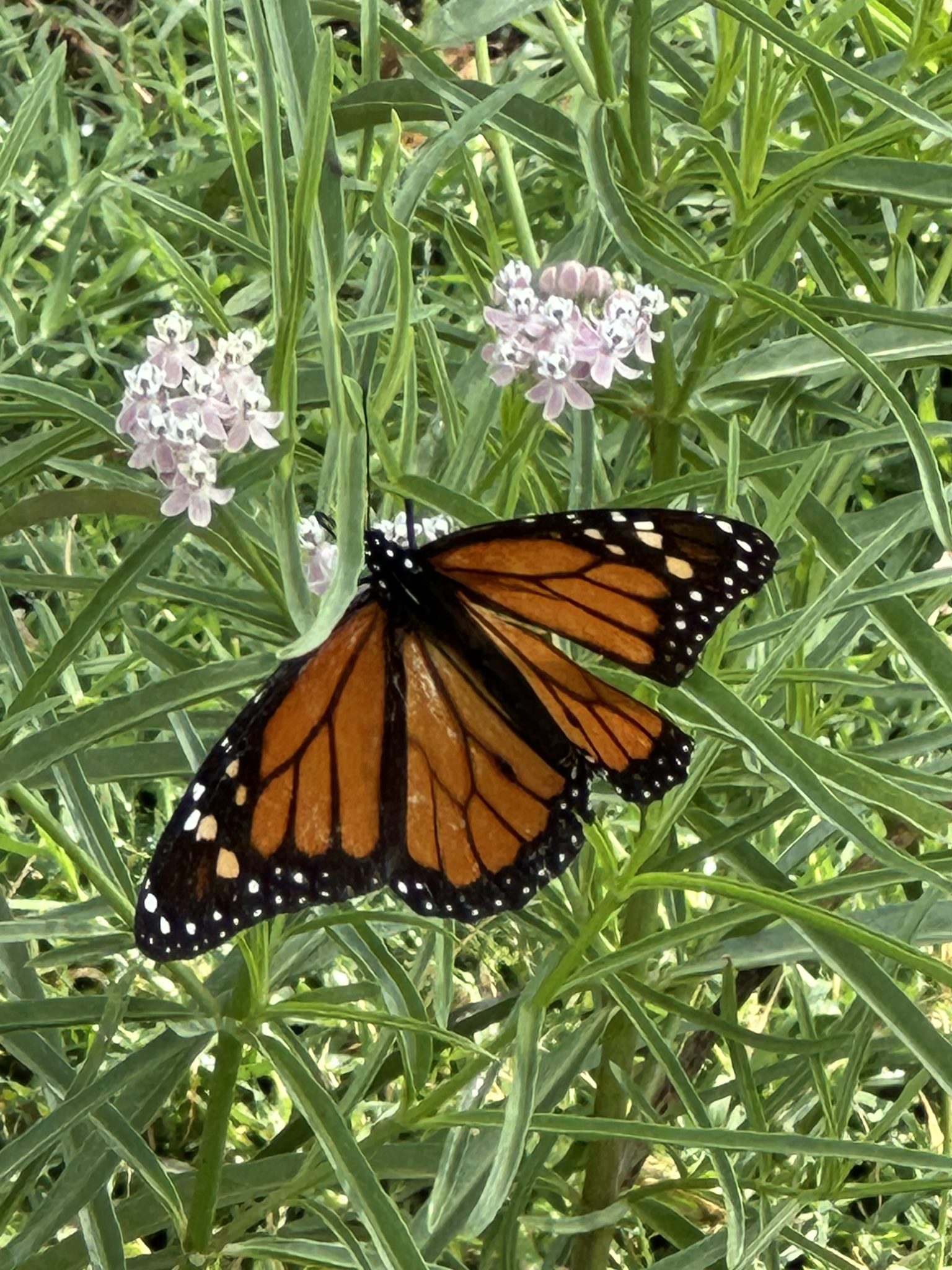
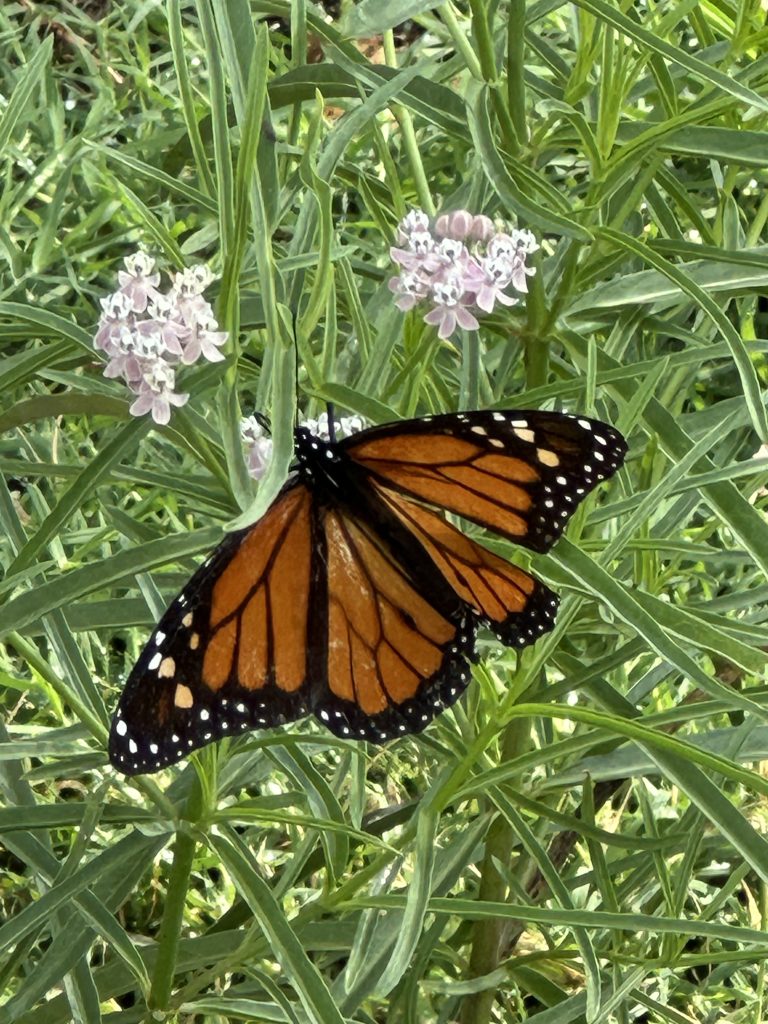
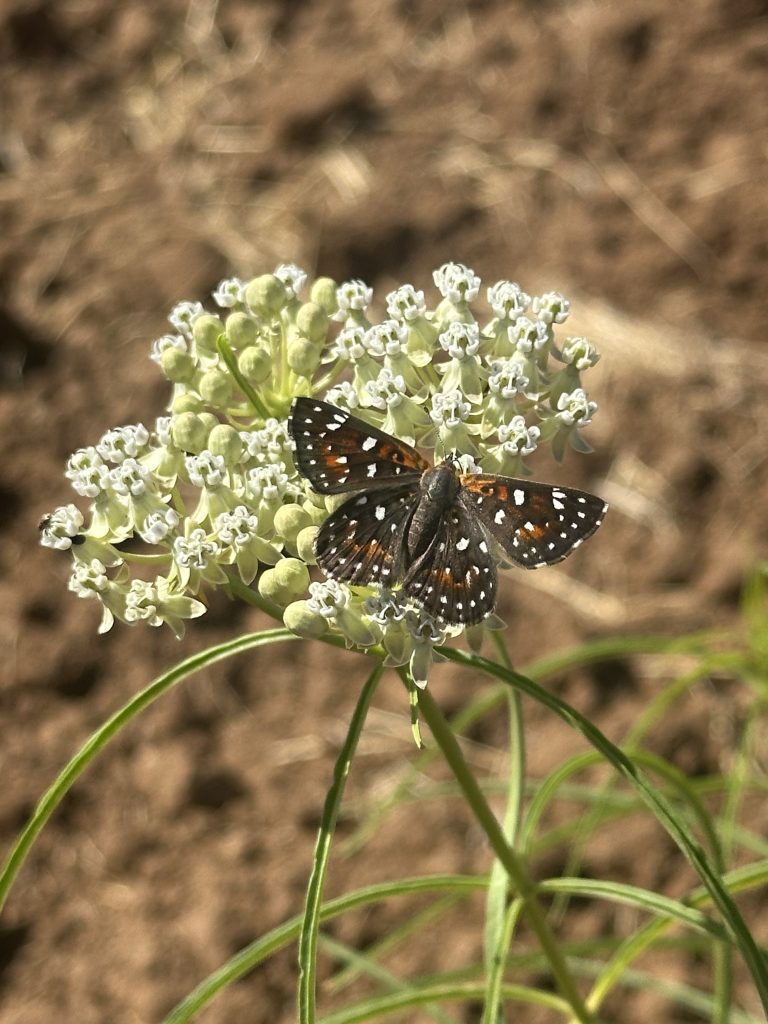
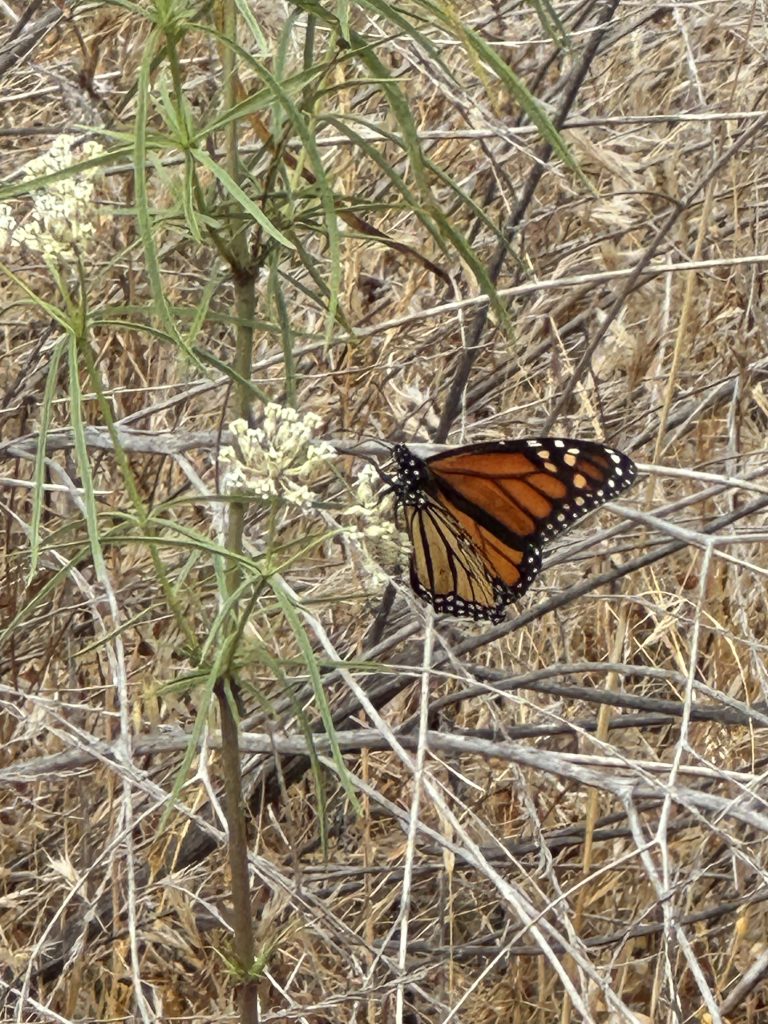
The idea behind the Lake O’Neill Milkweed Garden was to provide for monarch butterflies here at Camp Pendleton. To make the garden a more attractive habitat, narrowleaf milkweed was planted alongside other native plants, including white sage, black sage, and deerweed. At first, it wasn’t obvious how these additional plants would help make the garden more attractive to monarch butterflies. However, with time, watering, garden maintenance, and patience, we began to see eggs on the milkweed within the garden. As time passed, we noticed an increase in monarch activity within our garden, either by air or on the milkweed plants themselves. Currently, our garden appears to be a very popular feature for monarch butterflies. Not only are there more eggs and larvae on the narrowleaf milkweed plants within the milkweed garden, but we also notice regular adult monarch butterfly visits.
Learning to Care for the Garden
After the second batch of milkweed was planted, one of the challenges that we faced with the milkweed garden was determining how much to water. Twice a week, my intern partner, Tom, and I would thoroughly water the milkweed garden with a hose. Within the first month or two of caring for the garden, we noticed that the plants began looking limp, so we reduced the amount of water we gave them. After watering the plants less, both Tom and I noticed that some of the plants, particularly the milkweed, began looking healthier and more abundant. For the time being, some of the narrowleaf milkweed plants within the garden appear healthy and are starting to bloom. Based on these observations, Dejeanne recommended watering the milkweed garden even less to see if reducing the amount of water within the garden would improve the health of the milkweed there.
After Tom’s internship ended in August, the garden maintenance now rests only with me. Not long after, I began noticing crabgrass taking over the garden and entangling itself around some of the plants. Last week, I hand-removed bits of the crabgrass. I realized how large the crabgrass clusters had gotten and mentioned the issue to Bill, who wanted to take further action to remove it from the garden. The following day, Bill and I worked on removing as much crabgrass as possible from the garden. We manually removed any crabgrass closest to the plants we were trying to protect. Bill then applied herbicide to help remove any existing crabgrass throughout the garden. As of now, Bill and I are in the process of waiting to see if what we did to the milkweed garden was enough to kill off all the remaining crabgrass within it.
Looking Ahead
Today, the Lake O’Neill Garden, aside from ongoing efforts to control the crabgrass, appears to be in great shape. Not only is the narrowleaf milkweed thriving within the garden where it’s growing and flowering, but so are the other plants, such as the white sage, black sage, and deerweed. Furthermore, all plants show signs of vigorous development and well-being. To further support pollinators like monarch butterflies, we recently planted western vervain, a native species well regarded for its attractive purple flowers.
In conclusion, there is still much to do and much to learn about within the Lake O’Neill milkweed garden to help best prepare it for local pollinator populations. However, with ongoing care, I believe that the Lake O’Neill milkweed garden has the potential not just to grow but also to become a thriving and vibrant sanctuary for monarch butterflies.
Sorry, the comment form is closed at this time.