


24 Sep Hungerford’s crawling water beetle Field Work
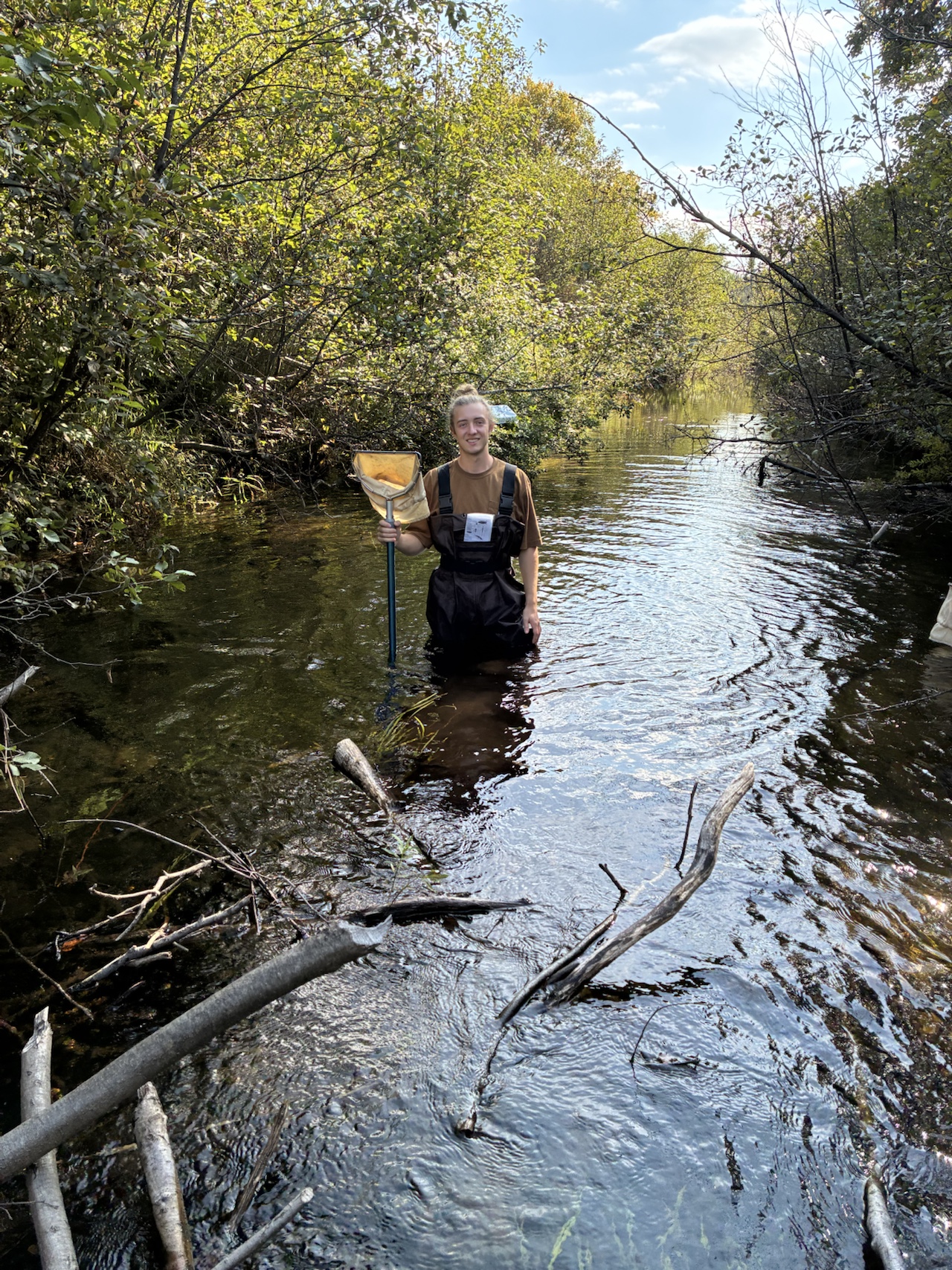
Hungerford’s crawling water beetle is an endangered species of aquatic macroinvertebrate that before this field work opportunity I did not even know existed. Hungerford’s have only been documented to live in very specific streams and rivers in northern Michigan and Canada. Namely smaller high quality streams that have a cobbly bottom (small stones and pebbles instead of muck or sand) and a flow that creates riffles around the rocks and logs in the stream without being fast enough to hinder their swimming or grabbing. They are also known to eat certain kinds of algae and when they are found it is common to find other water beetle species in the same area. I was lucky enough to be a part of aquatic macroinvertebrate surveying in the Manistee River as well as its offshoots in an effort to locate and confirm populations of endangered Hungerford’s. This field work was extremely enjoyable and something I have never participated in before. The process of surveying involves getting into waders and walking through the river or stream with a net that is used to create a vacuum or disturbance along the riverbottom that captures the macroinvertebrates at the site. The sampling process became very easy after a few tries and wading around the river was very fun especially since it was a nice hot day.
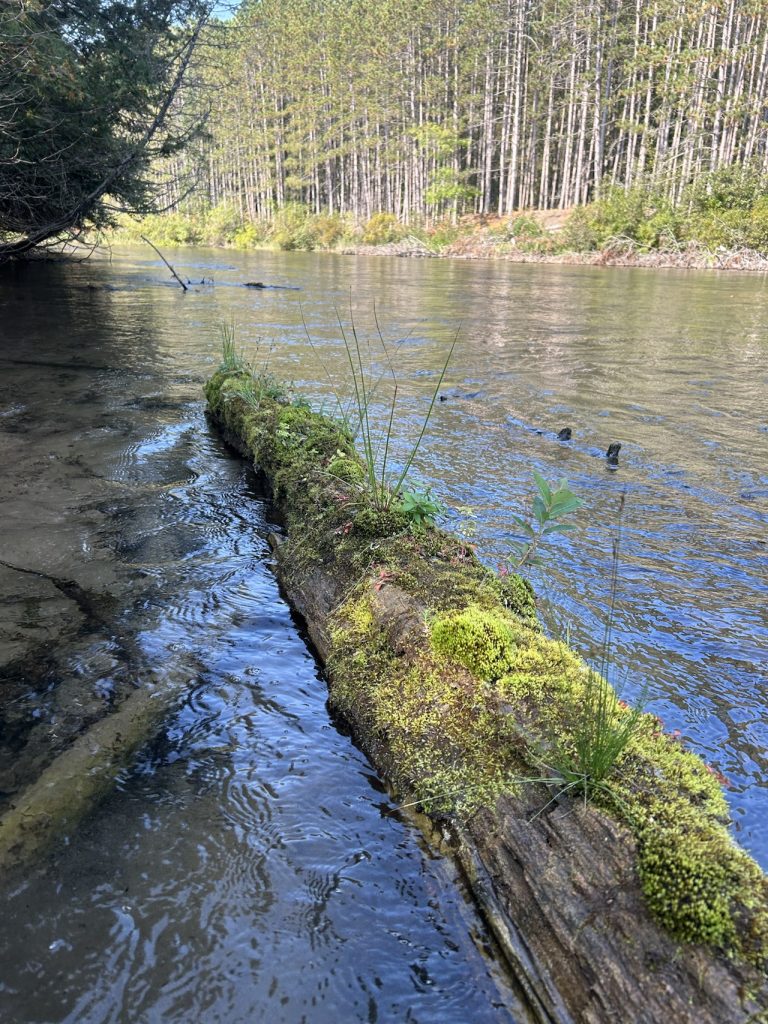


Through doing these surveys I learned about different water quality indicators and measurements as well as the identification of nearly all common aquatic macroinvertebrates that can be expected in streams in northern Michigan. Getting to identify and handle so many interesting species really sparked my curiosity about aquatic systems and aquatic fauna in general. I was also lucky enough to be the one to find and identify a Hungerford’s crawling water beetle in the Manistee river. This was the second recorded and confirmed sighting of this endangered species in this location which confirmed that there is a population in the river and the first identification was not a one off individual. The Manistee is also a much larger river than where Hungerford’s are typically found or expected to live. By confirming the population this could change our understanding of Hungerford’s habitat and environmental regulations on larger rivers that were previously not thought to contain this endangered species.


Sorry, the comment form is closed at this time.