


01 Oct Follicle to Flight: The Engineering of Milkweed Fruit
follicle to flight: The Engineering of Milkweed Fruit
Hello everyone!
This week I want to dive into something I find interesting about the milkweed plants we encounter here at Joint Base San Antonio – Camp Bullis, specifically, their fruit and seed dispersal system. During my undergraduate studies at UTSA, I took Biology of Flowering Plants and Herbaceous + Woody Plant Identification with Professor Stephanie Gdovin. I have her to thank for my appreciation and knowledge of Texas native plants!
Botanical science made simple!
Let me break down what makes milkweed fruit so special! Botanically speaking, milkweed species produce a follicle – a type of simple dry dehiscent fruit representing one of nature’s most efficient seed dispersal mechanisms. Understanding fruits classification can helps us better understand this engineering!
Fruits can be divided into two main categories: fleshy fruits (e.g. grapes, tomatoes, and apples) and dry fruits. Dry fruits, like milkweed follicles, are even further categorized as either dehiscent or indehiscent. Dehiscent means the fruit opens at maturity to release its seeds, including fruits like follicles and legumes (e.g. bean pods). Indehiscent fruits, like nuts or sunflower seeds, don’t open at maturity and instead rely on decay or environmental conditions to release their seeds.
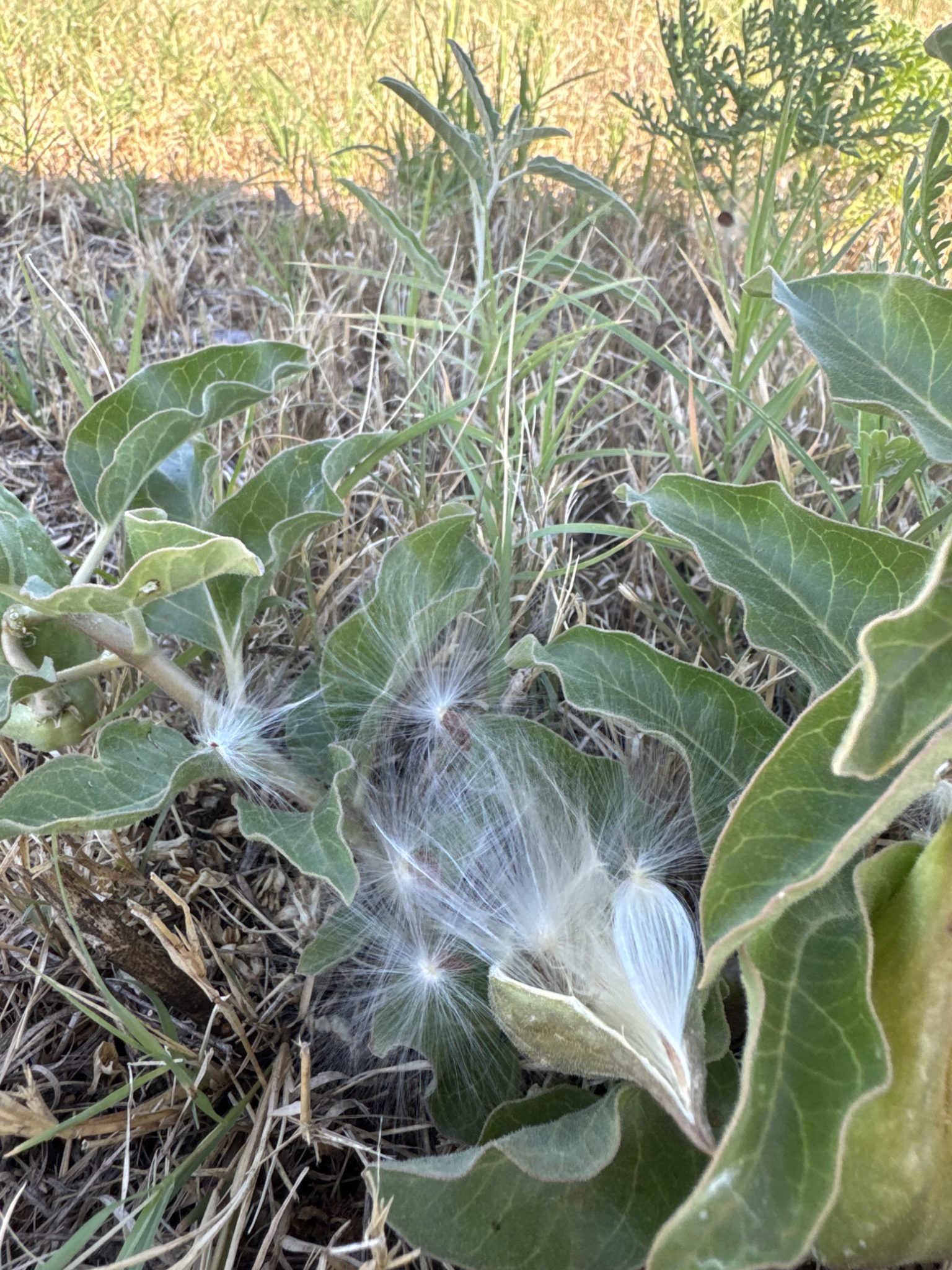
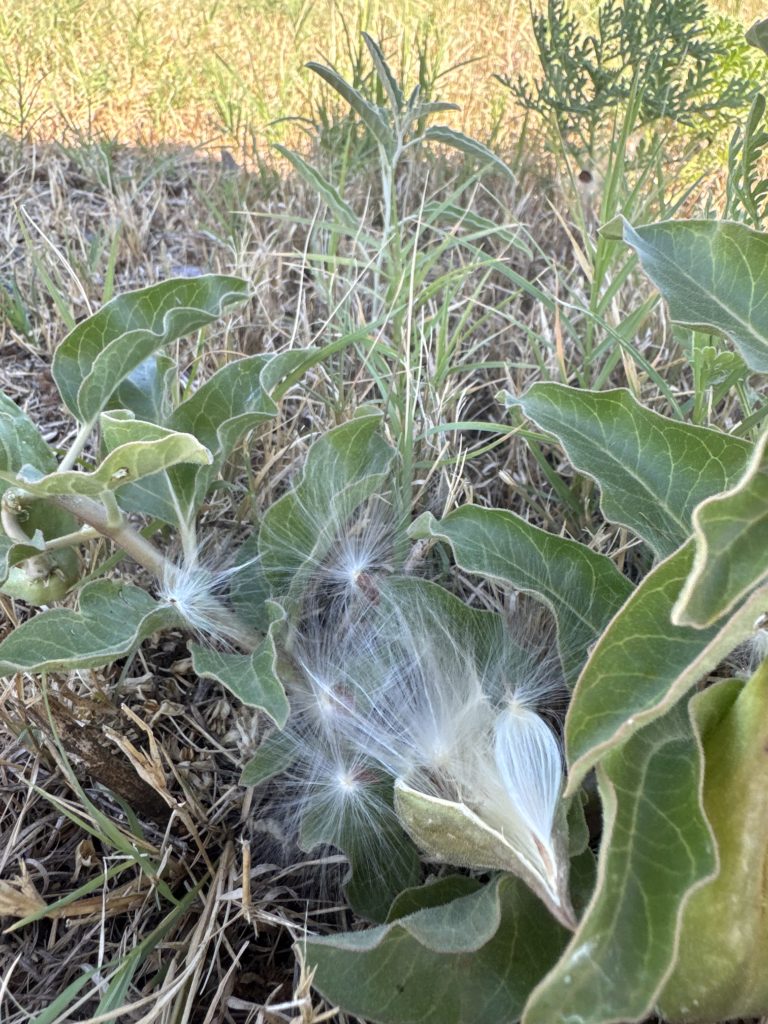
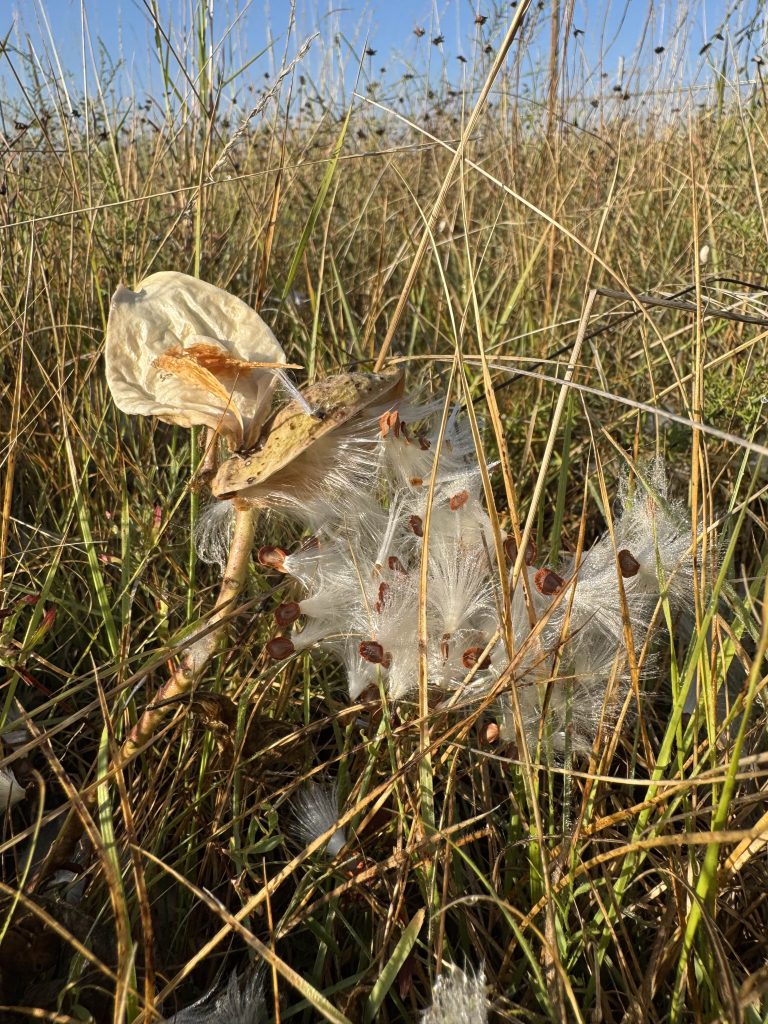
Milkweed follicles are perfectly designed dehiscent fruits. When mature, they split along a seam to reveal rows of seeds equipped with hair-like tufts that aid in wind dispersed seeds.
The Monarch Connection
Milkweed seed dispersal is critical for monarch habitat connectivity! The coma – those silky white hairs attached to each seed – functions as a wind dispersal mechanism that can transport seeds across considerable distances. As monarchs migrate through Texas, they require milkweed resources to support their reproductive cycles and larvae energy needs. Natural seed dispersal establishes new milkweed populations, creating the habitat necessary for a successful migration.
This means every milkweed plant that successfully disperses its seeds is potentially creating new habitat for future generations of monarchs. It’s a perfect example of how understanding plant biology directly connects to our conservation work here in Texas!
Until next time,
Dylan Garibaldi
Sorry, the comment form is closed at this time.