


30 Oct LHIP Art Showcase
Each year, the Latino Heritage Internship Program (LHIP) brings emerging leaders into national parks across the country. This summer, our interns closed their experience with a powerful creative project that honors heritage, history, and cultural pride.
What Is LHIP?
The Latino Heritage Internship Program connects college students and recent graduates with meaningful, paid internship opportunities across the National Park Service (NPS). The program is designed for students and recent military veterans who are passionate about cultural and natural resources, community engagement, and public lands.
More than just an internship, LHIP:
- Builds valuable job skills that open pathways to NPS careers
- Expands accessibility and awareness of national parks
- Facilitates mentorship and professional development
- Supports NPS projects in research, interpretation, conservation, and outreach
- Encourages long-term stewardship and inclusion in the preservation of our cultural and natural heritage
By collaborating with conservation organizations nationwide, LHIP strengthens community connections.
About the LHIP Art Showcase
To celebrate the end of their internship, LHIP Interns participate in a cultural art project designed to expand awareness and appreciation of Latino contributions to the United States. The goal is to share the remarkable stories, often overlooked, of Latino figures, landscapes, and historic sites that have shaped our nation.
During three guided art sessions led by award-winning traveling artist Ará Nibar of Puerto Rico, interns learned a variety of artistic techniques, including landscape composition, drawing buildings, and cultural landmarks, portrait and facial expression sketching, cartoon and stylized illustration.
Ará Nibar, widely recognized across Latin America and the Caribbean for his dynamic live painting and caricature work, brought his talent and passion for teaching to inspire our interns to express themselves through art.
Interns selected a cultural landmark, historic figure, or meaningful site connected to their park location and created an original piece that was later showcased during the Career & Leadership Workshop.
Why This Project Matters
Representation is powerful and art makes it accessible.
This project encourages interns to embrace heritage, amplify underrepresented histories, and translate their park experience into creative storytelling. By sharing these works, interns help the public see our parks and historic sites through a more inclusive, culturally rich lens.
The art showcase reminds us that Latino stories have always been woven into our national narrative and must continue to be seen, celebrated, and preserved.
Thank You Interns
Thank you to our interns, partners, and mentors for another inspiring year of storytelling, cultural celebration, and leadership. The LHIP Final Art Showcase reminds us that every brushstroke, story, and perspective brings us closer to a more inclusive future for our national parks.
Rowan O’Connor — Lincoln Boyhood National Memorial
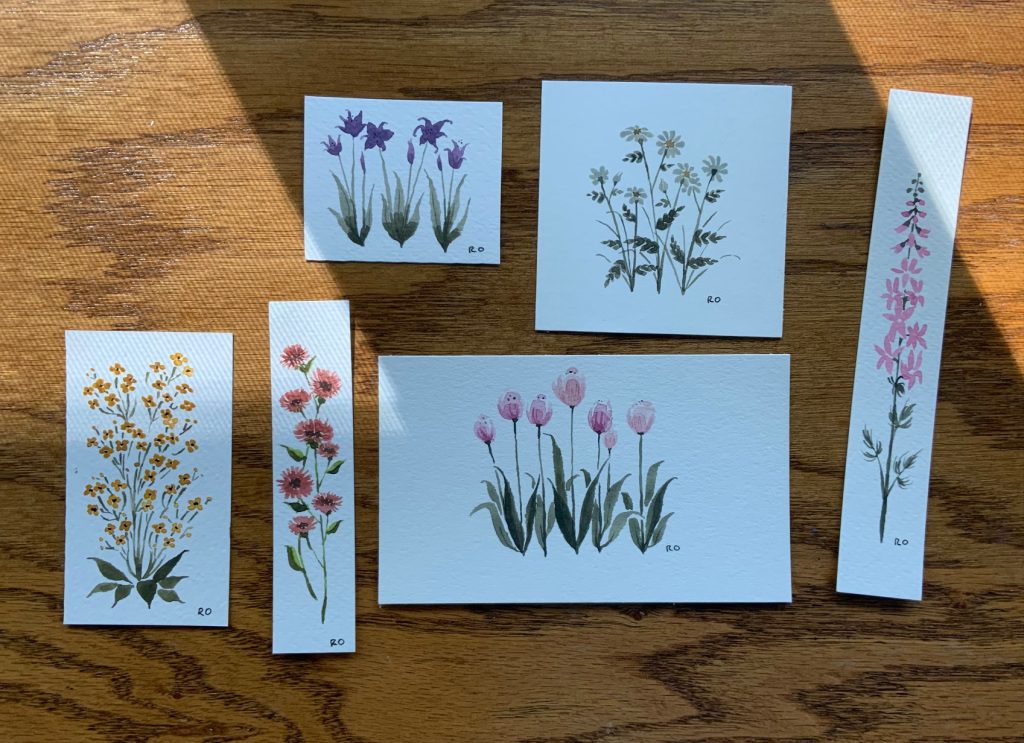
Rowan O’Connor created a series of watercolor paintings inspired by the flora found throughout Lincoln Boyhood National Memorial. Her work features vibrant colors influenced by Caribbean art styles, bringing energy and warmth to depictions of lilies, asters, daisies, and tulips. Working en plein air using a compact travel watercolor set, Rowan captured the natural beauty of the park directly from the landscape, expressive shapes, bold hues, and the connection between place and artistic interpretation.
Alonzo Mora — Cuyahoga Valley National Park, Ohio
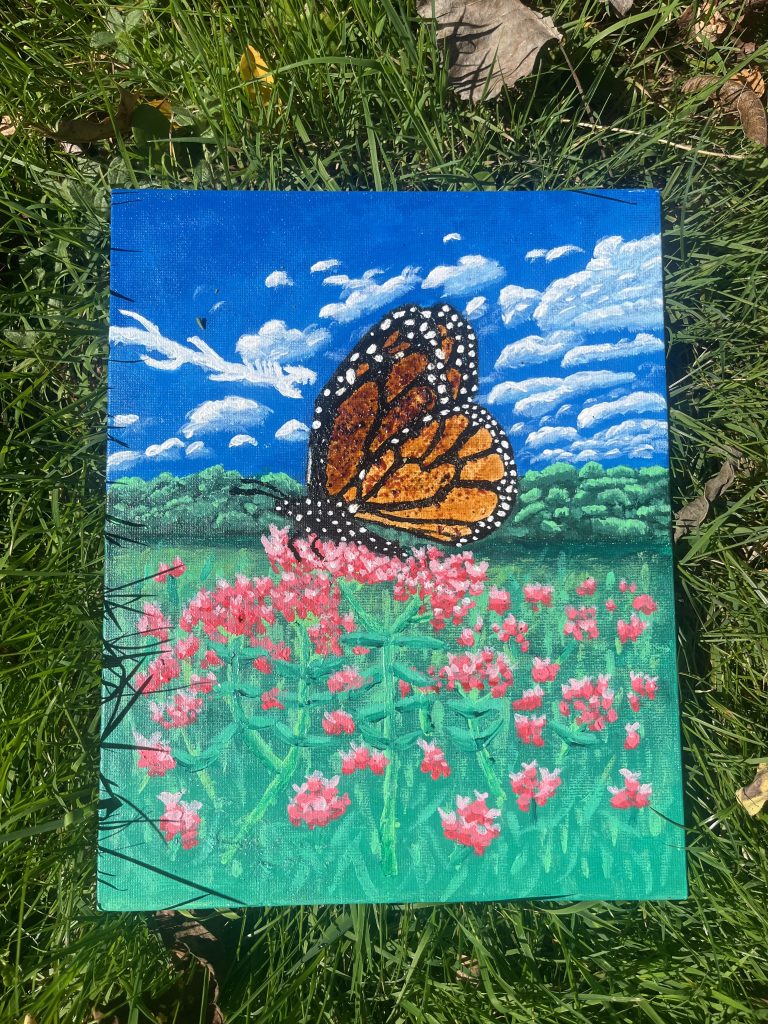
During their internship at Cuyahoga Valley National Park, Alonzo Mora created their third painting ever, inspired by observing monarch butterflies at the site. Using a unique medium made from ground-up chiles mixed with gum arabic, Alonzo painted a vibrant monarch, connecting their work to ancestral traditions in Mexico where monarchs are associated with the souls of ancestors during Día de los Muertos. Alongside the painting, Alonzo wrote a reflective poem exploring themes of migration, home, community, and intergenerational connection. The piece highlights the monarch as a symbol of continuity, resilience, and the enduring bond between ancestors and their communities.
Faith Ash — Cuyahoga Valley National Park, Ohio
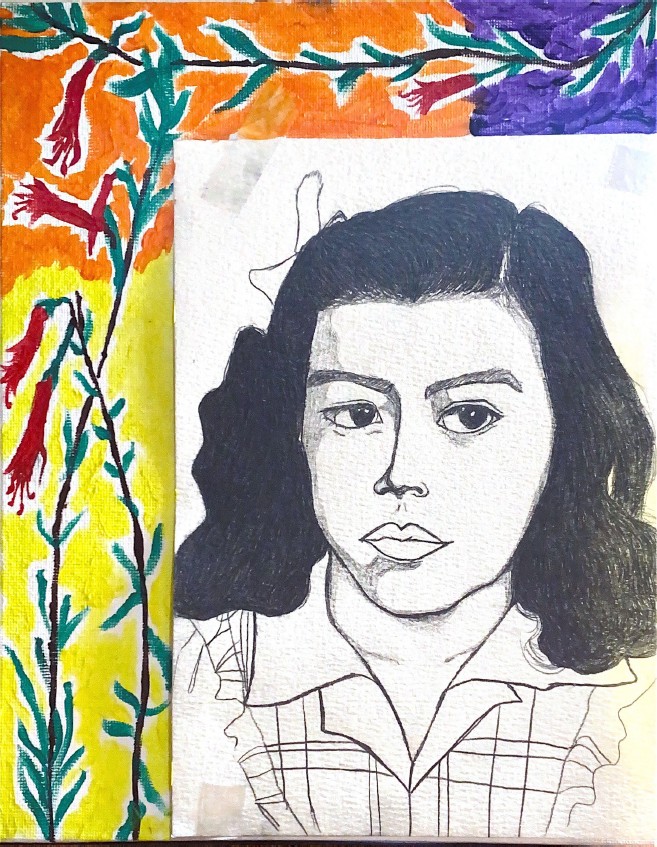
Faith Ash created a portrait of Sophie Delgado Moss, a member of one of the first Mexican American families to settle in Cuyahoga Valley. Rather than a traditional portrait, Faith incorporated symbolic elements that reflect cultural heritage. She painted California fuchsia, closely associated with her Mexican background, and included hummingbirds, linking her own family history and identity to the local landscape. Through this work, Faith connects the story of Sophie’s family with her own Mexican and Latin heritage, highlighting the deep ties between community, ancestry, and place.
Itzel Verdin — Upper Delaware Water Gap National Recreation Area, Pennsylvania & New Jersey
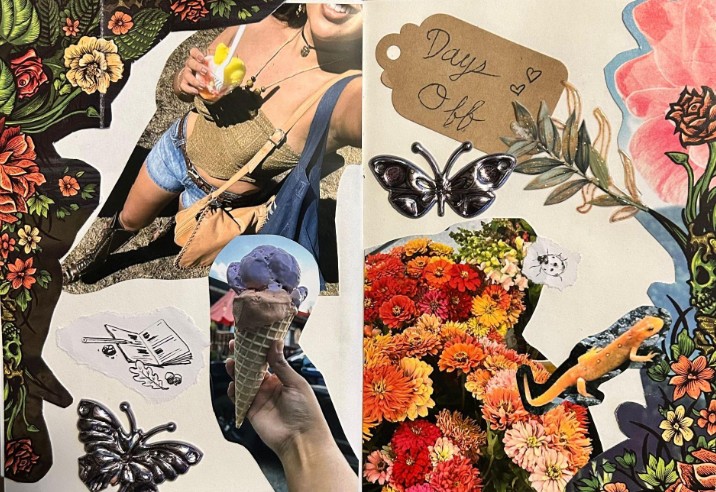
Itzel Verdin created a scrapbook-style “junk journal” during her internship at Upper Delaware Water Gap, documenting her personal journey and experiences. She began her trip in Dallas, Texas, traveling through San Antonio and Nacogdoches to visit family, and continued north through Arkansas to the park. Along the way, she collected mementos, such as visitor center passports, to incorporate into her journal. Itzel’s project captures the intimacy of travel, memory, and reflection, serving as a personal archive she hopes to look back on in the future, connecting moments of her journey with the landscapes and experiences of the park.
Eduardo Guzman — Blackwell School, Oklahoma
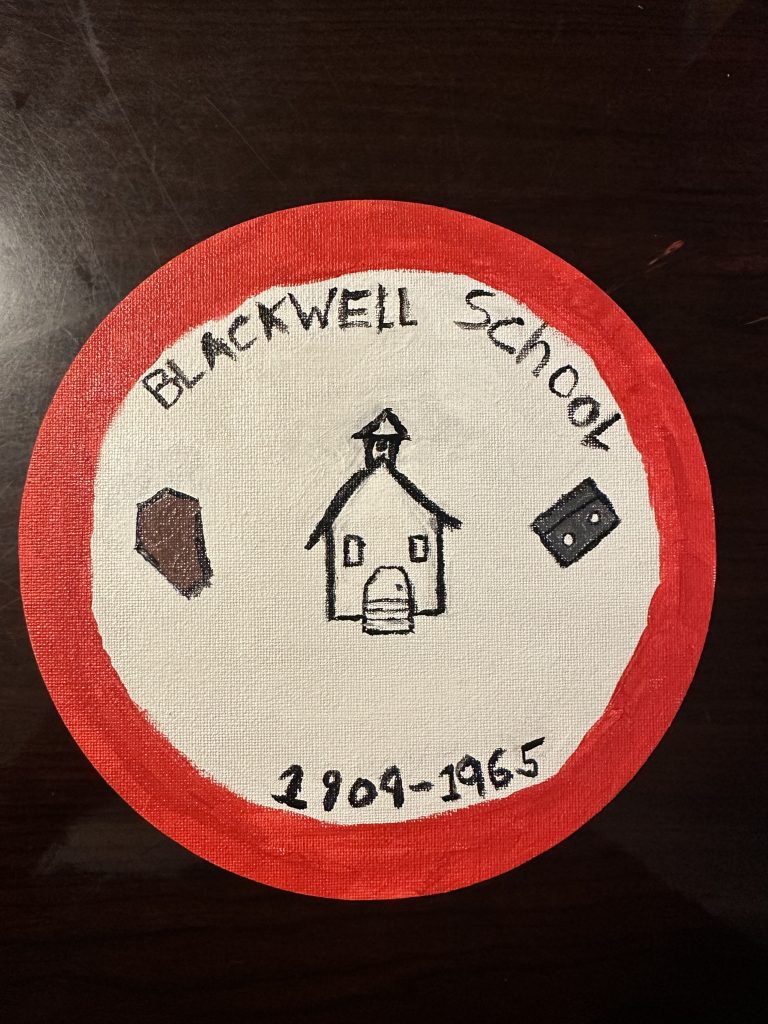
Eduardo Guzman created a painting inspired by the Blackwell School during his internship. Rather than depicting the exterior of the building like many might, he drew inspiration from a mug featuring the school’s logo. Using a circular canvas, Eduardo recreated the logo, transforming a familiar emblem into a personal artistic interpretation that honors the history and identity of the Blackwell School.
Kathleen Castano — First Ladies National Historic Site, Ohio
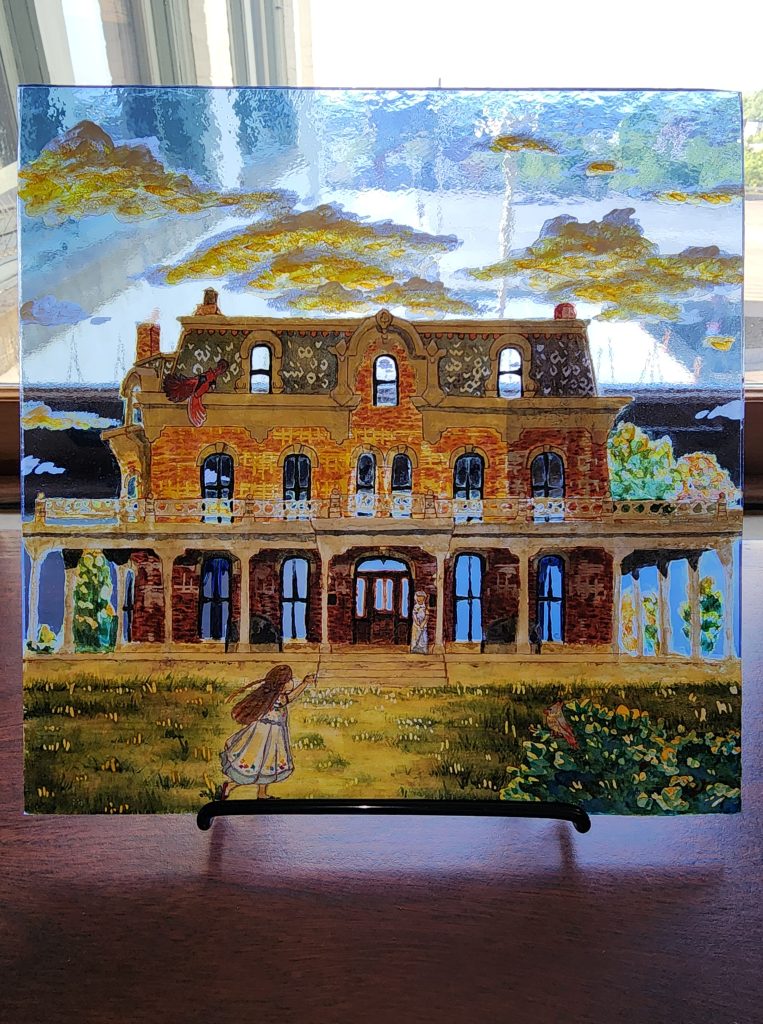
Kathleen Castano, an interpretation intern at First Ladies National Historic Site, created a stained-glass-inspired painting highlighting both architecture and personal narrative. Inspired by the windows of the Saxton House, she emphasized light, movement, and life, drawing the viewer’s eye along the path of a young girl. For Latino representation, Kathleen incorporated figures modeled after her own grandmother and niece, placing them at the center of the composition. Cardinal birds, the state bird of Ohio, also appear in the painting, adding local symbolism and a touch of whimsy. The artwork balances the beauty of the historic site with familial and cultural storytelling.
Victoria Prieto — Bayes Caldera
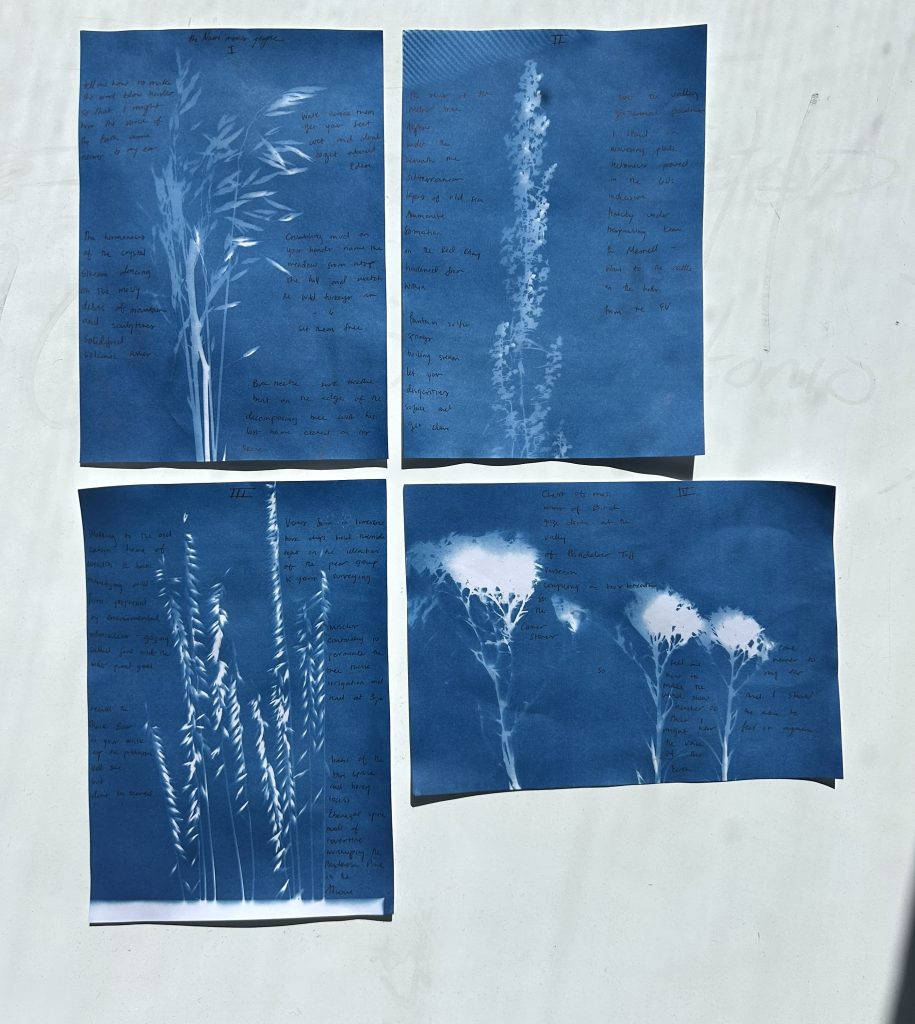
Victoria Prieto created a series of cyanotypes featuring plants from the Valles Caldera, capturing the natural beauty and history of the landscape. As someone passionate about both art and writing, she complemented the cyanotypes with a poem reflecting her experience discovering the area and connecting with its flora. With guidance from the park’s botany team, Victoria identified the plants she featured, including Bromus inermis, Artemisia kurudi, Battalia (exact species uncertain), and Heteroscelis viciosa. Her work emphasizes the voice of the landscape itself, celebrating the richness of the plants and their place in the environment’s story.
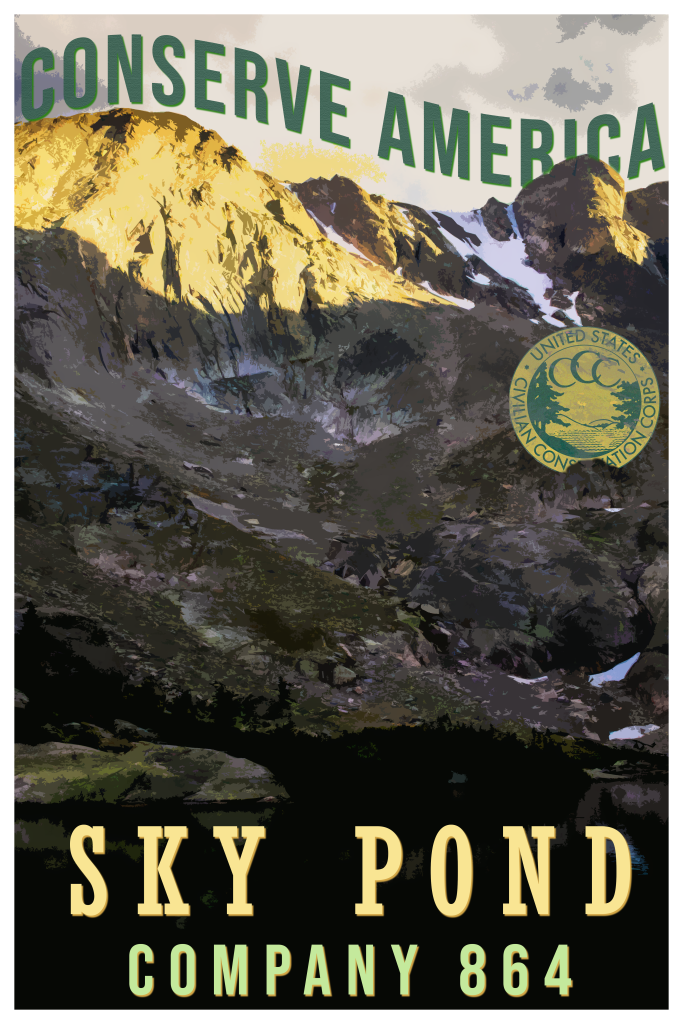
Michael Quintana — Rocky Mountain National Park, Colorado
Michael Quintana created a digital artwork inspired by Sky Pond, one of his favorite locations in Rocky Mountain National Park. He began with a photograph of the site and transformed it into a vector image using Adobe Photoshop. His work draws inspiration from historical National Park Service and Civilian Conservation Corps (CCC) posters, reflecting the lasting legacy of the CCC in the park. Specifically, Company 864 helped construct trails in Glacier Basin and Glacier Gorge, including the trail to Sky Pond, leaving infrastructure that remains heavily used today. Michael’s piece honors both the natural beauty of the park and the historical impact of the CCC, including the role of Latino recruits during the Great Depression, connecting living history with contemporary appreciation of the landscape.
Blanca Andrade — Fort McHenry National Monument, Maryland
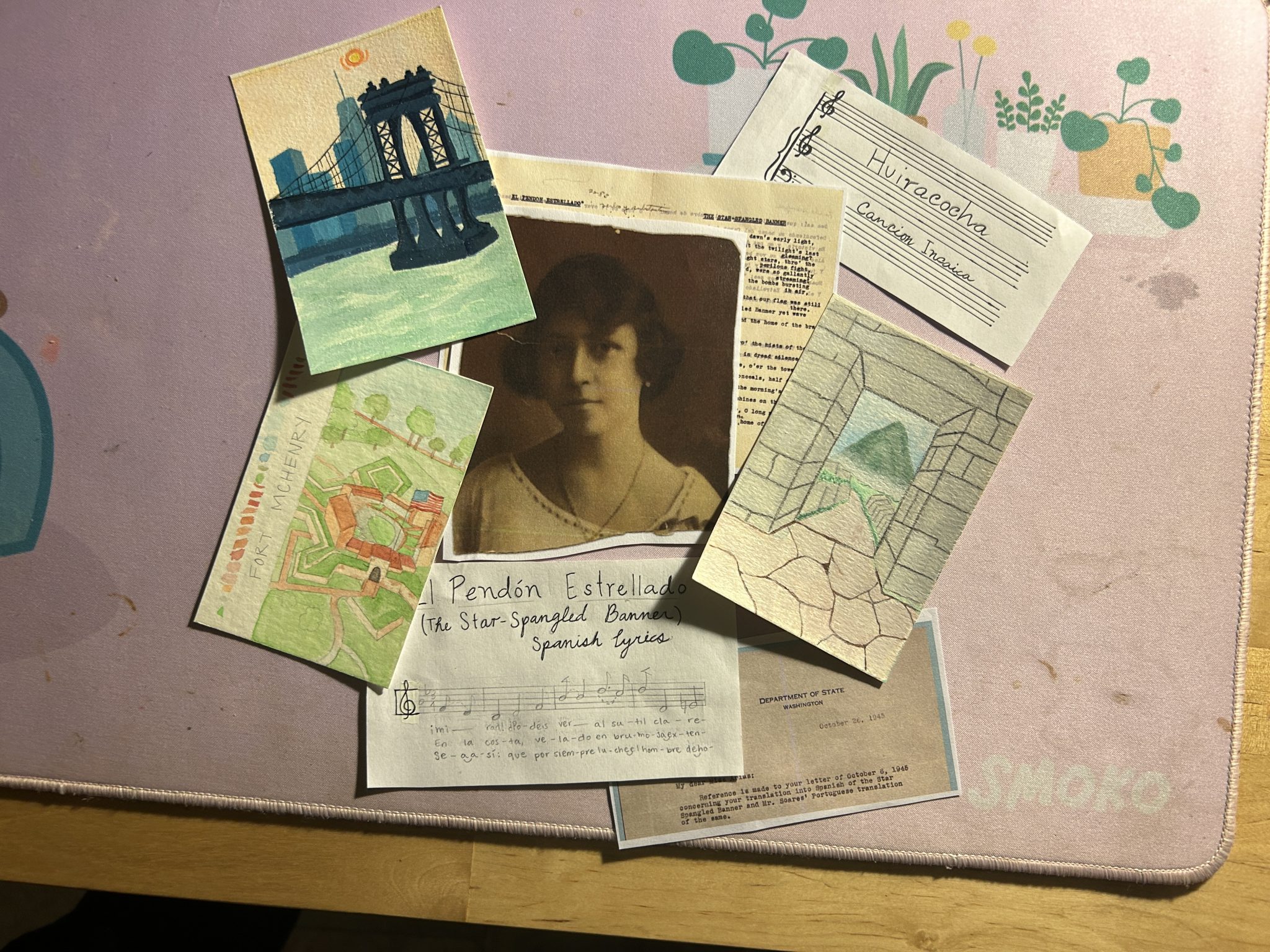
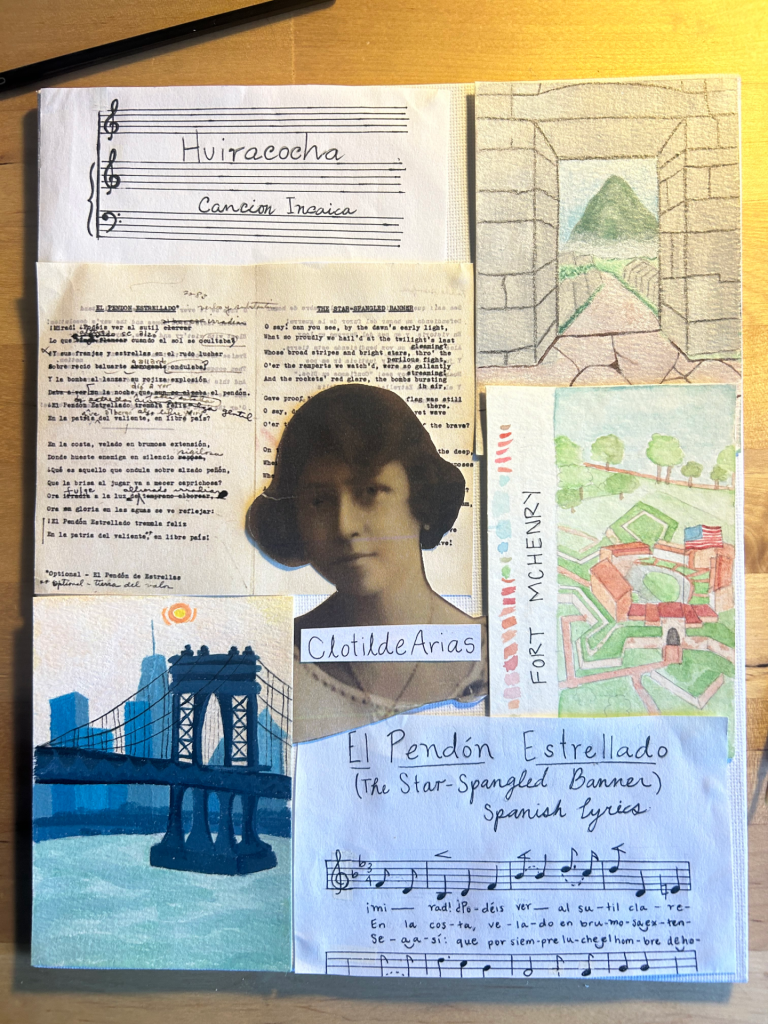
Blanca Andrade created a mixed-media project inspired by Clotilda Arias, a Peruvian immigrant who translated the Star-Spangled Banner into Spanish and composed music honoring her indigenous heritage from the Inca Empire. Blanca worked primarily in acrylics, with some watercolor, to depict landscapes from Machu Picchu and New York City, where Arias arrived in 1923 to study music. She designed her work with a scrapbook aesthetic, incorporating collaged images, compositions, and Arias’s handwritten translations in both Spanish and English. Blanca’s project reflects both Arias’s pioneering achievements as a composer, producer, and journalist and Blanca’s own exploration of her Ecuadorian and indigenous heritage. The artwork honors cultural history, musical legacy, and personal connection to ancestry.
Sorry, the comment form is closed at this time.