


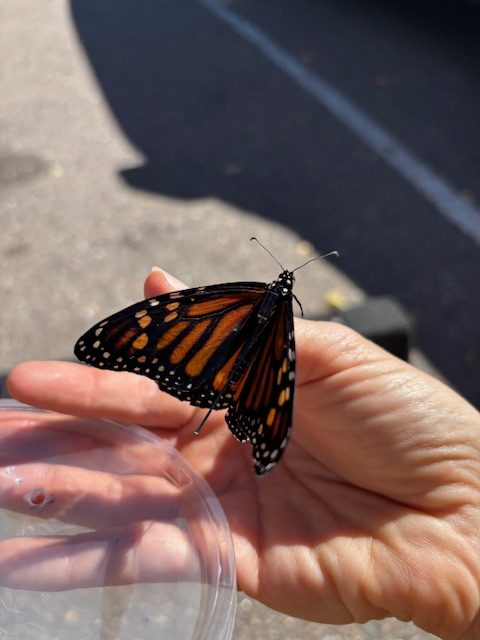
30 Oct Tiny Tags and Big Journeys: Tracking Monarchs on their migration!
Butterfly Migration!
Every fall, one of the most breathtaking migrations on Earth takes place above our heads. Millions of monarch butterflies (Danaus plexippus) flutter south across North America, traveling up to 3,000 miles to reach their overwintering forests in central Mexico. But despite decades of research, there’s still much we don’t know about the routes they take, how long they travel, or what challenges they face along the way.
Now, thanks to new CTT tracking technology, we’re beginning to fill in those gaps — one tiny tag at a time.
What Is CTT Tagging?
CTT stands for Cellular Tracking Technologies, a company that produces miniature wildlife transmitters. These tags — weighing less than a grain of rice — are light enough to attach to a monarch butterfly without affecting its flight. Once fitted, the tag transmits location data to a network of receivers or satellites, allowing researchers to follow the butterfly’s exact path in near real-time.
It’s a groundbreaking step forward. Traditional monarch tagging involved paper stickers with ID numbers, which required the butterfly to be physically recaptured to collect data. With CTT tags, scientists can now watch migration unfold as it happens — recording flight paths, stopover points, and even how weather patterns influence movement.
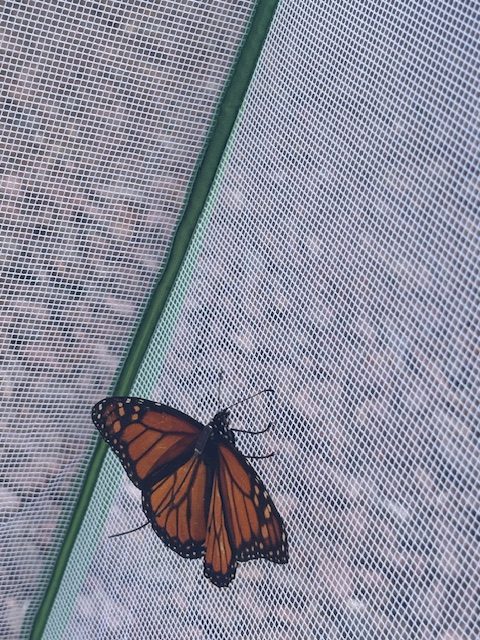
Following the Journey South
As tagged monarchs depart from northern breeding grounds in the U.S. and Canada, they begin an epic, multi-generational relay toward Mexico’s Oyamel fir forests.
CTT data helps reveal where they rest, refuel, and reproduce along the way. Early results have shown that monarchs don’t all follow the same path — some move directly south, while others take a more central route through Texas. These insights help conservationists identify critical habitat corridors that need protection, from native milkweed patches to nectar-rich wildflower fields.
Why Tracking Matters
Monarch populations have dropped by more than 80% in recent decades, largely due to habitat loss, pesticide use, and climate change. Understanding how and where they migrate is crucial to reversing this decline.
By combining CTT movement data with satellite imagery and weather models, scientists can pinpoint migration bottlenecks — areas where butterflies cluster and face heightened risks from storms, drought, or land development. Protecting these key stopovers could make the difference between further decline and recovery.
Citizen Science and the Project Monarch App
One of the most exciting parts of this research is how it’s opening new doors for citizen scientists to get involved — especially through the Project Monarch app.
The Project Monarch app connects everyday observers to ongoing monarch migration studies. Users can log sightings, upload photos, and record behaviors such as feeding or roosting. When combined with data from CTT-tagged butterflies, these community observations help fill in movement gaps that even high-tech tags can’t capture.
Every entry in the app strengthens our collective understanding of monarch migration patterns. Whether you spot a monarch in your backyard, school garden, or a local park, that single observation adds to a continent-wide database used by researchers and conservation organizations.
Getting involved is easy — download the Project Monarch app, head outside, and keep an eye out for these iconic orange wings. Your phone becomes a science tool, and your sightings become part of the story.
Sorry, the comment form is closed at this time.