


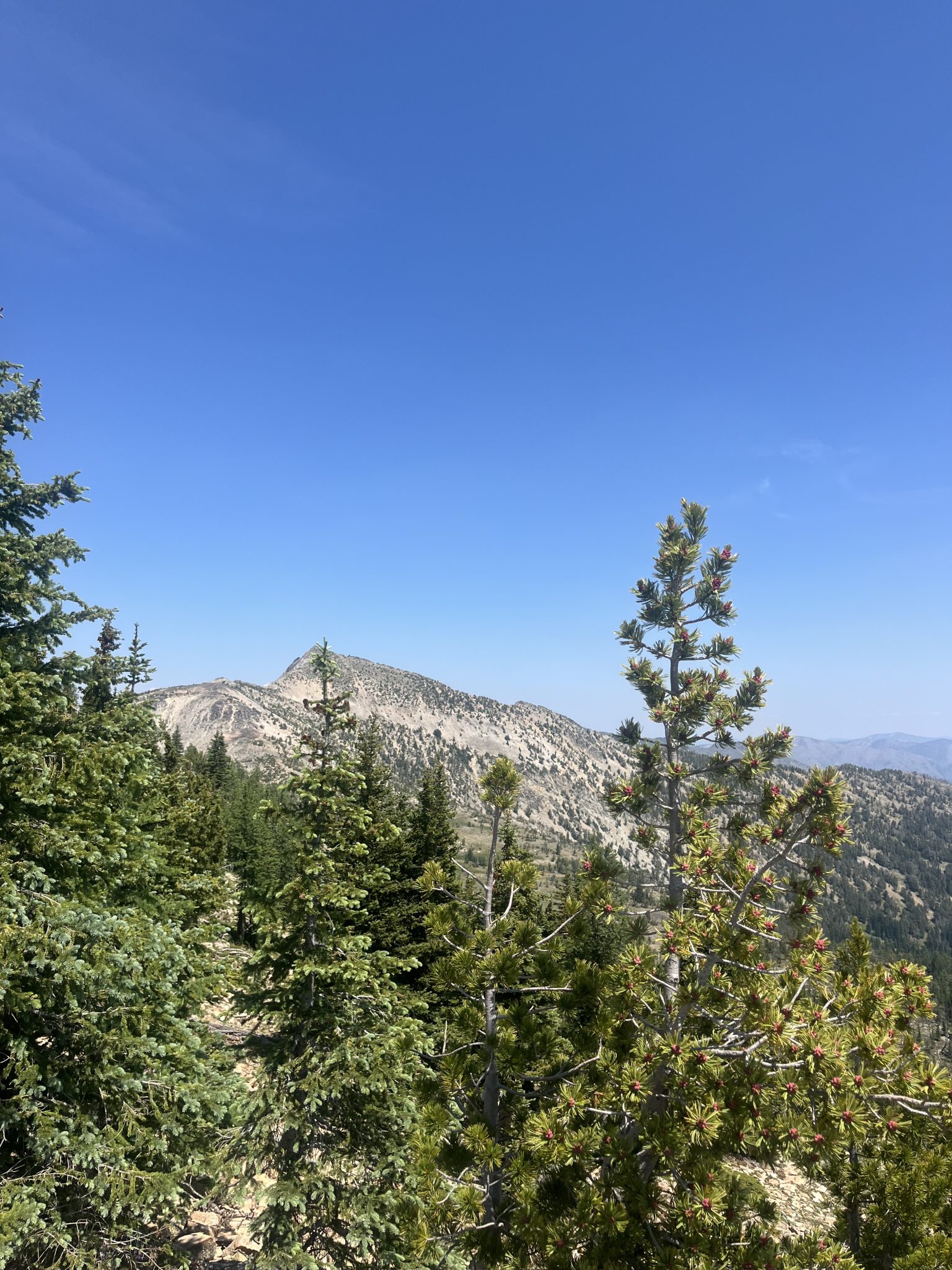
03 Nov Whitebark Pine (Pinus albicaulis) Cone Collections
*cue dramatic reading*
After years of growing slowly, waiting in anticipation for the right odds, when the stars align – finally! The time has come to collect whitebark pine cones..
Whitebark pine (Pinus albicaulis) are notorious slow growers. They can easily live from 500 to 1,000 years old on average and some go beyond even that! These trees don’t make it easy for restoration workers however – it takes about 40~ years until a whitebark pine is mature enough to reproduce. Even then, they don’t produce seeds every year, often masting like oaks do to make a huge amount of cones as a group so there are more seeds than the clark’s nutcrackers and other critters can consume in one season. And even THEN – the cones themselves take 2 years to become fully mature, making it an arduous process to even get one seed!
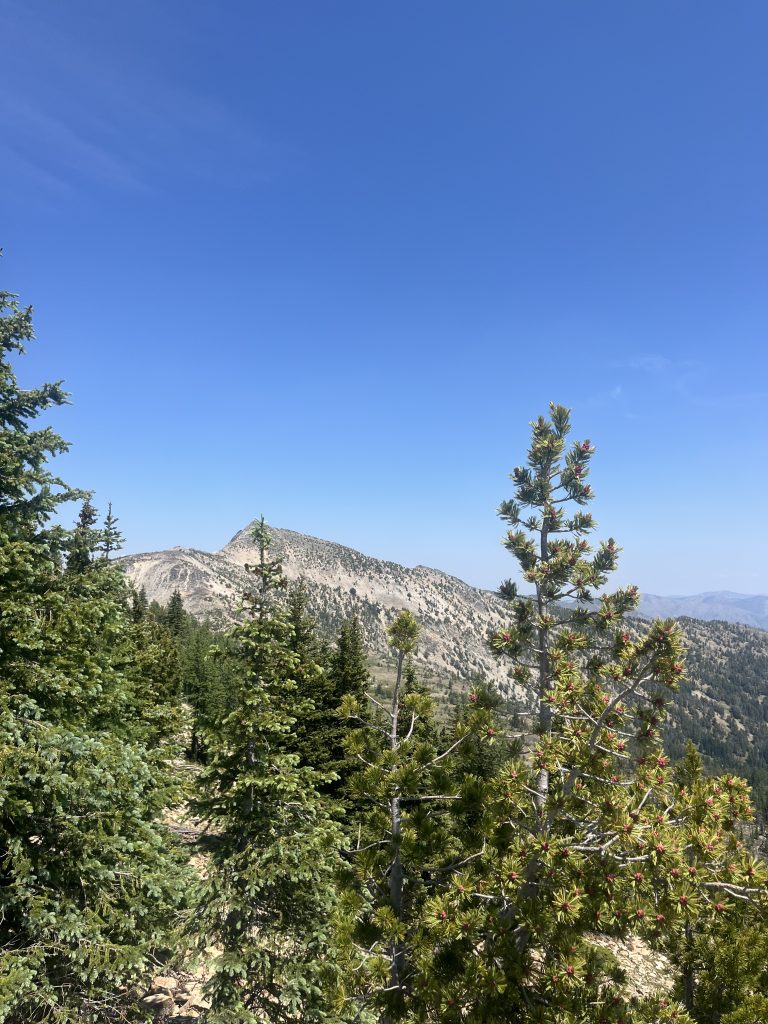
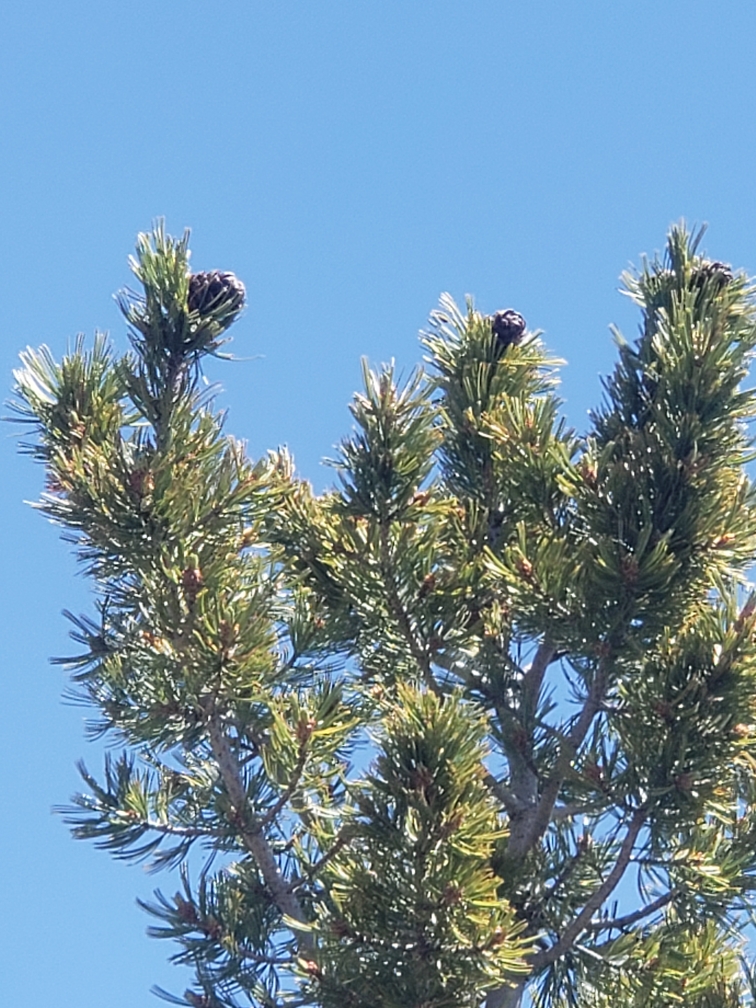
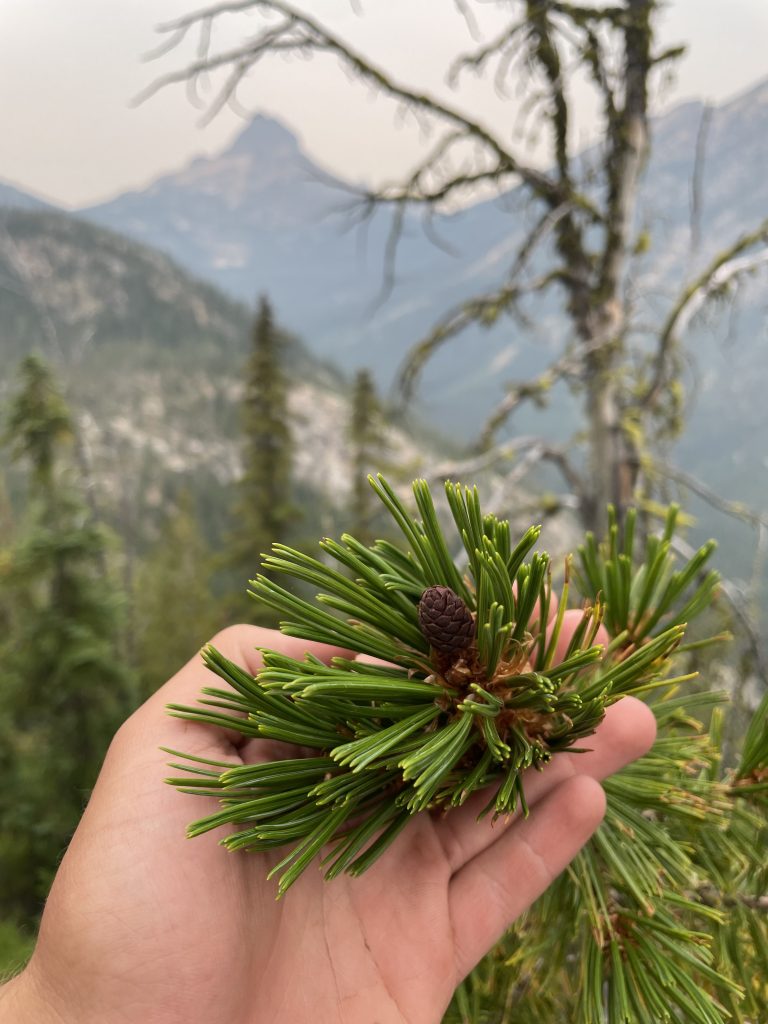
Last year when I was doing a lot of whitebark pine surveys, of the 10K+ trees we found, only about 50 of those were cone producing. This year, we’re seeing much more consistent but low cone production ie a lot of the mature trees have cones (yay!) but most of those trees have only 20 or so cones each. Ideally when we go out to collect cones, we’re looking for a minimum of 30, more likely 50 cones per tree and for the really big ladies, over 200!
It’s quite a procedure to collect whitebark cones as you need to:
FIRST: Scout potential areas to collect ….of which most are alpine sites which means you have to wait until the snow melts in June.
SECOND: Identify which trees are producing 30+ cones and are easier to access, ie close to roads or within a mile or less walk (there’s a LOT of gear to haul in for these operations). You also keep in mind which trees are healthy, especially those in areas with lots of blister rust (Cronartium ribicola) present (the main enemy of whitebark pine) as those trees will be prioritized for collections as they may have some innate genetic resistant to blister rust.
THIRD: Cage the cones in July before the Clark’s nutcrackers, bears, and other critters can eat them all.
FOURTH: Go back and ollect them 2 months later in September when they’re ripe and before the snow creeps in and cuts off access.
FIFTH: Send the cones to the genetic center in Doreena (OR) where they grow the seeds into seedlings and test if any of the trees have the elusive innate genetics that make them resistant to white pine blister rust. If so, they are selected as “elite” trees which will be grown as the future broodstock to restore our forests.
This year, I had the opportunity of helping cage whitebark pine cones with the silviculture crew. To actually ascend into the precarious crown of a whitebark pine, you need to be tree climber certified. I wanted to attend a training this spring to get my certification which was unfortunately canceled, so I was ground support aka the muscle hauling in gear & the brains recording all the necessary data.
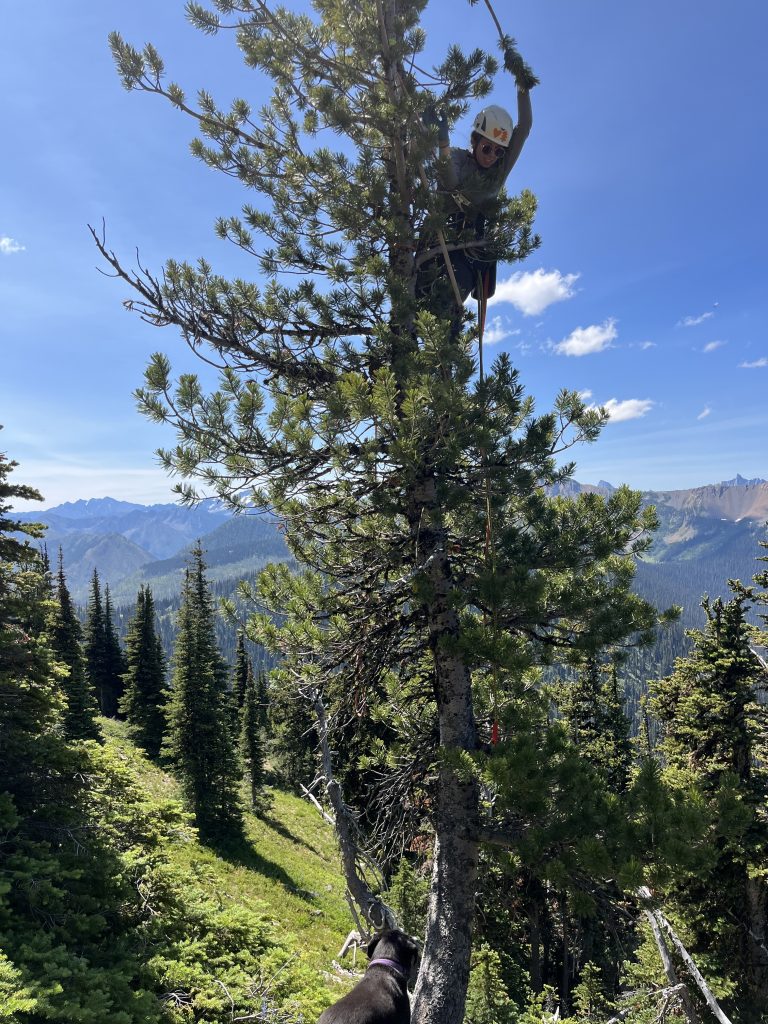
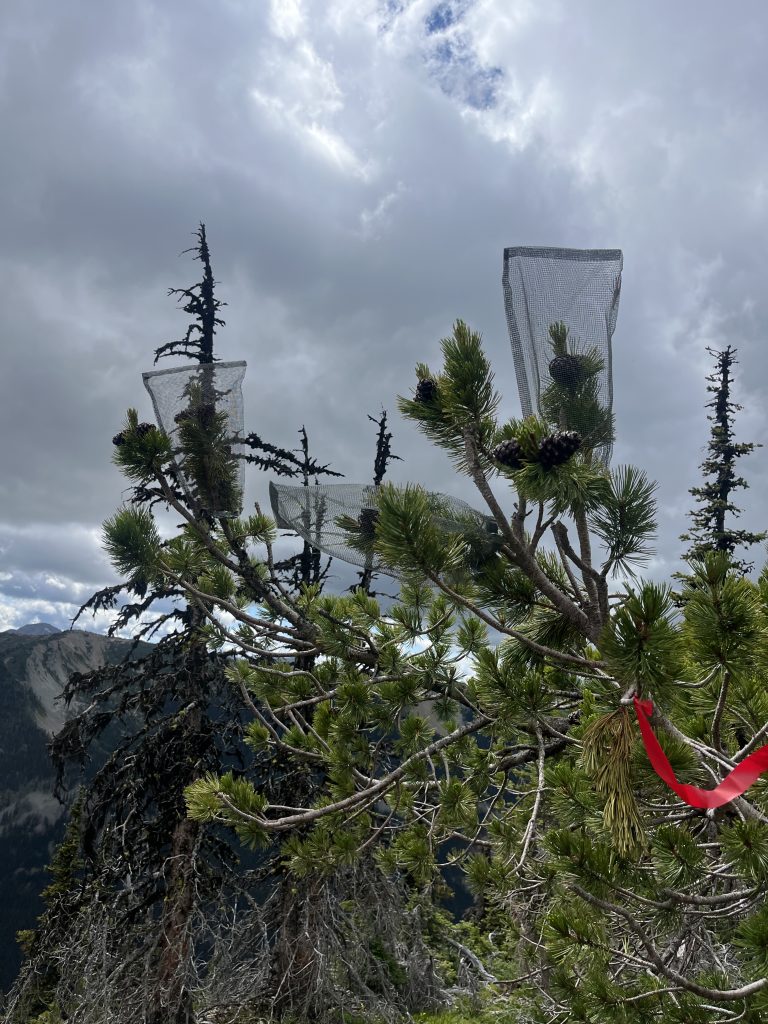
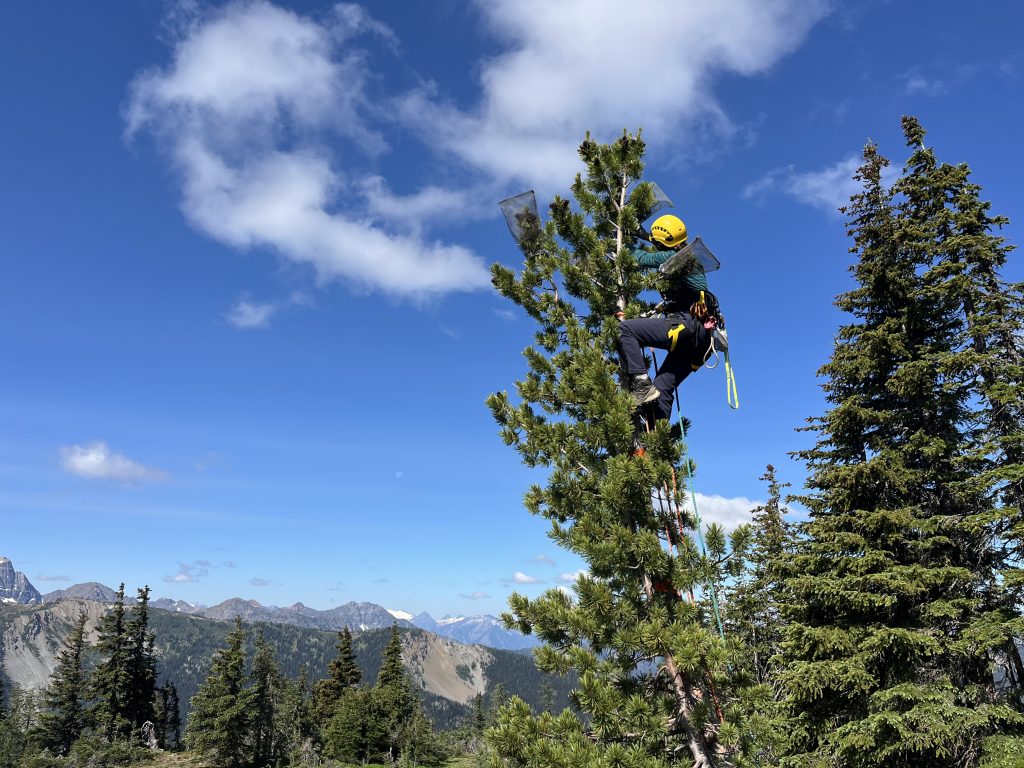
To my glee – there was one whitebark in a krumholtz form that I was able to reach on my tippy toes and cage by hand! So I did get to put some cages out ;)
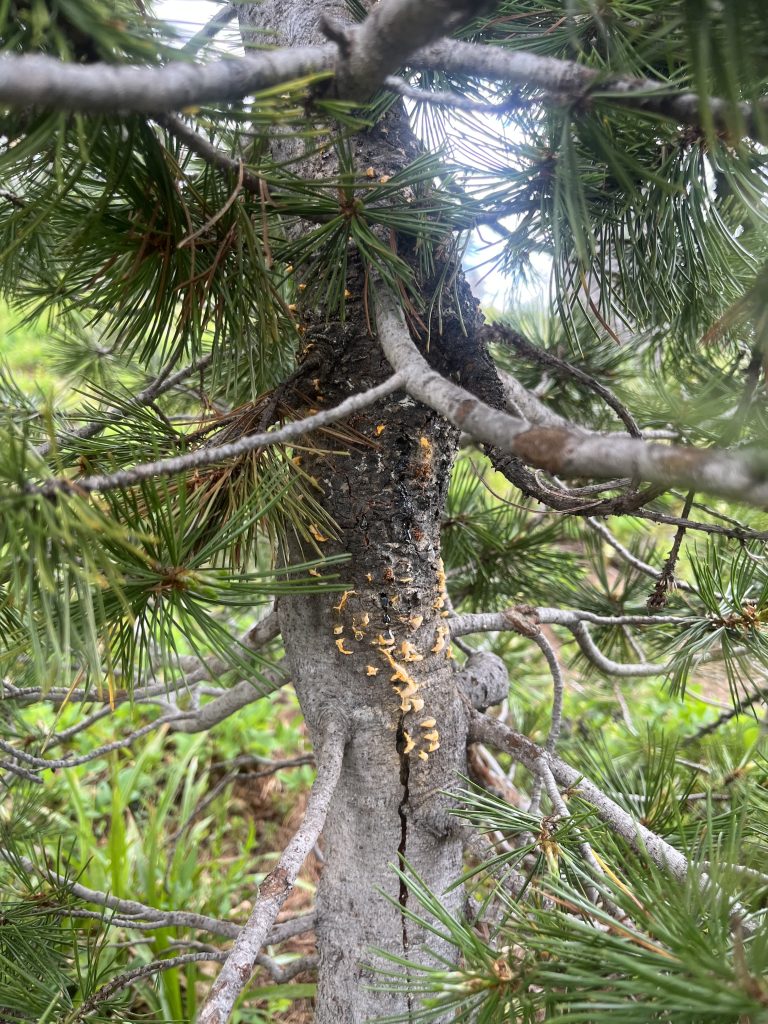
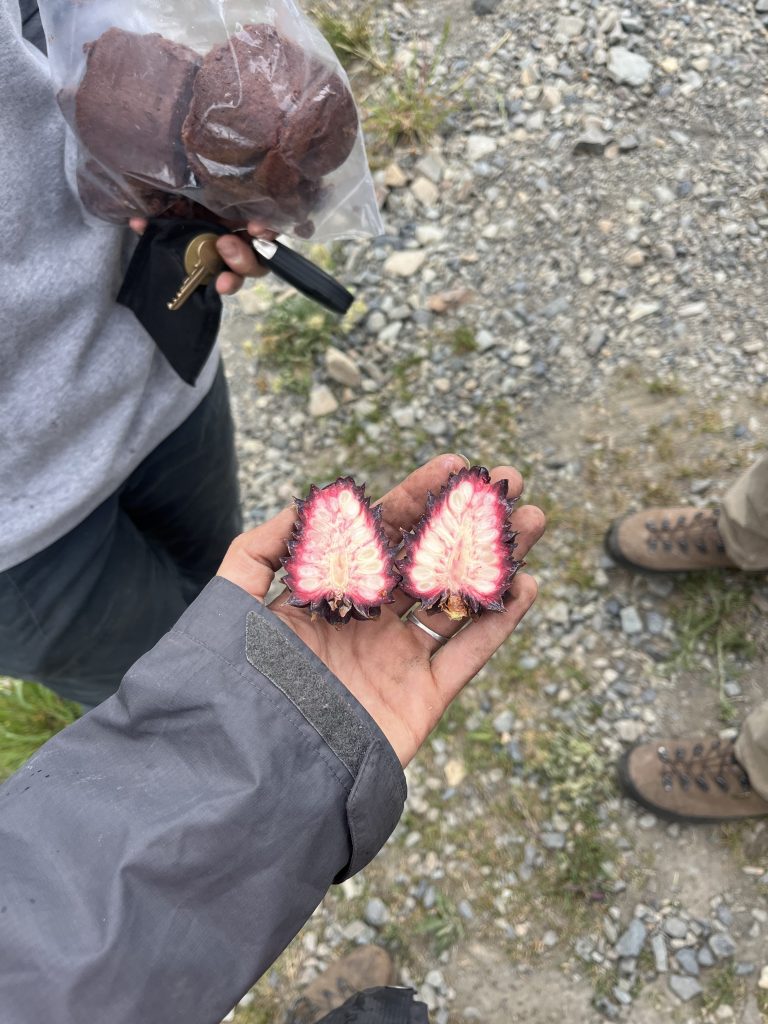
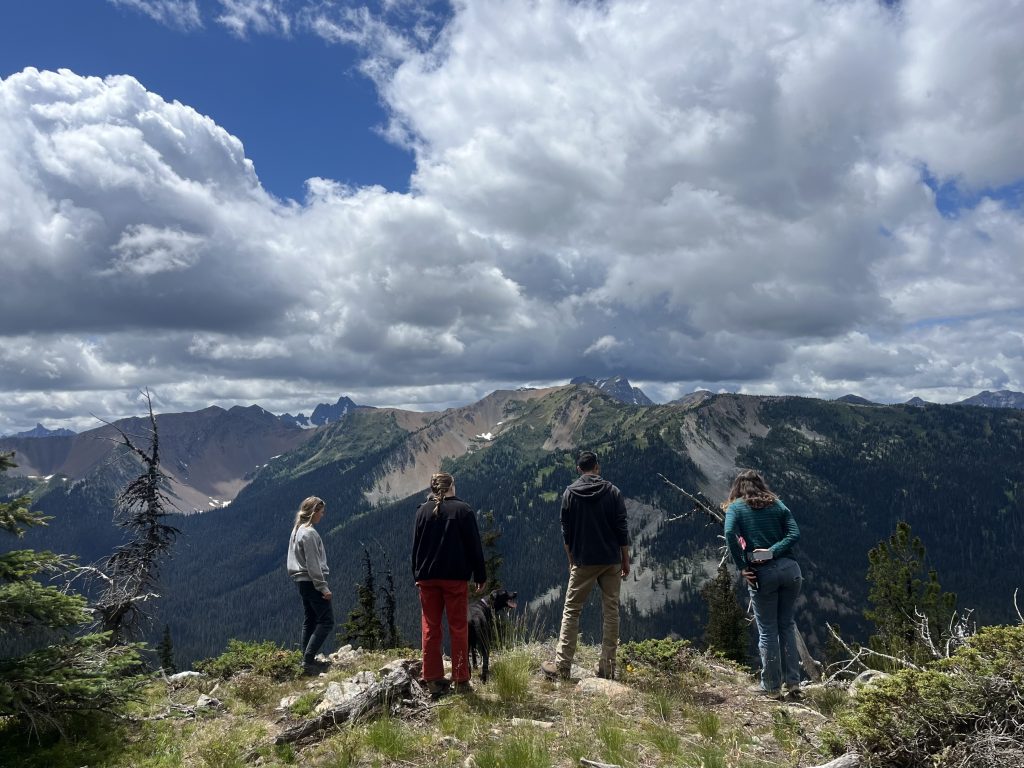
Side tangent – this felt so sacrilegious (whitebark pine is an endangered species after all) and I’m not sure I should include it on the internet – but to test how far along the cones are in ripening we cut one cone open and they are indeed on their way! Yay!
Thats all for now, hopefully I’ll have an update for y’all in a few months on how successful the cages were when we go back to collect the cones in September.
Sorry, the comment form is closed at this time.