


20 Nov Building Buck and Rail Fence with a Local Youth Crew
Building Buck and Rail Fence with a Local Youth Crew
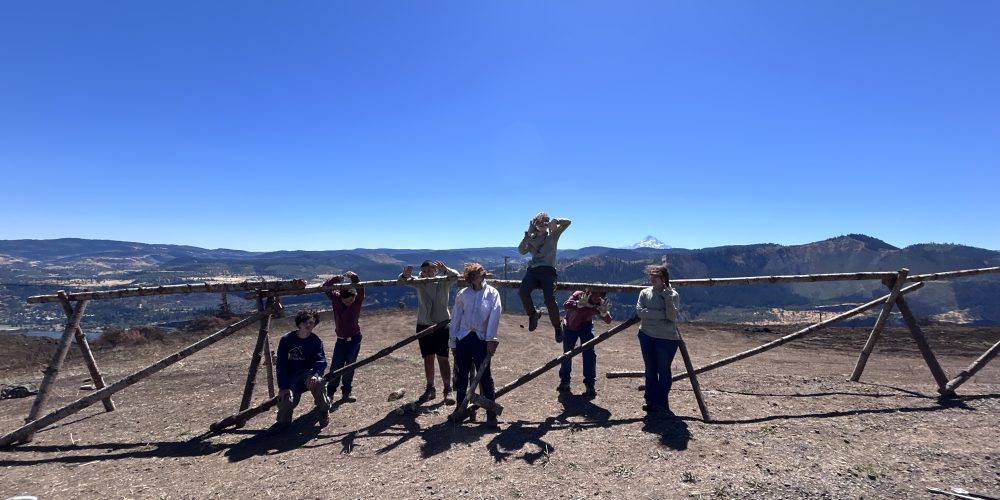
Once a year, my unit partners with The Next Door – a local nonprofit that provides social services to the Columbia River Gorge community. While The Next Door has a lot of worthwhile programs, we work with them on their Summer Youth Employment Program. The Summer Youth Employment Program empowers marginalized youth with the skills to be successful in the workforce. Local youth apply for a spot on the summer work crews and go through the interview process. Those who are offered jobs, work with the forest service and other local organizations on jobs related to forestry and natural resource management. My unit provides funding to the organization and guides the youth work crews through several jobs that build their skills and confidence. Typically, our unit is responsible for leading the crew for one month out of the summer.
This year I was one of the leads for the program. As part of that role, I collaborated with my coworkers to brainstorm projects that the youth crew could work on. These projects included removing invasive weeds along the Mosier Twin Tunnels Trail – a popular walking and biking trail, building buck and rail fences to discourage illegal offroad vehicular traffic, and installing shade fabric over a restoration site to kill a large swath of Canada Thistle, a noxious weed. Once we had our project ideas fleshed out, all that was left to do was prepare and wait for the youth crew start date.

The start date finally came and I met the youth crew out in the field. Initially I was overwhelmed by their sheer numbers and rambunctiousness (a dozen or so high schoolers can make a lot of ruckus). But we did a little ice breaker and I learned everyone’s names, and things started to feel more manageable. The project that I was in charge of overseeing was the buck and rail fence building project. My coworker and I taught the kids each step of the process. First, you need two A-frames. Then, you connect the A-frames with a pole going from the top of one frame to the top of the other. Lastly, you add an additional diagonal pole that goes from the top of one frame to the bottom of the other. And just like that – you have the beginnings of a fence!
Initially it was very difficult to keep the youth on task. But soon, my colleague and I realized that if we had them managing each other, everything ran more smoothly. So, every morning, we asked the crew to nominate a leader. That leader was in charge of keeping the other youth on task and making sure we reached our fence-making goals by the end of the day.
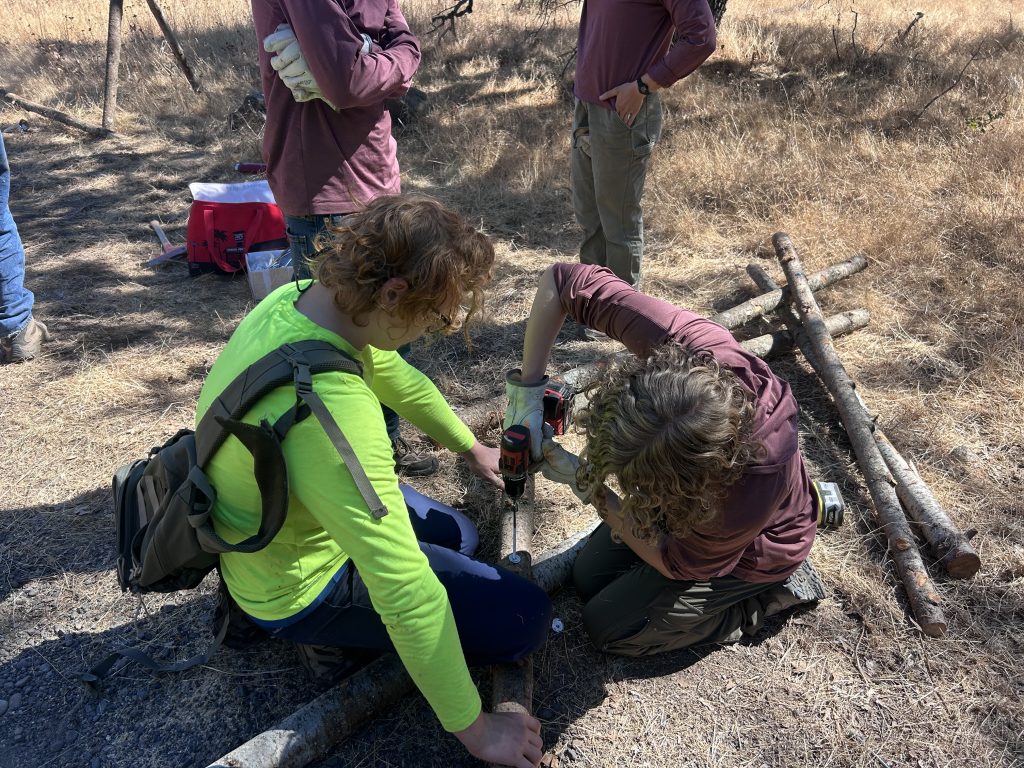
Overall, it was so lovely seeing the youth learn new skills and work together. Not only did they learn how to use tools and build a fence, but they also learned project management skills, how to work in teams, and how to communicate effectively. I think they really liked seeing a project from beginning to end – there’s something satisfying about starting with a pile of logs and ending with a fence. The mission of the project was also worthwhile – keeping illegal motorized vehicles out of sensitive plant habitat.
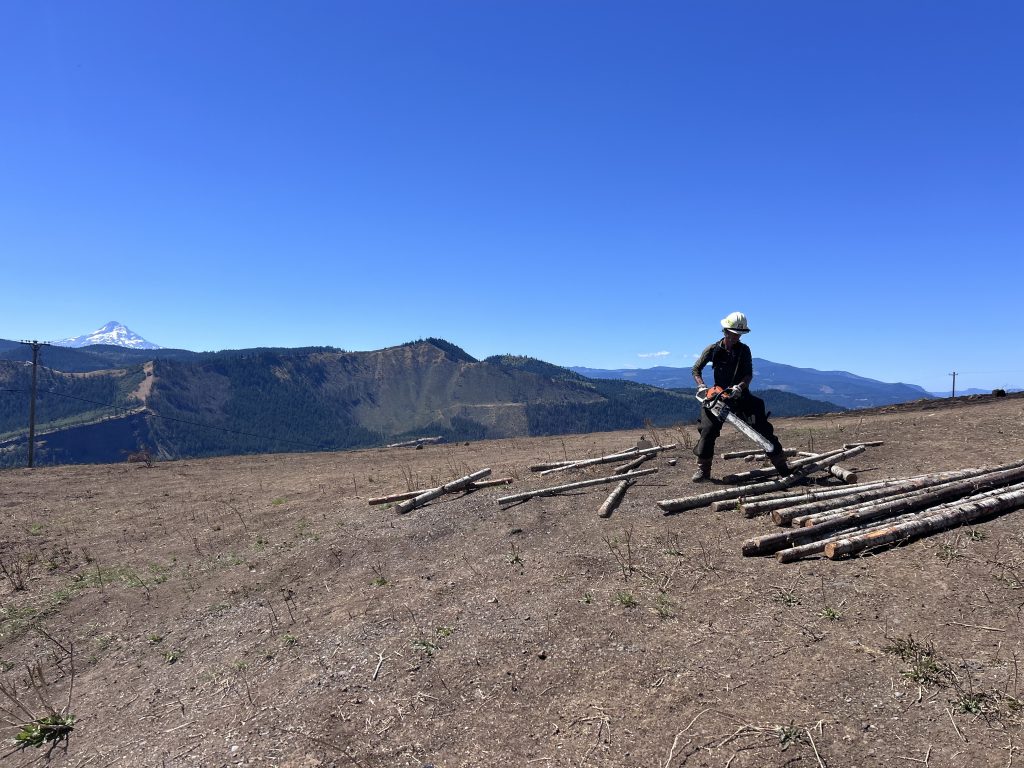
Sidenote – another cool part of this project was that the poles that we used for the fencing were harvested from a forest health and resiliency project that we had going on at a nearby site. More specifically, it was a thinning project where we removed small-diameter Douglas Fir that was encroaching on historic Ponderosa Pine and Oregon White Oak habitat. So not only did we make the forest more healthy and resilient to wildfire and disease – but we were also able to use the material to make fences to protect sensitive plant habitat. So cool!
Sorry, the comment form is closed at this time.