


29 Nov Monarch Tagging
Monarch butterflies (Danaus plexippus) are well-known for their bright orange and black wings or their striped, white, black, and yellow caterpillar bodies. They are divided into two populations by the Rocky Mountains: the eastern population and the western population. Here at Ottawa NWR, we see members of the eastern population quite often in the summer and fall.
A monarch butterfly, like all butterflies, begins its life cycle as an egg. Monarchs only lay their eggs, which hatch after 2-5 days, on milkweed plants because it is the only species that the caterpillar will eat. After hatching, the caterpillar eats and eats and grows and grows. It goes through five instars (where they molt their skin) over two weeks. Then, the caterpillar finds a leaf to attach to, and after shedding its skin a final time, it reveals the chrysalis that has formed underneath. The monarch’s metamorphosis (their scientific name means “sleepy transformation” in Greek) takes place over one to two weeks, after which the adult butterfly emerges.
There are many things that make monarchs incredible! Monarch caterpillars obtain toxins (called cardenolides or glycoside) from eating milkweed. They have evolved immunity to these toxins, but it makes them toxic to other animals. Their bright orange wings serve as a warning about this. Monarchs are also the only butterfly known to make a two-way migration as birds do. Monarchs go through three to five generations every year, and most of the adult butterflies live two to five weeks, but the final generation lives six to nine months. This generation follows an internal compass to fly to overwintering sites in oyamel fir forests in central Mexico, and they can cover up to 3000 miles during their migration (on the other side of the country, western monarchs overwinter in California at sites along the Pacific Coast). The distance from Ottawa NWR to their overwintering site in Mexico is 2230 miles, or about a 35 hour drive!
Unfortunately, monarchs are threatened in many ways, including through habitat loss, exposure to insecticides, and the effects of climate change. Their population has declined by approximately 90% since the 1990s. In December of last year, the USFWS proposed to list the species as threatened under the Endangered Species Act (ESA). This would provide it species-specific protections and encourage conservation actions. Currently public comments are being accepted, and a decision about the listing will be made in the future.
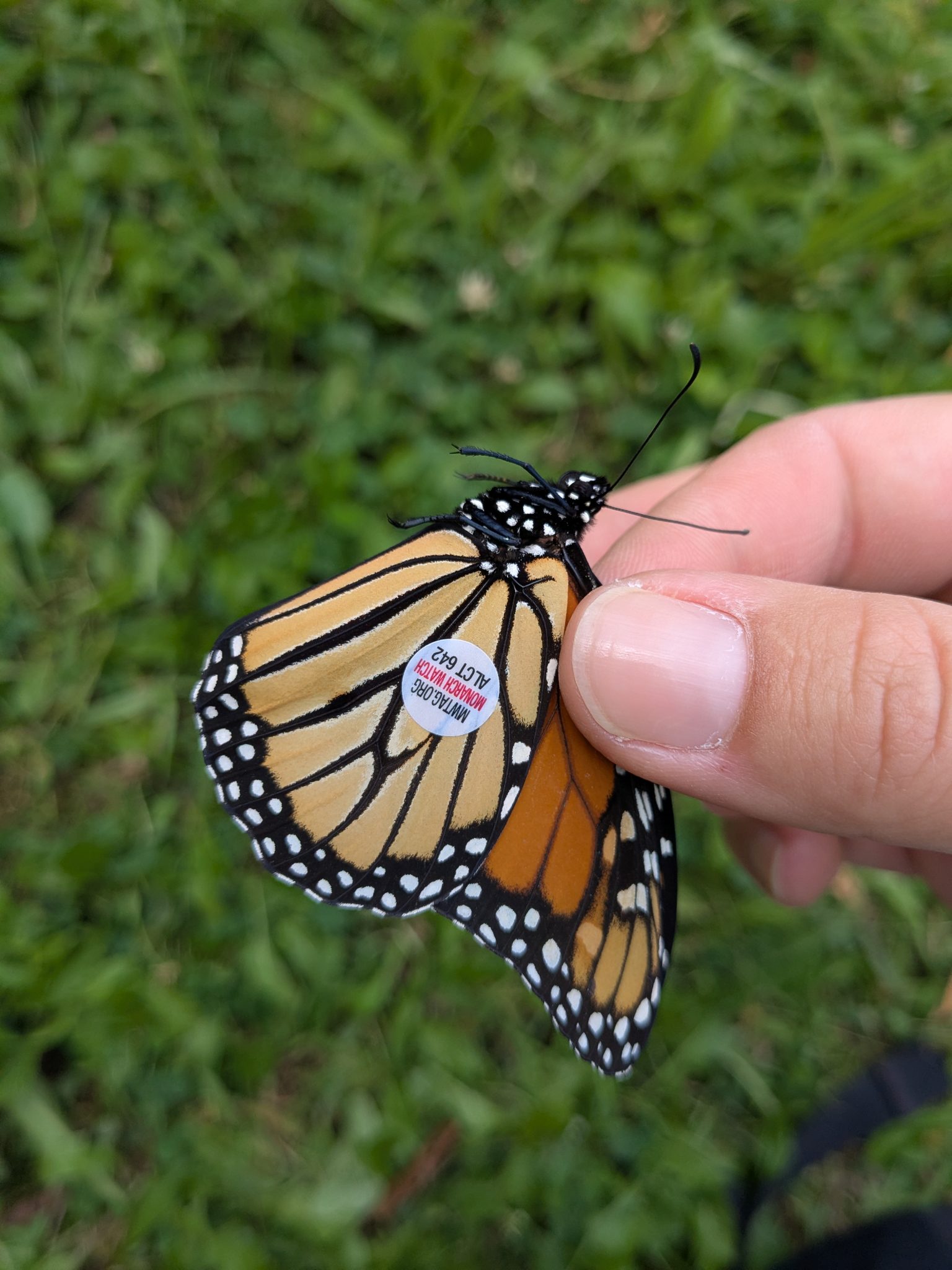
As part of my work at the refuge, I tagged monarchs this year. Monarch Watch is an organization that works on monarch education, conservation, and research. They have been running a community science monarch tagging project since 1992 to learn more about monarch migrations. Working with other staff and volunteers, we tagged 92 monarchs this year! I also led three public Monarch Hikes, where visitors could come learn about monarchs and the community science project and even see a monarch up close as it was tagged. The hikes were really fun and informative, and the most successful one brought out 25 participants.
We wish our monarch friends the best of luck on their migration to Mexico! 🦋

Sorry, the comment form is closed at this time.