


02 Dec What’s Happening at Mori Point?
Mori Point and an endangered snakes LAst Hope
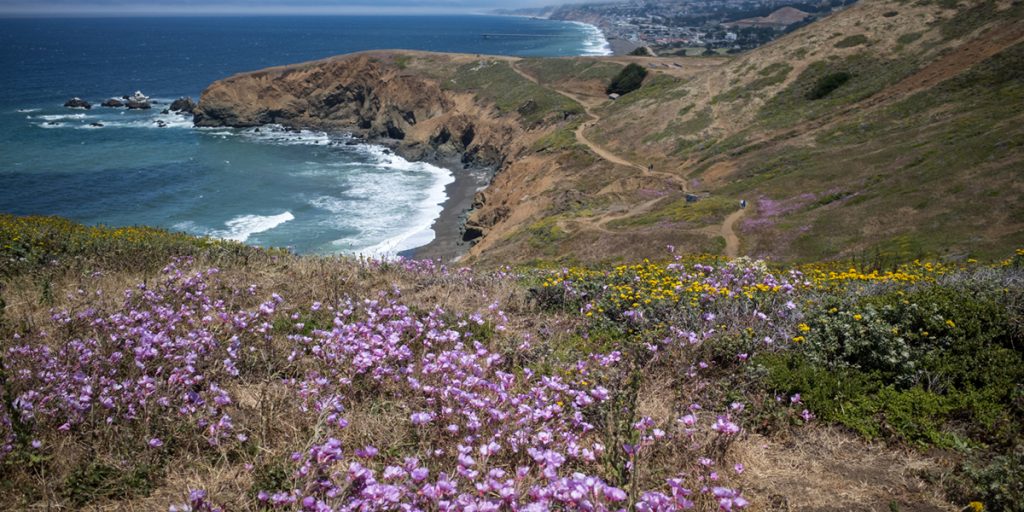
Mori Point is a bluff in Pacifica known for its scenic views of the peninsula coastline and a vibrant superbloom each spring. Before the National Park Service acquired the 110-acre site in 2002, it had a long and varied past- serving as a limestone quarry, farmland and ranchland, and even a haven for bootleggers during the Prohibition!
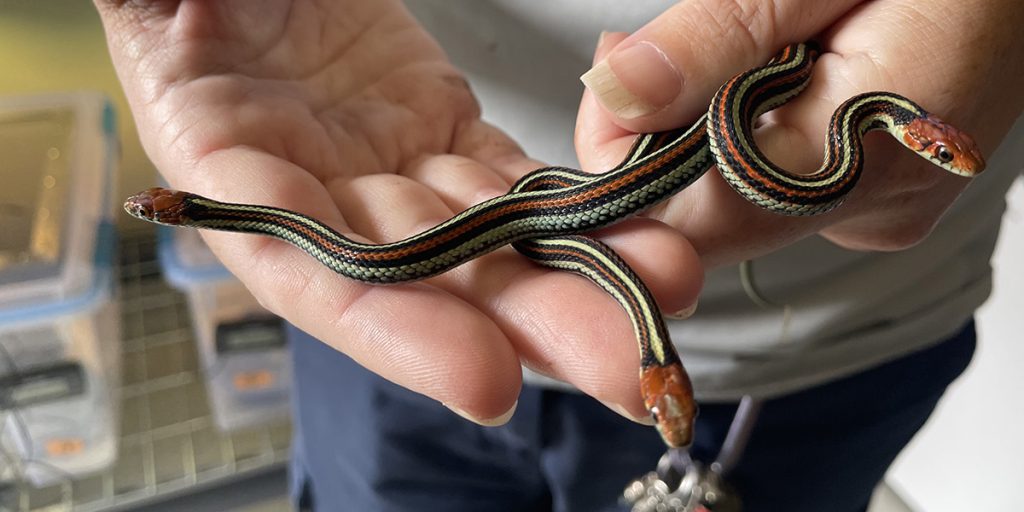
While the human history at Mori Point is interesting, it is distinctly anthropocentric and literally scars the landscape, leaving much work to restore it as a natural area. Below the bluff, restored pond and wetland habitat provide important breeding grounds for the Pacific tree frog and the threatened California red-legged frog. Restoration has also attracted a small population of the federally endangered San Francisco garter snake, which enjoys foraging in aquatic habitat. As juveniles, these snakes rely heavily on tree frogs, and as adults, they prefer California red-legged frogs. Unfortunately, the adult SFGS population at Mori Point has declined to just six individuals in recent years.
To recover the species, the NPS has partnered with the San Francisco Zoo to capture gravid snakes from donor sites and care for the offspring until they are large enough to release. Over the next two years, the project aims to introduce up to 80 genetically diverse snakes back into the area.. In order to support an increase in population, a new pond is being constructed at the site. I’ve been working closely on the Mori Point pond creation project over the past couple months and am excited to share my experience and contributions.
The Restoration site
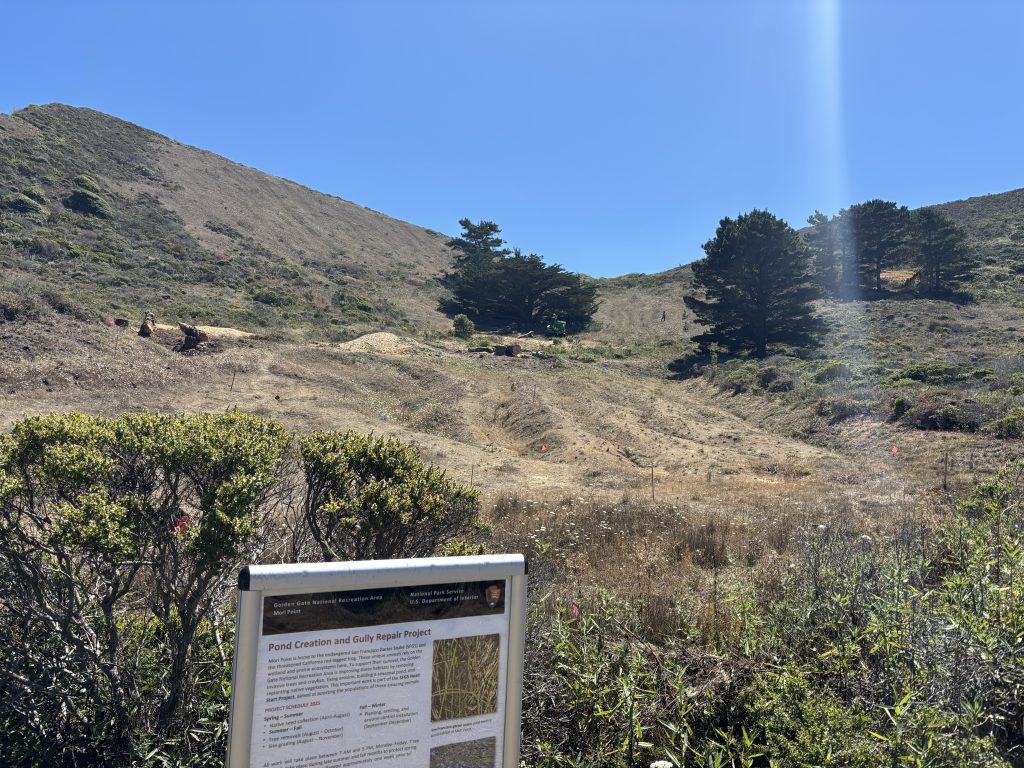
The pond creation site is an old agricultural field that, over many years, has eroded into deep gullies, resulting in a lack of vegetation growth. Along with creating a new pond, our project aims to repair the gullies, improve hydrology, and restore the area as a functional coastal prairie. I’ve outlined the main steps of the project below.
1. Monterey pine and cypress removal
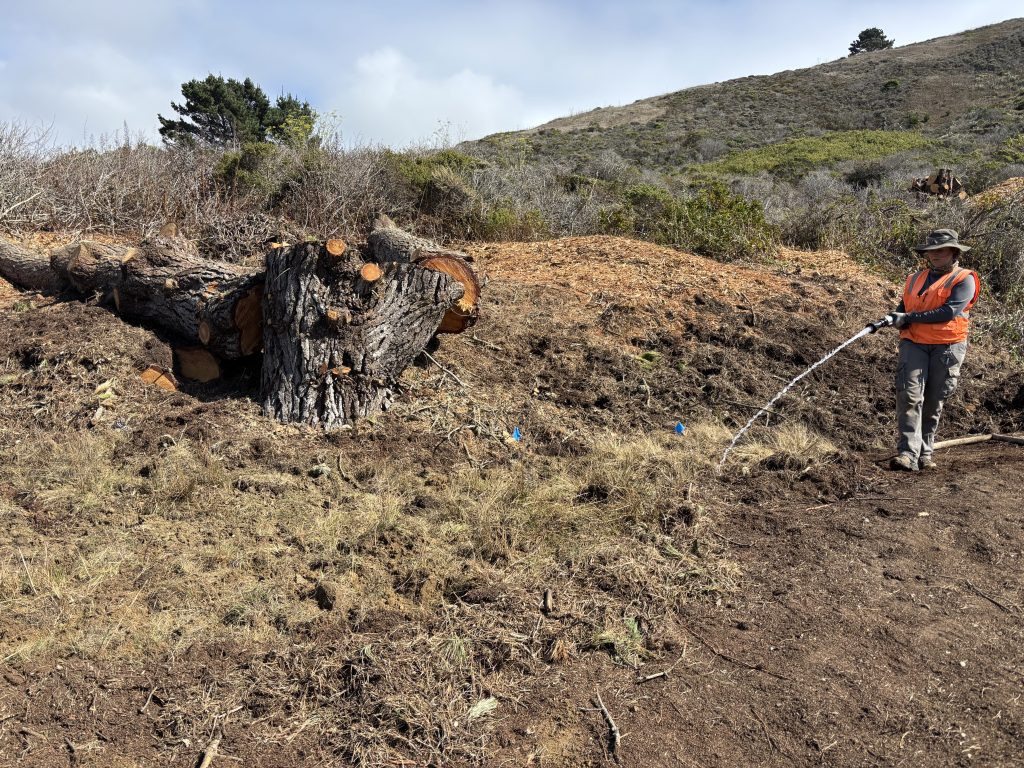
Mori Point is a coastal prairie ecosystem, the preferred upland habitat of the SFGS, where they can move freely and find shelter in rodent burrows. Coastal prairies do not typically support large trees, yet Monterey pine and cypress have become the primary invasive species encroaching on this habitat. If left unmanaged, these invasives would convert Mori Point into a conifer forest in just 60 years.
Contractors were brought in to remove the trees before any other work could begin, and my team conducted biomonitoring throughout the process to ensure that no snakes or other herps were harmed by heavy equipment. This early phase of the project also became an important moment for public outreach. Many locals were confused or concerned about the tree removal, often because they weren’t familiar with how non-native trees can actively damage native ecosystems. And… not everyone was immediately understanding! However, it was still a genuinely rewarding experience to explain what was happening, share our goals, and help clear up common misconceptions.
2. Gully repair and pond creation
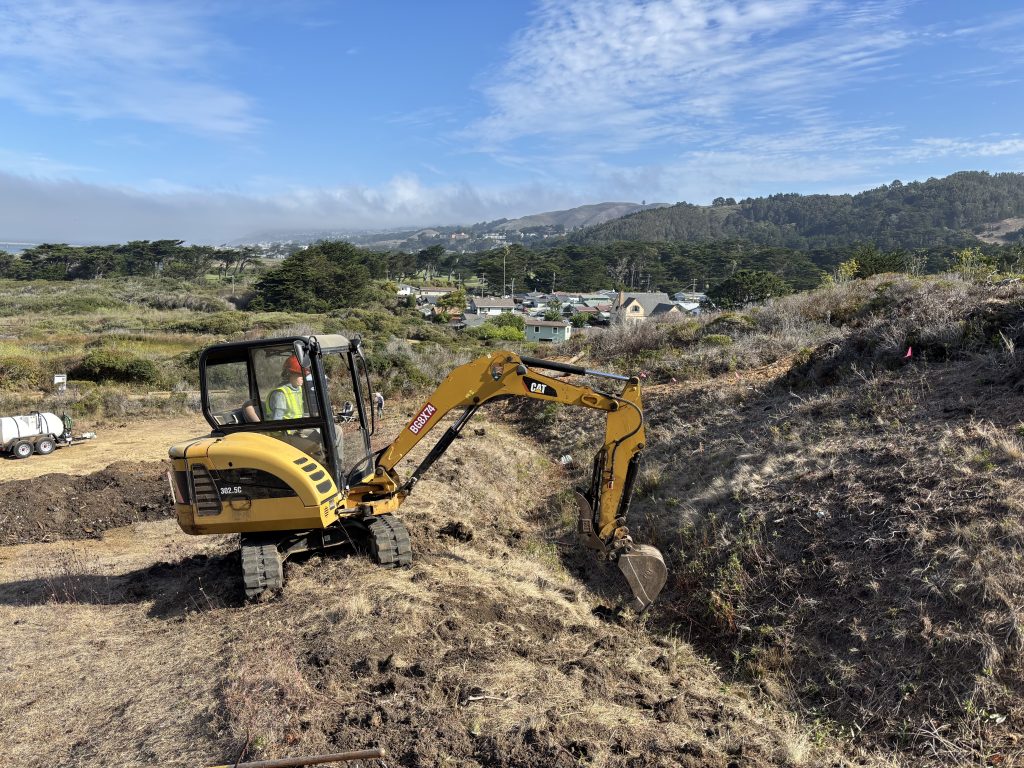
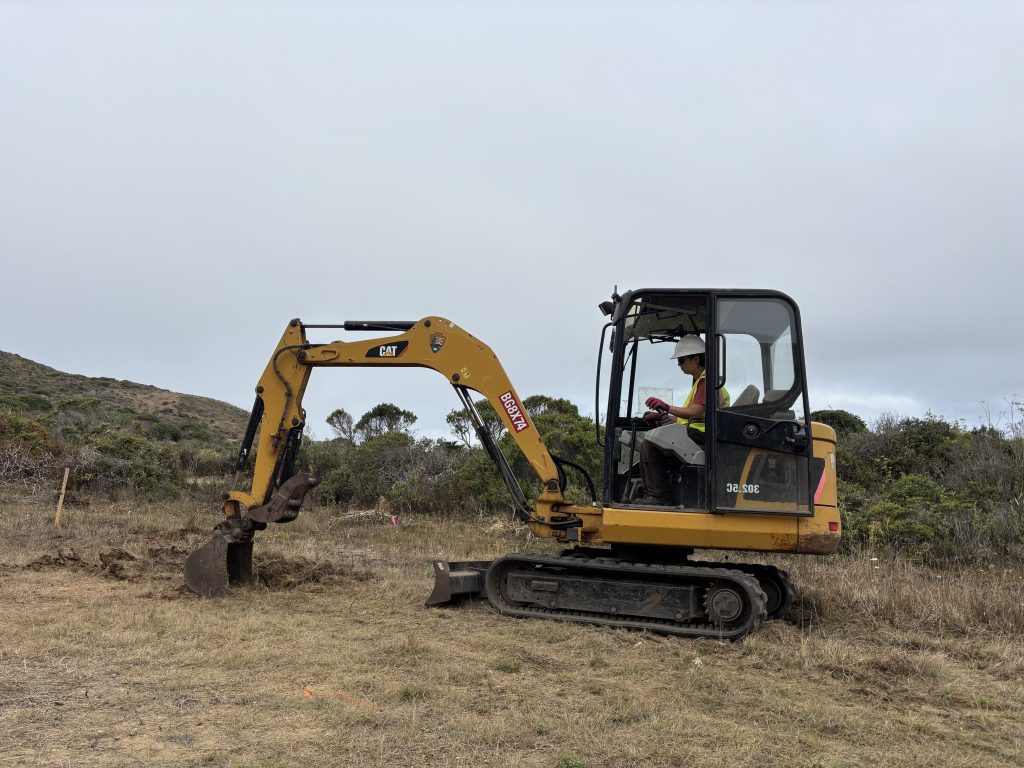
Next, the trail crew arrived to repair the gullies, re-grade the site, and dig the pond. Before any ground was displaced, my team wanted to salvage as much native grass as possible. We were able to borrow an excavator for this purpose, a tool I never expected to operate in my lifetime, which definitely became a highlight of the project for me.
Each of us had the chance to dig up intact chunks of native grass and relocate them temporarily. It was somewhat experimental, as we weren’t sure how well the grasses would handle the move. But so far, they’ve flourished under lots of watering.
3. Government shutdown?
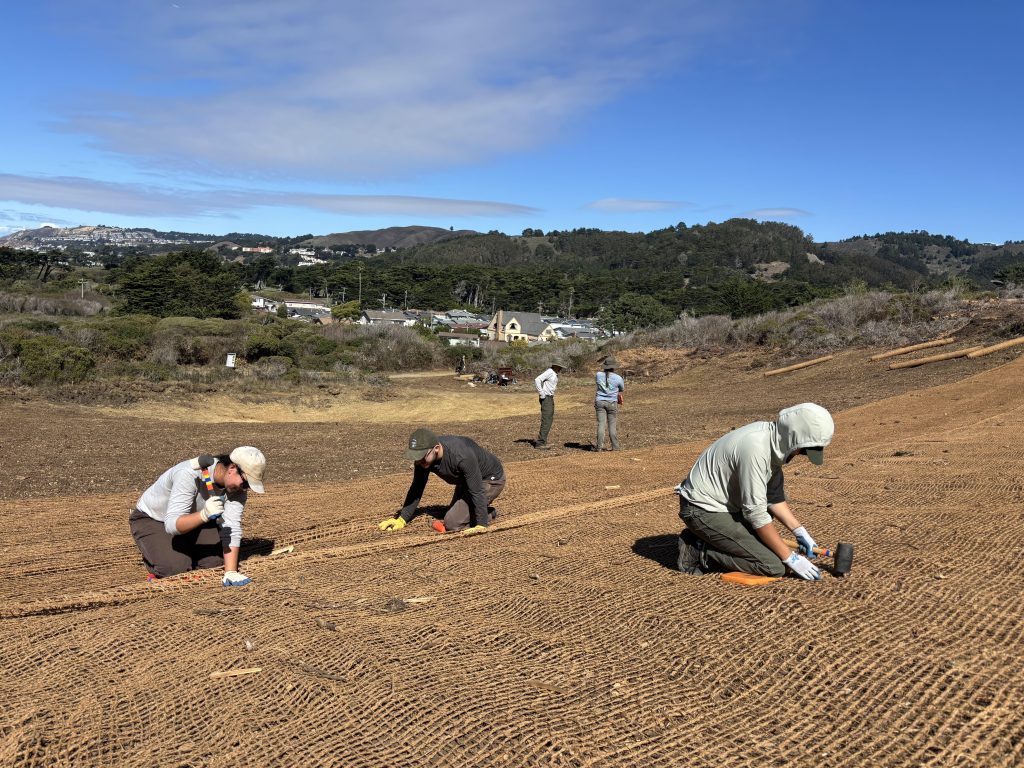
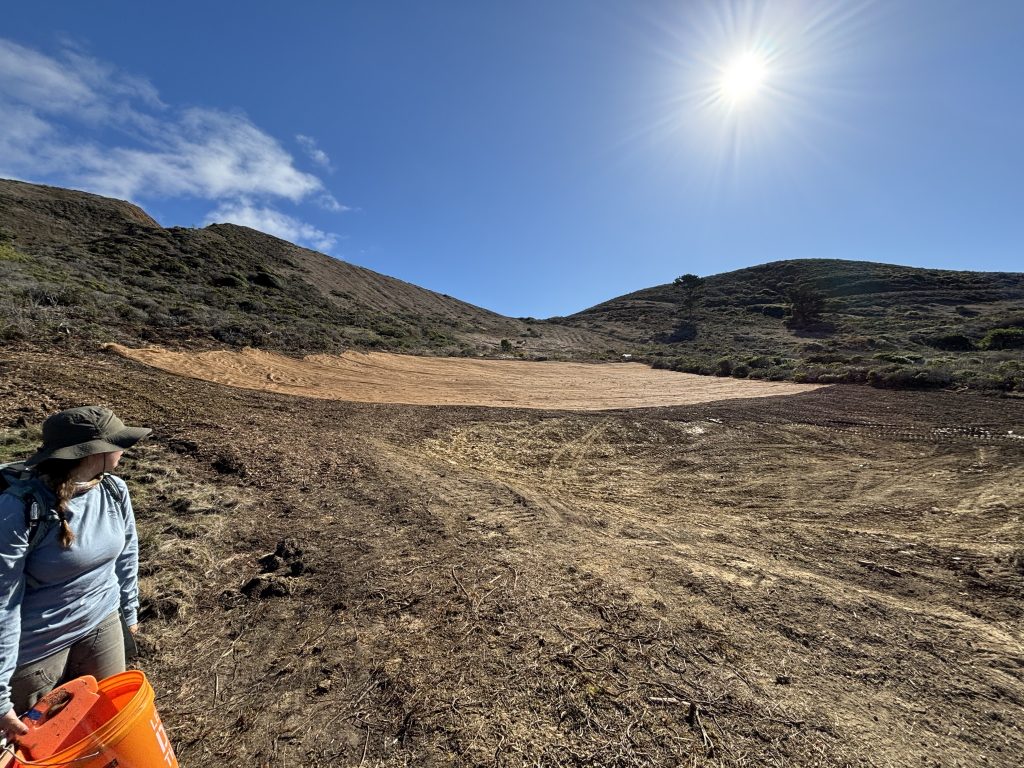
The government shut down for 43 days on October 1st. The trail crew was permitted to finish their work and a few interns, including myself, were able to work throughout the shutdown, so we put down erosion control fabric. However, I didn’t see the progression of the site for a few weeks.
4. Coastal prairie restoration
After arriving back at work from the shutdown, we were surprised to find 1.5 feet of water in the pond after just a day of rain!
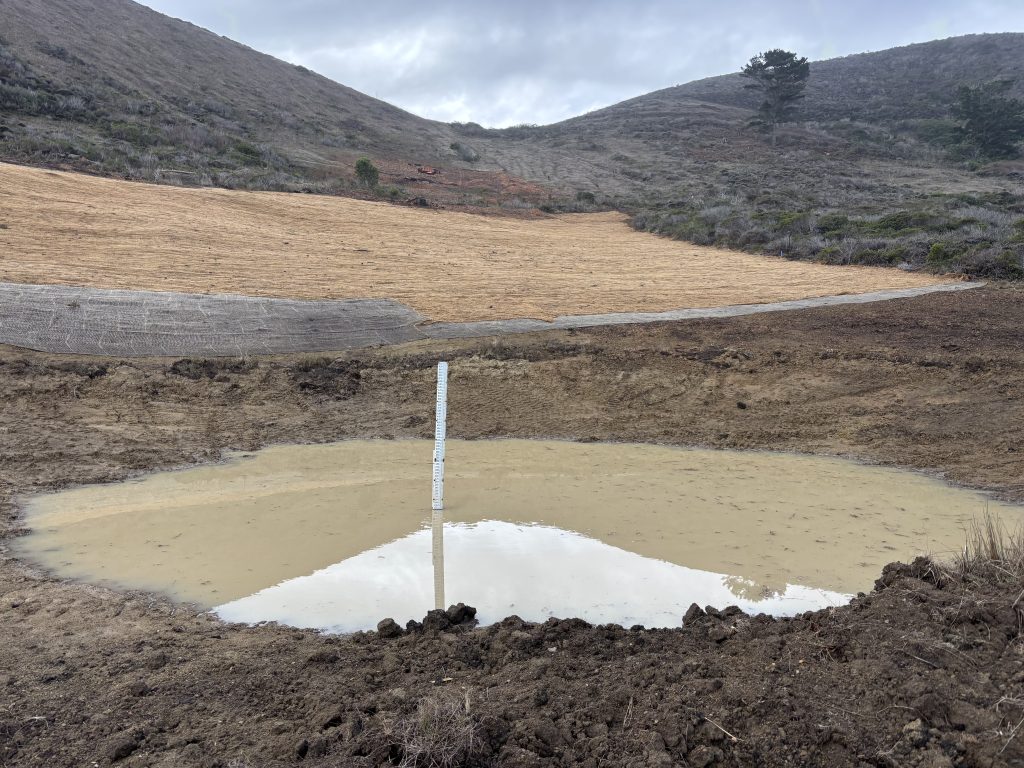
Our next steps involve revegetating the site with the salvaged grasses, along with thousands of container plants grown in the nursery. This work will keep my team busy throughout the winter. Sadly, the last day of my internship is December 2nd, so I won’t be around to see the project through. Even so, I’ve learned so much about habitat restoration and endangered species, and I’ve gained so many valuable technical skills from this experience. The San Francisco garter snake is truly the most striking species we have in the park, and I hope that they will thrive in their new home.
Sorry, the comment form is closed at this time.