


22 Jul Shockingly Fun: My First Weeks Electroshocking Fish and Water Sampling
These first few weeks have taught me so much about the local waterways I grew up on. I have enjoyed my time so far at the Alpena Fish and Wildlife Conservation Office more than I ever thought I could. From eDNA water sampling in rivers and on Lake Huron to electrofishing in small streams, I feel as though I have just begun my days in conservation. I have always wished to contribute to large-scale conservation efforts, and even though it is just the beginning, I am very happy with where I am.
On my very first day in the field, I joined the Aquatic Invasive Species team. Our day started at the warehouse, where we gathered all the necessary gear and prepared the boat we would be using for our work. We did eDNA metabarcoding. This is a technique that uses water samples to find out which living things are in an area. As animals swim or breathe, they leave behind tiny bits of DNA in the water. Scientists collect this water, filter out the DNA, and identify all the species present. We have the easier part: filtering out the water, which is then sent to the lab for testing. We did all of our sampling on Lake Huron. The sampling we conducted will be used to scan for potential new invasive species.
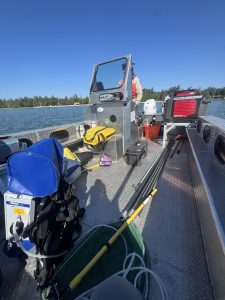
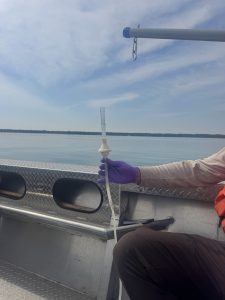
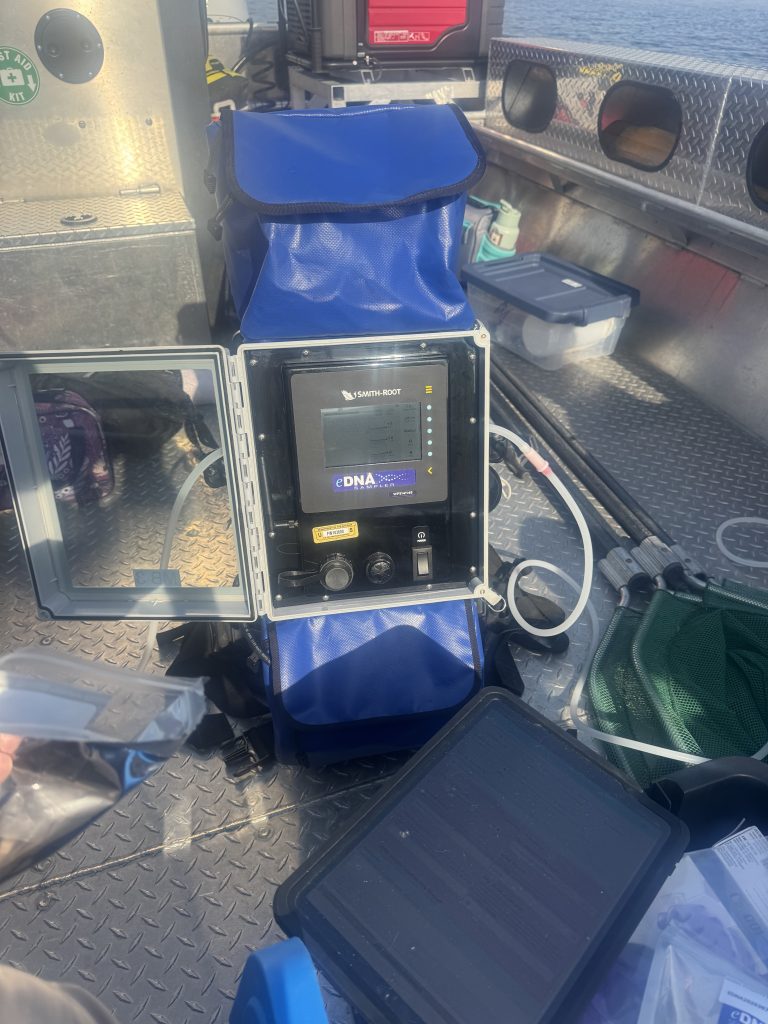
This is the machine that pumps the water. We set it to filter 2 liters of water. This took about 2-3 minutes at each location. The tube on the right is the inflow. At the end of this tube, there is the filter. We had to be very careful when handling this filter, as it can easily become contaminated from other sites. We had to wear gloves and change them between sites, which prevents DNA from one site from contaminating the next, preventing incorrect readings. The filters we collected were put into their own bags to be sent off. The tube on the left side was hung off the boat to return filtered water to the lake. This was a very cool process to see, as I had no idea about it beforehand.
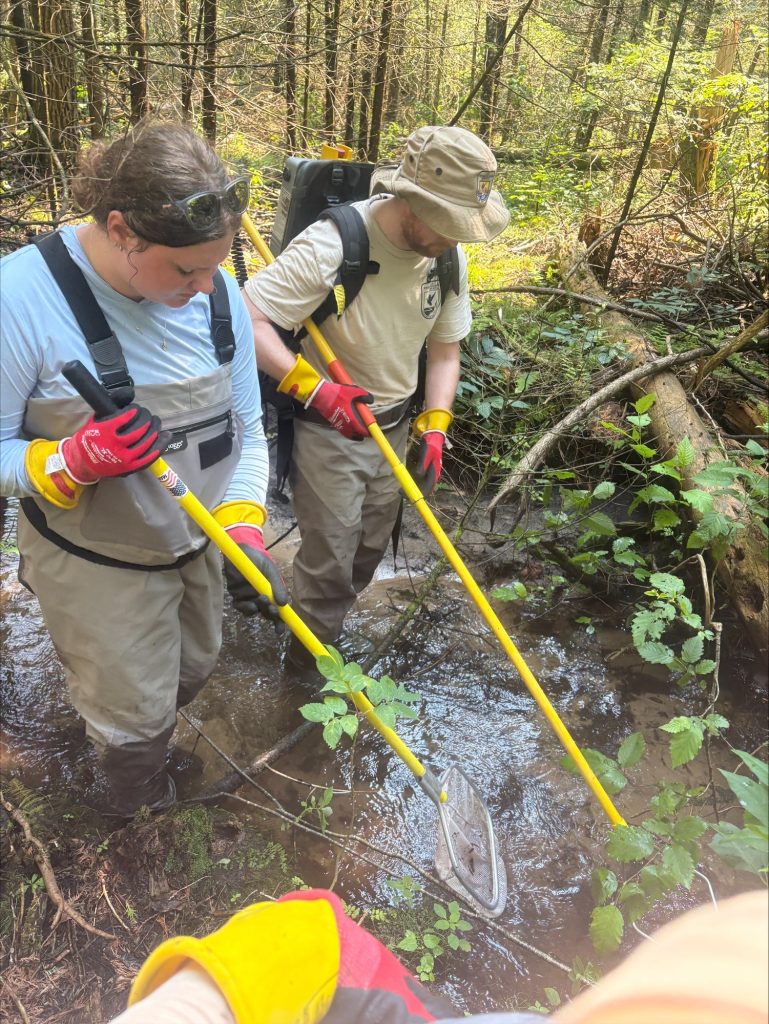
The next week, I was with the Aquatic Habitat Restoration team to do backpack electrofishing in a creek that had recently been restored. Backpack electrofishing is a surveying method in which a battery-powered backpack emits an electric current into the water. This temporarily stuns the fish, allowing us to safely net them for population counts and work up. The anode pole is held by the backpack operator; it is where the electricity originates. We worked in a team of 3: the backpack operator, a netter, and another netter who would hold the bucket of collected fish. When the anode button was pressed, the fish began swimming towards the pole. This allowed us to net them and put them into a bucket for later inspection. This seems like a scary process as we are wading through water that is being shocked by electricity, but it is very safe. The backpack automatically shuts off power when you lean to prevent shock if the operator were to fall. This was partially annoying as it beeped when this happened, and we had to climb over many downed logs, but it is a very important safety feature. Also, we wear 2 pairs of gloves to ensure safety and waders to cover our bodies.
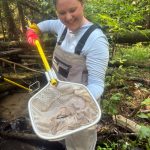
In this photo, I am working on netting the fish. It is easy for them to move quickly downstream, so it’s very important that you work quickly as well. You can also see the two pairs of gloves we are wearing; the base ones are the yellow rubber electrical gloves, with another pair on top to avoid getting those ones torn.
The hardest part of this task was climbing over all the downed logs and around the branches. Our sites were back in the woods, which meant we had to go through lots of brush in between each pass to reach the start of the site,
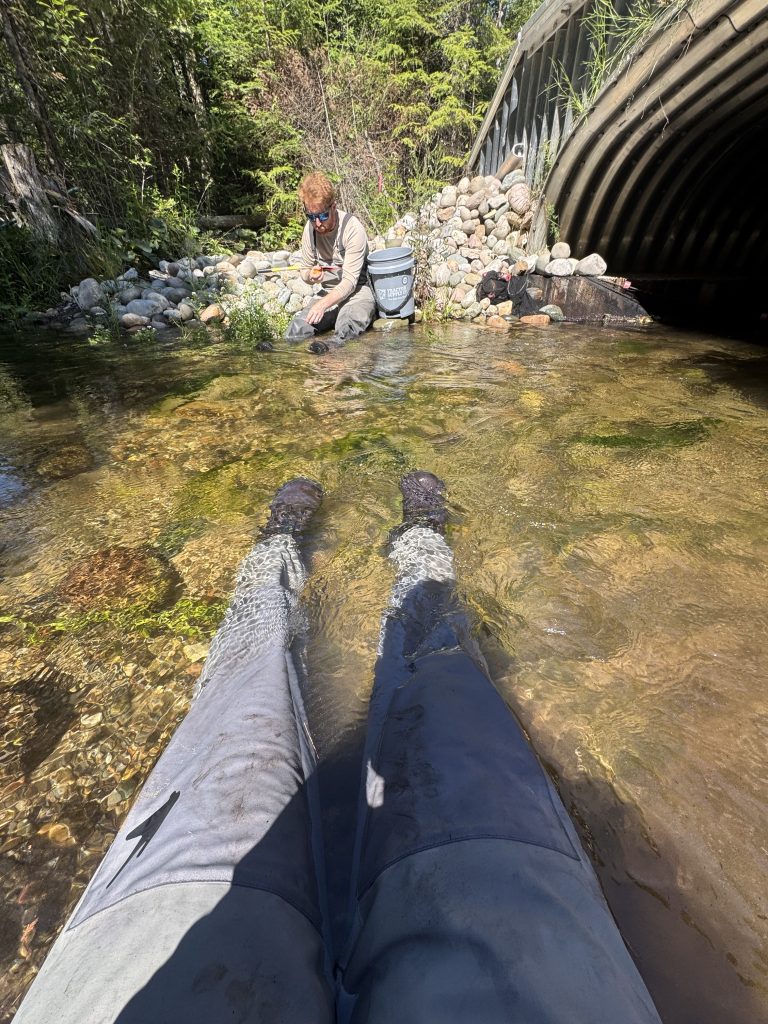
It was extremely hot this week, so being in the waders was not ideal, but it kept us all safe. The creek was very cold, so between passes we could sit in it to cool down. We worked on the Sheridan Creek, about an hour away from the office. We did 4 different sites where the creek flowed under the road. We did both the upstream and downstream of these crossings.
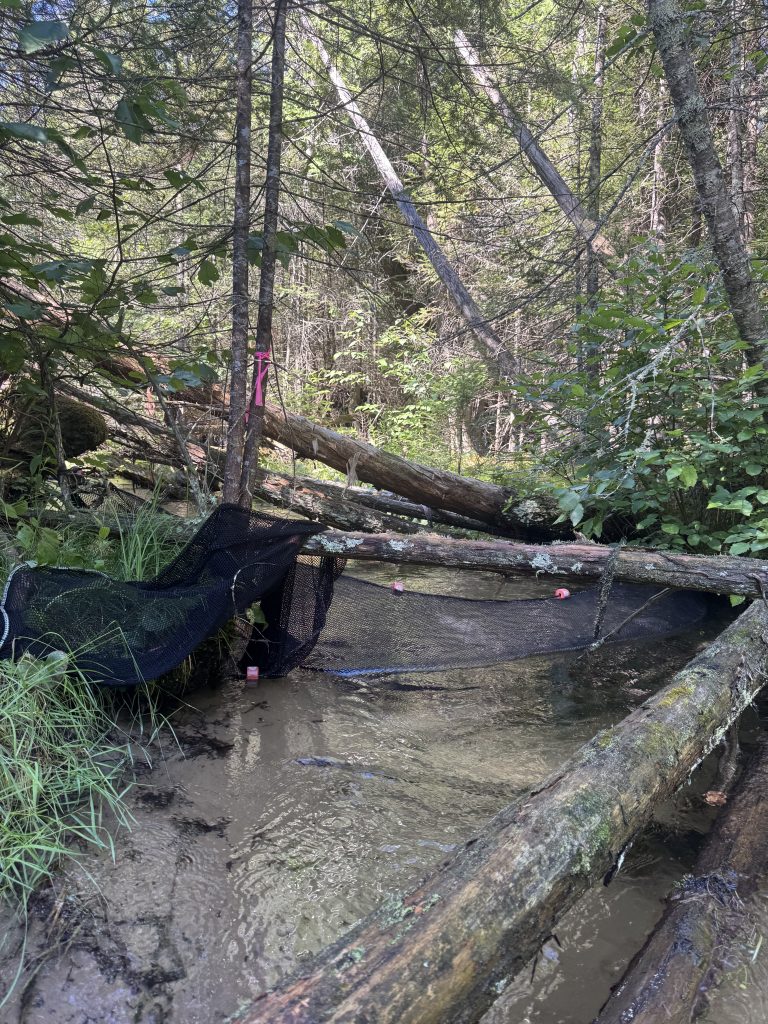
We did a technique called 3-pass depletion. This means that we did 3 passes of the same part of the stream in a closed environment. Block nets were set up at the beginning and end of the area we would be working on to prevent fish from entering or leaving. Doing the 3 passes helps ensure we get all the fish in that particular part of the stream. Using this technique, we can estimate the stream’s population.
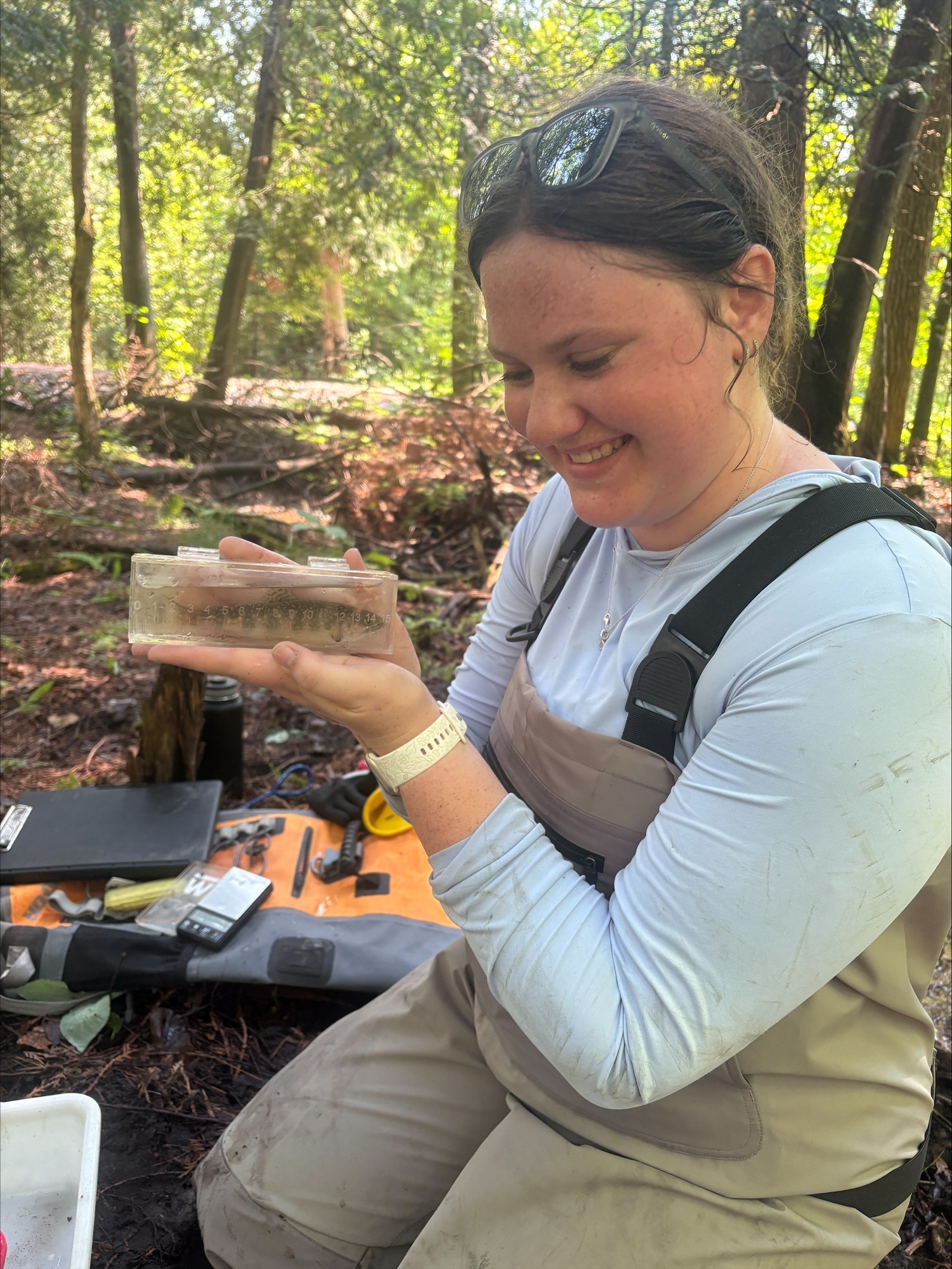
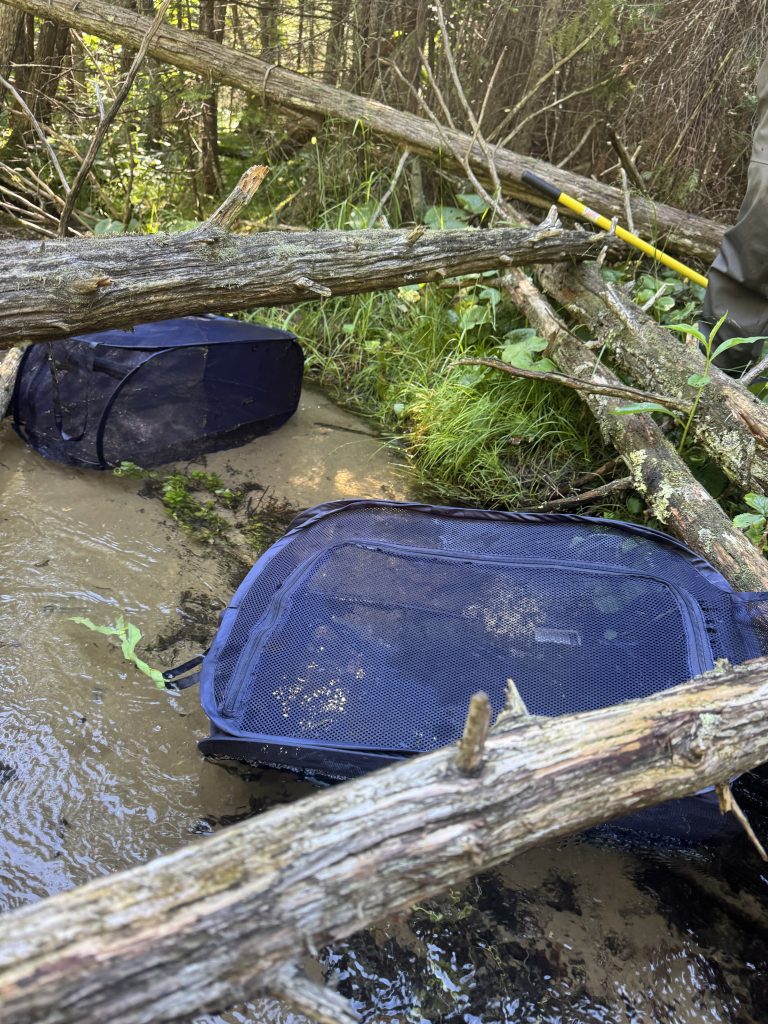
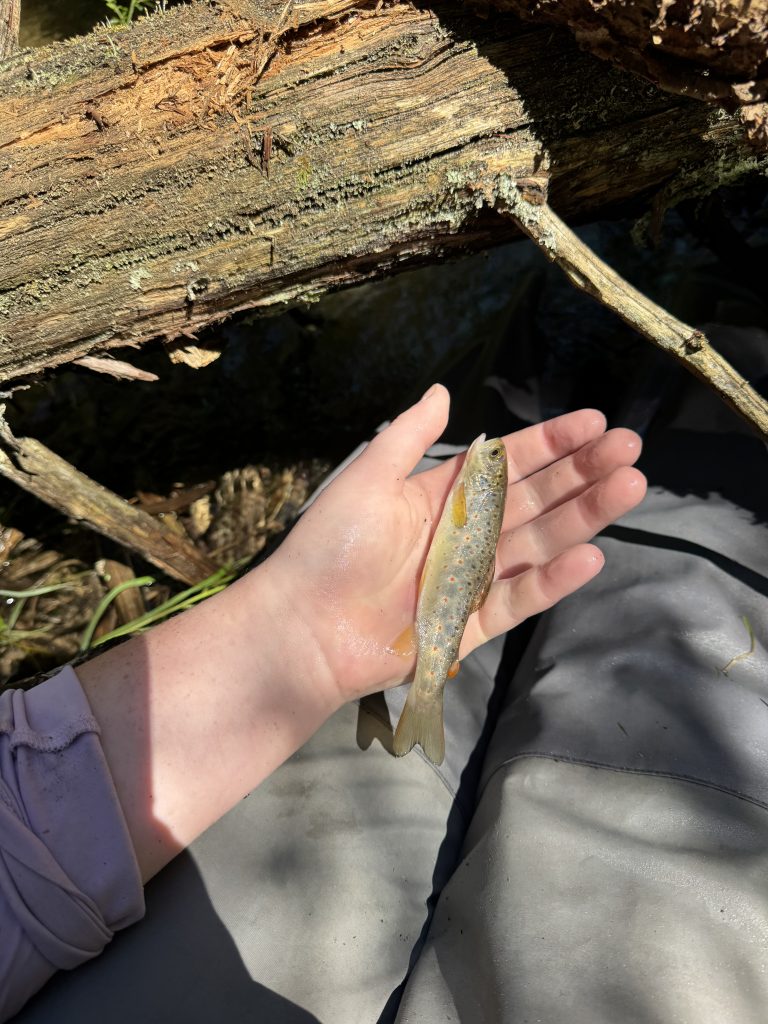
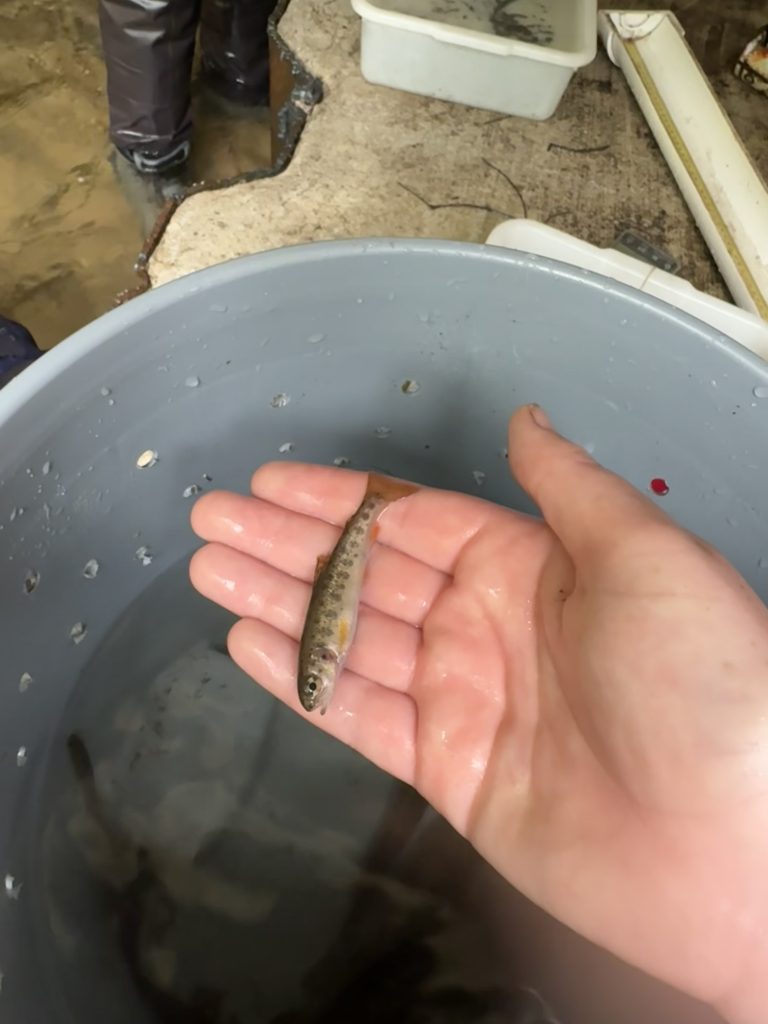
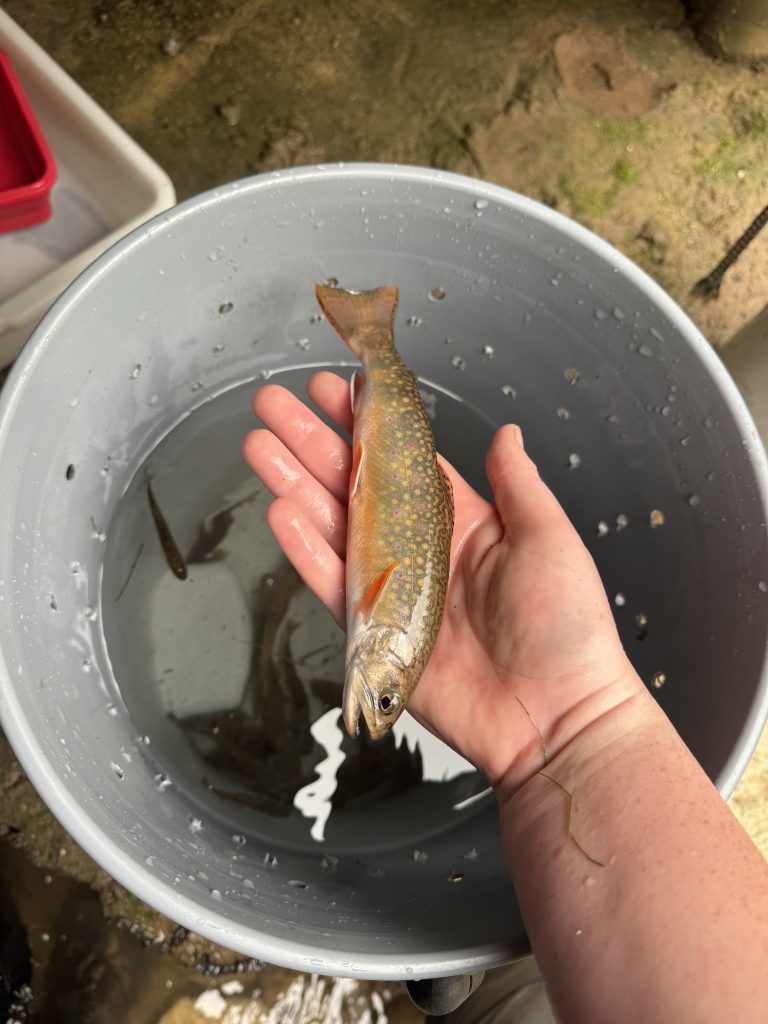
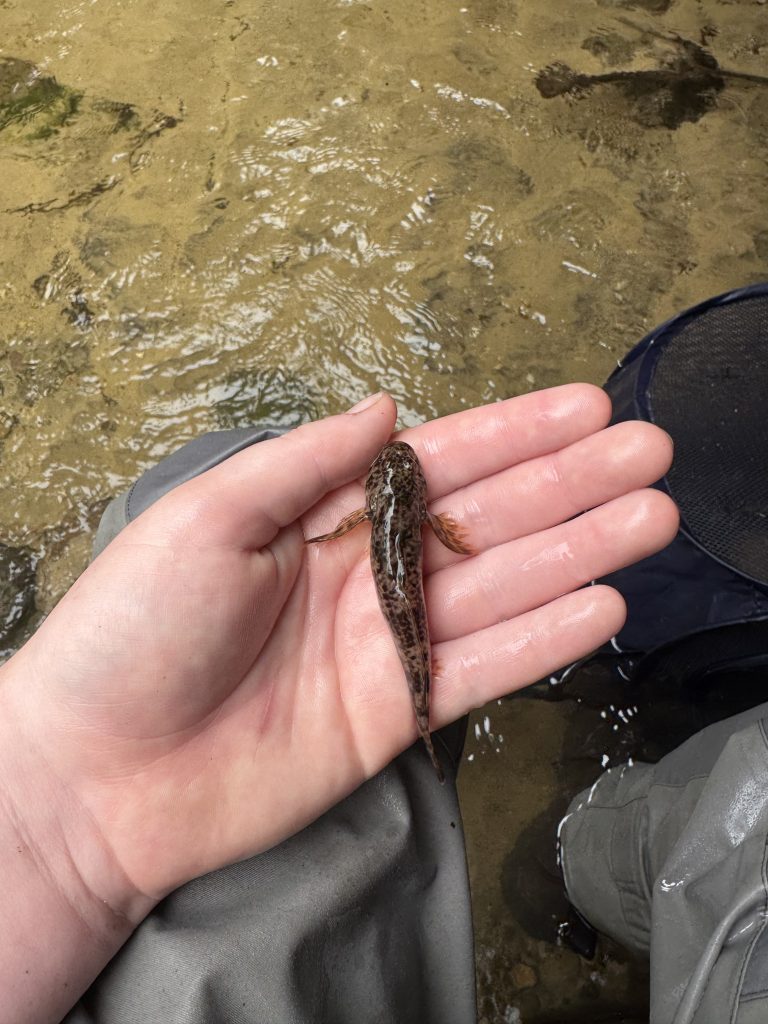
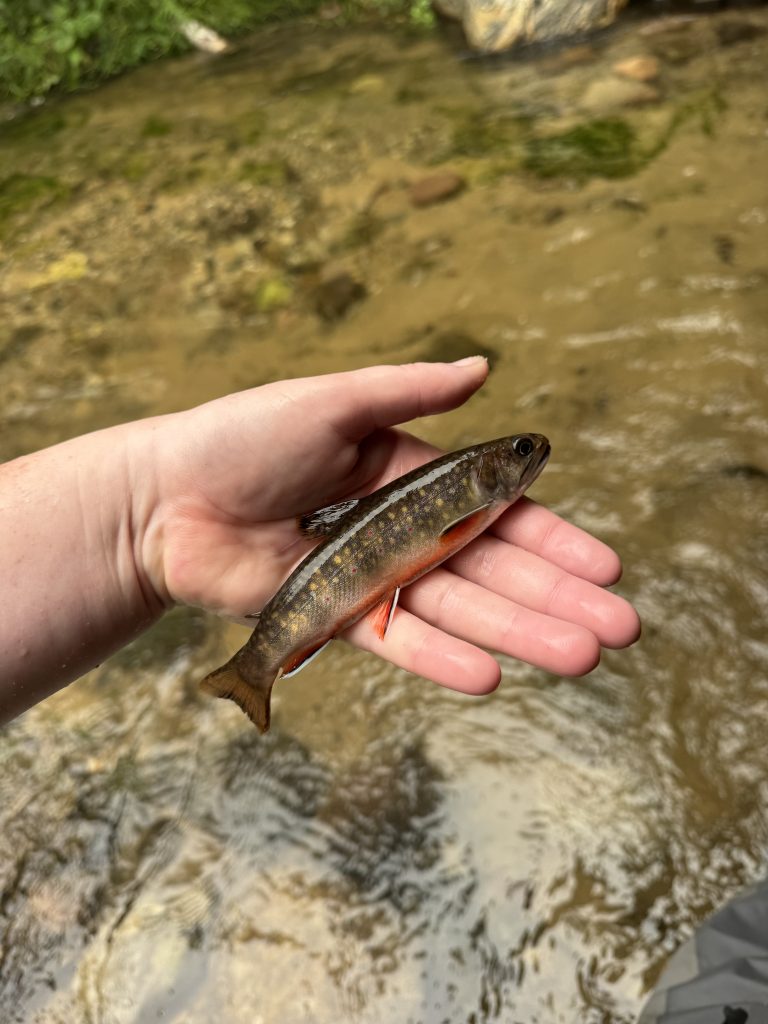
This was a very fascinating and fun process to take part in. We were looking for brook trout, but we also collected many other fish species. We collected Brook trout, Brown Trout, Rainbow Trout, and Slimy Sculpins. Between passes, we put the fish in baskets in the creek to keep them safe. After all 3 passes, we picked up the block nets and began our fish workup. At most sites, we saved all the fish workup until the end, so we could do it all at once. The fish workup included identifying the fish species, measuring weight and length, and recording this data. In total, from all sites, we caught 196 fish. This was very surprising to me, as it was such a small creek. I was also very surprised at the size of the fish we caught. Although most of them were smaller in size, we caught a few bigger ones that I had no idea would be in such a narrow body of water.
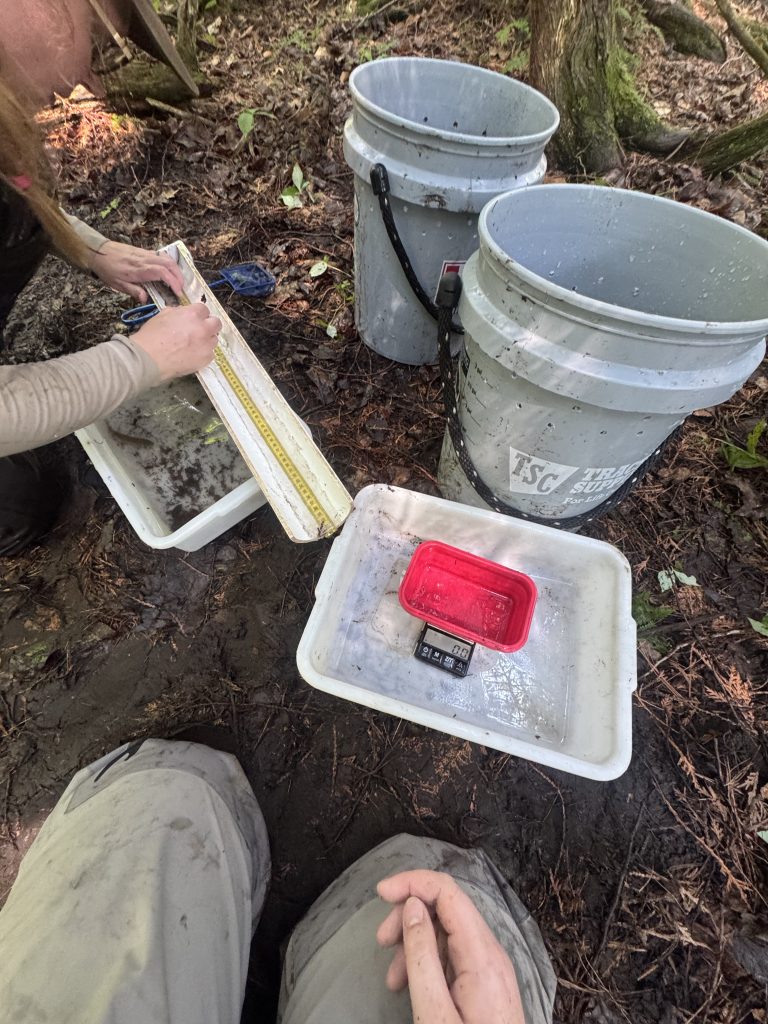
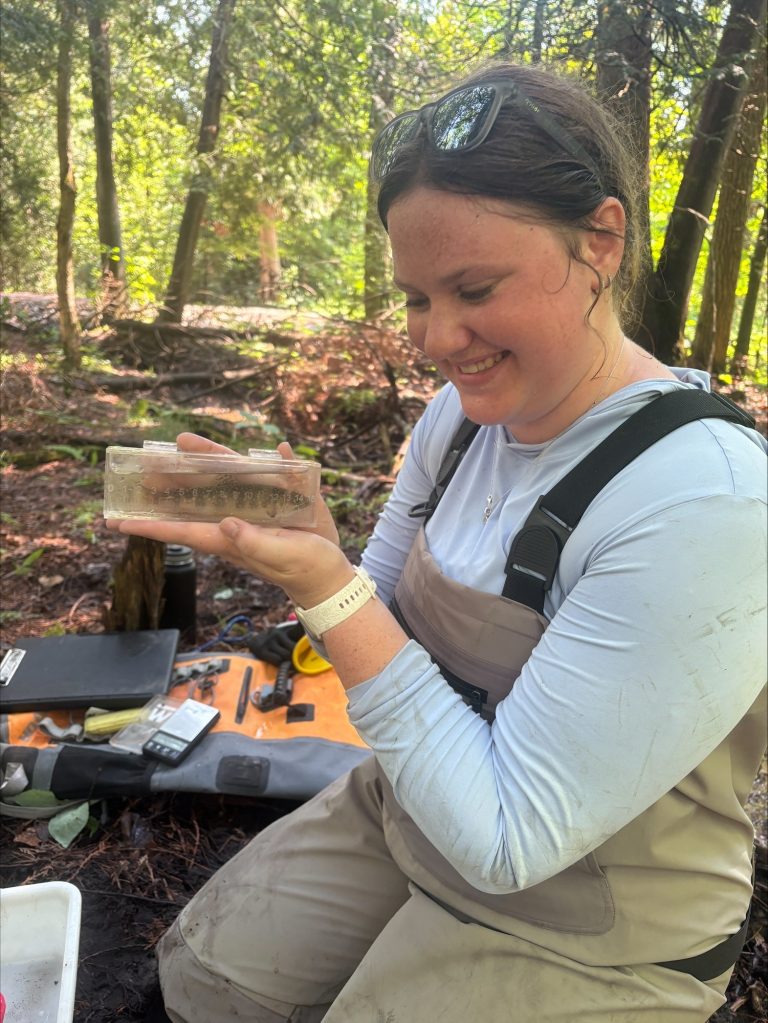
As you can see, I was very excited during this whole process. While doing the fish workup, I was taking the weights and releasing them back into the stream. This was after their length and species name were taken. A really fun part of this process was learning to tell the 3 types of trout we caught apart. The Slimy Sculpins were much easier to tell. I learned that Rainbow, Brook, and Brown trout can be distinguished by their color patterns and markings. Rainbow trout have a silver/green body with a distinctive pink or reddish stripe running along each side. They are covered with small black spots that extend onto the tail and dorsal fin. Brook trout have a darker green or brown body with unique worm-like markings on their back, called vermiculations. They also have bright red spots surrounded by blue halos. The lower fins have a noticeable white edge followed by a black stripe. Brown trout have a light brown body with black and red or orange spots along their sides. They lack both the pink stripe of the rainbow trout and the white-edged fins of the brook trout. Getting this down the first day was not easy, but I can now distinguish them all without any help!
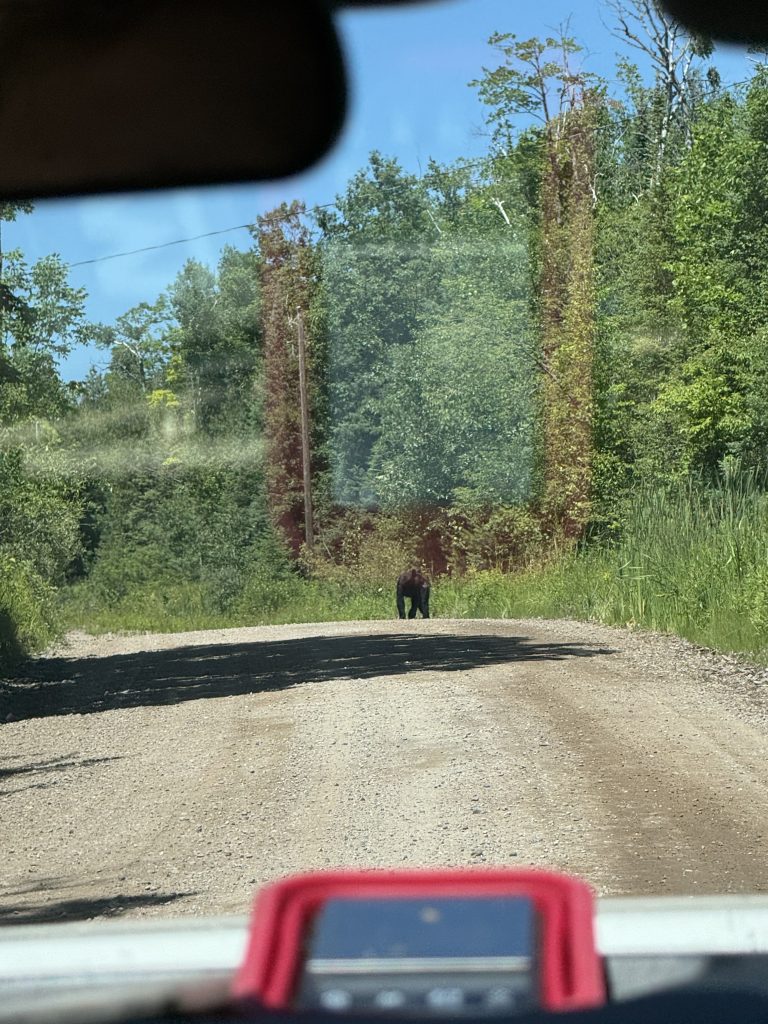
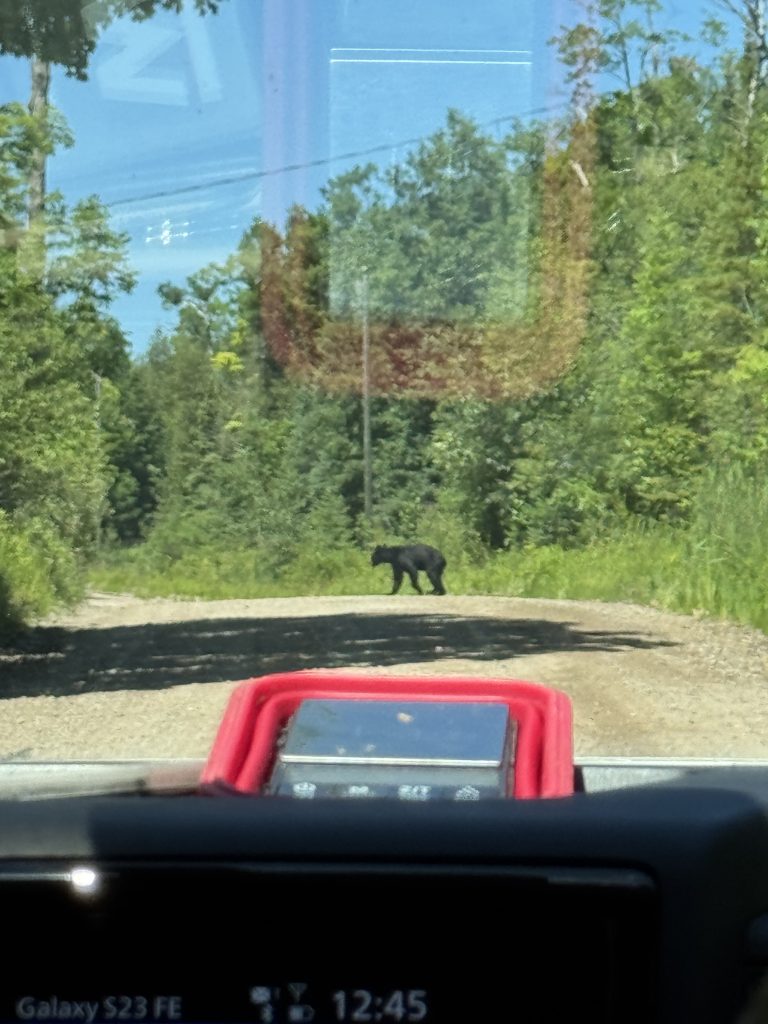
From the safety of the truck, we saw a bear right down the road from our site! This was such a cool experience, as I’ve never seen one here, even though I’ve grown up in the area.
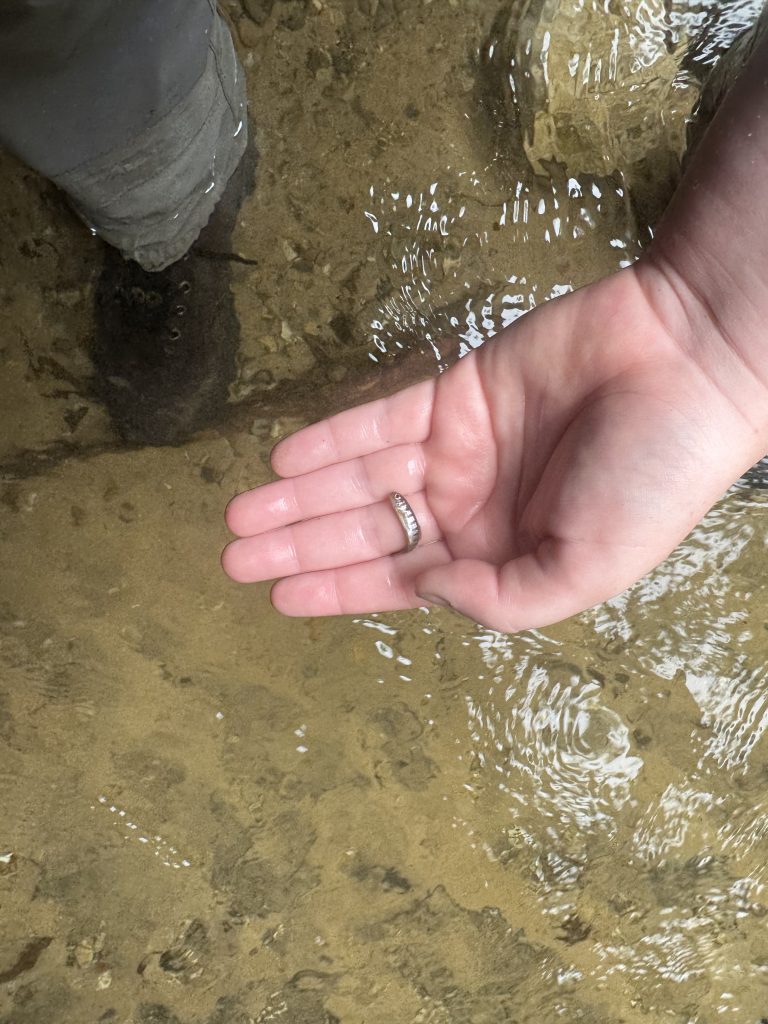
I am so grateful for this internship opportunity and excited to share with you guys what the next few weeks have in store! Here are even more pictures of the beautiful fish we caught. I hope you enjoy them as much as I did!
Shelly Clarke
Posted at 12:31h, 23 JulyThis was very educational, excellent write up Em! Share more with us! I’m so proud of you and that you’re loving what you’ve learned!