


24 Aug A Summer of Learning: My Fisheries Internship Experience
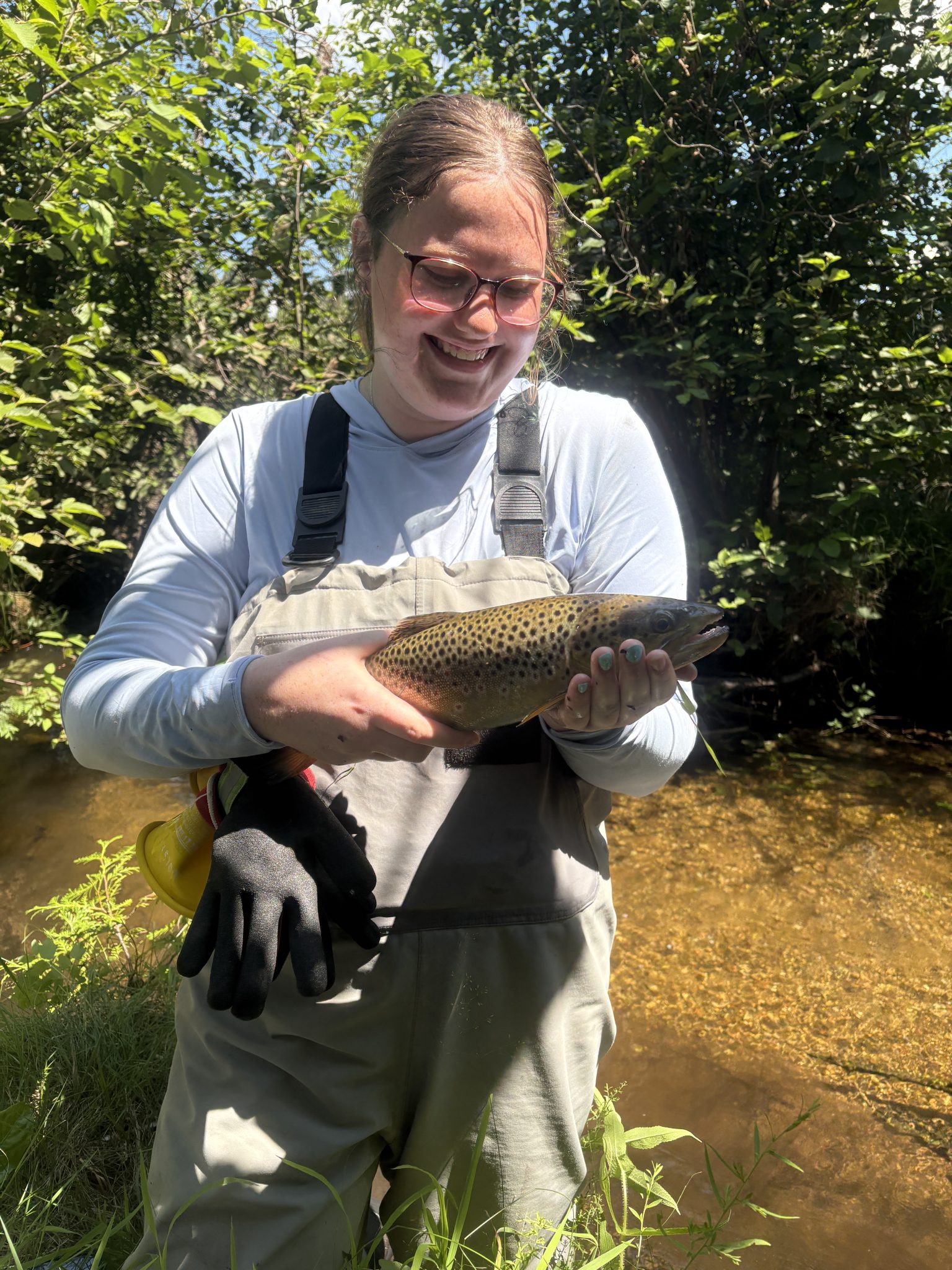
Over the past few weeks of my internship, I’ve spent much of my time conducting backpack electrofishing surveys in small trout streams. This has been one of the most rewarding parts of my internship, gaining hands-on field experience while exploring some of the region’s beautiful cold-water streams.
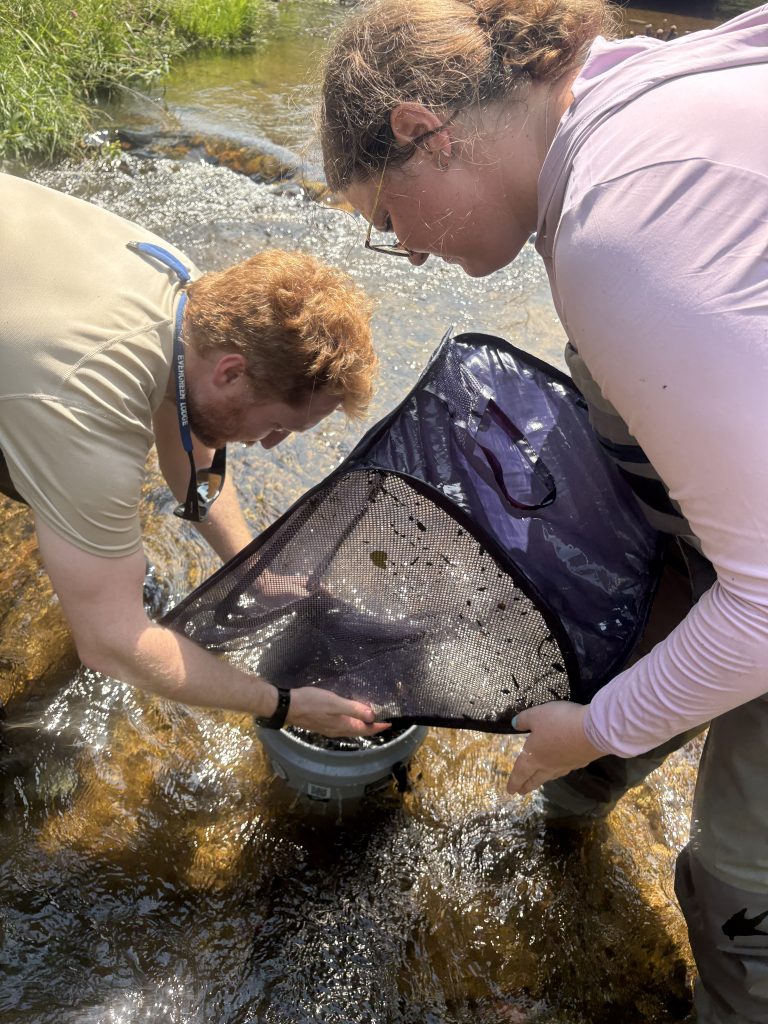
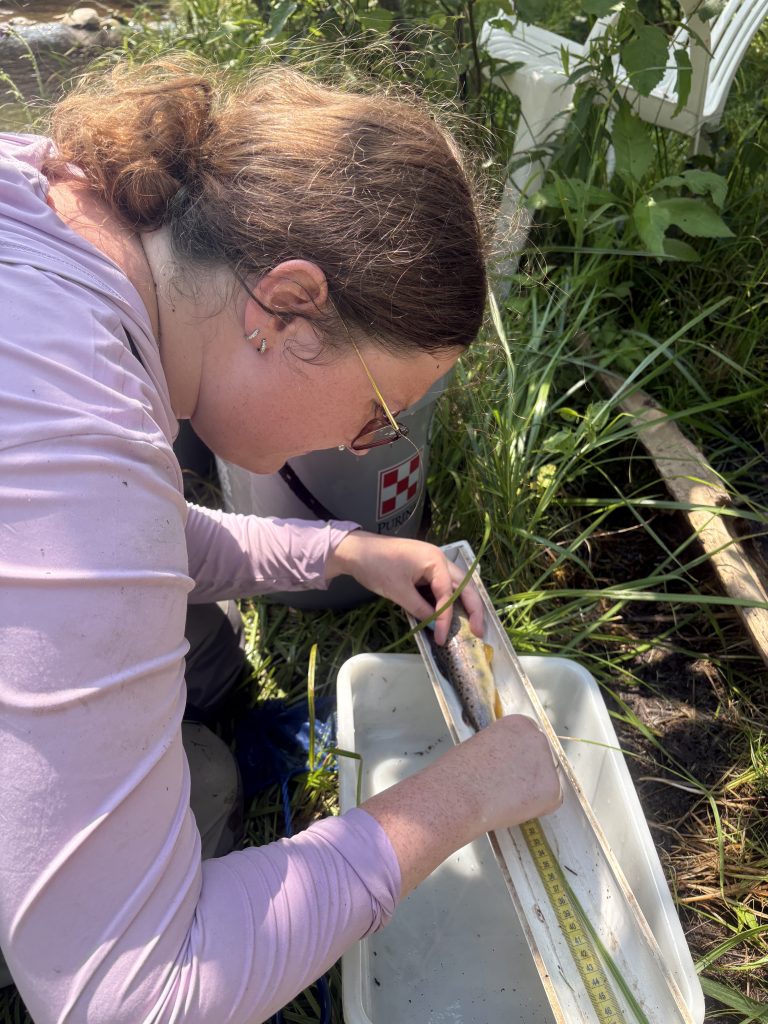
Backpack electrofishing is a valuable tool to assess fish populations in streams. We were specifically looking for Brook Trout populations. Working alongside experienced staff, I learned how to safely operate the equipment, collect accurate biological data, and properly identify and handle fish before releasing them back into the water. Each survey required careful handling to minimize stress on the fish.
One of the highlights of working in these small trout streams has been seeing how different each stream can be. Even streams that appear similar support different numbers and sizes of trout. This depends on habitat quality, water temperature, stream flow, and available cover. In all the streams, there was plenty of habitat provided by fallen trees, which made our job trickier as we had to go around these areas. It has been exciting to observe these differences and better understand how biologists use this information to monitor fish populations and evaluate stream health.
While the fieldwork is often the most exciting part of the job, I’ve also learned that collecting data is only half the process. After each survey, all of the information gathered in the field, including species identification, fish lengths, and weights. Data entry can be time-consuming and sometimes tedious, but it is a critical part of the work. This experience has shown me that behind every day of fieldwork is an equally important effort to organize and preserve the data.
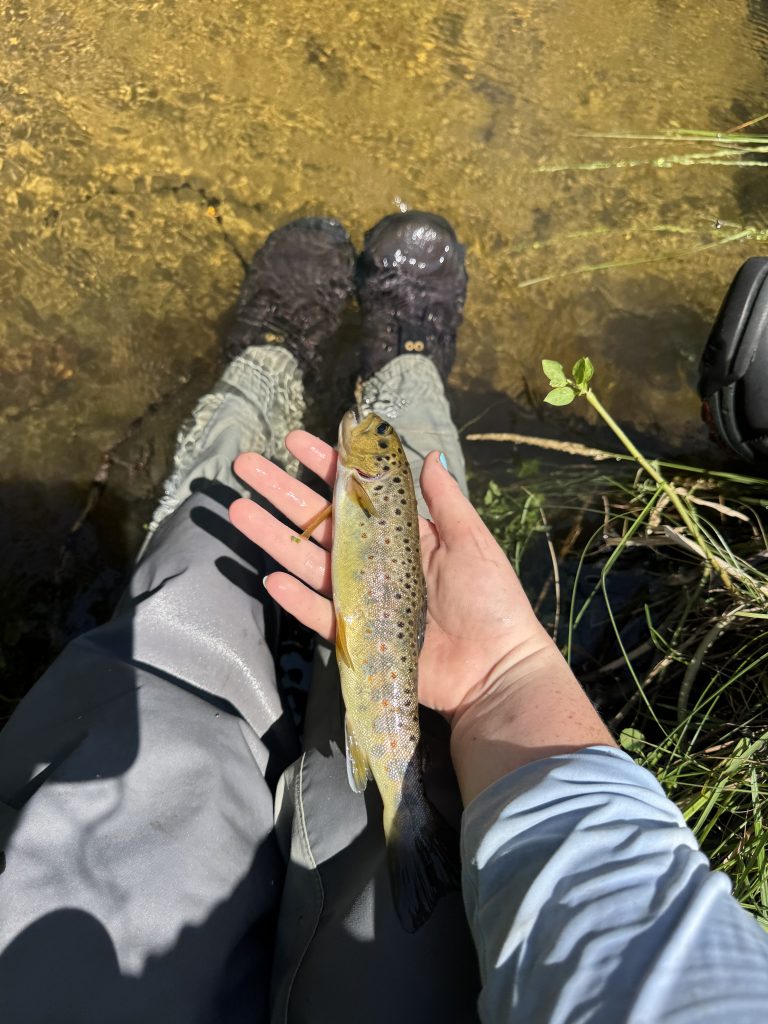
If you look closely at the gills on this trout, you can see white specs. These are called gill lice.
Gill lice are small parasitic organisms that live on the gills of trout and other salmonid fish. They attach to the gill tissue and feed on the fish, which can cause irritation and physical damage. Because the gills are responsible for taking oxygen from the water, heavy infestations can interfere with a trout’s ability to breathe properly.
Gill lice can be especially harmful to young or stressed trout. In severe cases, damage to the gills can make fish more vulnerable to disease, reduce their ability to grow and survive, and potentially lead to death. The effects depend on factors such as the number of parasites present, the age and health of the fish, and environmental conditions.
Gill lice are important to fisheries because they can affect trout health and population success. Understanding these parasites helps scientists and fisheries managers better understand threats to trout populations and protect the health of freshwater ecosystems.
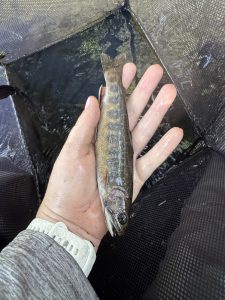
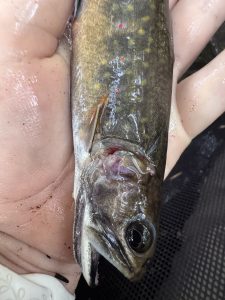
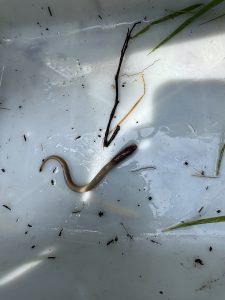
As we were electro fishing we also caught a Lamprey! This is a native lamprey.
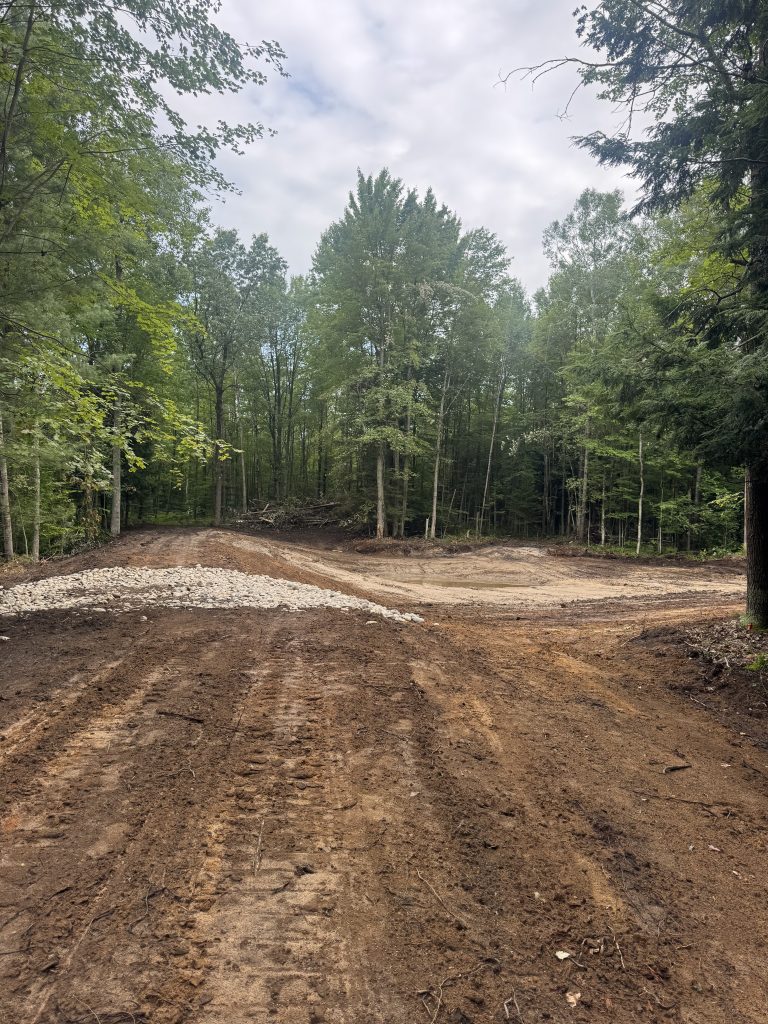
During my internship I had the opportunity to visit several habitat improvement projects and see conservation work happening firsthand. One of the sites had a newly constructed dike. A dike is an elevated area of soil that helps control and manage water levels in a wetland. By controlling the water, managers can create better conditions for wetland plants and provide important habitat for migratory birds. These wetlands give birds places to rest, feed, nest, and raise their young while also providing benefits to the surrounding environment by helping hold water and reduce erosion and runoff.
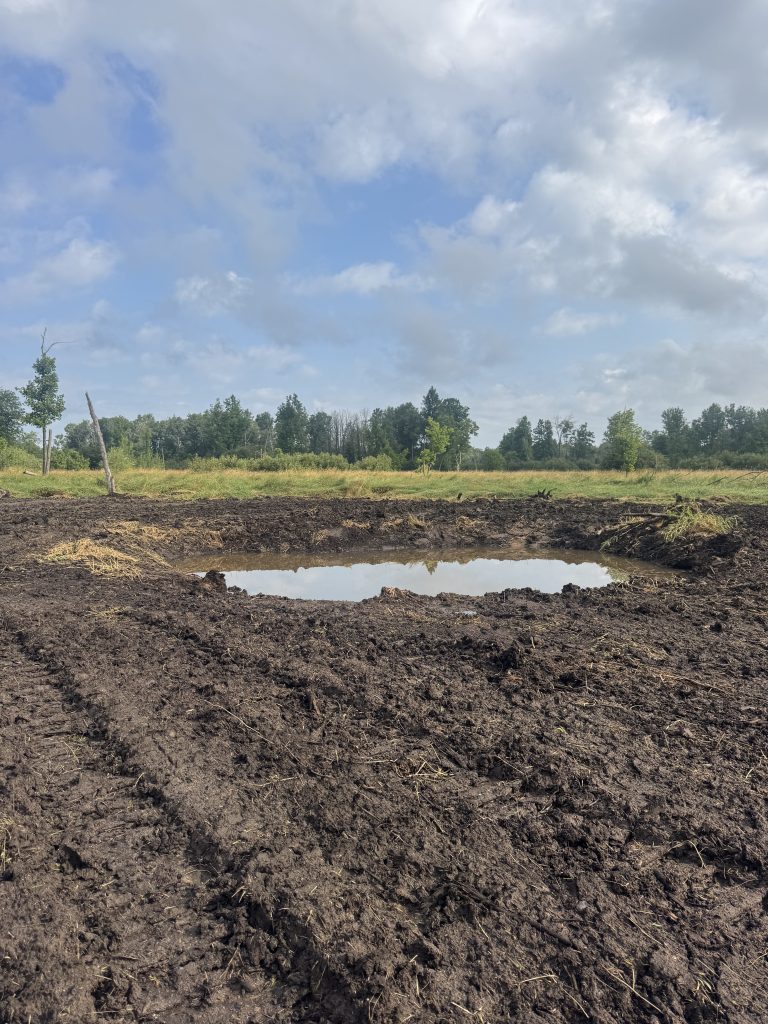
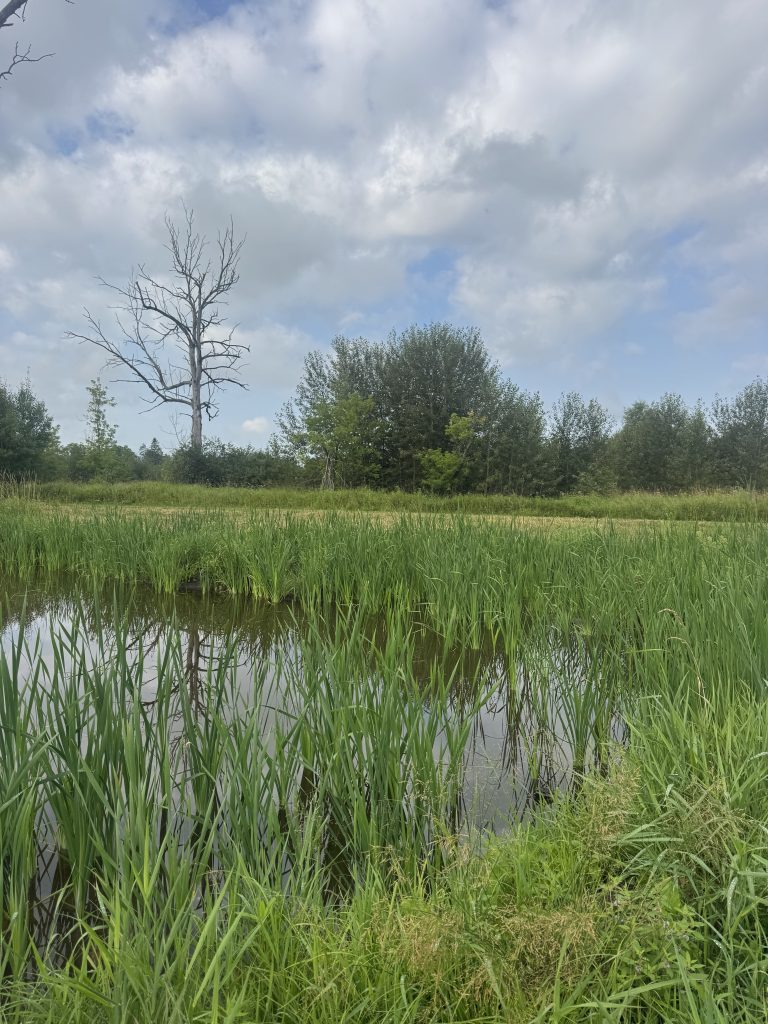
At another site, I was able to see both completed and unfinished dugouts. Dugouts are excavated areas that are designed to hold water and create or improve wetland habitat. The finished dugouts showed what the habitat will look like once the project is complete, while the unfinished dugouts gave me a chance to see the work that goes into creating them. These areas can provide important food and water for migratory birds, especially during migration when birds need places to stop and refuel.
Seeing these projects in person helped me better understand how habitat management can make a difference for wildlife and the environment. Although a dike or dugout may look like a simple construction project, each one plays an important role in creating and improving wetlands. This experience gave me a greater appreciation for the work the U.S. Fish and Wildlife Service does to protect habitats and support migratory birds.
As my internship comes to an end, I’ve been reflecting on everything I’ve experienced over the past few months. Looking back, I can confidently say this internship has been one of the most valuable learning experiences. I am so greatful for all of the experiences and knowledge that I gained from this opportunity.
When I first started, I was eager to gain real-world experience. Throughout my internship, I had the opportunity to work on meaningful projects, collaborate with talented professionals, and develop skills that cannot be learned from textbooks alone.
Sorry, the comment form is closed at this time.