


24 Aug Balancing Opposing Interests: Fish, Roads & Wet Weather Haul
On the Natural Resources team, it seems as though every conversation starts and ends with timber. Much of the land in the Willamette National Forest remains a major timber-producing area, and the forest often uses revenue from commercial timber sales to finance other maintenance and restoration work. This has included the costly maintenance of logging roads, which are also open to recreational traffic. Historically, the logging season has stretched from late spring into early fall, giving loggers the time and appropriate weather conditions to log safely, effectively, and profitably. A few factors are coming together to change that reality in the upcoming logging season.
One factor is fire. In more recent years, the historical logging season has been interrupted more frequently and more severely by wildfires. Even if wildfires do not burn through an area slated for logging, logging efforts cannot continue when they pose a threat to crews on the ground. Logging interruptions due to fire can last days or weeks and may occur multiple times during the season. As a result, there has been mounting pressure from logging companies to open operations earlier in the spring and continue operations later in the fall to make up time lost to fires.
Another factor, of course, is money. In the current timber market, the timber team is having difficulty developing projects that are competitive and profitable for purchasers while also meeting the strict environmental standards for logging on federal lands. Adding to this tug is higher timber targets, set nationally, in a restrictive budget environment with fewer Forest Service Staff.
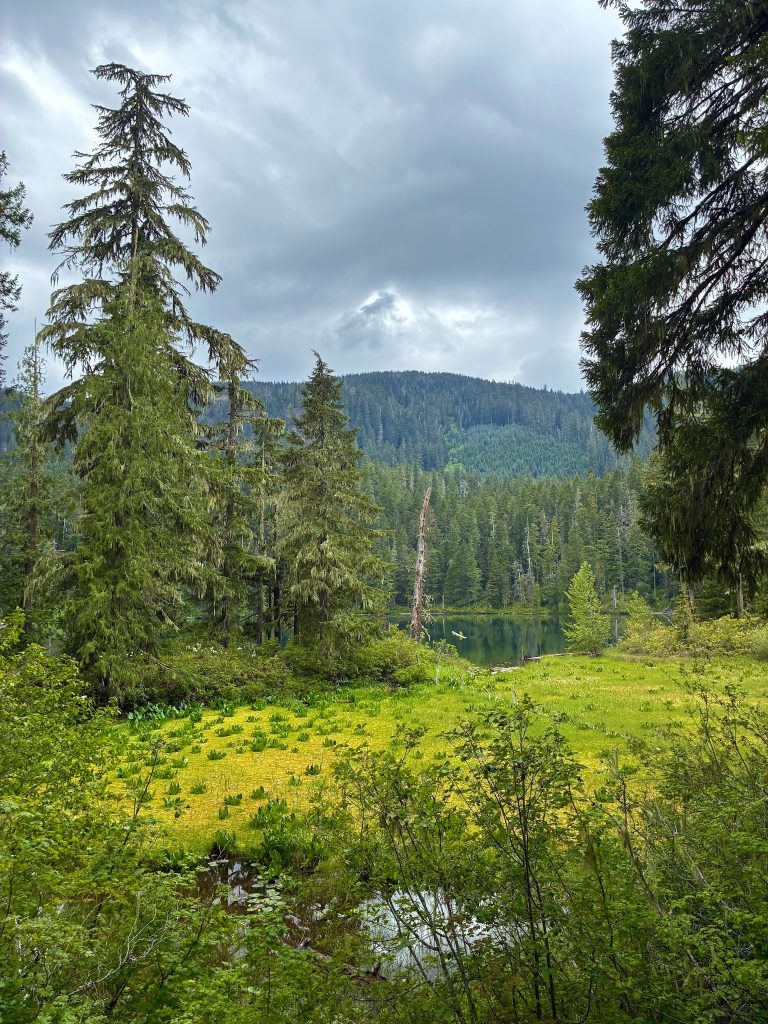
Logging in wet weather poses unique challenges to both roads and aquatic resources. Gravel logging roads degrade more quickly when used in wet conditions. Roads that degrade will begin to erode and leach sediment into nearby streams, rivers, or lakes. These riparian ecosystems are delicate; fish and other aquatic life are negatively affected by sediment introduced into their habitat. Moreover, the Clean Water Act requires that any work that may damage waterways on federal lands be stopped before damage occurs.
I helped my team prepare for a two-day workshop convening forest specialists and decision-makers to discuss the issue of wet-weather haul. In the morning, the first day was an overview of aquatic law, regulation, and policy. In the afternoon, we discussed policy implementation. The second day was a field day led by the engineering team. We visited a number of logging road sites in the McKenzie Ranger District and discussed road conditions, previous timber sales on these roads, and the successes and failures in balancing aquatic resource protection with providing logging opportunities.
The group talked through solutions at the margins. What if we extended haul into the shoulder seasons? How could we monitor road conditions to know when roads are too wet for haul? What is the best suite of potential options we can present to logging contractors looking for wet-season haul opportunities? How can we afford to maintain roads in a bad timber market?
Like with so many issues, there were many questions and few answers. We ended the workshop with a short list of the most feasible options. Options, which when banded together, might present us with a passable solution.
Managing federal lands is an exercise in geometric frustration; even when land management goals are in direct opposition, there are still more goals pulling them in additional, different directions. The oppositional, overlapping, and co-dependent needs of different mandates and program areas create a frustrated system. Out of this tension, through discussions like this over the years, ideally comes the most utilitarian solution.
Sorry, the comment form is closed at this time.