


10 Sep Hidden in Plain View: Asters
Hello everyone! I’ve been learning a lot about plants, and I want to share it. Let’s get right into it today.
Everyone here knows what a sunflower is. I’m sure at some point in your life you’ve seen someone eat sunflower seeds, or you’ve had them yourself. Maybe you’ve taken pictures in a field of sunflowers sometime in late summer or fall. They’re pretty iconic.
Well, today, I’m going to give you a new set of eyes to see them with.
Usually, when we look at a sunflower, what we see is something like this:
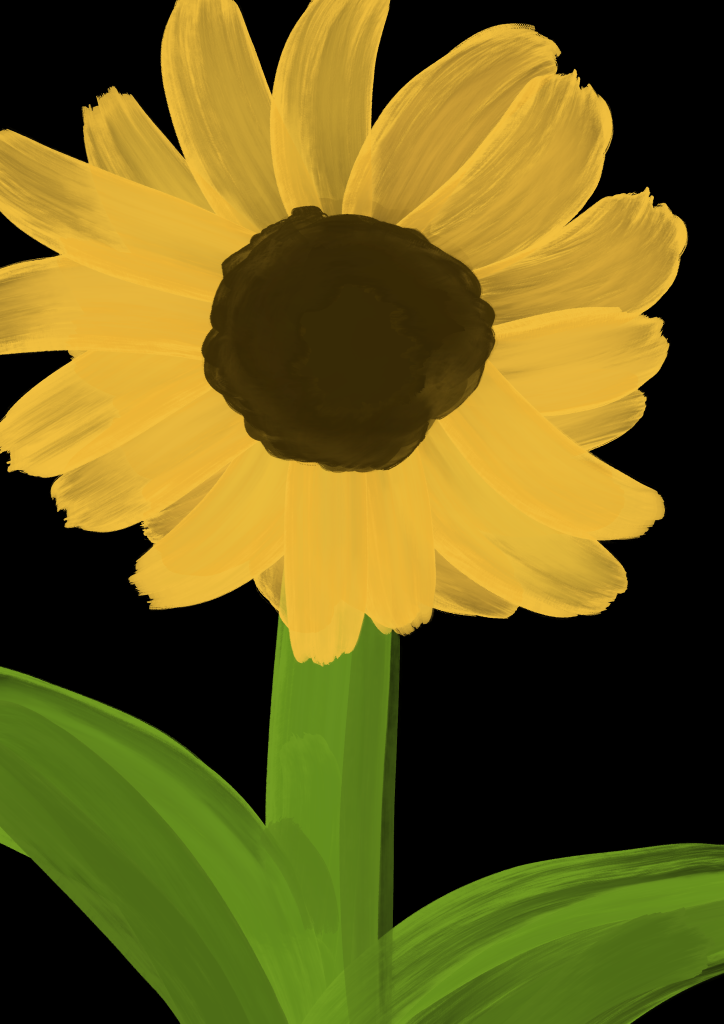
We can pick out a few parts pretty easily:
Flower: the big yellow thing with a brown center.
Stem: the long green stalk holding it up.
Leaves: the broad green structures coming off the stem.
Simple enough.
Except botanically, there’s one big problem with that description:
That “flower” isn’t actually one flower. It’s an entire community of flowers packed together so tightly that, from a distance, they look like a single enormous bloom.
Let me introduce you to the real beauty of a sunflower…
A sunflower belongs to the family Asteraceae, also called the aster family, daisy family, or sunflower family. Members of this family produce one of the most distinctive types of inflorescences in the plant world.
An inflorescence is simply a structured group of flowers growing together on a plant.
Think about a hydrangea, for example. One hydrangea cluster contains lots of individual little flowers. Because those flowers are separated from one another, it’s pretty obvious that we’re looking at an inflorescence. A sunflower is doing essentially the same thing, but much more convincingly.
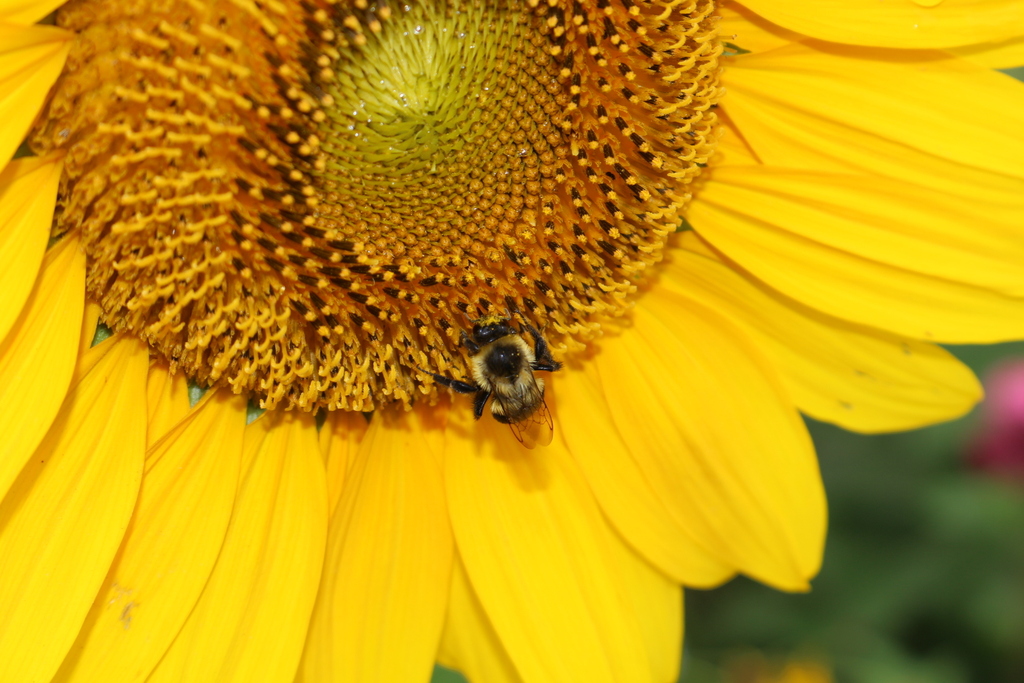
Its flowers are packed together on a broad platform called the receptacle, forming what botanists call a head, or capitulum. So the entire thing we casually call a sunflower “flower” is really a flower head containing many individual flowers. Those individual flowers have their own special name: florets.
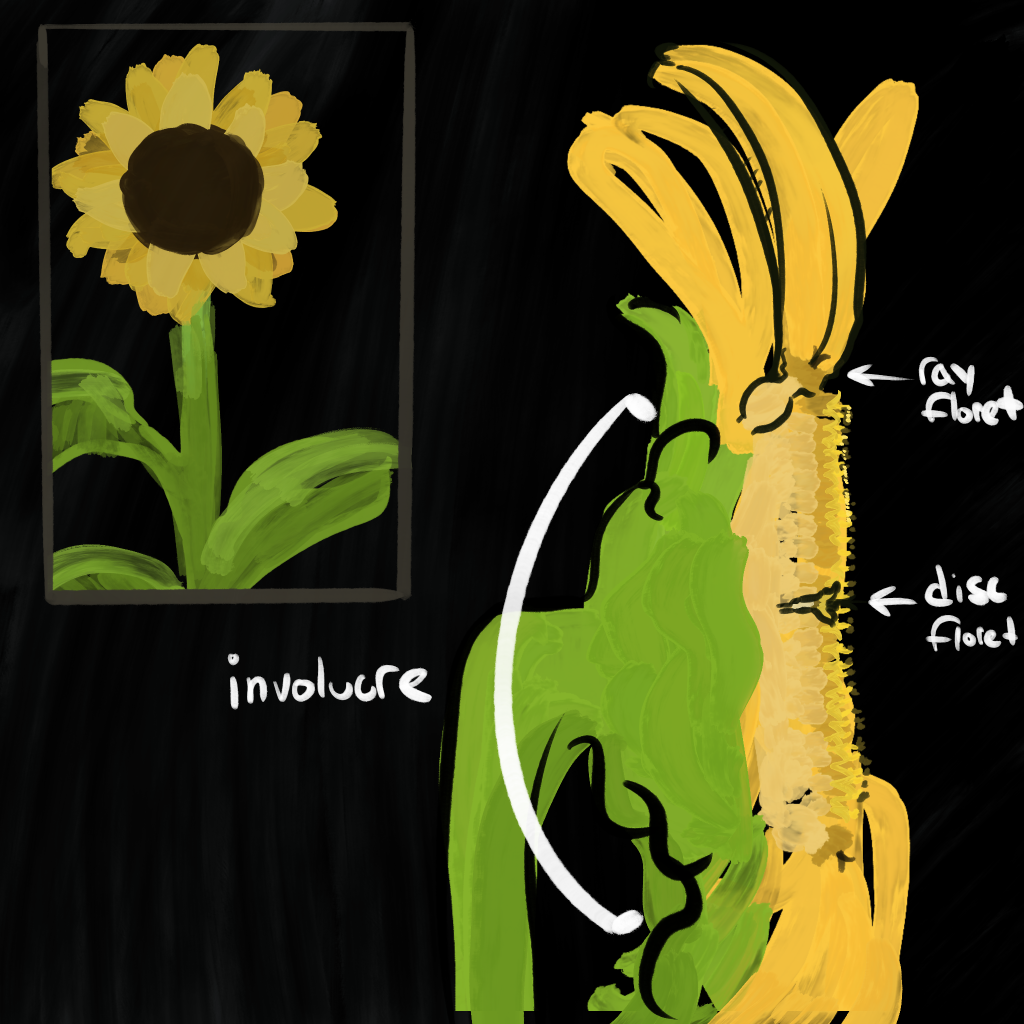
If we take apart a typical sunflower head, inside the cup-like structure at the base of the head (the involucre), we find two very different-looking kinds of florets.
Around the outside are the long, yellow structures that most people would call petals. But those aren’t individual petals; each one belongs to its own flower, which has developed differently.
These are called ray florets.
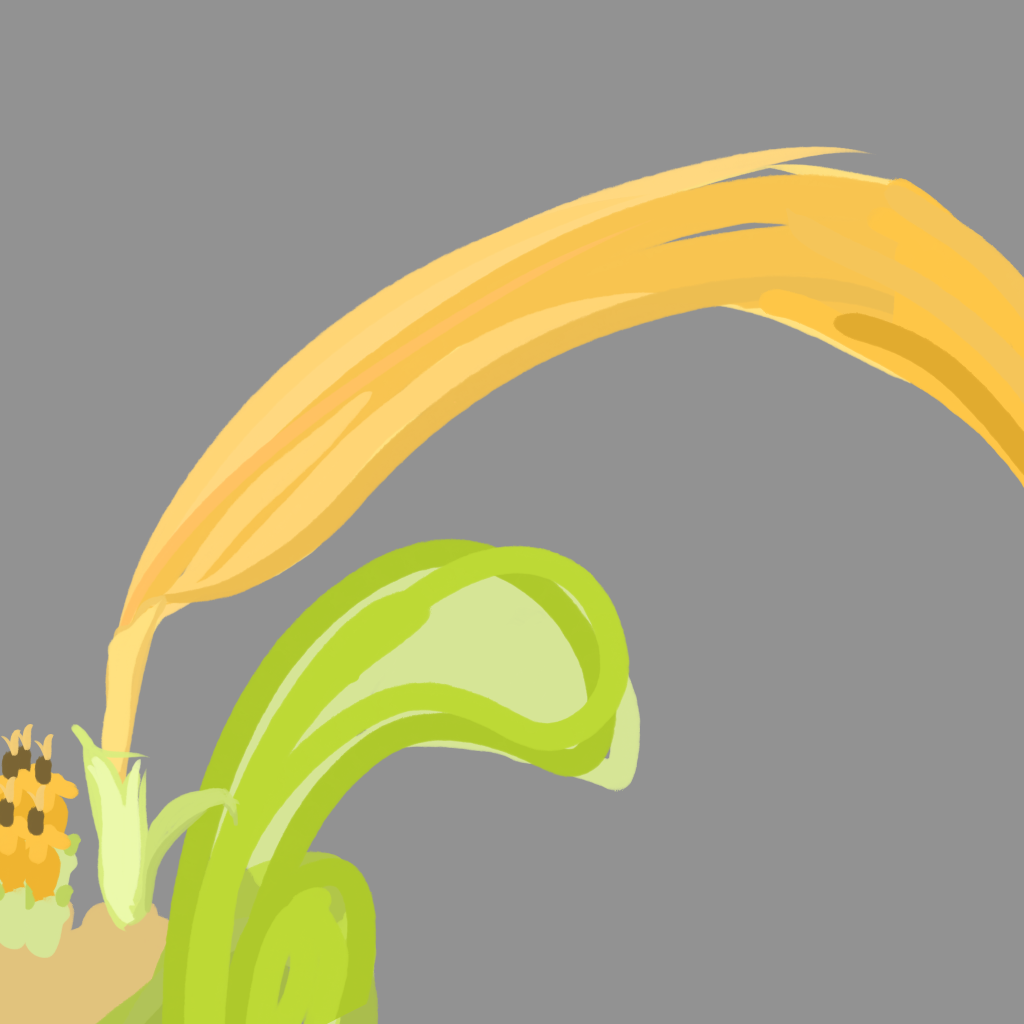
The long yellow “petal” is actually the floret’s corolla—the collective term for the petals of a flower. In ray florets, the petals are fused together and extend outward into a long, strap-like structure.
So when you look at a sunflower and count what appear to be twenty or thirty big yellow petals, you are actually looking at twenty or thirty separate differently developed flowers arranged around the edge of the head.
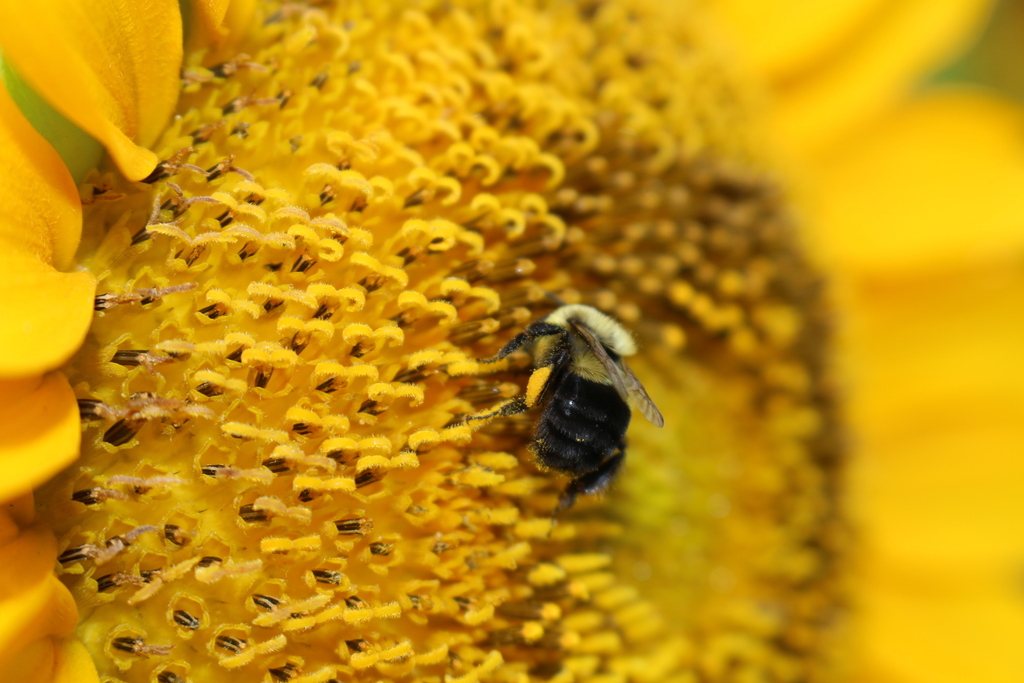
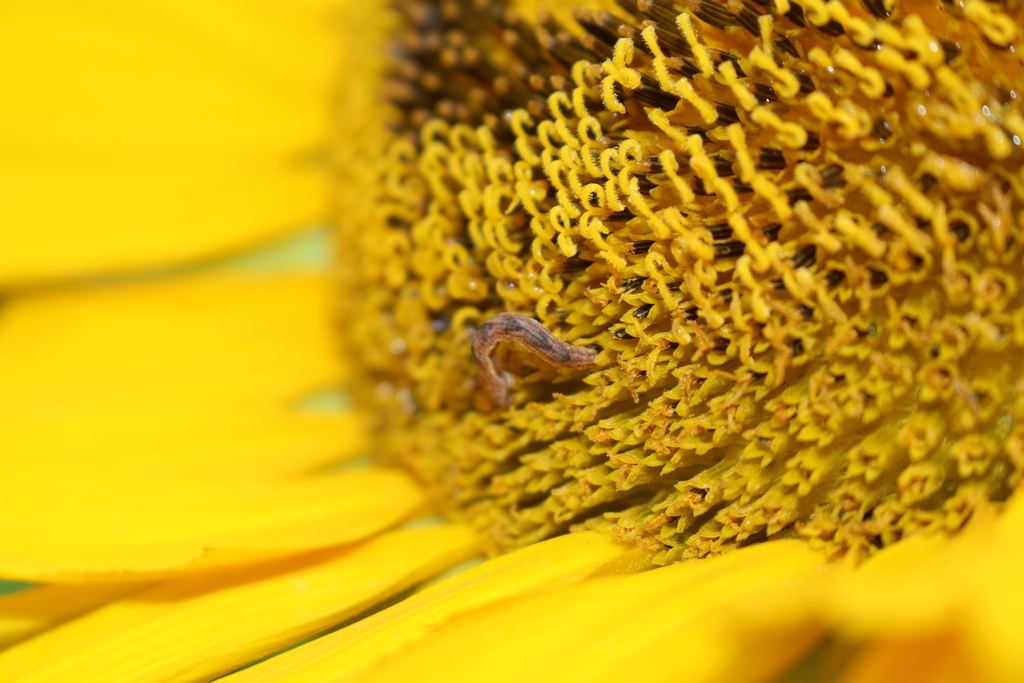
Then we get to the dark center. That center isn’t one structure either. It consists of hundreds of tiny disc florets packed together.If you look closely at a sunflower in bloom, especially with a hand lens or macro camera, you can actually see them. Each little unit in the center is an individual flower.
The sunflower has performed an illusion: hundreds of flowers are arranged together in such a coordinated way that the entire inflorescence looks like one giant flower.
Let’s zoom in even farther:
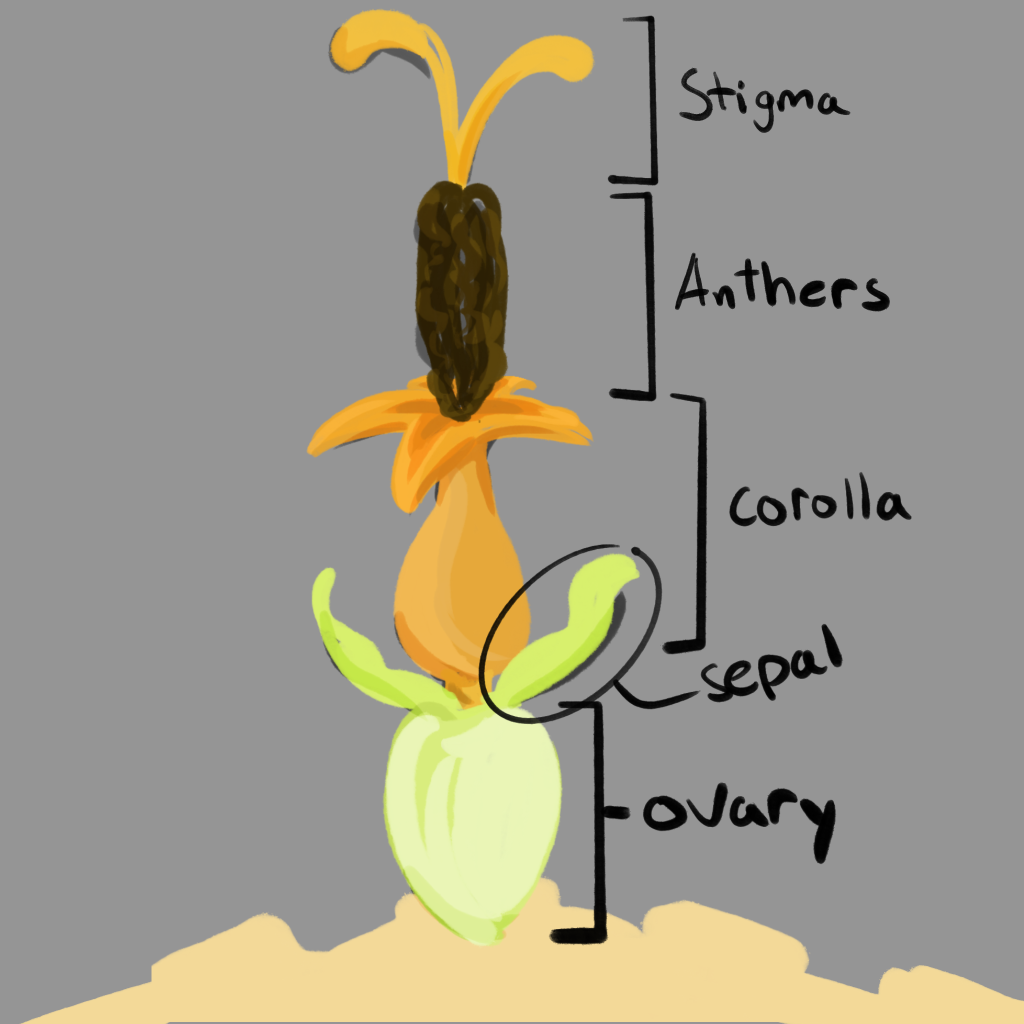
This is one disc floret from the center of a sunflower. And unlike the whole sunflower head, this really is a single flower.
Even though it’s tiny, it has all the important parts needed to reproduce. It has a structure that receives pollen, called the stigma; structures that produce pollen, called the anthers; and an ovary containing an ovule that can develop into a seed after pollination and fertilization.
So even though one disc floret may only be a few millimeters wide, it is a complete flower.
And a single sunflower head can contain hundreds of these tiny flowers packed together.
Later in the season, after the flowers have been pollinated, look at the head again, and you’ll see hundreds of sunflower seeds, each one developing from the ovary of its own individual disc floret.
FYI: Ray florets aren’t the same in every member of the aster family! In some species, the ray florets are sterile, but in others they have functional stigmas and ovaries and can produce fruits and seeds.
So hopefully, the next time you look at the flowers around you, you’ll take a closer look. Maybe you’ll start to see the massive world hidden in the smallest details.
Sorry, the comment form is closed at this time.