


10 Sep To Catch a Bat in 10 Hours
How to Catch a Bat in 10 Hours? Thinking back to one of my favorite rom-coms, How to Lose a Guy in 10 Days, one has to be clever. To catch a bat in 10 hours, you have to think like a bat; in many cases, you need to become one with it. Bats are mysteriously elusive wonders of the night, and they can be very tricky to outsmart otherwise.
Hour 1: Learn about Bats
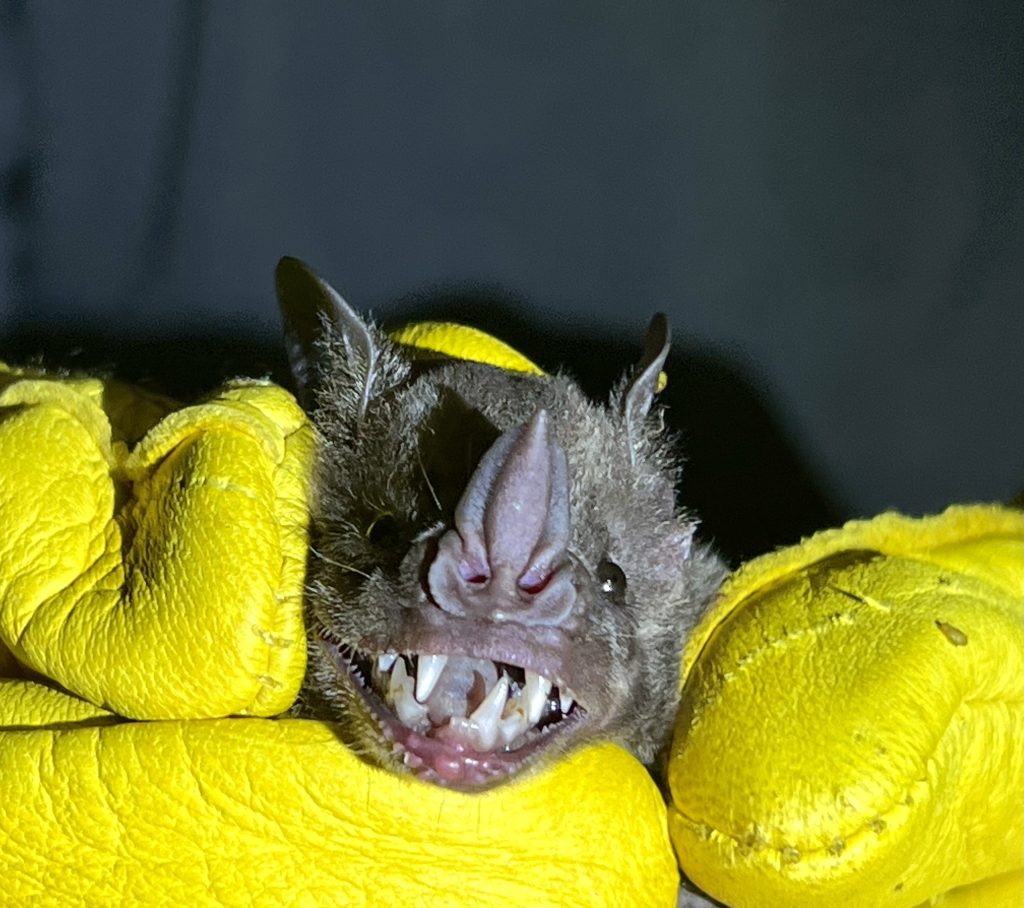
Bats are flying mammals of the night and the only mammals capable of true, sustained flight. They occupy the moonlight hours when most other flying animals have headed to sleep and can eat up to 10x their body weight in insects. North American bat diets consist mainly of insects, but other species eat fruit, nectar, fish, and some even rely solely on blood.
Hour 2: Learn about Bat Habitat
Bats tend to congregate and feed where the trees are. Trees make great structural shelters for bats, as they can climb under exposed bark and nestle in for sleep during the sunlight hours. Certain bat species will hibernate in caves during the colder months, but many species will choose migration instead and continue to live among the trees. For our research, we will head to forested areas!
Hour 2-3: Habitat Scouting
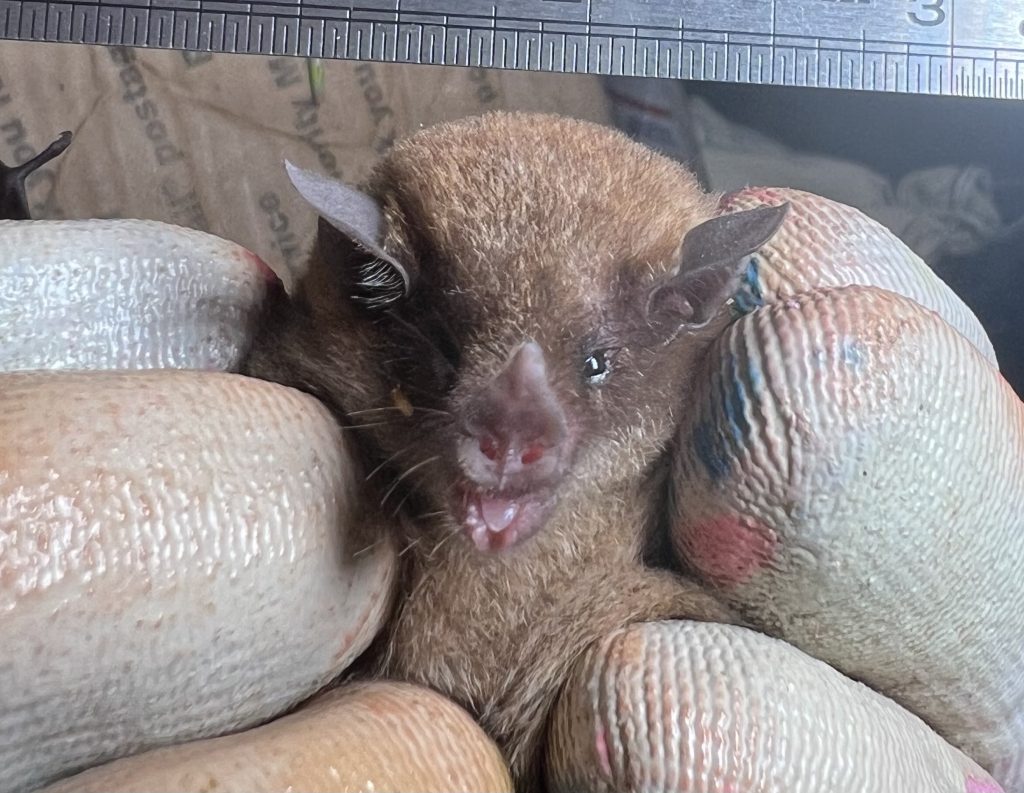
Choosing a habitat location depends heavily on the bat species and diversity you plan to target. Larger bats tend to prefer more open areas where they can freely navigate open spaces, while smaller bats, such as our Northern Long-eared bats, feast successfully with ample canopy cover. Riverbeds are also reliable places to stay near when scouting.
For our mist-netting adventure, Carter Leerhoff, Julie Johnson, and I all headed out to Louisville Swamp in the daylight hours to scout potential Northern Long-eared bat (NLEB) zones. We also used previously recorded NLEB roost locations from 2019 to get a general idea of where to start looking. We headed along the Little Prairie Loop trail to preview the canopy-covered areas in that direction. Much of the canopy cover we noted was along the West end of the trail and through a separate, unidentified trail that branched off the main trail. Canopy cover and dense vegetation are essential for Northern Long-eared bats, and we found some promising locations. We also headed down south to see a historical, abandoned farm on the site — very cool, but kind of creepy too!
We also scouted the Mazomani trail, but there wasn’t enough canopy cover to really pique our interest. So, for our research purposes, we decided to stick along the Little Prairie trail!
Hour 4-5: Setting the Nets
Deploying mist nets can get very tedious, very quickly. But with a great group of people and a lot of perseverance, it can be done! Mist nets vary widely in size, brand, and quality, so it’s easy to get lost in the process. For our night, we set up 3 triple high nets along the West end of the Little Prairie trail, along with 2 single-high nets along the unidentified trail. These nets were tricky to put together, and with darkness approaching and mosquitoes looming, speed and accuracy are essential.
Hour 6-9: Waiting and Catching
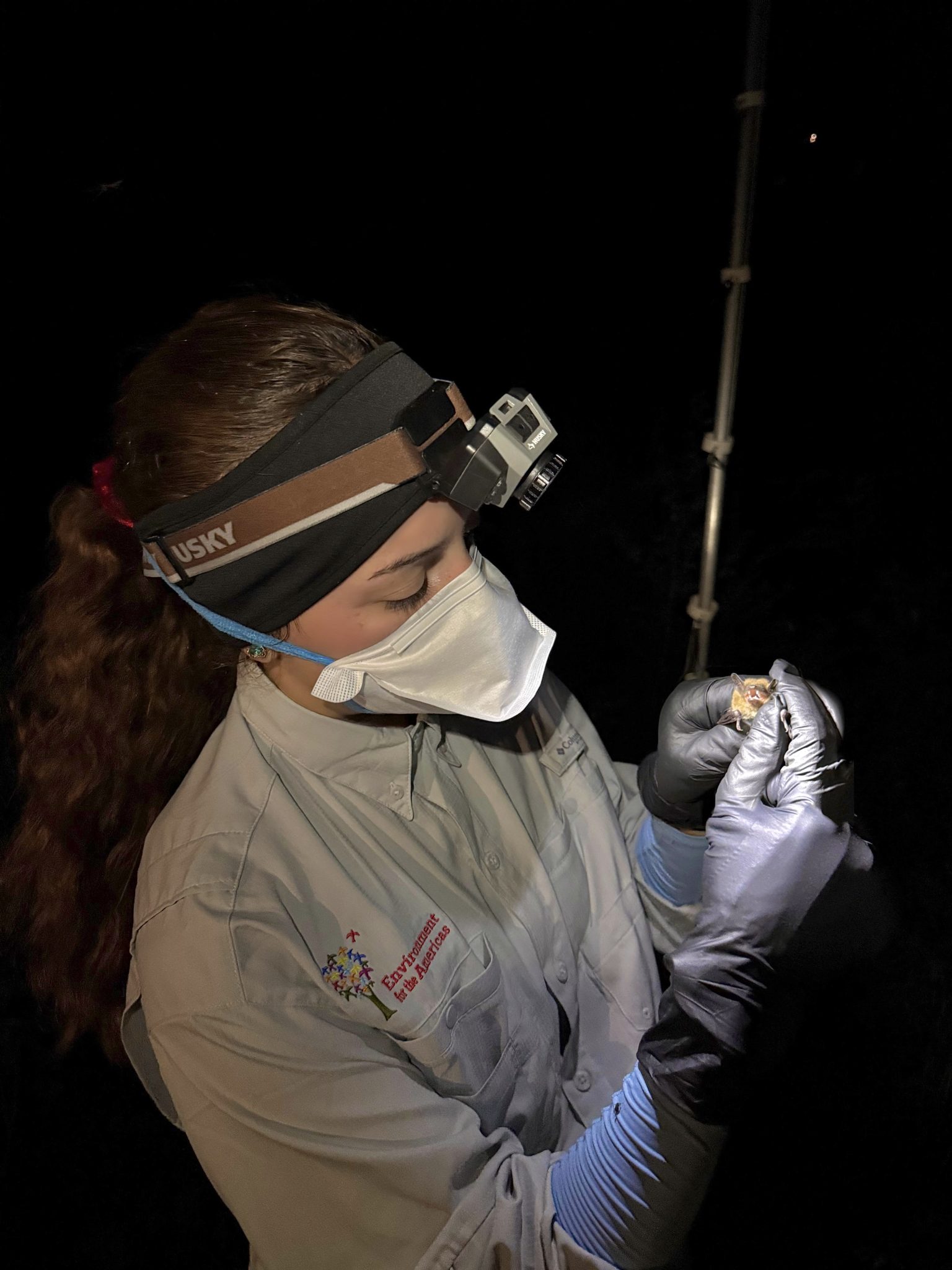
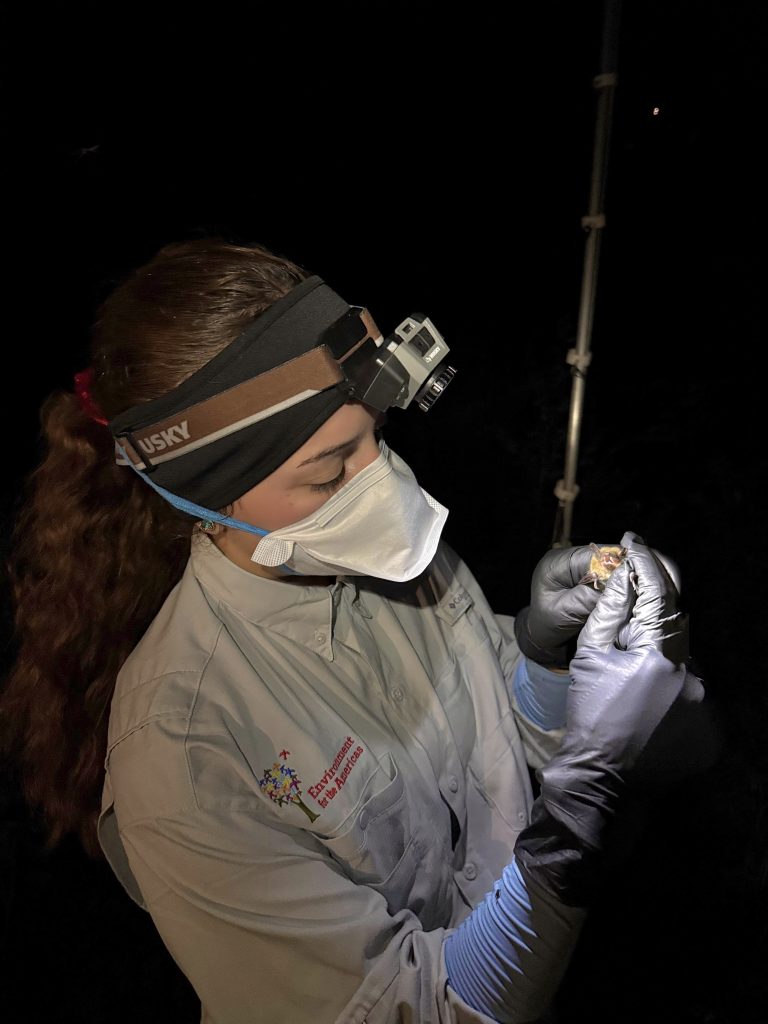
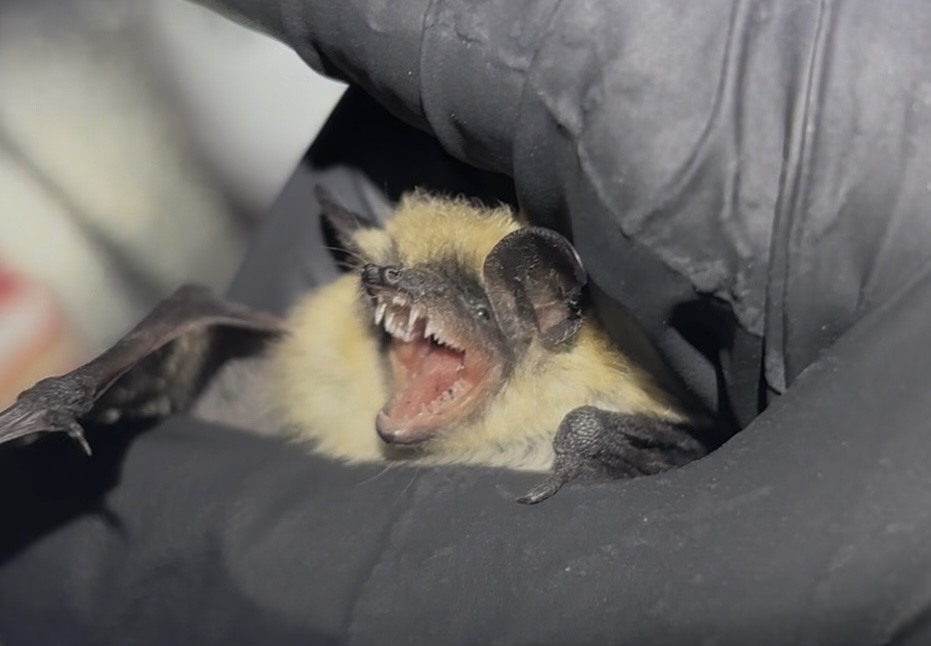
Arguably the most exciting part of the night is the anticipation. When all nets are properly set and opened, the night gets really quiet and still as everyone sits around waiting. In near-total darkness, we sit and eat our snacks, with 5-ish minute intervals for net checks. All 5 of our nets followed a 0.5-mile section of the trail, and even if that doesn’t seem long, it feels incredibly long in the dark, eerie hours of the night with nothing but a headlamp for illumination. After the first 5 minutes of waiting, we luckily caught our first bat, and then another, and another. We had definitely hit a gold mine of Big Brown bats this night — and it was truly magical! Overall, we successfully captured and safely released 18 Big Brown bats (16M, 2F) during our night of mist-netting. At one point during the night, I went out with a fellow colleague and swiftly removed 3 bats from a single net all on my own in about 5 minutes. It was a record for me, and I felt truly grateful for the opportunity to work under pressure with such high risk. When mist-netting, you have to check nets frequently to ensure no bat stays in one long enough to injure itself or become too stressed. Three bats in a net at once was a big feat to take on by myself, but I did it!
Sorry, the comment form is closed at this time.