


21 Sep A Summer Spent Looking Up
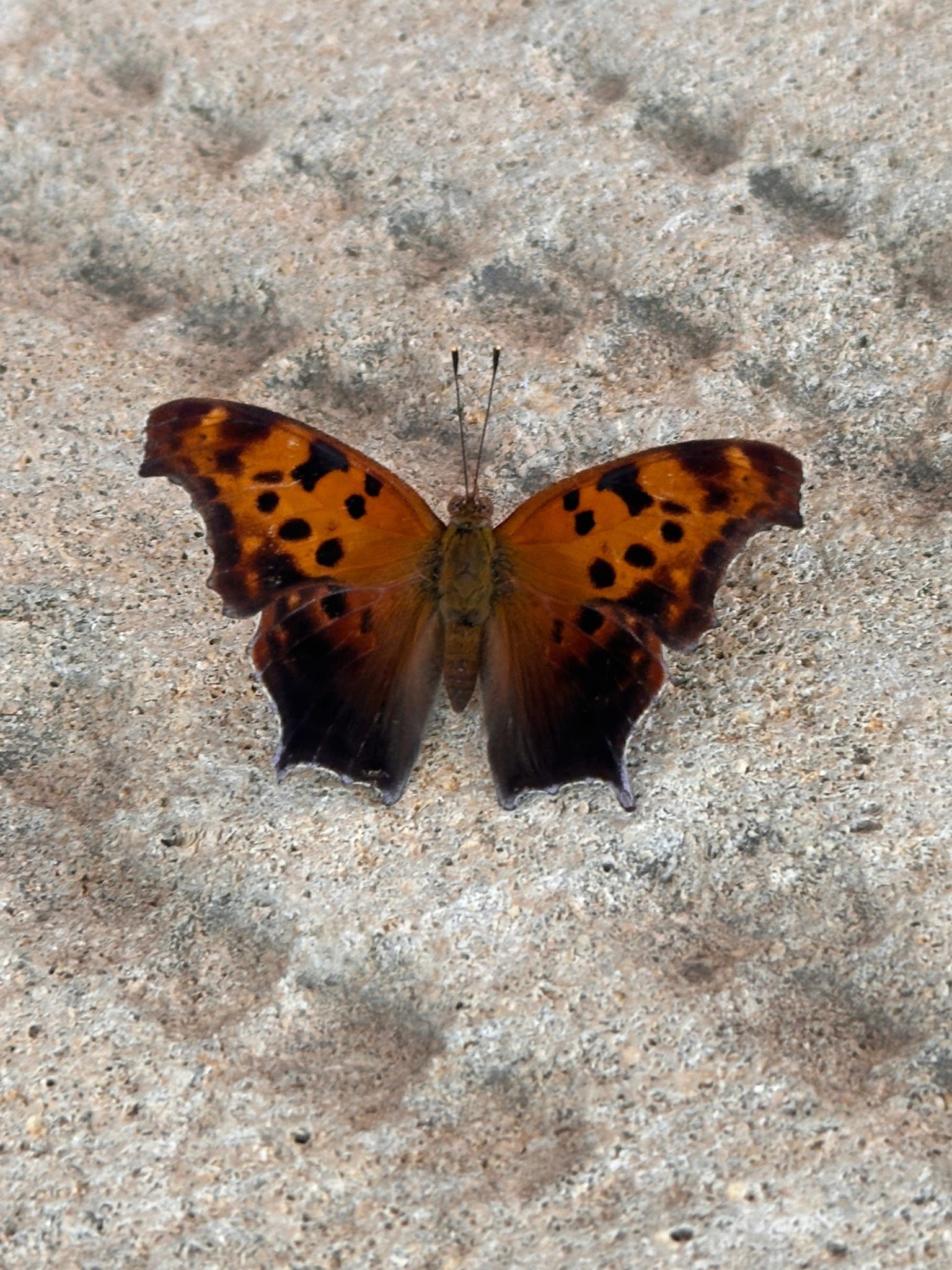
Question Mark butterfly (Polygonia interrogationis)
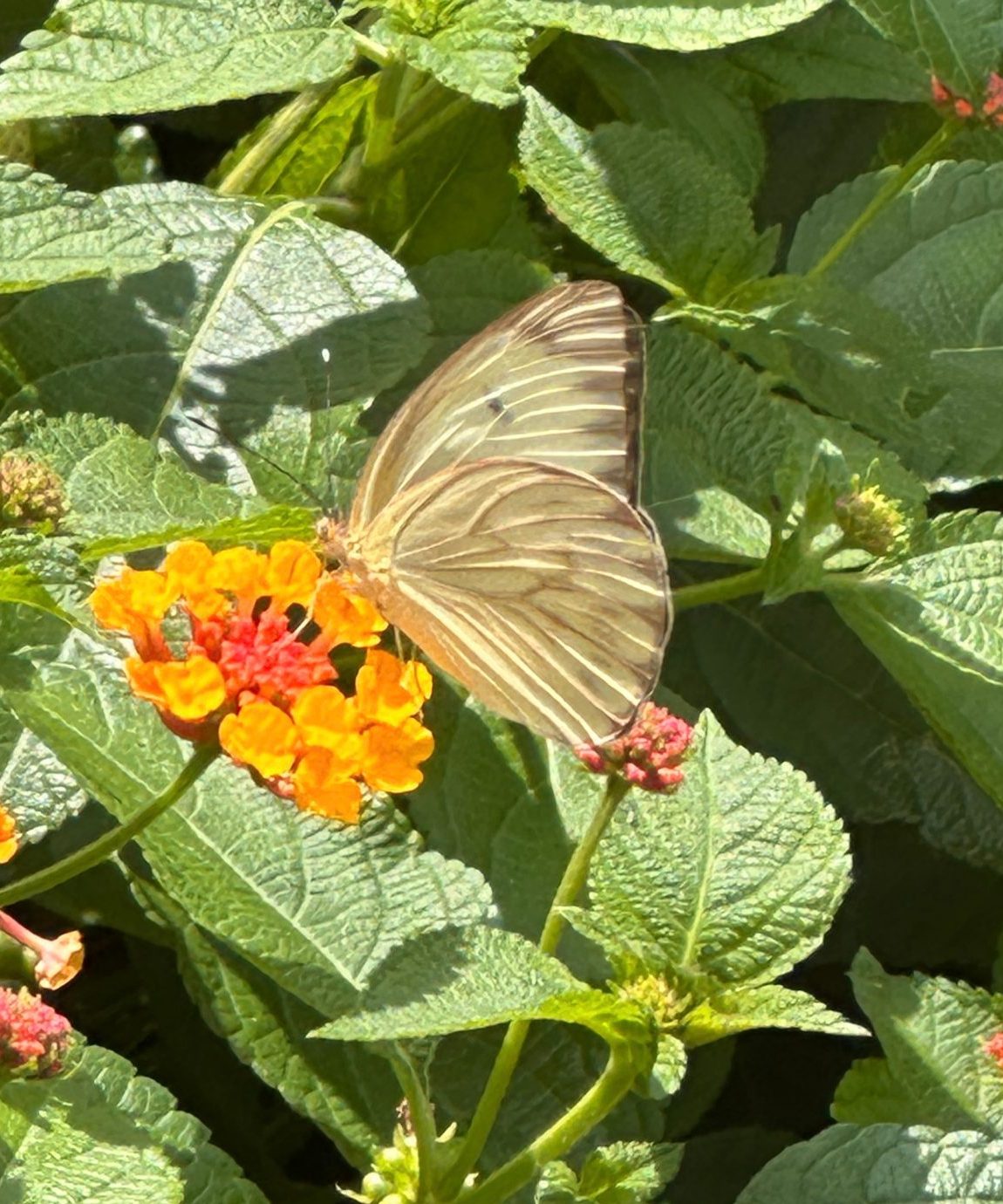
Great Southern White butterfly (Ascia monuste)
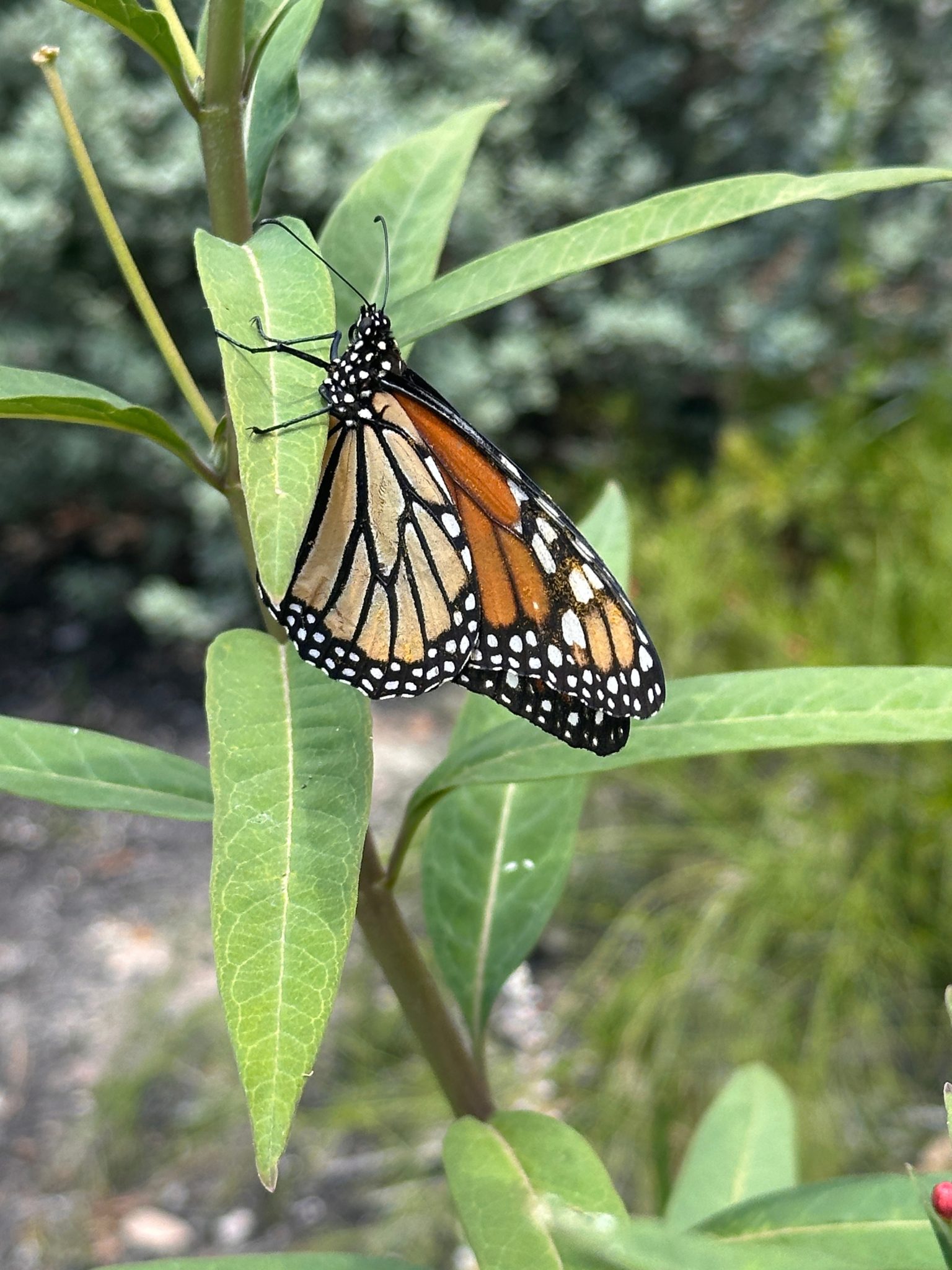
Monarch butterfly (Danaus plexippus)
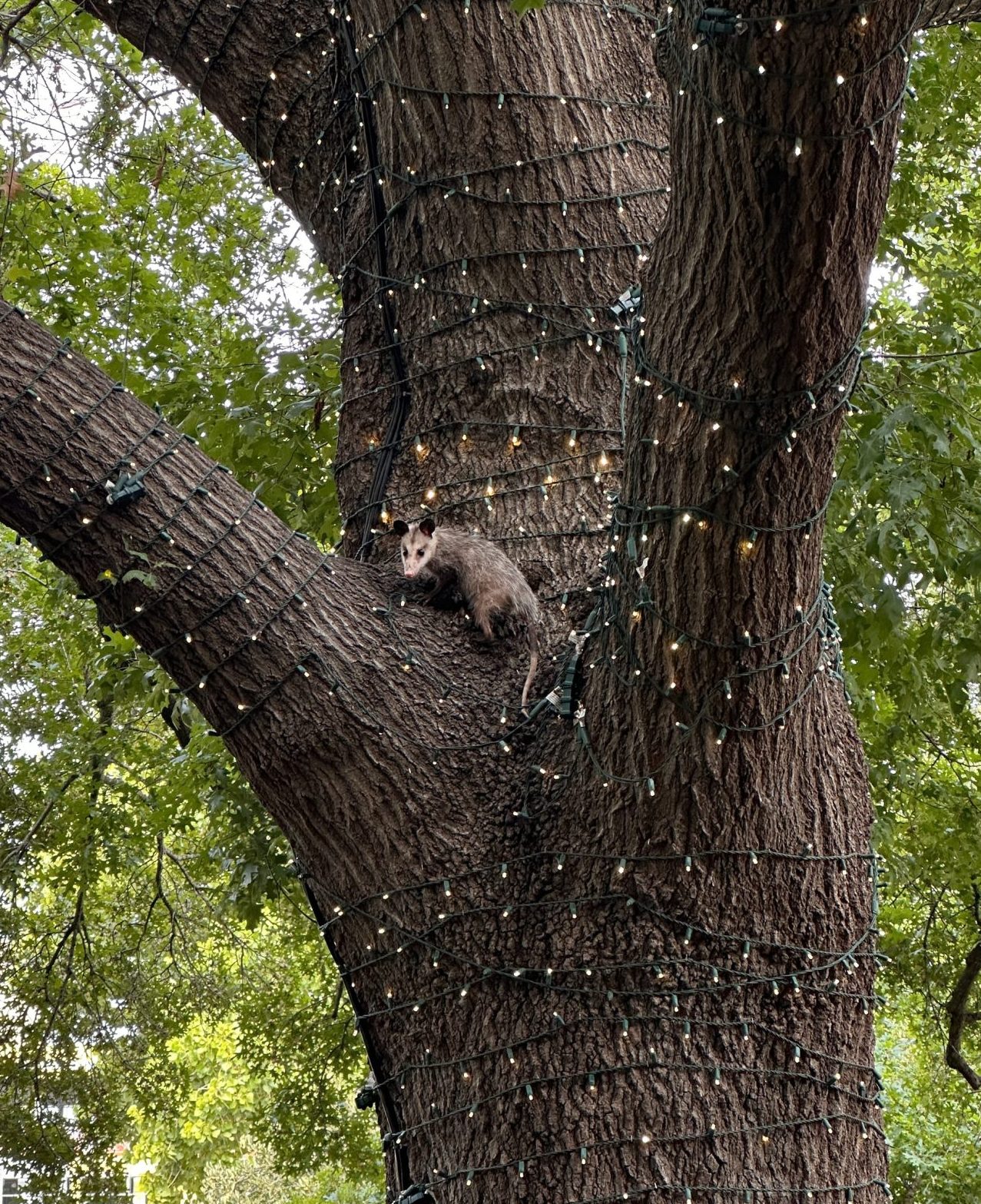
Virginia Opossum (Didelphis virginiana)
These past few months have come and gone, and what a summer it was. South Texas was relentlessly hot, both day and night, but that never stopped me from getting outside. Between casual bug hunting, trips to local parks and gardens, and plenty of birding along the way, there was always something to discover.
In between my internship sessions, I also worked part-time at one of the most iconic places here in San Antonio: The Alamo. When I wasn’t monitoring the grounds or answering questions in the museum, I was usually looking up and all around for wildlife big and small.
The gardens on the property are beautifully maintained, and there happen to be a few water features that provide plenty of opportunities for local wildlife to stop by. There’s a small colony of rabbits that can sometimes be spotted in the early morning, opossums climbing through the trees, and a family of Blue Jays that always seem to be keeping an eye out for the hawks in the area. But some of my favorite visitors were the butterflies, constantly drifting between the flowering plants throughout the grounds. See the images in the gallery above for a few of the species I was able to spot.
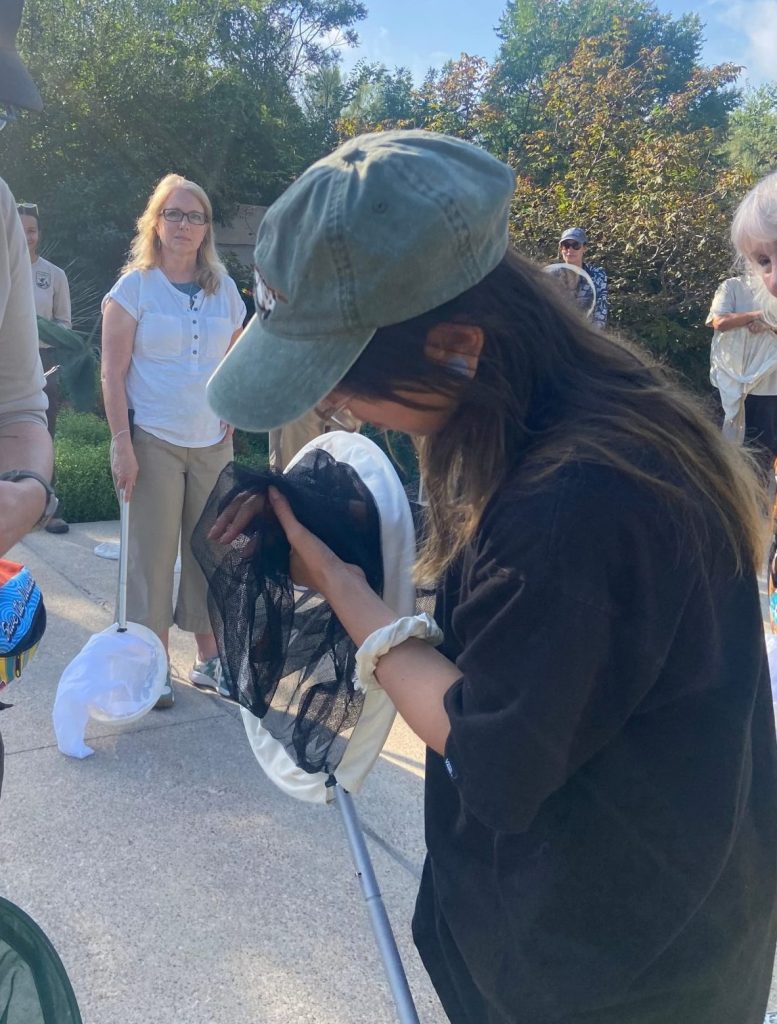
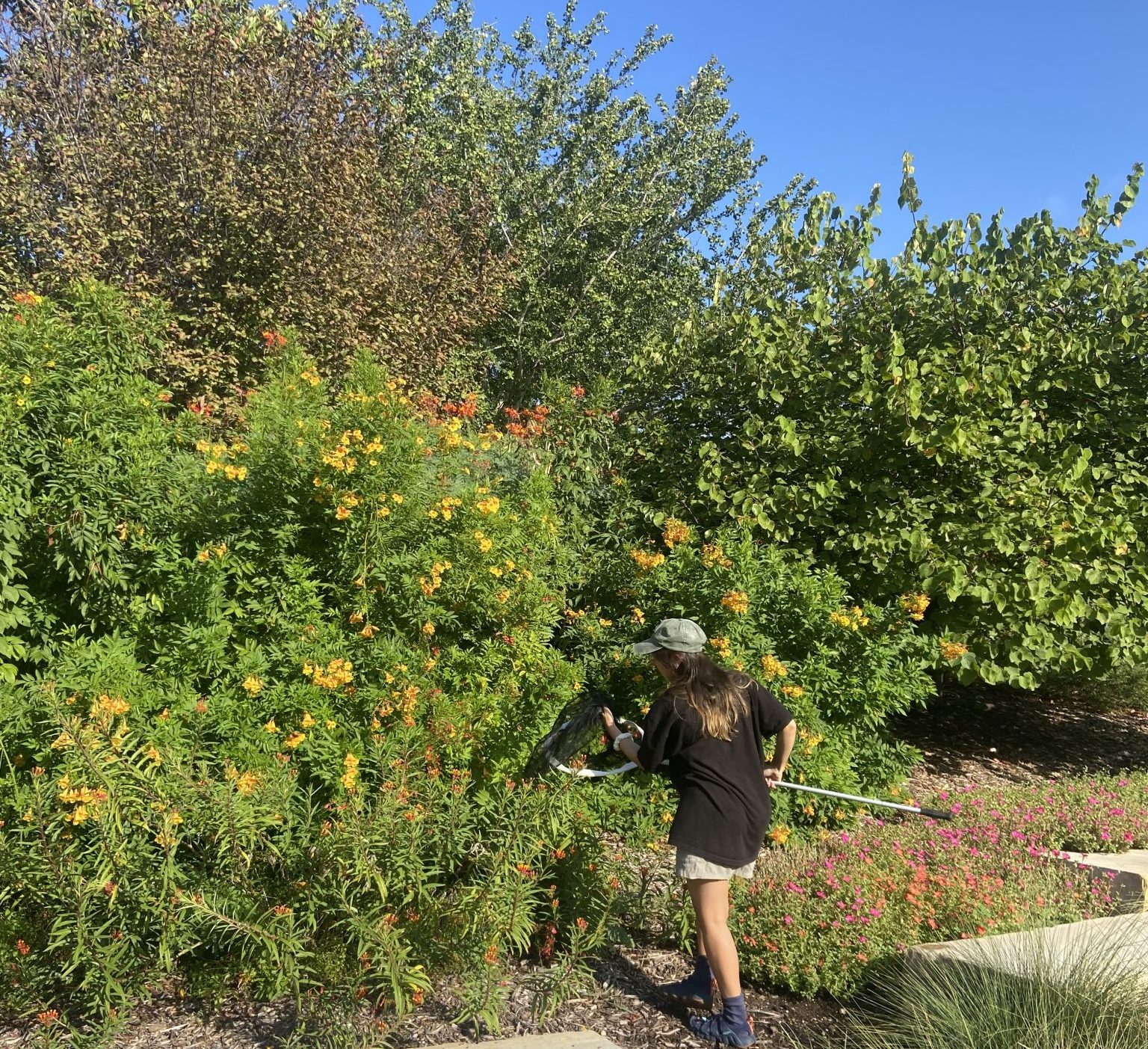
Towards the end of summer, I had the opportunity to take part in a training at the San Antonio Botanical Gardens focused on Monarch CTT tagging, which was an exciting experience. We got hands-on practice catching butterflies throughout the grounds and learned how to safely handle them for processing in the training area.
At the time of the training, however, it wasn’t quite Monarch season yet, so we weren’t able to find any Monarchs within the garden. Instead, we encountered and caught other species, including Lyside Sulphurs, Queens, and several species of Swallowtails. We used nets to carefully catch the butterflies, practiced safely handling them, and placed each individual into a sheer envelope. We then recorded which species we caught and where they were found on our data sheets.
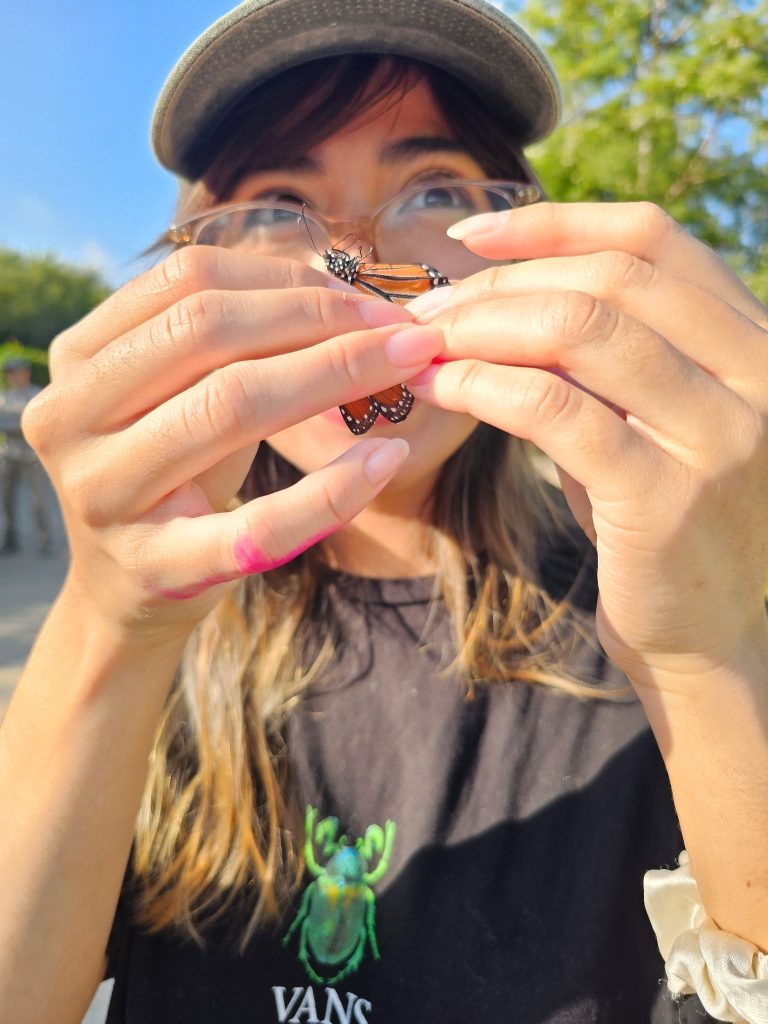
The species I was able to catch and you see me holding in the images here is the Queen butterfly (Danaus gilippus).
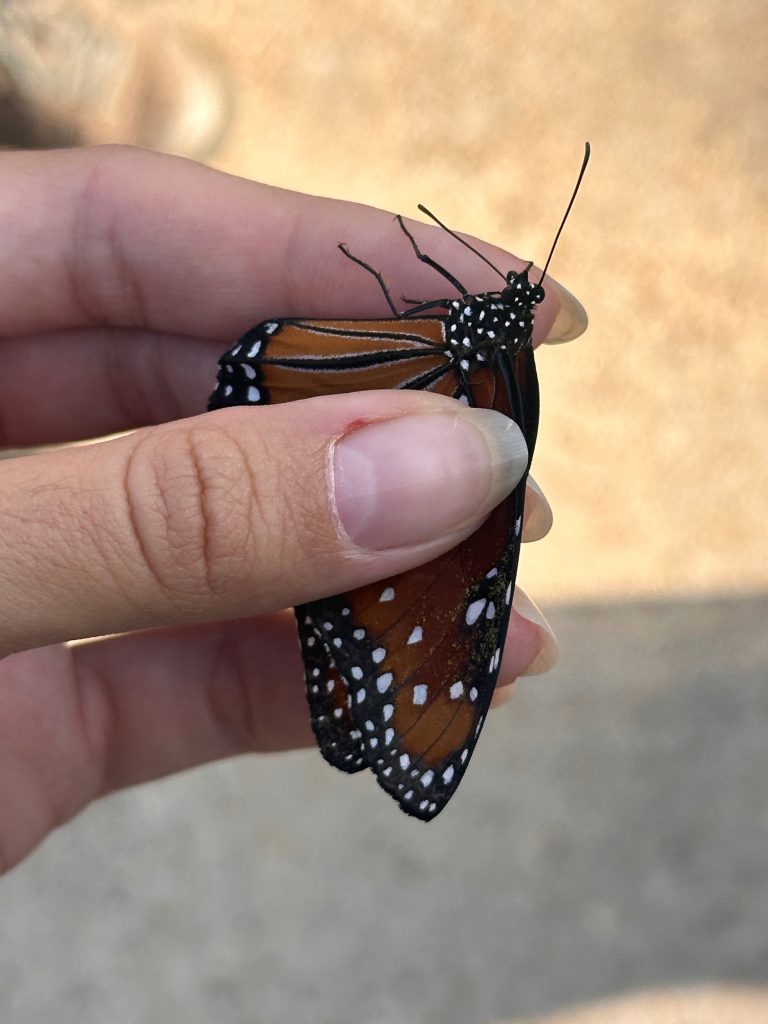
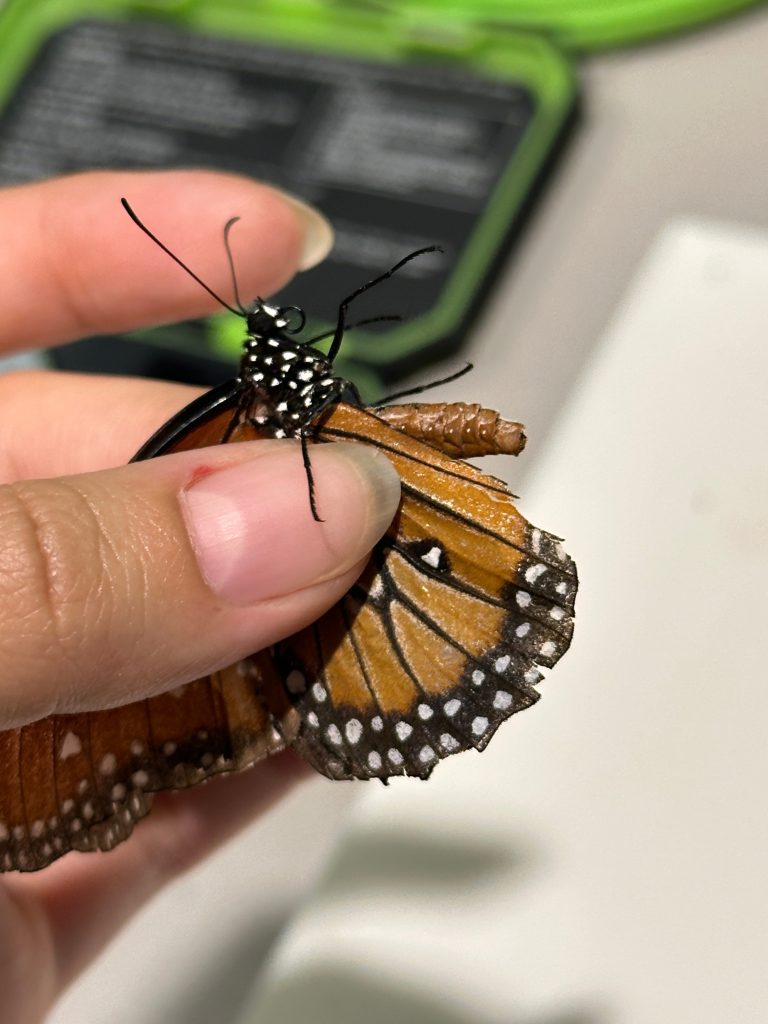
Male butterfly, dictated by the distinctice spots on hindwing veins, these are scent patches used to release pheromones for mating
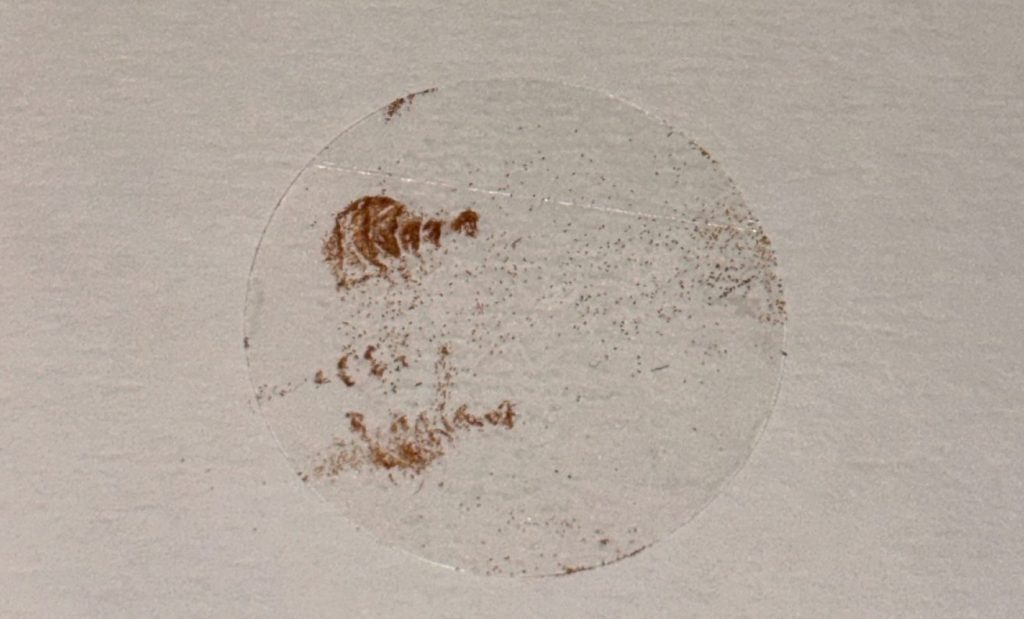
Before we could practice placing the radio tags on the butterflies, we first had to conduct a series of tests to determine whether each individual would be a suitable candidate for a CTT tag. We carefully removed them from their tiny envelopes, weighed each individual, attempted to determine their sex, measured their wing length, and assessed the condition of their wings.
After recording these identifiers, we tested each butterfly for O.E. (Ophryocystis elektroscirrha), a parasite that can affect adult butterflies. If the number of O.E. spores is too high, the individual would unfortunately be disqualified from becoming a candidate for a radio tag. Luckily, the butterfly I tested was free of any spores, and only clean scales were visible under the microscope, this imagfe can be seen alone. The O.E spores would be small dark and almost football shaped next to the scales themselves.
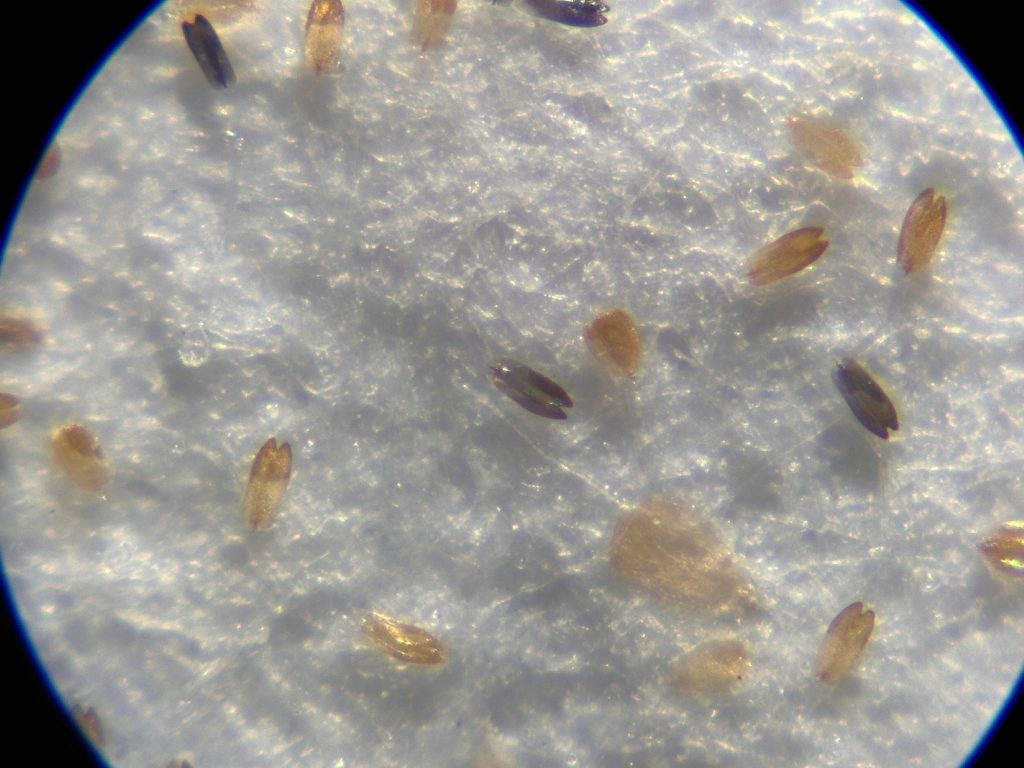
The circle of pigmentation you see on the left image is the released scales from the sticker test to check the abdomen for spores on adult butterflies. This test was conducted on a Queen so the scales are more brownish-orange compared to queens which have a darker scale pattern.
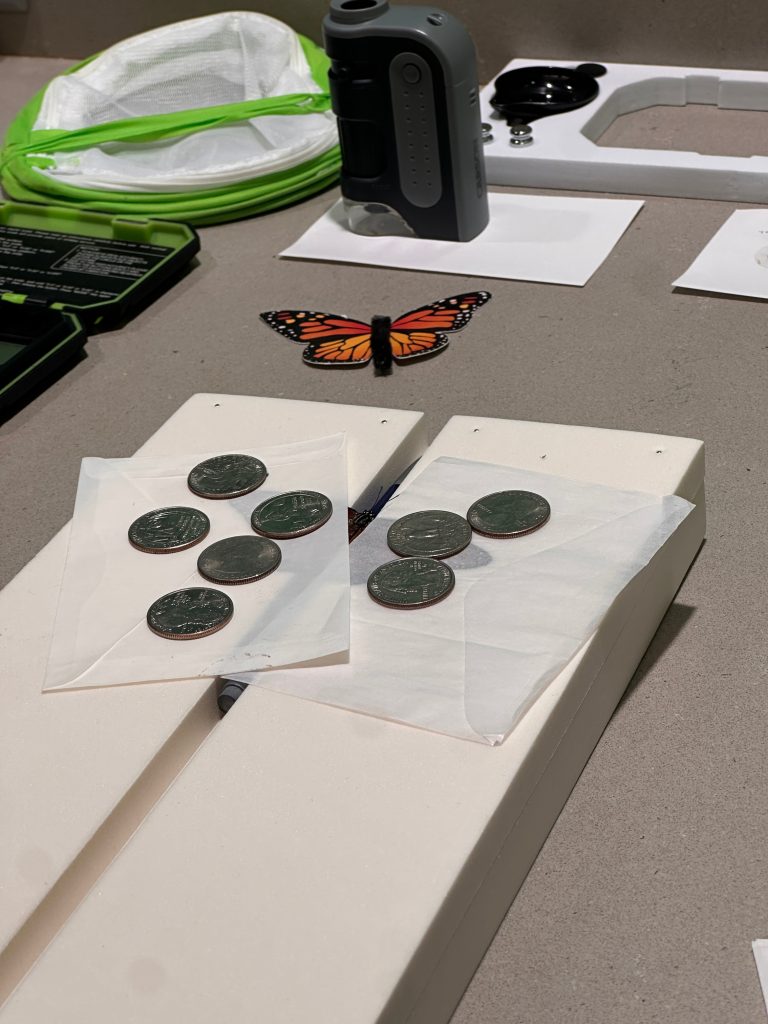
Once the testing and charting were completed, we practiced preparing the butterflies for radio-tag placement. This was an incredibly meticulous and delicate process. We gently positioned each butterfly onto the processing apparatus and carefully secured their wings to keep them still while preparing for the adhesive.
The adhesive used for the tag was a special type of mascara glue that was tacky enough to hold the tag in place while remaining safe for the butterfly’s abdomen. I was curious just how well it would hold, so I even tested the glue on my own skin. With some serious scrubbing, it took about three days before it finally came off my hand!
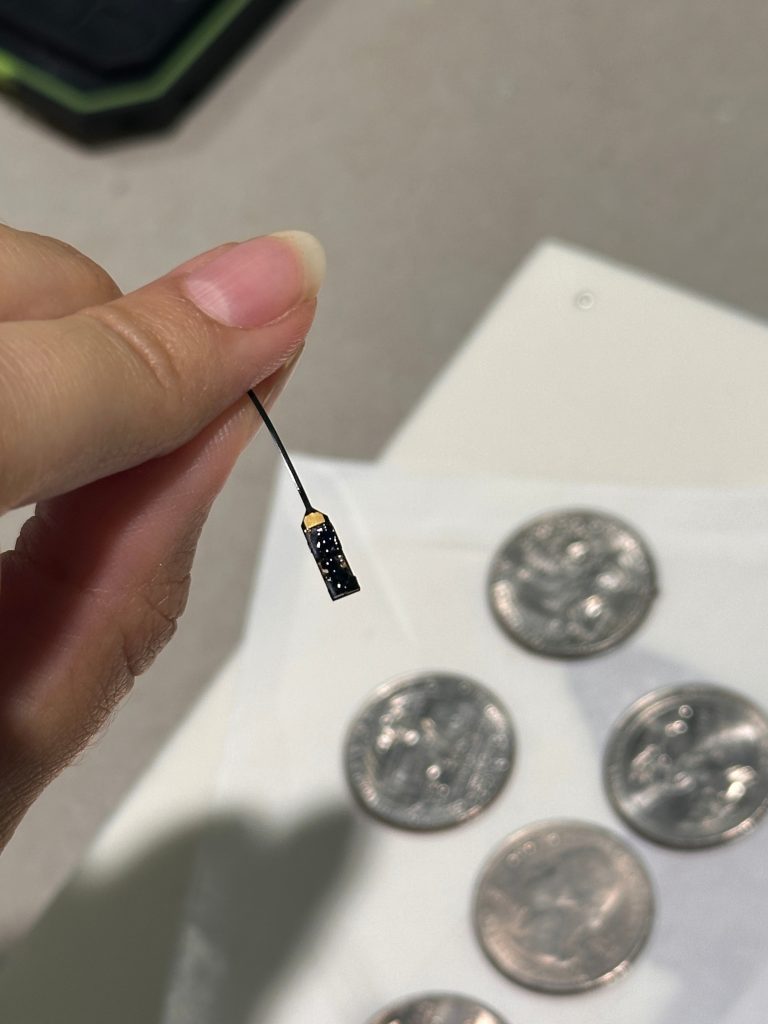
Tiny solar-powered CTT Blumorpho tag used to adhere and track the Monarch for the duration of it’s mirgration to Mexico! Shown above is the underside with a moderate layer of glue. Glue sits for five minutes before placing directly on a Monarchs back!
Queen butterfly used as a model for demonstrating process of administering the radio tag and steps needed for successful placement. Tags were not used or glued on the Queen, just demonstrative purposes only. Notice the weights on the model, Monarchs are very strong and wiggly during the process, weighing them helps ensure quality measures are taken.
I’m excited to put these methods into practice in the field when the time comes later next month. Hopefully, by then, I’ll get the chance to work with the Monarchs themselves!
Peace,
Danielle
Sorry, the comment form is closed at this time.