


25 Oct A Gloomy Morning for the Birds: October Big Day at Shine Preserve
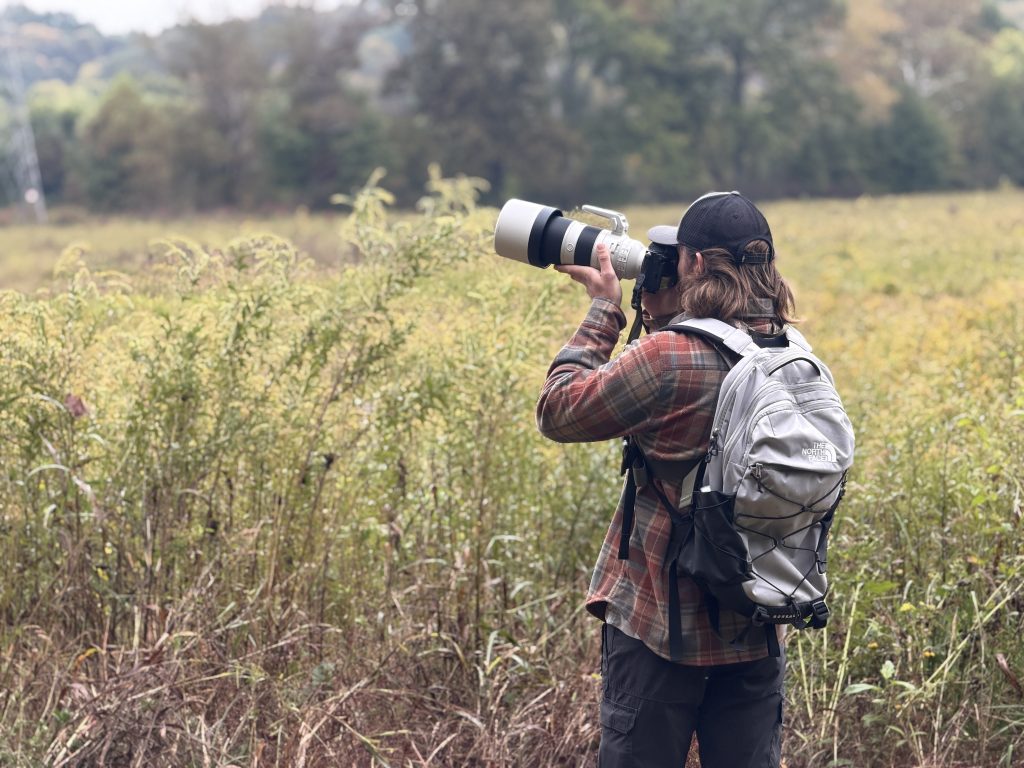
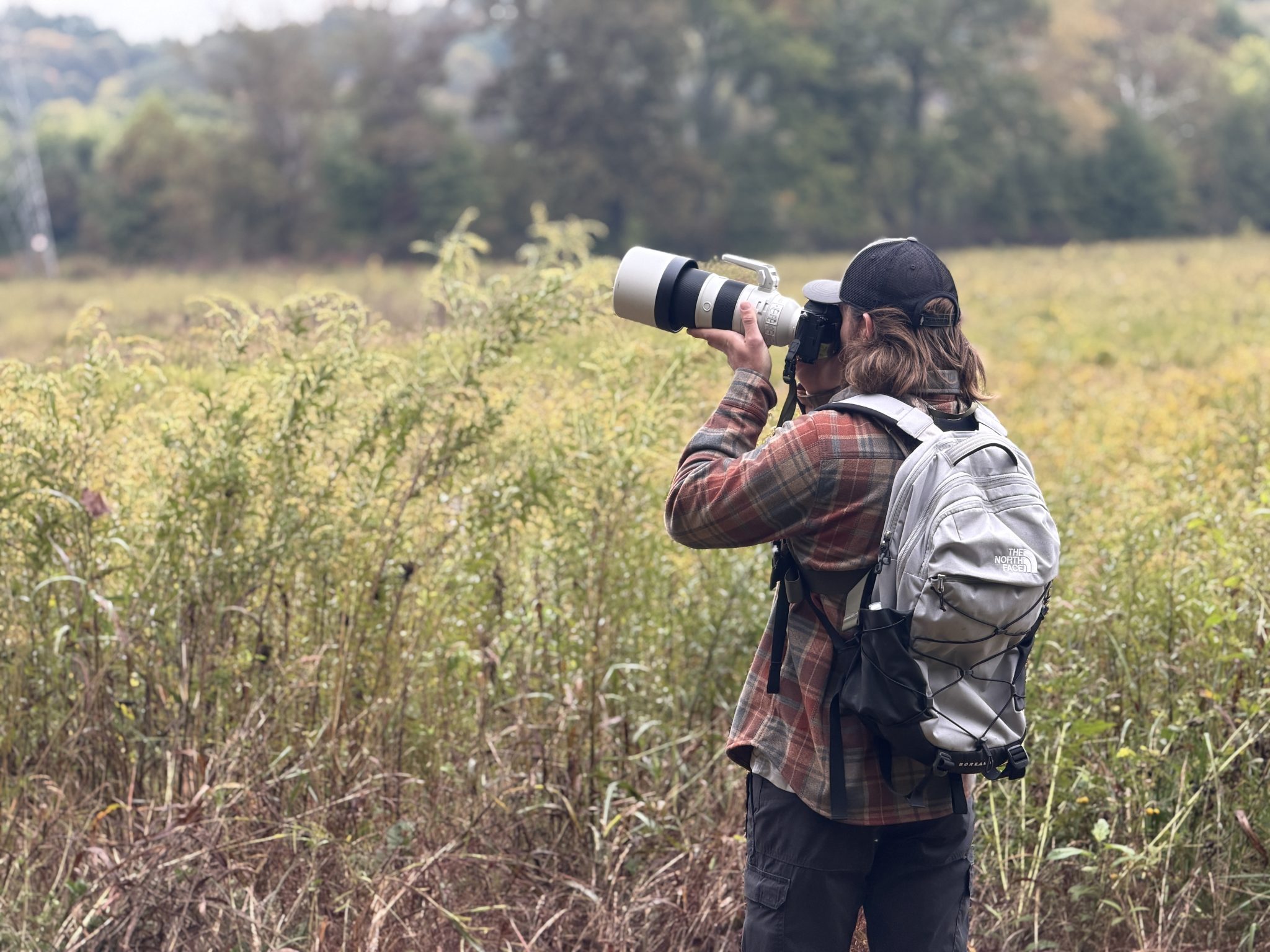
Dark skies and the threat of an approaching storm didn’t stop nearly 30 birders from gathering at Sycamore Land Trust’s Sam Shine Foundation Preserve on October 10 for October Big Day, a global celebration of bird migration.
The morning birding walk was hosted by Sycamore Land Trust in collaboration with Sassafras Audubon Society and Indigo Birding Tours as part of the 2026 October Big Day hikes organized with Indiana Audubon Society and the Indiana Land Protection Alliance.
Our group was led by David Rupp, owner of Indigo Birding Tours and a familiar face in the local birding community. We began our roughly 1.5-mile walk through the preserve’s restored native prairie before descending into bottomland forest and eventually reaching the wetlands along Beanblossom Creek.
A Landscape Restored for Wildlife
Located near Ellettsville, Indiana, Shine Preserve is part of a much larger conservation effort to protect and restore the Beanblossom Creek watershed.
Over the years, Sycamore has restored extensive floodplains, wetlands and upland prairies throughout the property. These habitats support an impressive diversity of wildlife, including the state-endangered Kirtland’s snake, while providing important stopover habitat for migratory birds traveling through Indiana.
Walking through the prairie and into the wooded floodplain, it was easy to appreciate how these connected habitats provide different opportunities for wildlife. Open grasslands, mature trees and shallow wetlands each offer their own resources for resident and migratory species.
Birding Beneath the CLouds
Unfortunately for us, the weather wasn’t particularly cooperative.
Thick clouds hung over the preserve, and the approaching storm brought dark, gloomy conditions that seemed to quiet much of the morning’s bird activity. Still, there was plenty to appreciate along the trail.
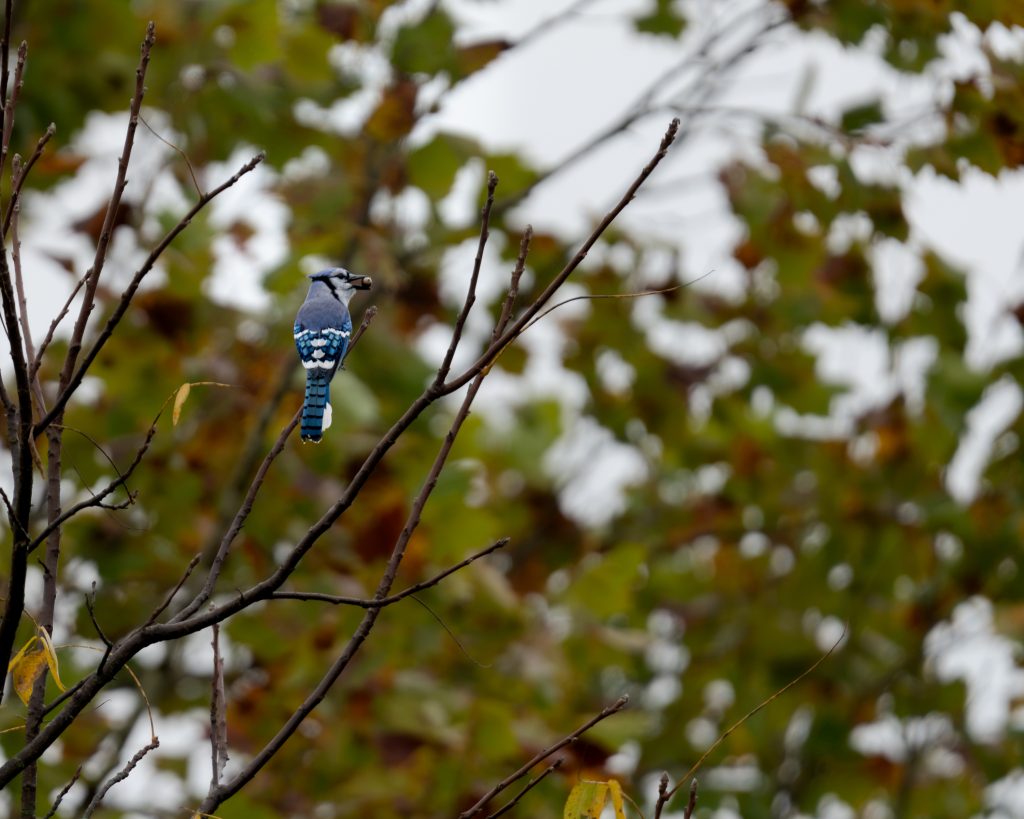
Flocks of blue jays moved through the trees, some likely year-round residents and others passing through during their fall migration. Their loud calls regularly broke the silence of the woods.
We also encountered flocks of cedar waxwings, their bright, cheerful movements providing a welcome contrast to the gray skies. These social birds bounced between branches in groups, occasionally pausing long enough for us to admire their sleek plumage and distinctive crests.
As we made our way into the wetlands, the landscape became increasingly atmospheric. Fog settled over the grasses and shallow water, where great blue herons stood nearly motionless, watching for prey.
In the distance, deer bounded through the tall vegetation, briefly appearing through the mist before disappearing again.
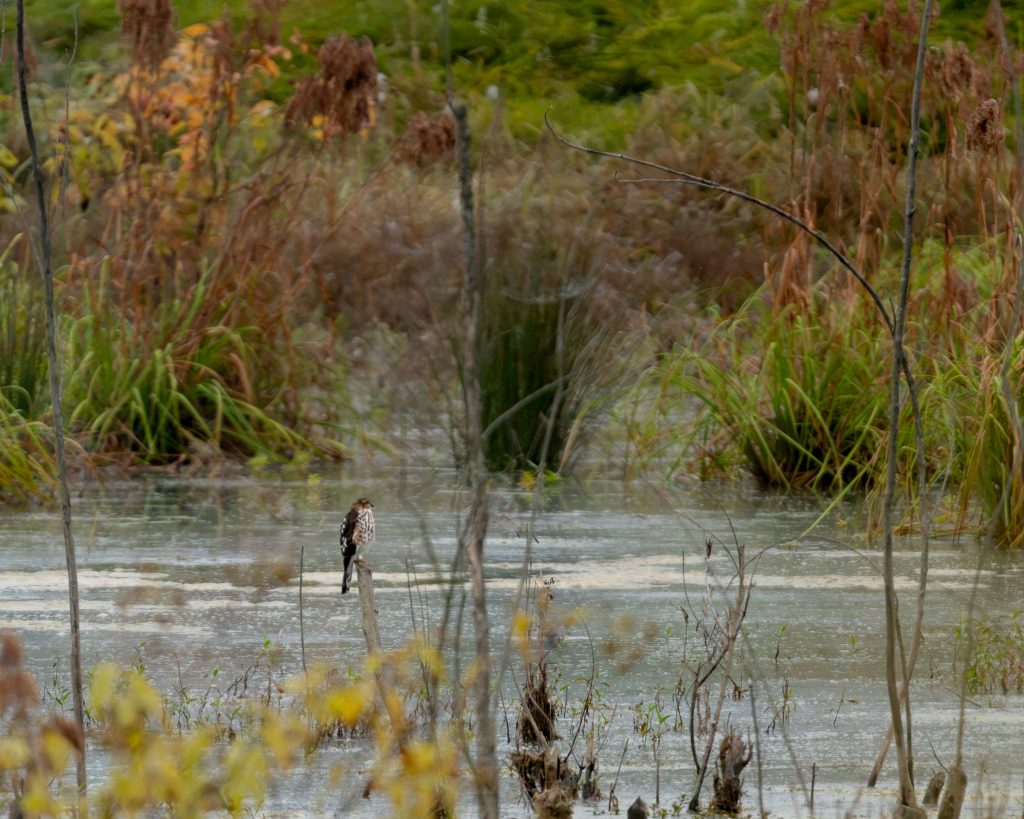
One of the morning’s more memorable encounters came when we spotted a sharp-shinned hawk being harassed by a flock of blue jays. The jays called loudly and pursued the smaller raptor through the trees, a behavior known as mobbing. Birds often mob predators to drive them away from an area, creating an opportunity to observe interactions that might otherwise go unnoticed.
Although the overall bird activity was relatively quiet, moments like these made the morning worthwhile.
the importance of migratory bird stopovers
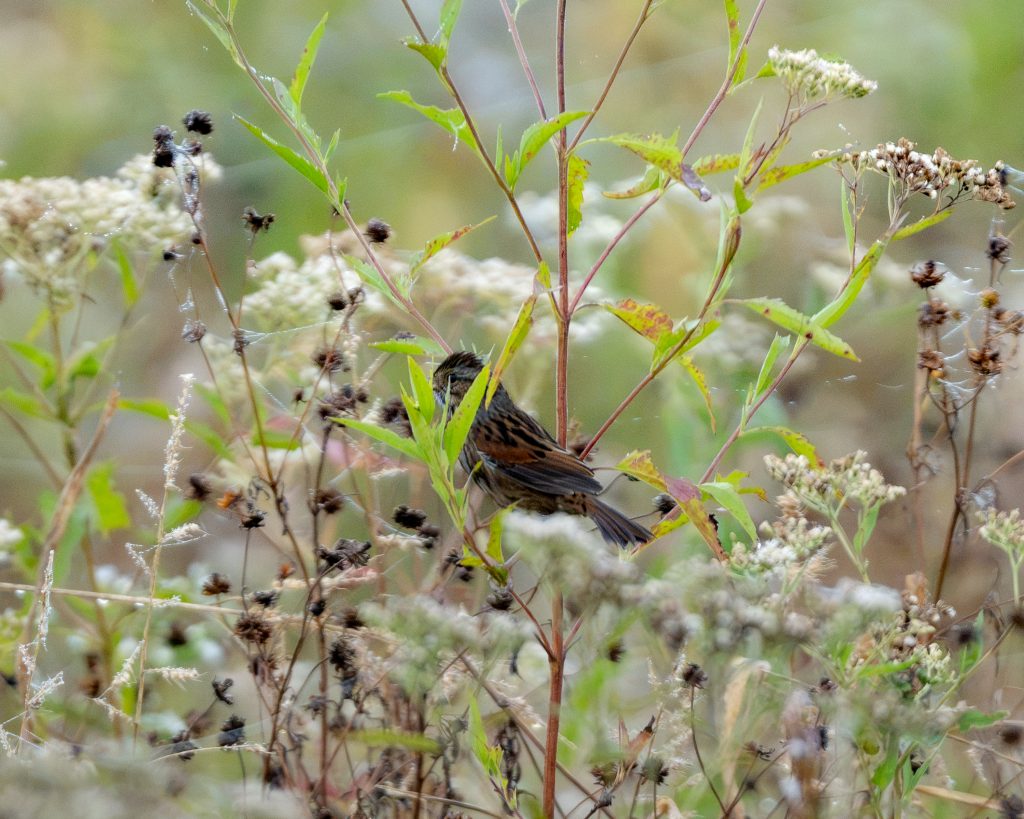
October Big Day is an annual opportunity for birders around the world to observe and document birds during fall migration. It also provides a reminder of the importance of protecting the places migratory birds depend on throughout their journeys.
For many birds, migration isn’t a single uninterrupted flight between summer breeding grounds and wintering areas. Instead, birds rely on a network of stopover habitats where they can rest, feed and replenish their energy before continuing their journeys.
Shine Preserve is one of those places.
Its restored prairies, bottomland forests and wetlands provide a variety of habitats for birds moving through south-central Indiana. Protecting these areas is especially important in landscapes where development, habitat fragmentation and historical wetland loss have reduced the availability of suitable habitat.
By restoring wetlands and reconnecting floodplains along Beanblossom Creek, Sycamore Land Trust is helping maintain the habitat that migratory birds and countless other species need to survive.
a morning well spent
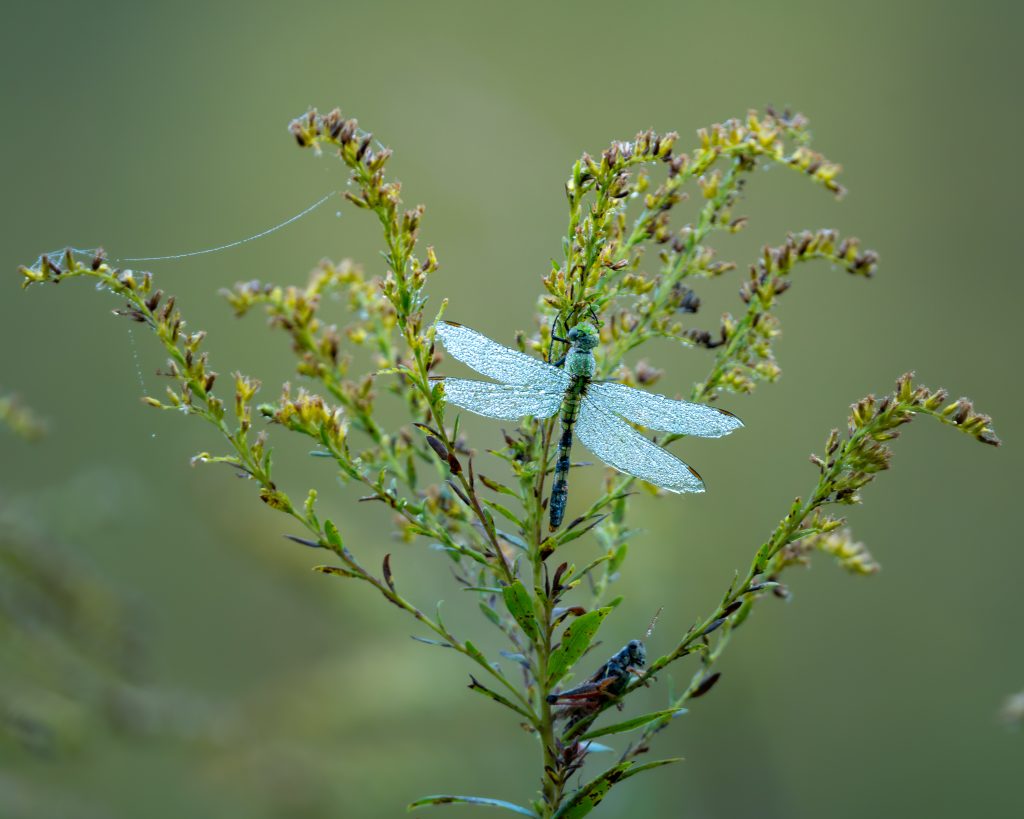
Despite the gloomy weather and relatively subdued bird activity, the morning offered a rewarding opportunity to explore a beautiful piece of protected Indiana landscape alongside others who share an appreciation for birds and conservation.
From the lively calls of blue jays and the cheerful flocks of cedar waxwings to the quiet silhouettes of great blue herons standing in the fog, the morning was a reminder that enjoying nature isn’t always about seeing the greatest number of species.
Sometimes, it’s simply about being present, paying attention and appreciating the places that make these encounters possible.
And on this particular October morning, Shine Preserve was a pretty wonderful place to be.
Sorry, the comment form is closed at this time.