26 Oct Day in the Life of a Hawkwatcher
When I arrive at the office every morning, the first thing I do is say hello to Gale, my supervisor, and the program manager at GGRO. Gale is so incredible and awesome: they put a ton of care and attention into our two community science programs (Hawkwatch and Banding) to ensure they run smoothly, and that high-quality data is being collected. It’s always great to check in and chat before the day begins.
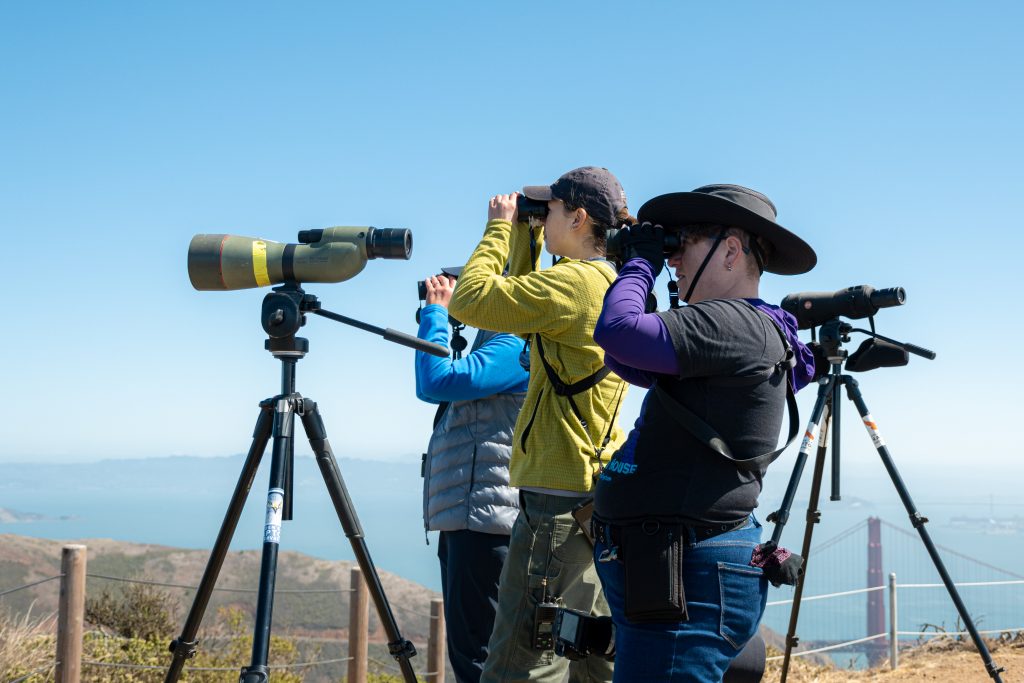
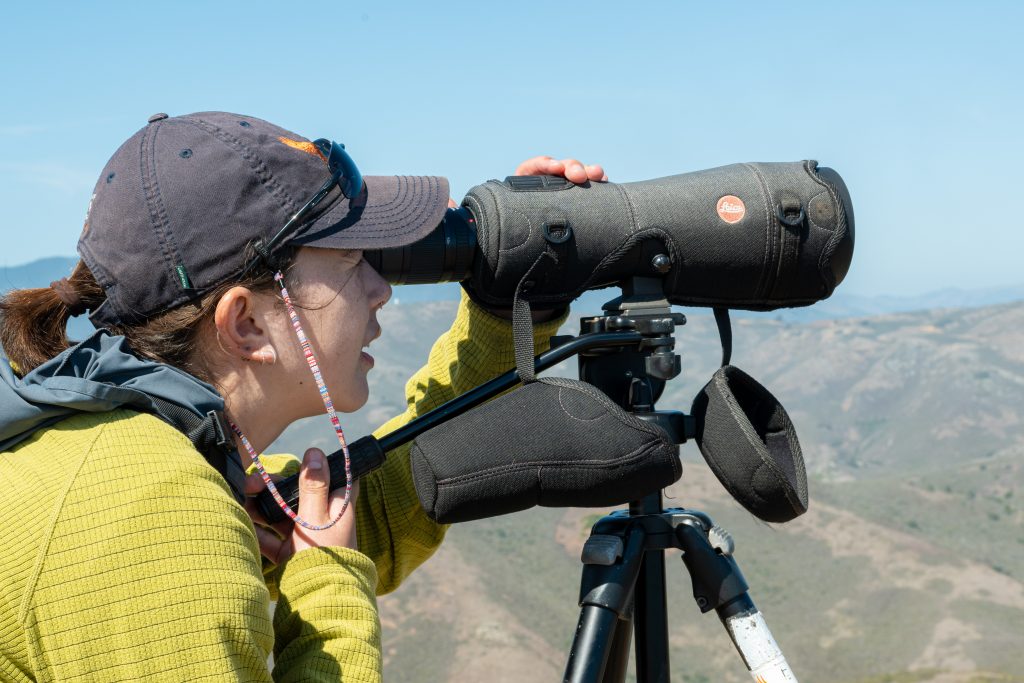
Before heading up to Hawk Hill, I load up our vehicle, the Pidge, with our spotting scopes, data tablets, and reference landmark signs. Then I embark on the beautiful drive up to the Hawk Hill parking lot, where I meet the volunteers to load their equipment and bags into the Pidge. With everything ready, we finish the steep journey to the top of Hawk Hill.
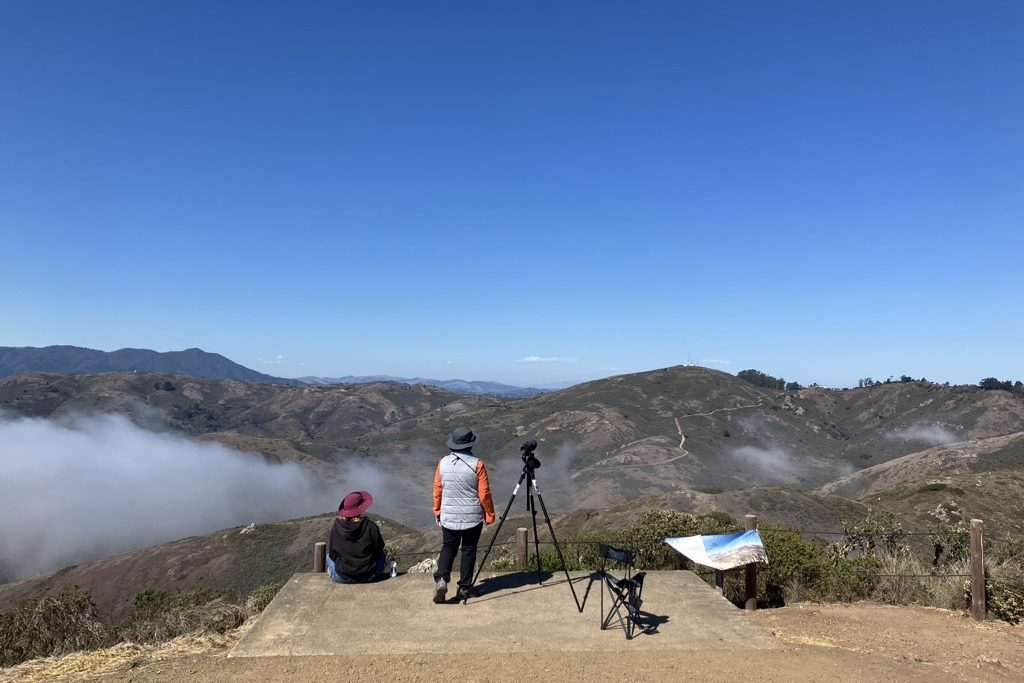
Hawk Hill—discovered in the 1970s as a hotspot for raptor migration—offers a 360-degree view over the Marin Headlands, Pacific Ocean, and San Francisco Bay and sits along the Pacific Flyway. It is one of my favorite views in the Bay Area, and the hawks love it too. Flyways feature coastlines or mountain ridges, which produce thermals of rising air columns that raptors use to generate lift and help conserve energy during migration.
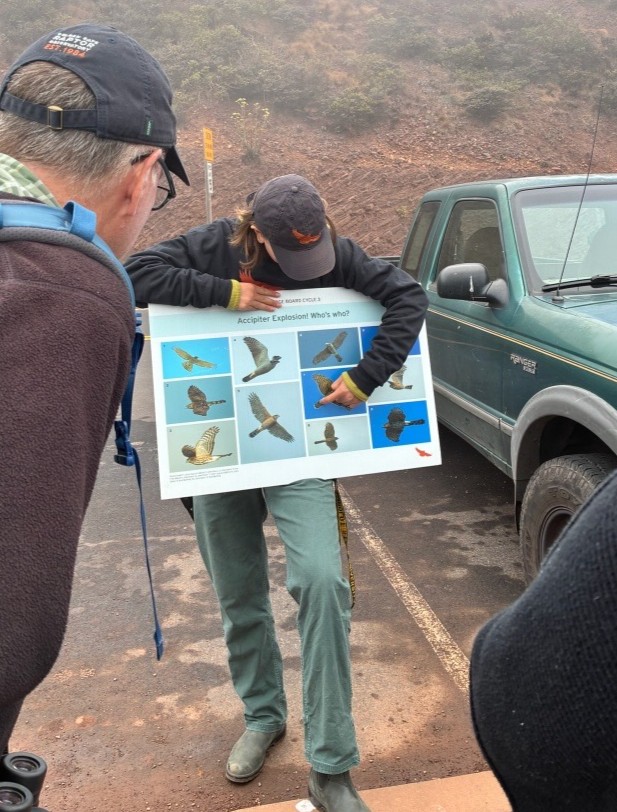
Atop Hawk Hill, the Hawkwatch team holds a brief morning meeting discussing any notes or updates from staff with regards to safety, methodology, and seasonal trends. This might include signs of heat exhaustion, spotting techniques, or when to expect the Accipitrine peak. We follow up our morning meeting with what we call a George Board that I facilitate in collaboration with the Day Leader(s). George Boards, named after a former Hawkwatcher, highlight a specific bird or group to help refresh our team’s ID skills.
At 10am, our official Hawkwatch count begins. We count every day for 5 hours during the fall raptor migration (mid-August through early December).
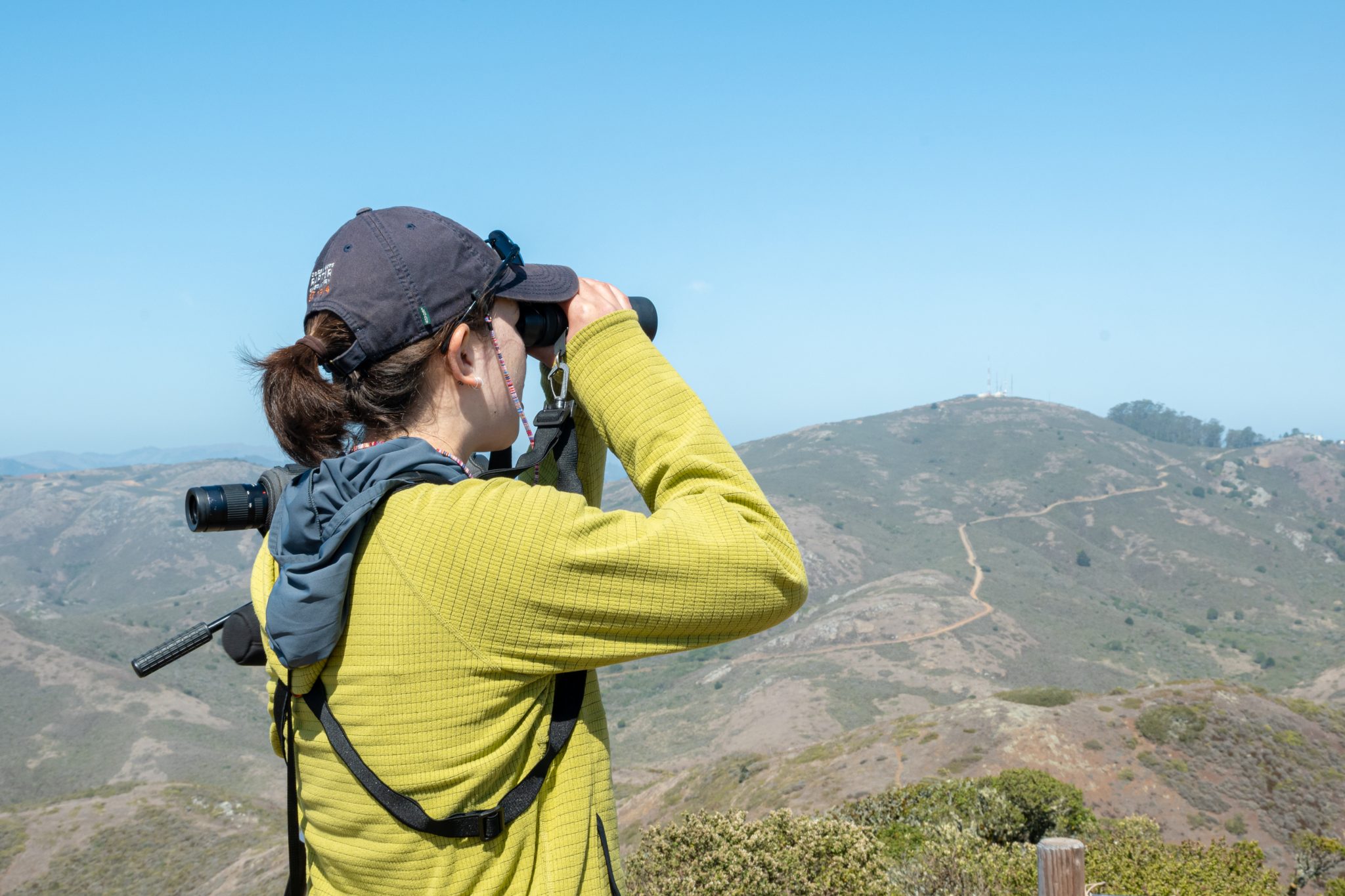
The most common question I get from visitors on Hawk Hill is: “How do you know you aren’t counting the same bird twice?” The truth is, we don’t know. GGRO’s Hawkwatch program has been carried out since 1982 and follows a quadrant method developed for Hawk Hill’s unique conditions. Some birds that we observe are year-round residents, some come to the Marin Headlands to winter, some continue their migration inland further east, and others continue migrating farther south. Most raptors don’t like flying over bodies of water, as they lack thermals, so they might take a lap or two around the Marin Headlands before making the jump across the SF Bay. Because of these unique conditions, we measure migration through a rate of raptors per hour. Our count protocol remains consistent, and we are therefore able to monitor raptor migration rates over time.
We do as much as we can to make sure we don’t count the same bird twice using our quadrant method. Volunteers are split into four quadrants: North, East, South, West. Volunteers remain in their quadrant for 30 minutes before rotating to the next quadrant. In those 30 minutes, volunteers count and identify all the raptors in their quadrant. If a bird is moving from one quadrant to another, the Hawkwatchers will “pass” their bird to the next quadrant, letting them know a bird is entering their quadrant that has already been counted.


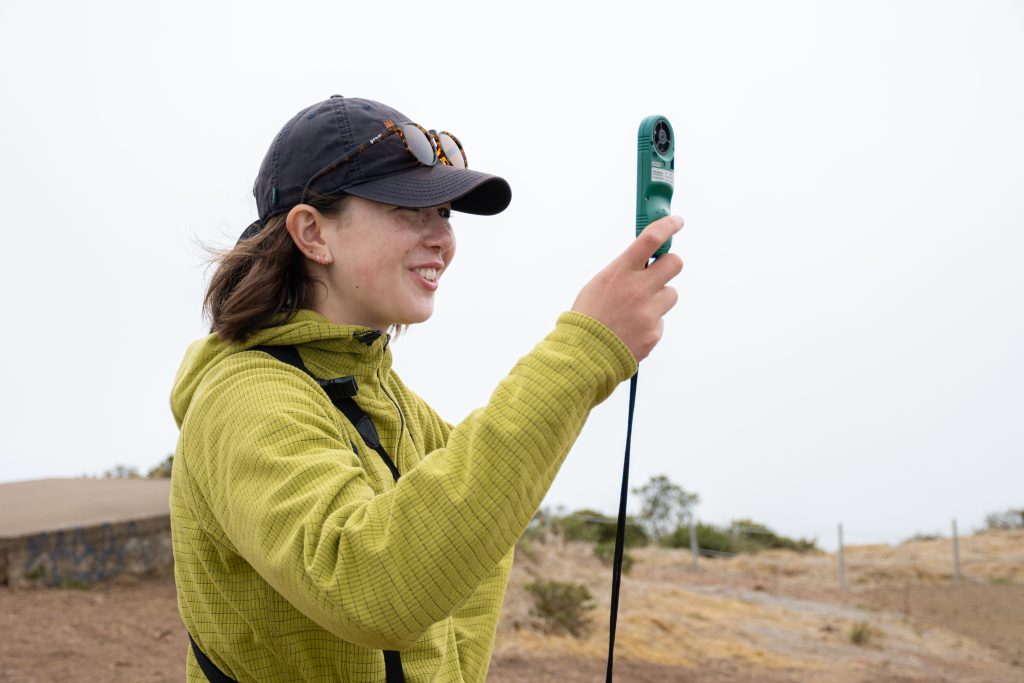
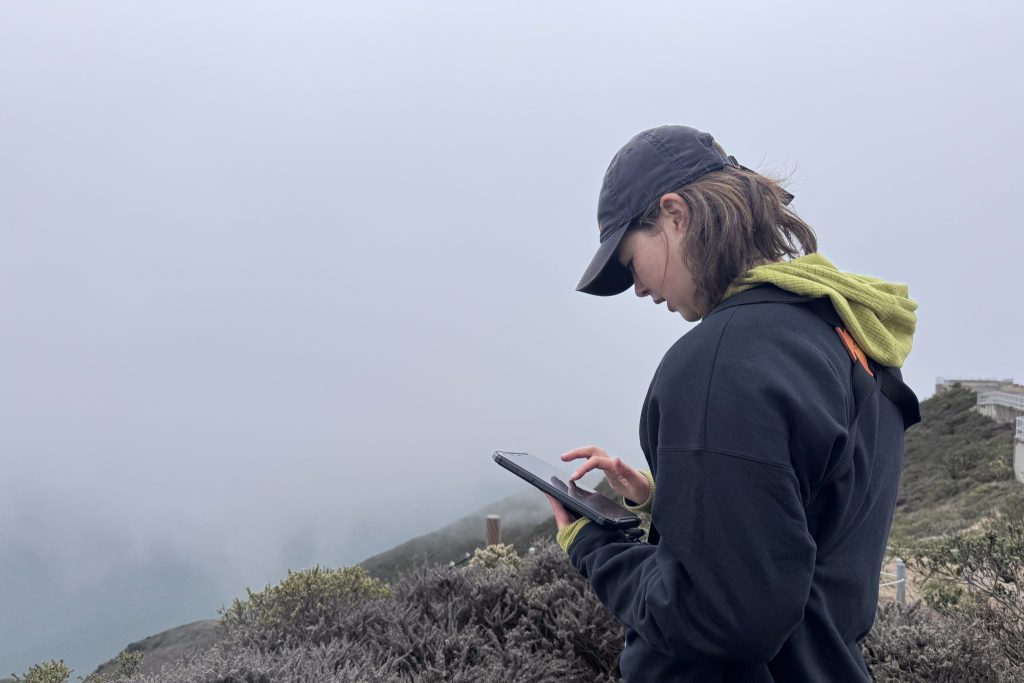
I have the pleasure of taking on many roles on Hawk Hill. Working together with the Day Leader—an experienced volunteer who organizes the volunteers into quadrants and makes the final call on difficult identifications—to lead our Hawkwatching team is one of them. Most days I stand in the center of the hill recording the birds that the volunteers spot with the data tablet. At the top of every hour, I collect metadata: temperature, cloud coverage, precipitation, wind speed, wind direction, and visibility. I will also float around providing support identifying tricky birds, using a spotting scope for distant birds, and helping quadrants work through kettles (a group of hawks soaring and spiraling around a thermal).
At the end of each day, we pack up and return to the office to enter data and write a blog post for our Daily Hawk Count describing the conditions, our daily count, and any notable observations or behaviors.


Now that we are halfway through the fall migration season, I thought I would share some of my highlights from Hawkwatch:
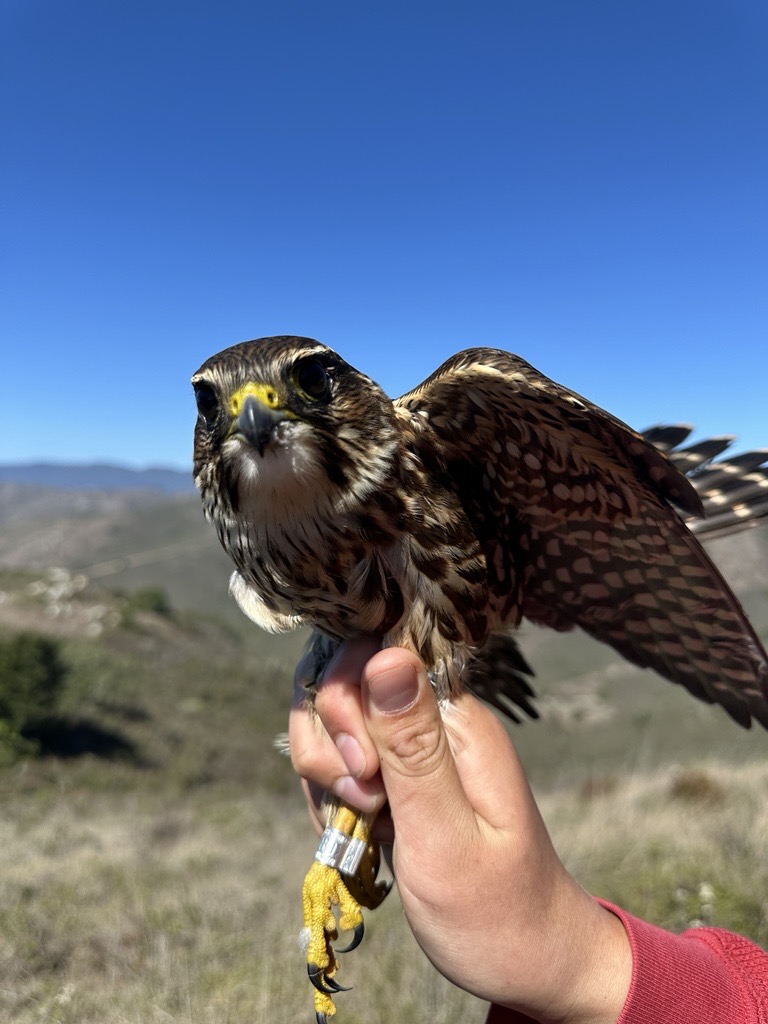
- A Merlin dive-bombing a Sharp-shinned Hawk and then doing a close full circle flyby of Hawk Hill. Often, Merlins just zip by, and we don’t get a good look. Many volunteers commented that it was the best look they had ever seen of a Merlin.
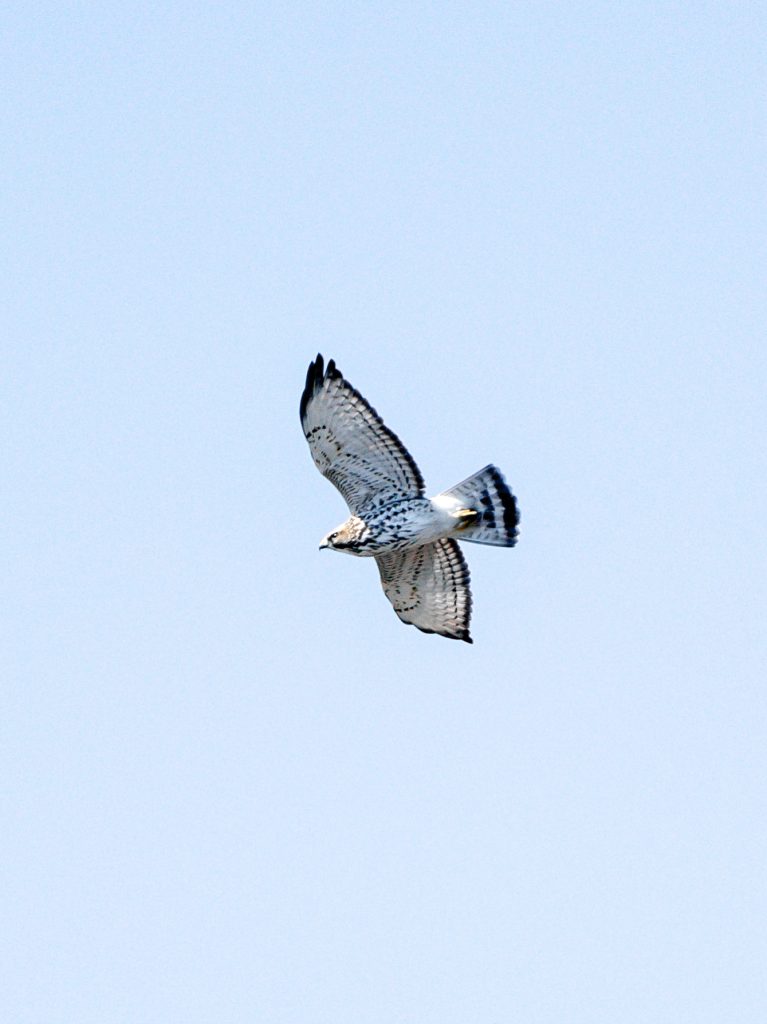
- Every day that I see a Broad-winged Hawk is a good day! They are beautiful birds and are incredible migrants. Broad-winged Hawks are complete, long-distance migrants that migrate across North America breeding as far north as Canada and the northern U.S. and travel to their wintering grounds in the Caribbean.
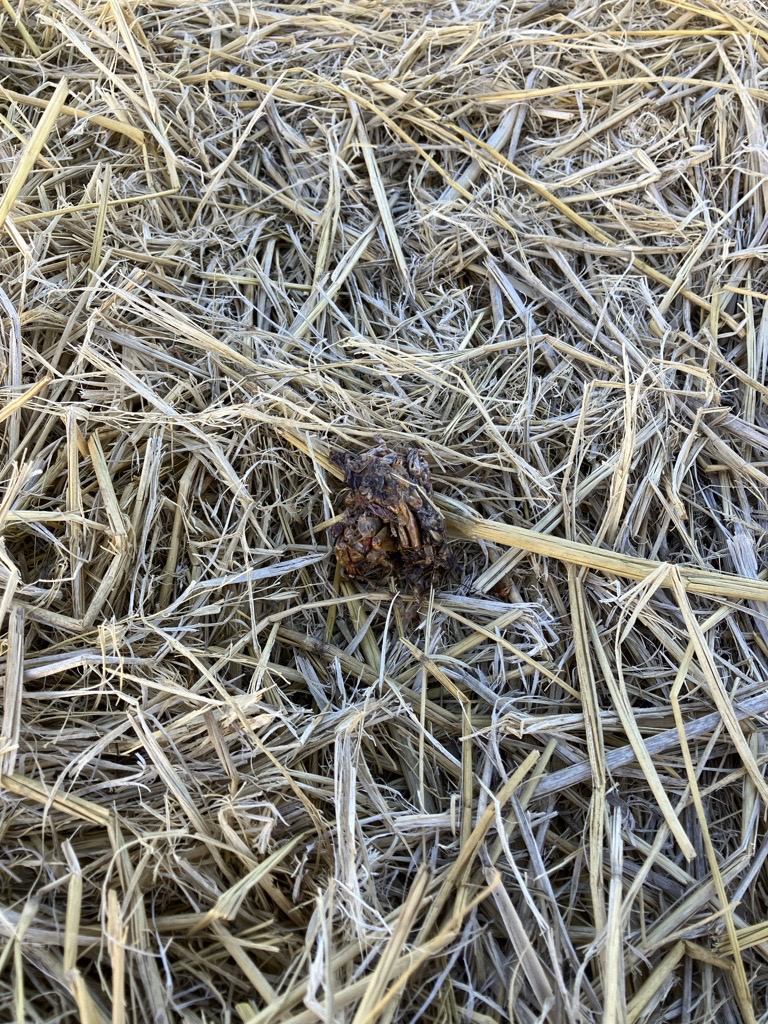
- A Red-tailed Hawk dropped us a little present from the sky just nearly missing me. The present….a pellet of regurgitated indigestible contents, in this case, Jerusalem Crickets.


A large part of my work has been volunteer management and interacting with visitors on Hawk Hill. GGRO places a strong emphasis on working with our Apprentices (first year volunteers) to support them in developing their ID skills and building confidence. We do this in several ways. During the pre-season I collaborated with experienced volunteers to put together a series of field in-flight ID trainings to prepare volunteers for the season. Now in the migration season, we have George Boards discussions every morning to refresh ID skills. We also make sure to put Apprentices in a quadrant with an experienced volunteer to help support them as they continue to work through identifications. Working with our Apprentices has been really enjoyable for me as I have taken the tricks that experienced volunteers have taught me (and continue to teach me) and I get to try them out with Apprentices to help them build their confidence in what they are observing.
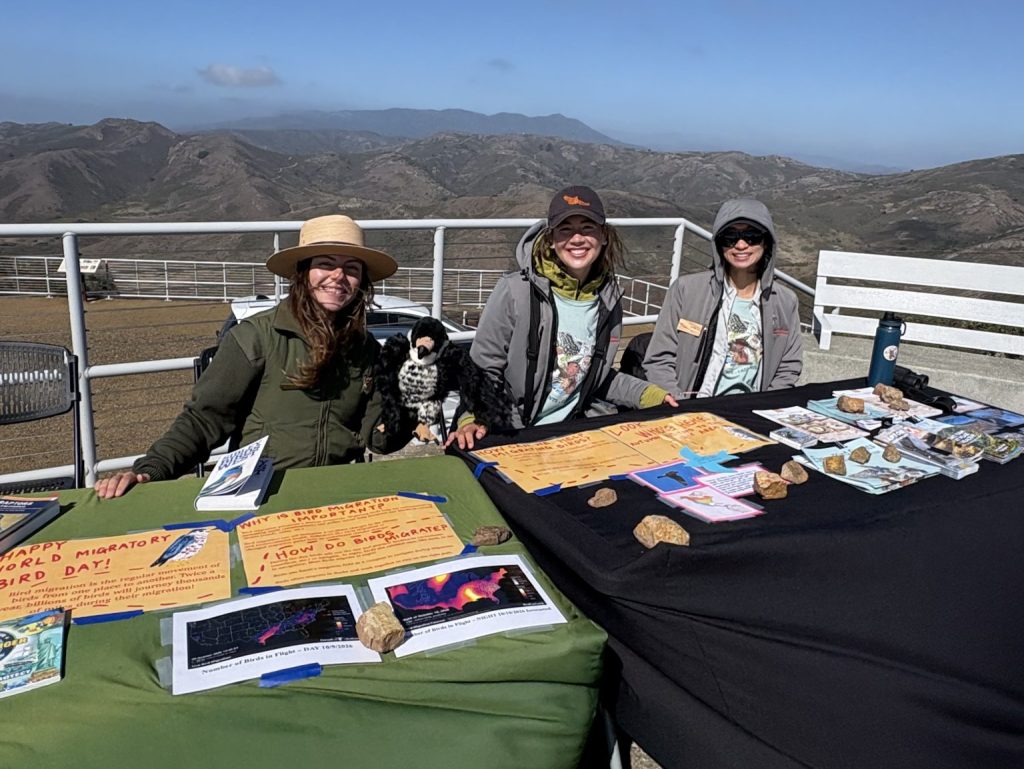
Because Hawk Hill is quite a popular public viewpoint, we get many visitors that are curious about our work, which creates an opportunity for engagement. Two weeks ago, I collaborated with Vassar and Riley, two NPS interpretation staff, and Iris, an EFTA Community Science Intern, to host a World Migratory Bird Day event on Hawk Hill. We put together materials on an overview of migration and a bird spotlight highlighting three of our migratory raptor species: Red-tailed Hawks, the most commonly seen raptor with both resident and migratory populations, Broad-winged Hawks, incredible, long-distance migrants, and Merlins, small falcons that are widespread across the country and are a featured species for World Migratory Bird Day 2026. It was exciting taking a step back from data collection to intentionally engage with visitors. However, the winds were extremely high, and we didn’t get as many visitors as we would have liked.

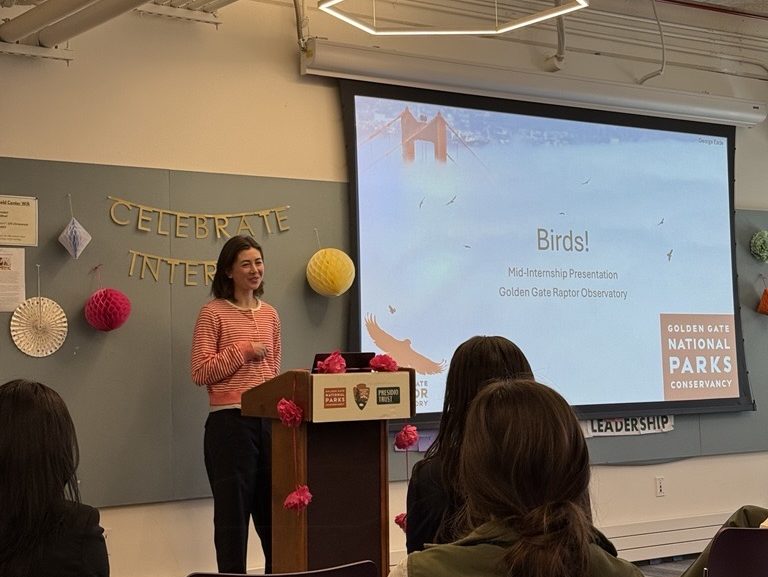
Another addition to my past month was presenting my mid-internship summary alongside other EFTA natural resource interns. I enjoyed learning about the projects other interns have been working on in the Marin Headlands and around the Golden Gate National Recreation Area. Projects included habitat restoration, biological surveys, and volunteer programming. I gave an overview of the work we do at GGRO and spoke about my experiences with Hawkwatch and Banding. Hopefully some of the interns will get the opportunity to shadow Hawkwatch before their internship is over.
Overall, it has been a busy month! It is gratifying to be able to share the skills and knowledge I have been developing in the field with others in multiple different forms.

Sorry, the comment form is closed at this time.