The past 8 months since I started my community science internship have flown by incredibly fast! During this last month of my term, I am working mostly remotely. My main tasks include reviewing data for our Trachusa gummifera (T. gumms) annual report and training volunteers to catalog wildlife photos for the Marin Wildlife Watch program.
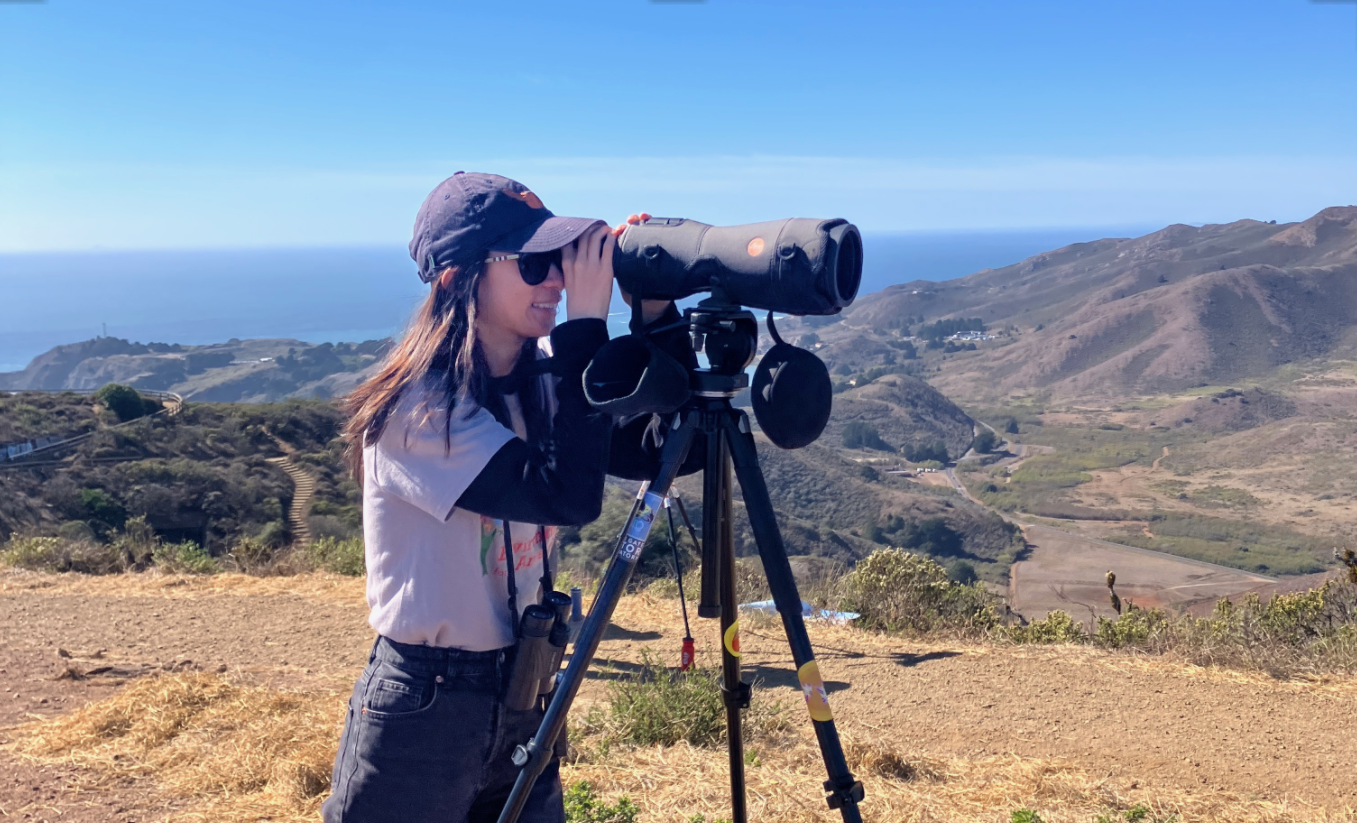
With my field season over, my colleagues at the Golden Gate Raptor Observatory (GGRO) invited me to shadow their Hawkwatch program in the Marin Headlands! Hawkwatch is a community science program started in the early 1980s and runs annually from mid-August to early December. Every day, volunteers and staff track the autumn raptor migration along the Pacific Flyway by counting and identifying birds of prey flying around Hawk Hill.
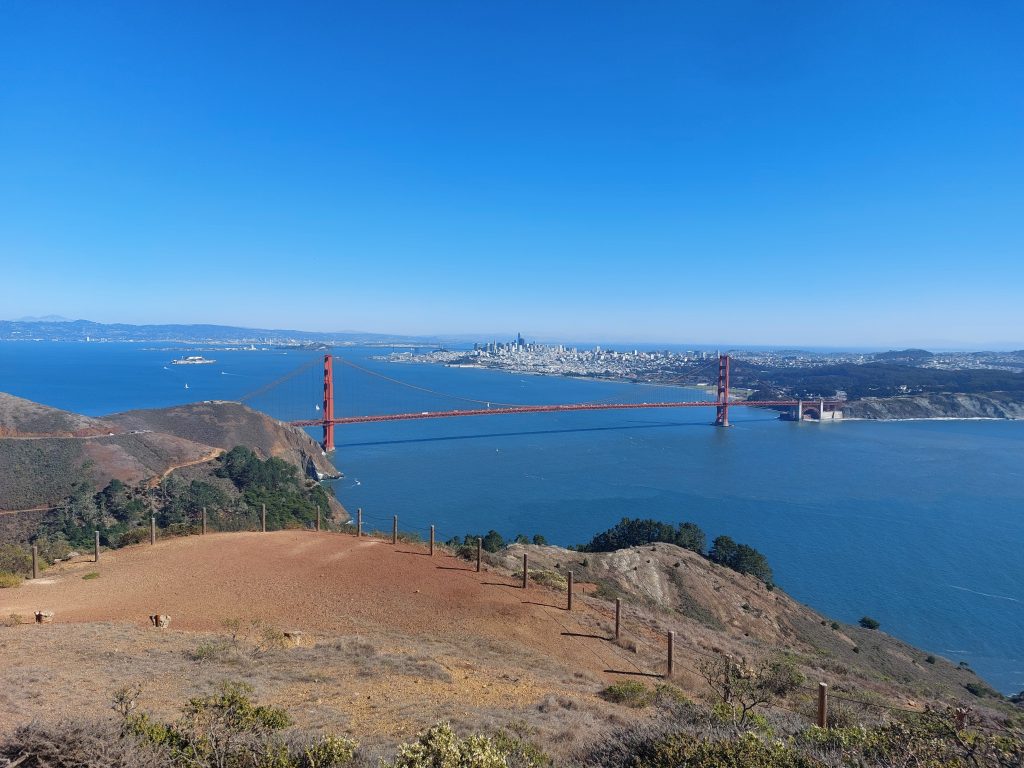
View of the Golden Gate Bridge from Hawk Hill
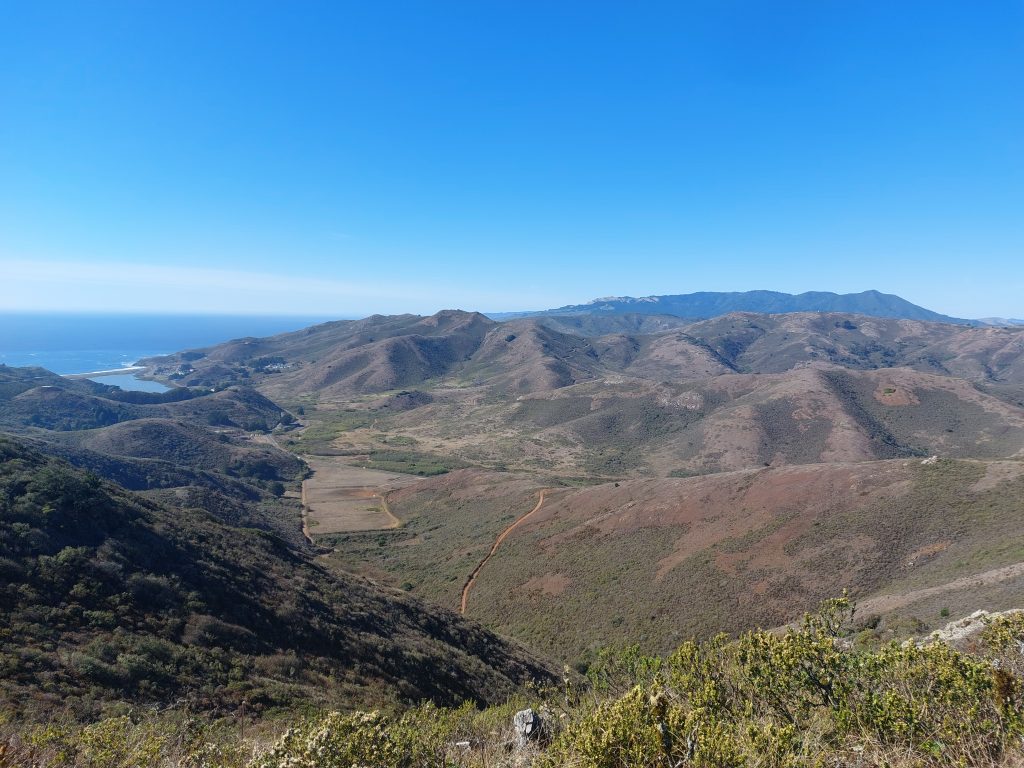
View of the Marin Headlands from Hawk Hill
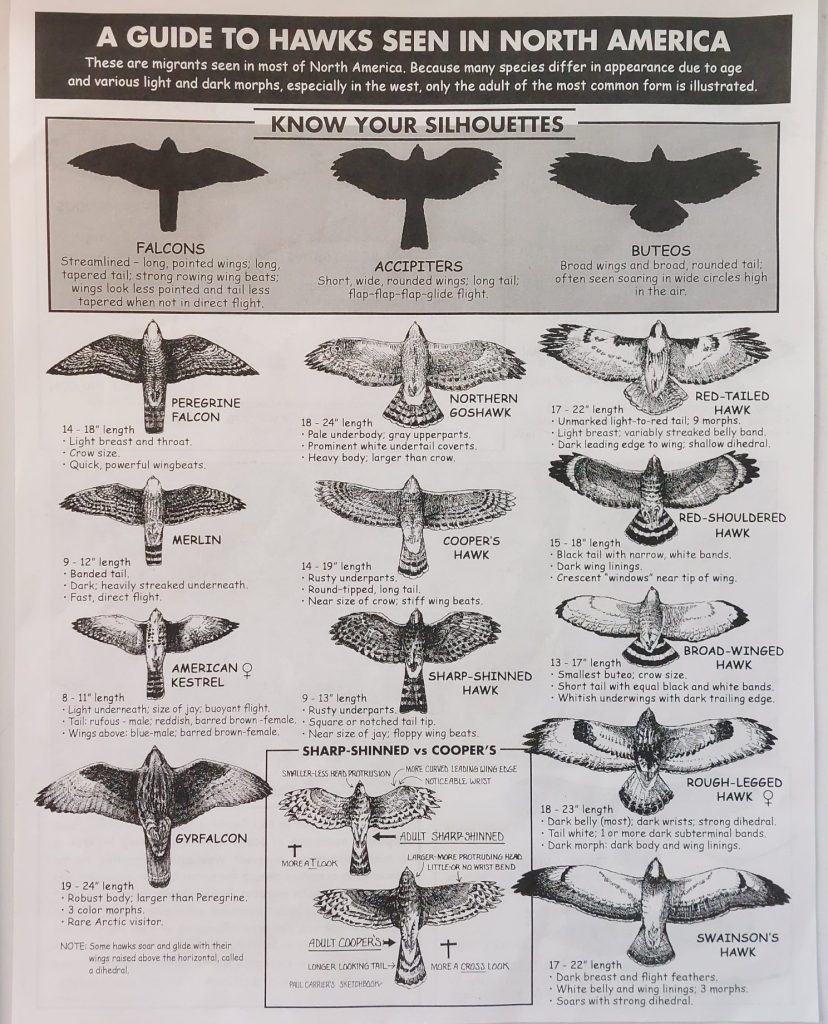
The day I visited Hawk Hill was clear and sunny, and the 360° view was stunning! It was challenging to identify each bird, especially those far away and flying quickly. However, Maya, a community science intern at GGRO, shared a helpful diagram that categorizes raptors into 3 main groups: falcons, accipiters, and buteos. I was amazed by the volunteers’ sharp observational skills and how they analyzed each bird’s flight patterns and behaviors to identify it! In 5 hours, we counted 87.4 raptors per hour, including 29 Red-Shouldered Hawks!
Diagram of 3 common raptor types Hawkwatchers observe on Hawk Hill
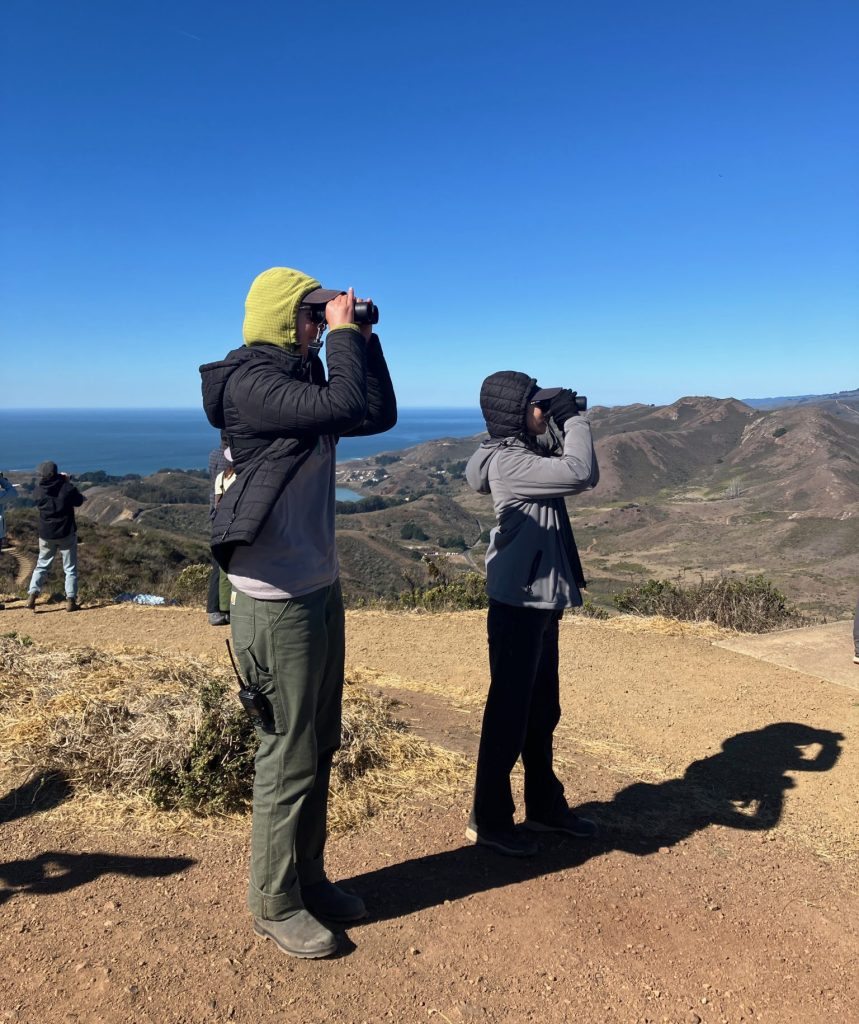
Maya and I looking for birds with our binoculars!
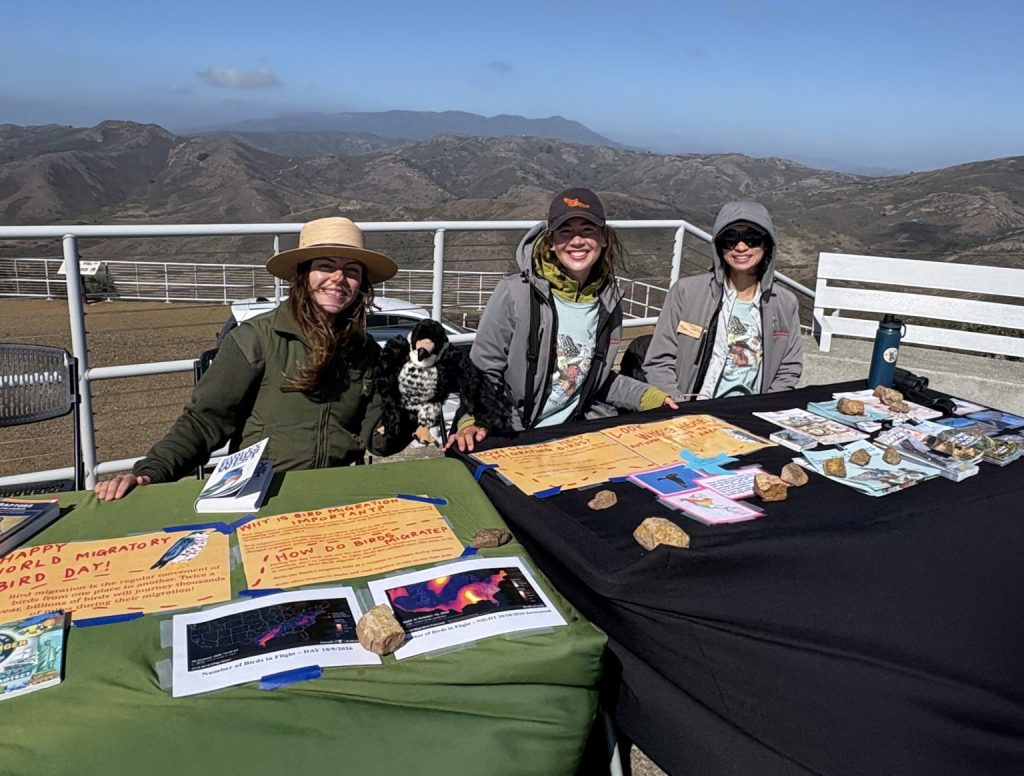
We also collaborated with National Park Service interpretation staff, Vassar and Riley, to host a tabling event for World Migratory Bird Day, a global campaign led by Environment for the Americas (EFTA) that raises awareness and promotes the protection of migratory birds. We set up our table on Hawk Hill and told visitors about the importance of community science programs, such as Hawkwatch, in migratory bird conservation. Although public engagement was low due to extremely windy conditions (20-30 mph!) and the San Francisco Fleet Week air show, we still had some meaningful conversations about our volunteer programs!
Photo of Vassar, Maya, and me tabling for World Migratory Bird Day taken by Riley Morris (National Park Service)
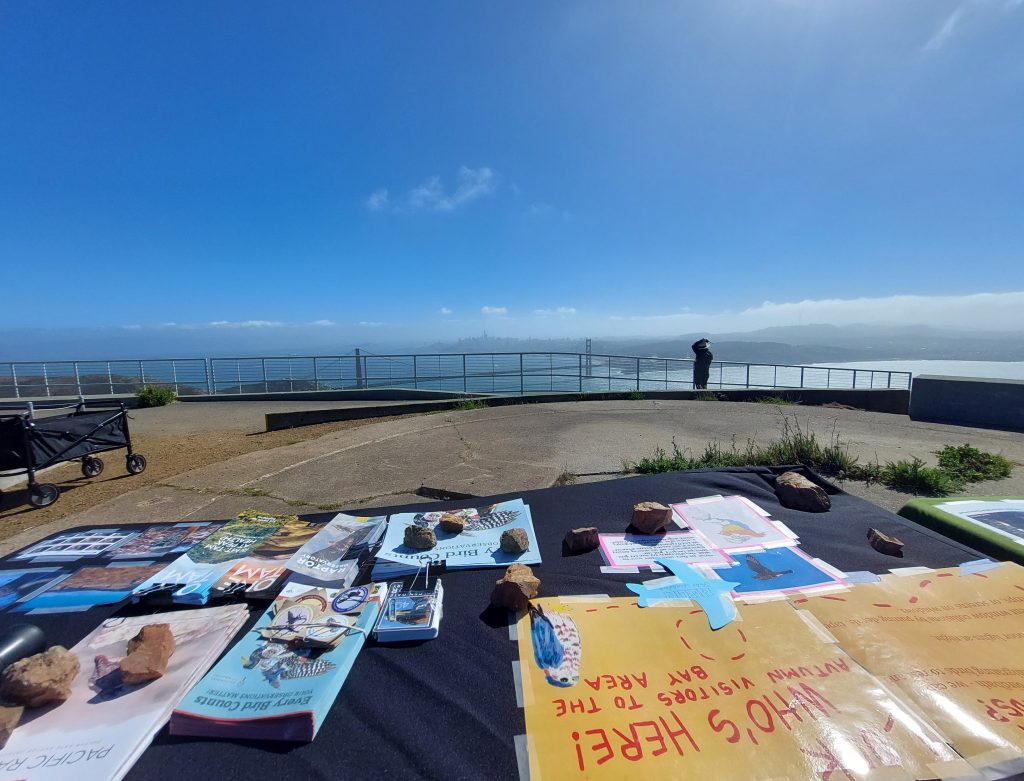
Our World Migratory Bird Day table on Hawk Hill! (Lots of tape and rocks were essential to prevent our supplies from flying away)
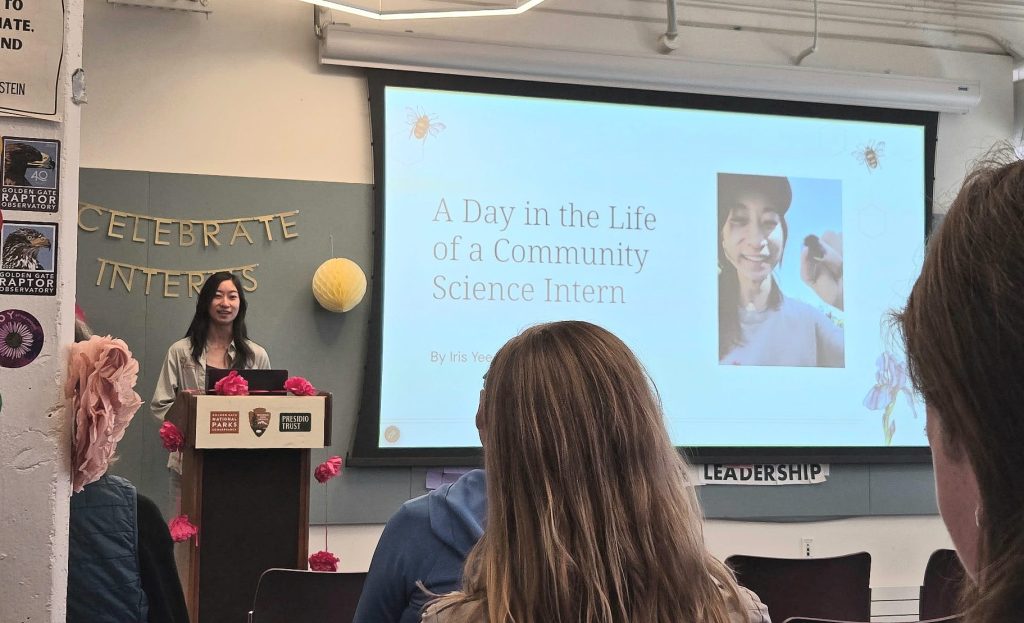
Most recently, several EFTA interns and I had our final internship presentations, where we shared about our experiences and celebrated our accomplishments with colleagues, friends, and family! It was inspiring to hear about my peers’ conservation and restoration projects around the Bay Area and how much we accomplished this past year! I presented my T. gumms research and was excited that others were enthusiastic to learn about this special bee!
Giving my presentation on my community science internship!
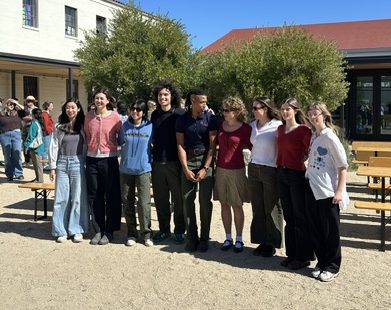
Group photo of the EFTA interns!
I’ve thoroughly enjoyed my work as a community science intern! Not only did I participate in multiple wildlife conservation programs around Marin County, but I also learned about other community science work at different park sites in the Bay Area! My favorite experiences were connecting with others passionate about ecological conservation, sharing our wildlife projects with our communities, and learning about my favorite fuzzy pollinators! Before this internship, I never knew there were more than 20,000 bee species, let alone ones that nest underground and collect leaf cuttings! While my internship is ending in 2 weeks, I hope to stay connected with my colleagues in their work, especially for next year’s T. gumms surveys! In addition, I aspire to gain more experience in community science in my future endeavors!
Thank you for tuning in to my journey! I also want to thank Environment for the Americas and the Golden Gate National Parks Conservancy for this opportunity, as well as my field team, Sara, Carmen, and Alice, for their support and encouragement!
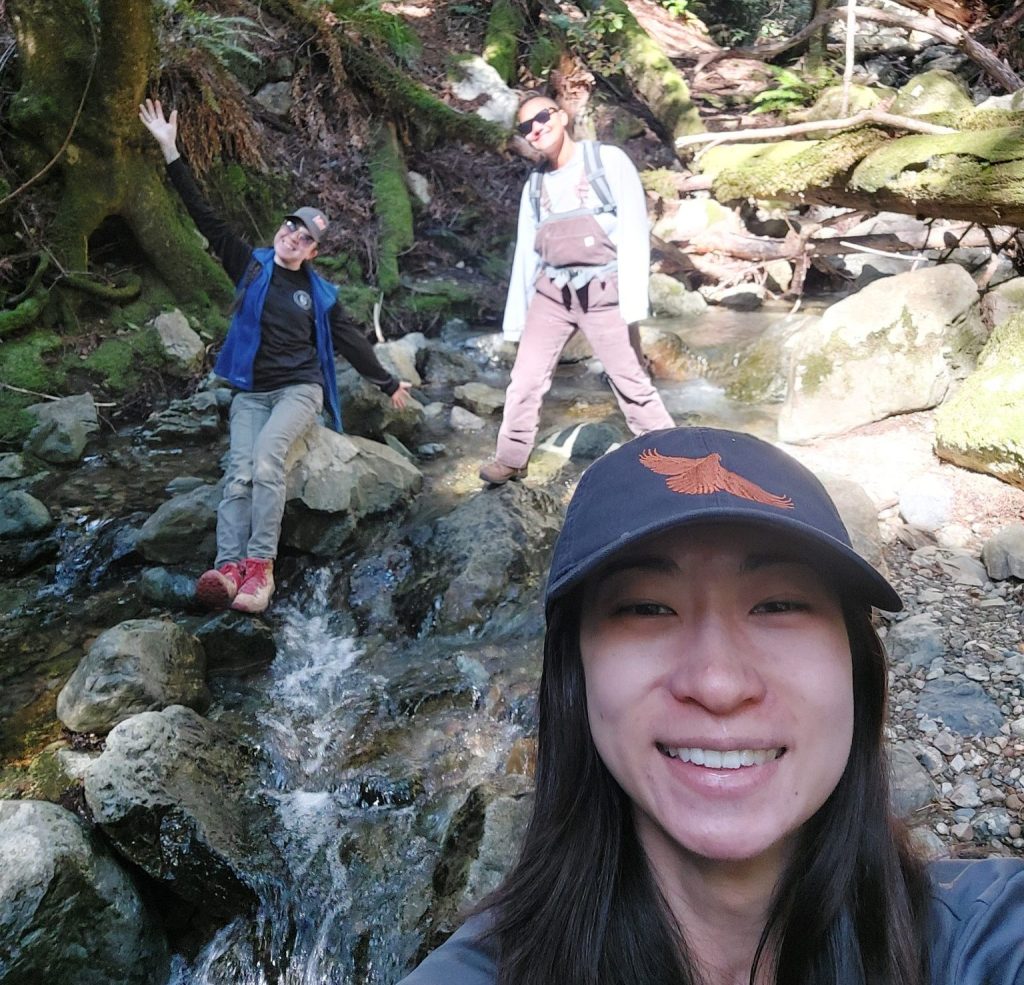
Carmen, Sara, and I conducting camera checks!
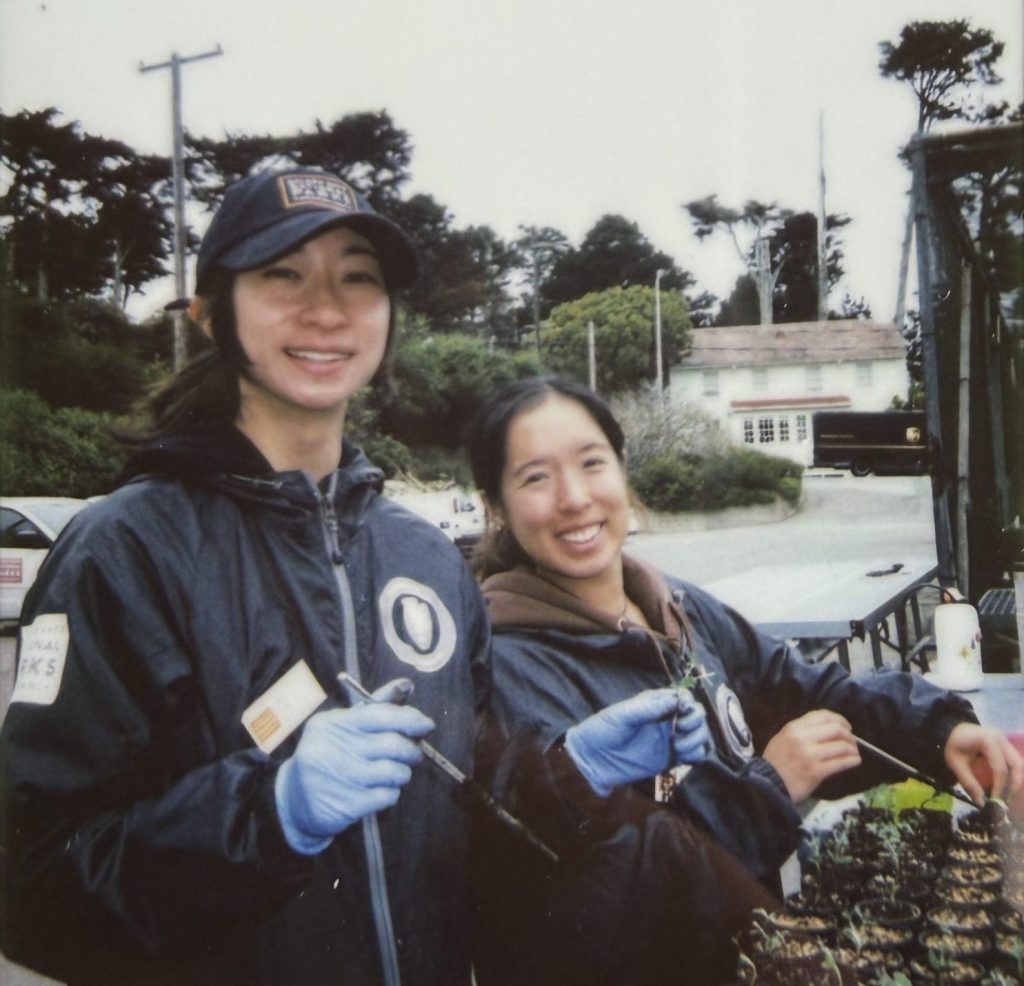
Alice and I transplanting lupine seedlings at the Presidio Nursery!
No Comments
Sorry, the comment form is closed at this time.
Thanks for subscribing! Feel free to contact us with any questions you have!


Sorry, the comment form is closed at this time.