


03 Nov Monarch Tagging by Day, Bat Mist Netting by Night
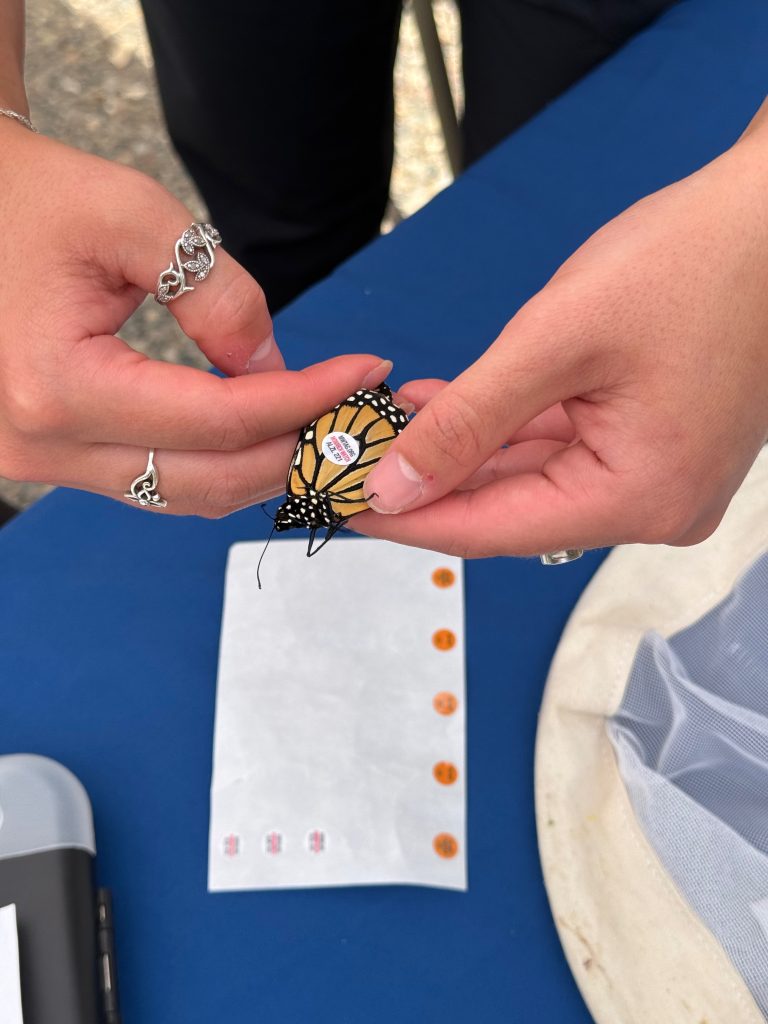
One of my favorite parts of working from a Wildlife Refuge is getting to assist with refuge programs and initiatives. This past week (8/21/26), the refuge hosted Monarch tagging, and Jessica (Co-Intern) and I had the pleasure of joining in on the fun. Monarch tagging matters because it lets Monarch conservationists study migration patterns and survival rates, which in turn helps us make informed decisions about habitat restoration. During the tagging process, volunteers and scientists also measure the wings and weigh the Monarch before placing a small circular tag on the underside of its wing. All of the aforementioned data, plus sex, location, and date of capture, are recorded on a data sheet corresponding to the tag number.
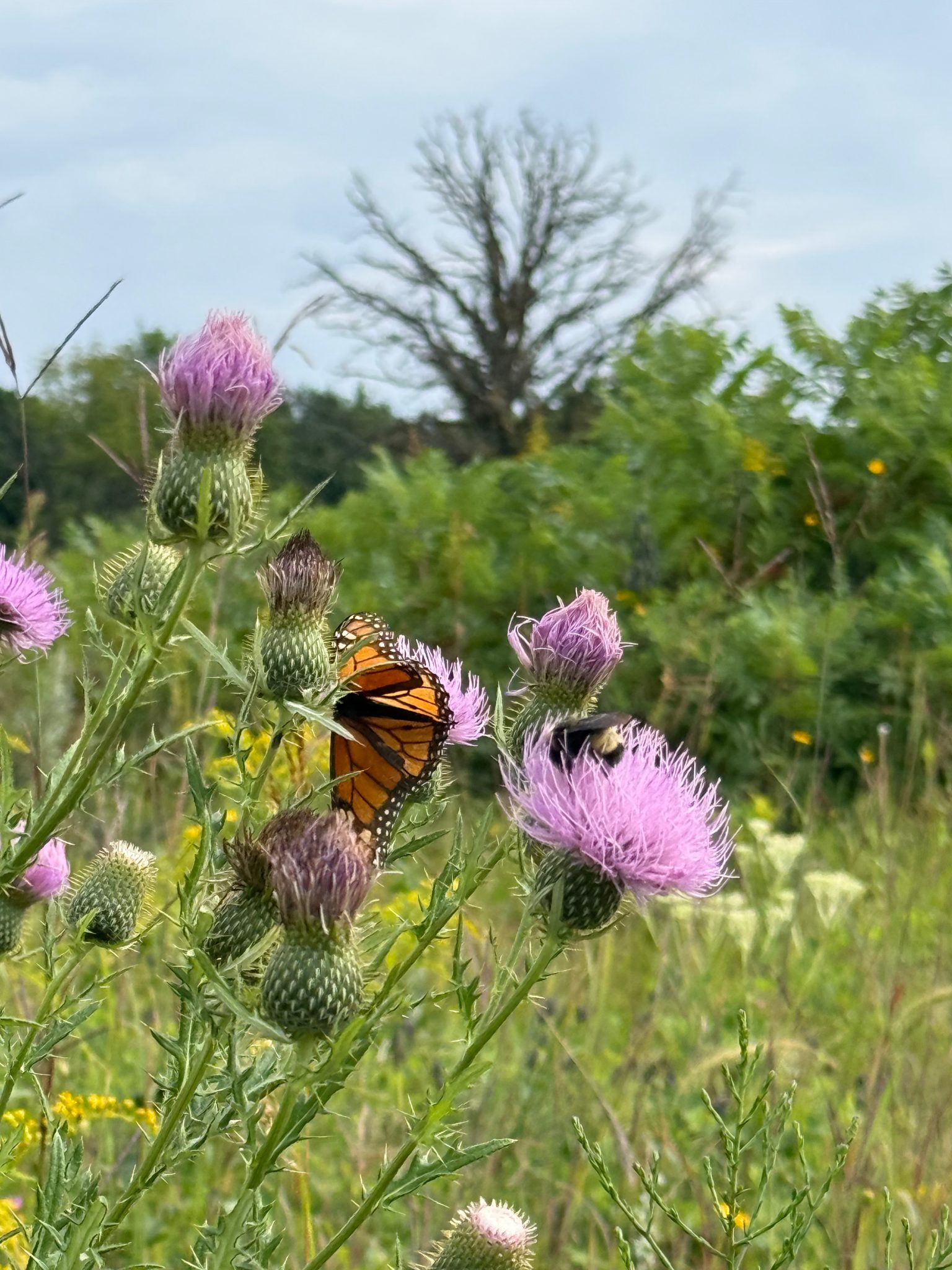
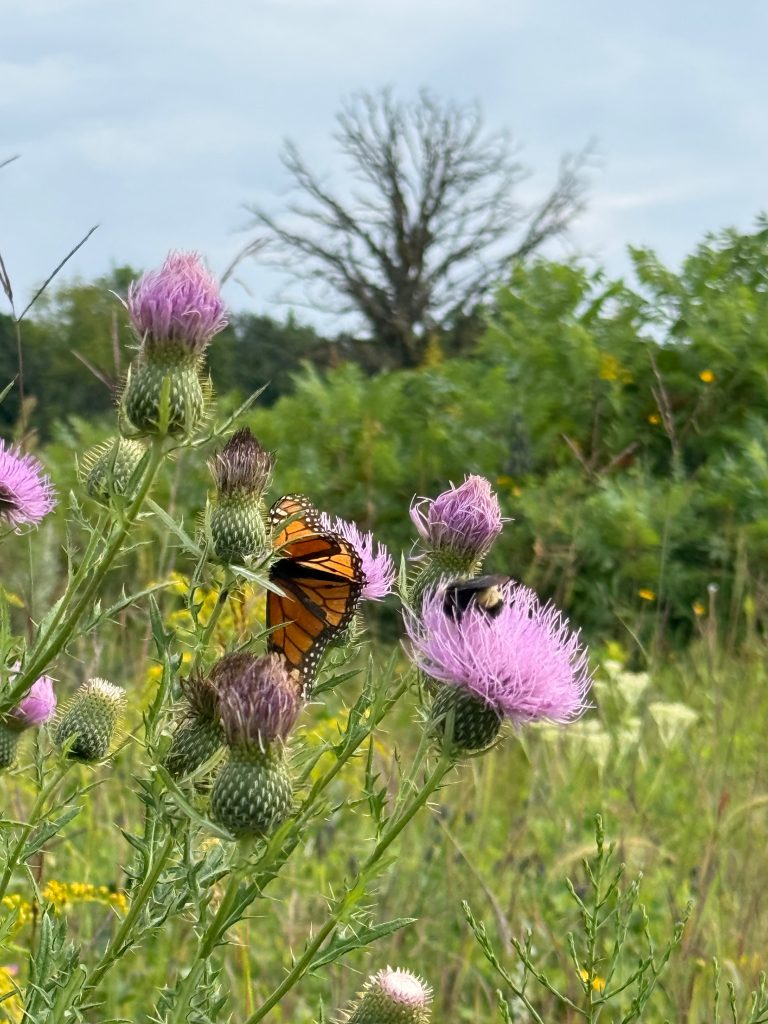
Jessica and I had a blast tromping through the prairie with insect nets at the ready. After many failed attempts, we both finally caught Monarchs perched on Prairie Blazing Star. We gently carried them over to the tagging station and affectionately named them for good luck on their trip to Mexico. At the station, Refuge staff collected all of the data I mentioned earlier and placed the small white tag on the underside of their wings. They handed them back to us, and we released them back into the prairie!
Later in the week, I helped Jessica scout prime locations to mist net for bats. We drove just under an hour to Louisville Swamp, a part of the Minnesota Valley Wildlife Refuge. We had heard that last year, one of their Habitat Restoration Apprentices did a project using acoustic bat monitors to survey local bat diversity. From this survey, she found that the endangered Northern Long-Eared Bat was present in this section of the refuge. The Restoration Apprentice took us on a long walk where we discussed our mist-netting needs and possible locations. At the end of the day, we found the perfect section to place three large mist nets.
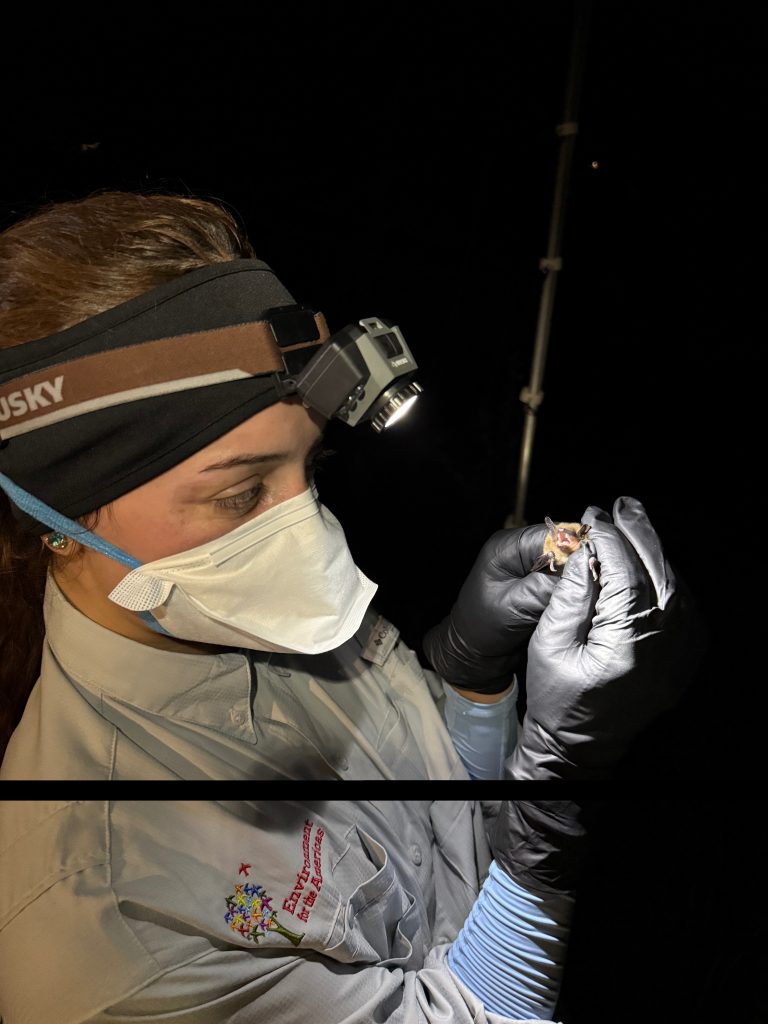
Finally, it was time to mist net. We set everything up just before sunset, and as the sun sank below the horizon, we opened the nets. Immediately, we were met with a cauldron of big brown bats. We ended up processing about twenty, but the big showstopper was the eastern red bat, and we only saw one. I mostly got to watch and take pictures, so I will let you read her blog for all of the nitty-gritty details of mist netting. Thanks for reading mine, and until next time,
Carter Leerhoff
No Comments